
Jump to Recipe
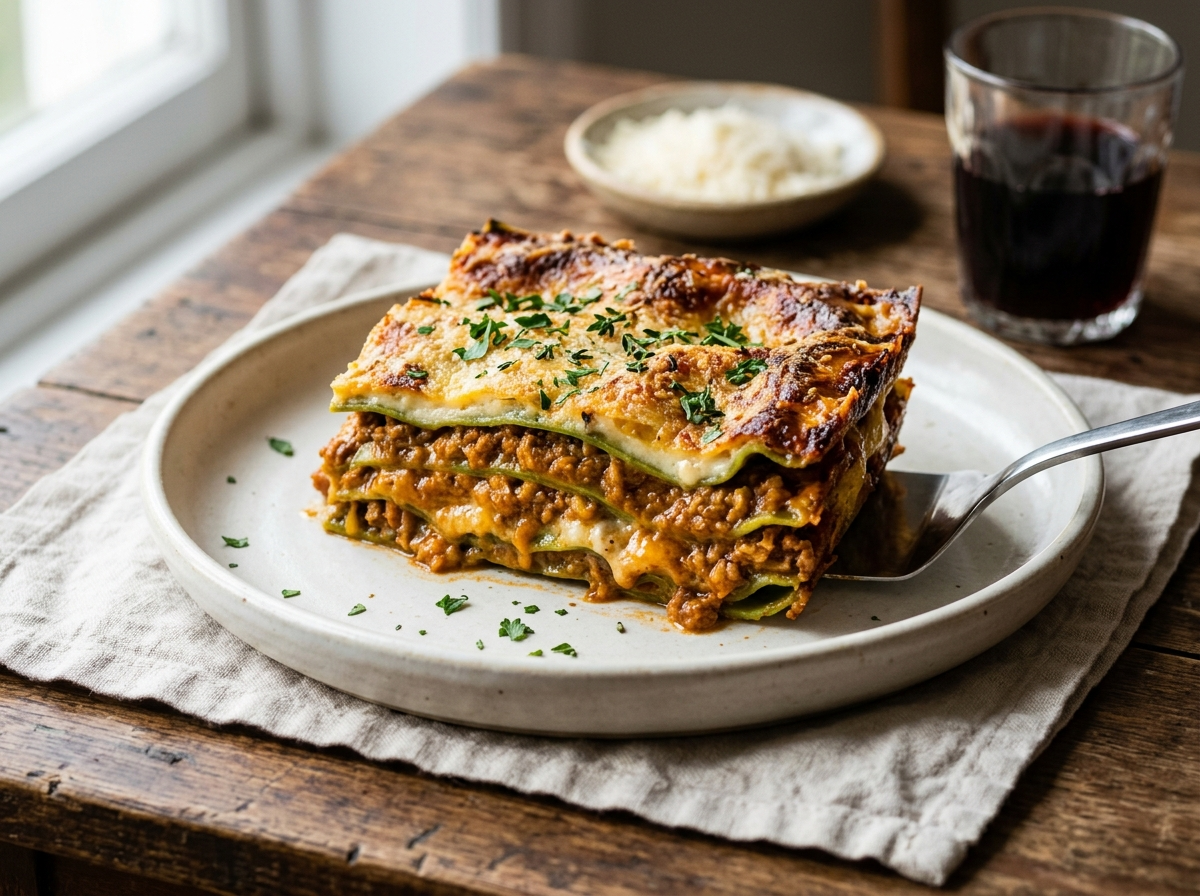
Lasagne verdi alla bolognese is the version you find in old trattorie across Emilia-Romagna. The pasta is pale green from spinach, the ragù cooks low and slow until the meat is silky and concentrated, and the béchamel binds everything without drowning it.
This is not a fast weeknight dish. It is a Sunday project, and it rewards patience. Make the ragù a day ahead if you can. The flavor tightens overnight and the lasagne assembles much faster the next day.
A note on the pasta: fresh spinach sheets are thinner and softer than dried, so they melt into the layers rather than staying firm. If you have a pasta machine, use it. If you don’t, good-quality fresh lasagne sheets from a deli counter work as a backup.
Why You’ll Love This Recipe
- Ragù made a day ahead means easy same-day assembly
- Spinach dough adds color and a subtle mineral note
- Slices cleanly from the dish after resting 15 minutes
- Freezes well in portions for up to three months
Ingredient Notes
- Fresh spinach for the pasta dough: You need cooked, squeezed-dry spinach – about 200 g fresh leaves yields 60 g once wilted and pressed. Frozen spinach works if you thaw and squeeze it thoroughly; any moisture left in the dough makes it sticky and hard to roll.
- 00 flour: 00 flour gives the pasta its characteristic silk. Plain all-purpose flour is a reasonable swap but produces a slightly chewier, less tender sheet.
- Ground beef (coarse mince): Use beef with around 15-20% fat for the ragù. Lean mince dries out during the long cook. A 50/50 mix of beef and pork adds depth and keeps the sauce loose.
- Pork (ground or finely diced): Pork adds fat and sweetness to the ragù. Italian sausage meat with the casing removed is a convenient substitute.
- Whole milk for béchamel: Full-fat milk makes a smoother, richer sauce. Semi-skimmed works but produces a thinner result that can separate slightly under the oven heat.
- Parmigiano Reggiano: Grate it fresh – pre-grated Parmigiano loses moisture and doesn’t melt as cleanly. Grana Padano is a budget-friendly alternative with a slightly milder flavor.
- Dry white wine: Use something you’d drink. A cheap Trebbiano or Pinot Grigio works well. You can substitute dry vermouth at the same quantity.
- Nutmeg: Fresh-grated nutmeg in the béchamel is a non-negotiable in Emilia-Romagna. Pre-ground nutmeg is acceptable but the flavor is noticeably flatter.
Lasagne Verdi alla Bolognese
Ingredients
Method
- Wash the spinach and cook it in a dry pan over medium heat for 2-3 minutes until fully wilted. Transfer to a clean cloth and squeeze firmly until completely dry. You should have about 60 g of pressed spinach.
- Finely chop or blend the pressed spinach into a smooth paste.
- Mound the flour on a clean work surface. Make a well in the center and add the eggs, spinach paste, and a pinch of salt. Beat the eggs gently with a fork, gradually drawing in the flour from the inner wall of the well.
- Once the dough comes together, knead firmly for 8-10 minutes until smooth and slightly elastic. The dough should be firm but not sticky. If it clings to the surface, add flour a teaspoon at a time.
- Wrap the dough tightly in cling film and rest at room temperature for 30 minutes.
- Heat the olive oil and butter together in a large heavy-bottomed saucepan over medium heat. Add the onion, celery, and carrot and cook, stirring regularly, for 10-12 minutes until the vegetables are soft and pale gold.
- Increase the heat to medium-high. Add the ground beef and pork. Break the meat up with a wooden spoon and cook for 8-10 minutes until no pink remains and the meat begins to brown lightly on the base of the pan.
- Pour in the white wine and stir, scraping any browned bits from the base. Cook for 3-4 minutes until the wine has mostly evaporated.
- Stir in the tomato paste and cook for 2 minutes. Add the milk and stir until absorbed, about 3 minutes.
- Pour in the warm stock, add the bay leaves, season with salt and pepper, and reduce the heat to low. Simmer partially covered for 1.5 to 2 hours, stirring every 20-30 minutes, until the ragù is thick and the liquid has reduced. Remove the bay leaves and taste for seasoning.
- Melt the butter in a medium saucepan over medium heat. Add the flour all at once and stir constantly for 2 minutes until the mixture is pale and smells slightly nutty.
- Add the warm milk gradually, whisking continuously to prevent lumps. Continue whisking over medium heat for 8-10 minutes until the sauce is thick enough to coat the back of a wooden spoon.
- Season with salt, white pepper, and freshly grated nutmeg. Remove from heat and press a piece of cling film directly onto the surface to prevent a skin from forming.
- Divide the rested dough into 4 portions. Keep unused portions covered. Flatten one portion with your hand and feed it through the pasta machine at the widest setting (1). Fold it in thirds and feed through again. Repeat twice.
- Progress through the settings, rolling once per setting, until you reach setting 5 or 6. The sheet should be thin enough to show your hand through it when held up to light.
- Cut sheets to fit your 30 x 20 cm baking dish with a slight overhang. Lay finished sheets flat on a lightly floured surface or hang them over a rod. Repeat with the remaining dough.
- Bring a large pot of salted water to the boil. Blanch the pasta sheets in batches for 30 seconds each, then transfer to a bowl of cold water for 10 seconds and lay flat on clean kitchen towels.
- Heat the oven to 190 C / 375 F.
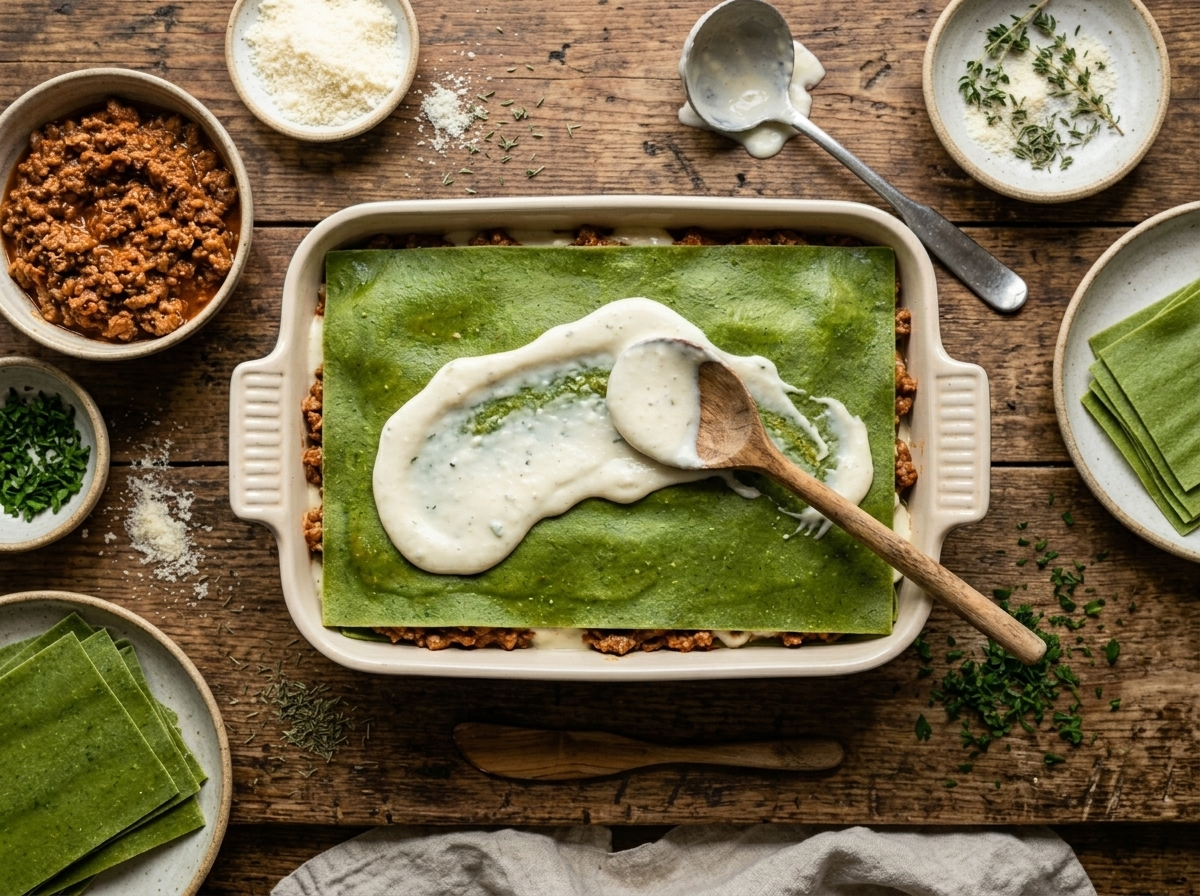
- Spread a thin layer of béchamel across the base of the baking dish. Lay the first pasta sheet over the béchamel, trimming any overlap.
- Spread an even layer of ragù over the pasta, followed by a layer of béchamel, and a scattering of grated Parmigiano. Repeat the layering - pasta, ragù, béchamel, Parmigiano - building 5 to 6 layers in total.
- Finish the top layer with the remaining béchamel, a generous grating of Parmigiano, and dots of butter scattered evenly across the surface.
- Cover tightly with foil and bake for 30 minutes. Remove the foil and bake for a further 15 minutes until the top is golden and bubbling at the edges.
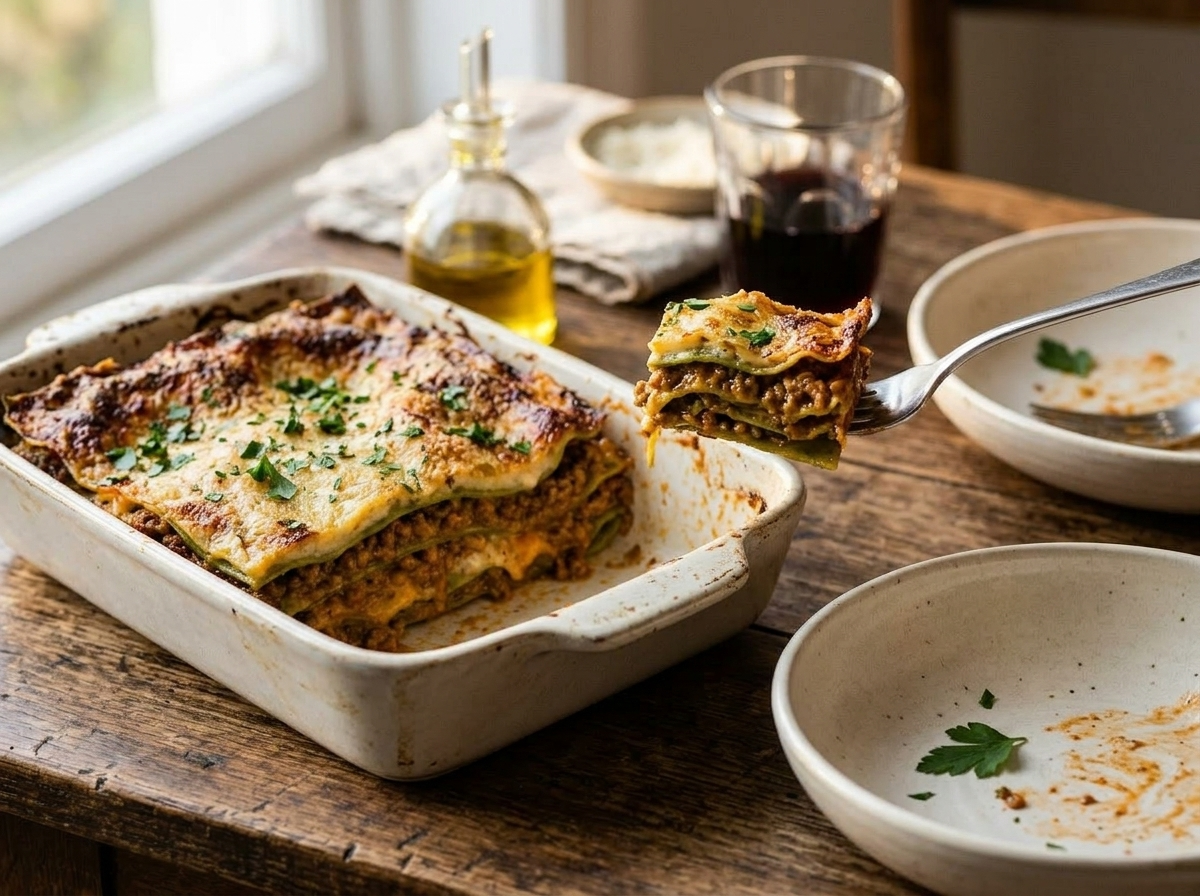
- Remove from the oven and rest uncovered for 15 minutes before cutting and serving. The layers will settle and slices will hold their shape.
Notes
Tips for Success
- Squeeze the cooked spinach in a clean cloth until completely dry before blending into the dough, or the pasta tears during rolling.
- Rest the ragù uncovered for the last 20 minutes of cooking so excess liquid evaporates and the sauce clings to the meat rather than pooling.
- Roll pasta sheets to setting 5 or 6 on your machine – thin enough to turn translucent when held to light, which means they’ll cook through without becoming gummy.
- Spread béchamel on the base of the baking dish before the first pasta sheet to prevent sticking and create a creamy bottom layer.
- Cover with foil for the first 30 minutes of baking, then remove for the final 15 to get a golden, slightly crisped top without drying out the layers.
Variations
- Swap half the beef with chicken livers, finely chopped, for a more traditional Bolognese depth.
- Add a layer of thinly sliced mortadella between the ragù and béchamel for a richer, fattier result.
- Use roasted butternut squash and ricotta in place of ragù for a meatless version that still holds well when sliced.
Storage and Reheating
Once baked and cooled, cover the dish tightly with cling film and refrigerate for up to 4 days. The lasagne firms up as it rests and actually slices more cleanly on day two.
To reheat individual portions, place in an oven-safe dish, add a small splash of water or milk over the top, cover with foil, and bake at 180 C / 355 F for 20-25 minutes until hot through. Microwave reheating works in a pinch – cover loosely and heat in 90-second bursts, checking between each.
For freezing, cut the cooled lasagne into portions and wrap each in cling film, then foil. Freeze for up to 3 months. Thaw overnight in the fridge before reheating in the oven as above.
Serving Suggestions
In Bologna, lasagne verdi is served as a primo – a first course before a secondo of roasted meat or braised rabbit or short ribs. Portions are moderate, not the generous slabs you might cut for a main. A simple green salad dressed with red wine vinegar and olive oil is the only accompaniment at the table.
If you’re serving it as a main, a glass of Sangiovese or Barbera — the kind covered in any Italian wine pairing for pasta guide — cuts through the richness of the béchamel and ragù. Avoid a heavy red – the dish doesn’t need competing tannins.
For a family table, put the lasagne dish in the center and let people cut their own portions. Set out extra grated Parmigiano and crusty bread to soak up any sauce that pools on the plate.
FAQ
Why is my lasagne verdi watery after baking?
The most common cause is a ragù that wasn’t reduced enough before layering – it releases liquid in the oven and softens the pasta sheets. Cook the ragù until there’s almost no visible liquid pooling around the meat, and make sure the béchamel is thick enough to coat a spoon firmly before assembling.
Can I use frozen spinach instead of fresh for the green pasta dough?
Yes, frozen spinach works well and is easier to manage. Thaw it completely, then squeeze it in a clean cloth until you can’t extract any more liquid – you need 60 g of dry, pressed spinach per 300 g flour. Any excess moisture will make the dough sticky and the sheets will tear when you roll them thin.
Can I assemble lasagne verdi alla bolognese the night before and bake it the next day?
Assembling the night before actually improves the result – the pasta layers absorb the ragù and béchamel slightly, which helps the lasagne hold its shape when cut. Cover the assembled dish tightly with cling film and refrigerate overnight. Add 10 extra minutes to the covered baking time since you’re starting from cold.
What pasta shape is traditionally used and can I substitute dried lasagne sheets?
Traditional lasagne verdi uses fresh spinach egg pasta rolled thin and cut into rectangles. Dried lasagne sheets are a workable substitute, but they absorb more liquid – increase the béchamel quantity by about 20% and don’t pre-cook the sheets. The texture will be firmer and slightly less delicate than the fresh version.
Is lasagne verdi alla bolognese the same as regular lasagne al forno?
The main differences are the pasta color and the strict absence of tomato in the authentic Bolognese version. Regular lasagne al forno often includes a tomato-based ragù and sometimes mozzarella. Lasagne verdi uses spinach pasta, a meat ragù that’s more milk-based than tomato-based, and only béchamel and Parmigiano between the layers.
How do I keep the spinach pasta sheets from tearing when I roll them thin?
Make sure the spinach is squeezed bone-dry before incorporating it into the dough. Rest the dough wrapped in cling film for at least 30 minutes before rolling – this relaxes the gluten and makes the sheets far more elastic. If sheets tear on the machine, fold the dough and roll through the thicker settings a second time before progressing.