
Jump to Recipe
Prosciutto e melone is a classic Italian antipasto that pairs thin-sliced prosciutto crudo with ripe, chilled cantaloupe. No stove, no oven, just good ingredients arranged on a board. It works as a starter for a summer dinner or as a light lunch on its own.
The dish lives or dies on the melon. Underripe cantaloupe tastes like watered-down cucumber next to salty prosciutto, and that mismatch is the one real failure mode here. A ripe melon smells sweet at the stem end and gives slightly under thumb pressure.
I chill the melon hard before slicing, straight from the fridge, so the contrast against the room-temperature prosciutto is sharper. A few cracks of black pepper and a thread of good olive oil are the only additions I make. Some cooks add a squeeze of lime or a few mint leaves, and both work, but the base recipe needs neither.
Why You’ll Love This Recipe
- Takes 15 minutes with zero cooking or cleanup at the stove
- Works as a starter, a light lunch, or part of an antipasto board
- Only 5 ingredients, most of them already in a normal kitchen
- Sweet and salty contrast that needs no sauce or dressing
Ingredient Notes
- cantaloupe: Choose one that smells sweet at the stem end and gives slightly under thumb pressure. Honeydew works as a milder substitute.
- prosciutto crudo: Use thin-sliced, air-cured prosciutto (Parma or San Daniele style), not cooked ham, for the salty edge this dish needs.
- olive oil: A fruity extra virgin oil adds a grassy note against the sweet melon. Skip it entirely if you prefer the dish drier.
- black pepper: Freshly cracked, not ground from a shaker. It’s the only seasoning the dish gets, so grind it coarse.
- fresh mint (optional): A few torn leaves add a cool, herbal lift. Basil works too if that’s what’s in the garden.
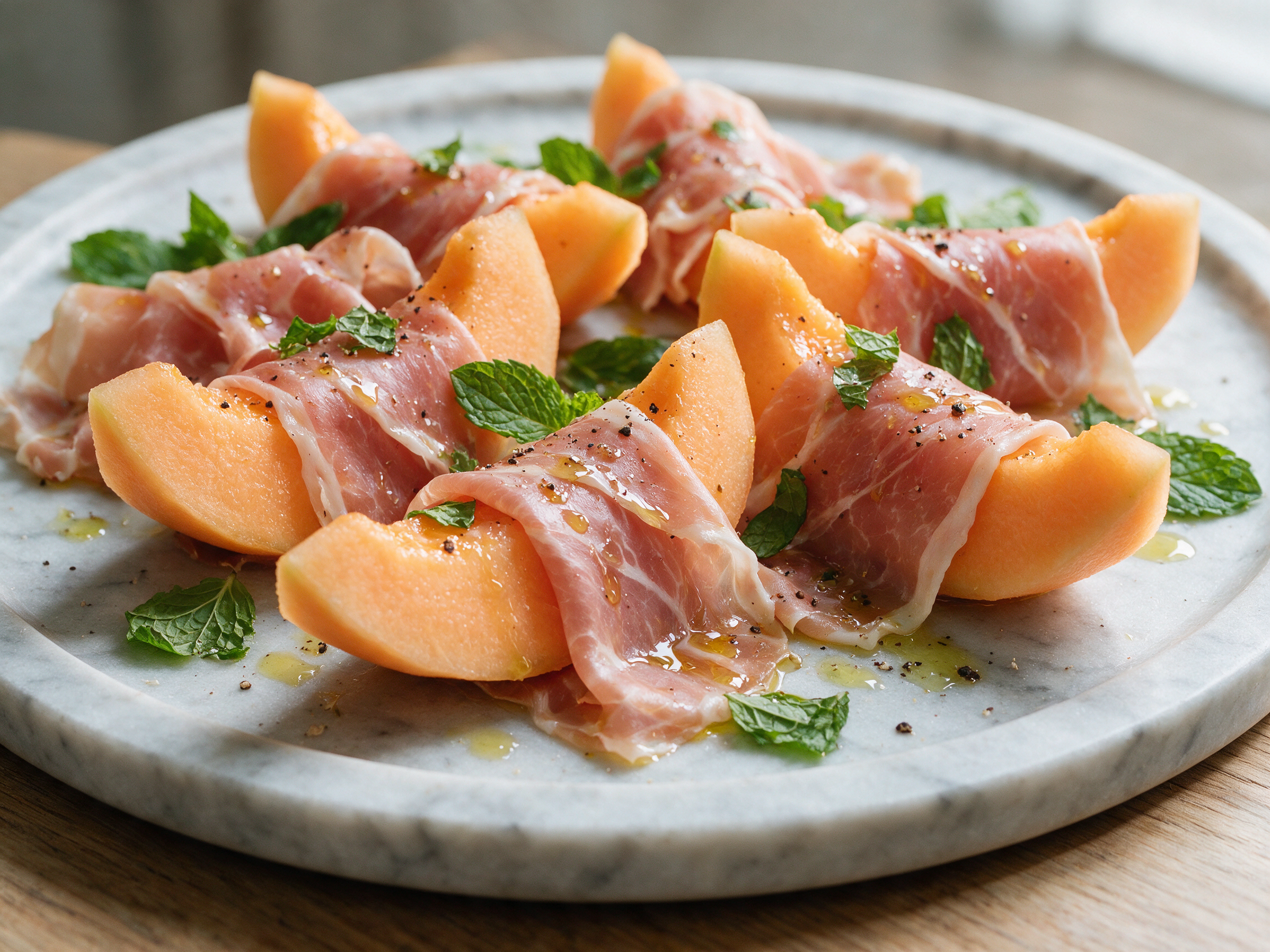
Prosciutto e Melone: Sweet, Salty, No-Cook Antipasto
Ingredients
Method
- Halve the cantaloupe and scoop out the seeds and stringy pulp with a spoon.
- Cut the melon into wedges about 2 cm thick, then slice the rind away from each wedge with a knife.
- Chill the wedges in the fridge for at least 15 minutes, or up to a day, covered, so they're cold when served.
- About 10 minutes before serving, take the prosciutto out of the fridge so the fat softens slightly.
- Arrange the chilled melon wedges on a 30 cm / 12-inch platter, slightly overlapping.
- Drape one slice of prosciutto over or beside each wedge, letting it fall in loose folds rather than pressing it flat.
- Drizzle the olive oil over the platter, squeeze the lime juice over everything, and finish with a generous crack of black pepper.
- Scatter mint leaves over the top if using, and serve right away while the melon is cold and the prosciutto is at room temperature.
Notes
- Buy prosciutto sliced to order if possible, pre-packaged slices are often thicker and drier.
- Don't slice the melon until close to serving time, it sweats and loses crispness fast.
- Room-temperature prosciutto drapes better than fridge-cold prosciutto straight from the pack.
- Skip the olive oil entirely if your melon is very ripe and sweet on its own.
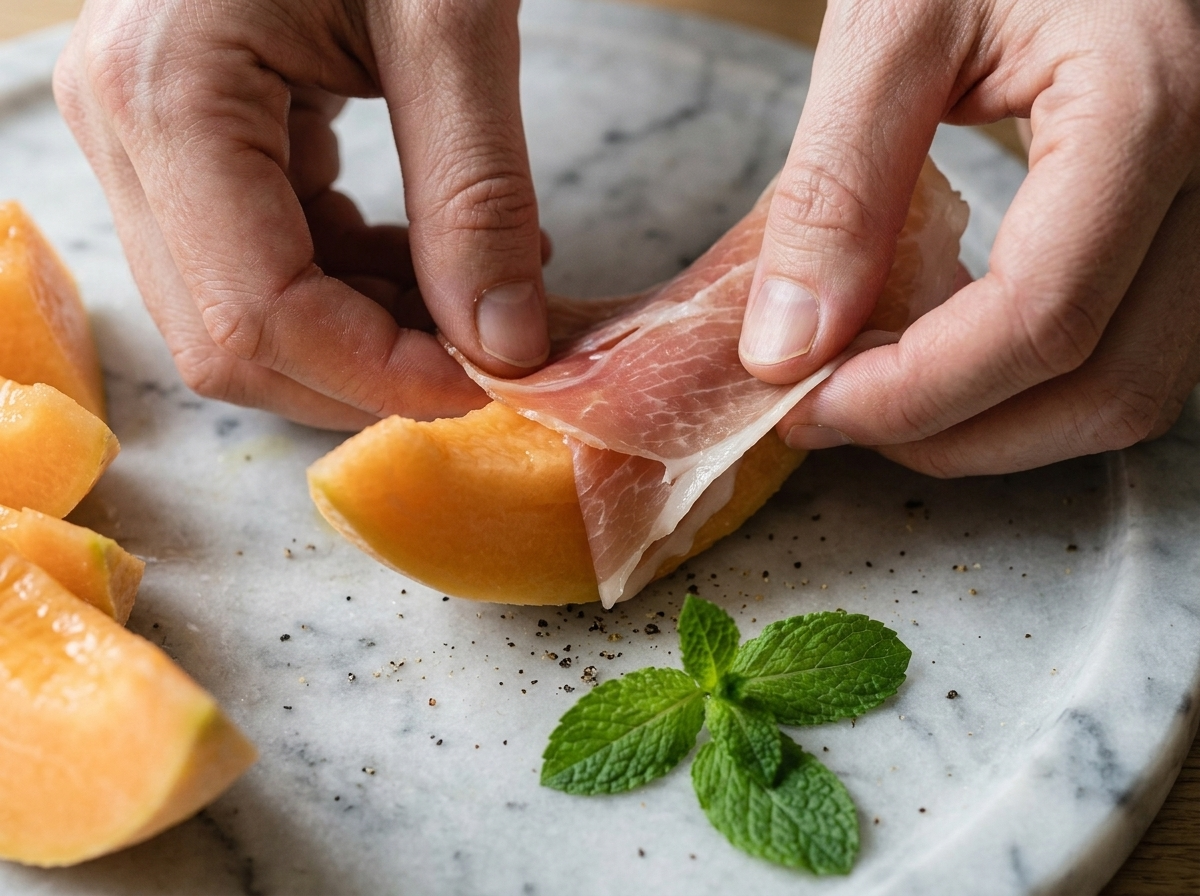
Tips for Success
- Chill the melon in the fridge for at least 15 minutes before serving so it stays cold against the room-temperature prosciutto.
- Slice the prosciutto as thin as your butcher will go so it drapes instead of clumping.
- Cut the melon into wedges no thicker than 2 cm so each bite gets an even ratio of melon to ham.
- Let the prosciutto sit out of the fridge for 10 minutes before plating so the fat softens and the flavor opens up.
- Taste the melon before you slice the whole thing. If it’s bland, add a squeeze of lime instead of forcing it as is.
Variations
- Swap cantaloupe for ripe honeydew or a small wedge of watermelon for a milder, less floral melon flavor.
- Add torn burrata or a few bocconcini balls alongside the wedges for a heavier antipasto course.
- Skewer melon cubes and folded prosciutto ribbons on toothpicks for a passed appetizer at a party.
Storage and Reheating
Prosciutto e melone is best assembled just before serving, since the melon sweats once cut and the prosciutto dries out and curls if it sits too long. This isn’t a dish to reheat, there’s nothing to cook in the first place.
For a party, you can cut the melon into wedges up to a day ahead and store them covered in the fridge in an airtight container. Keep the prosciutto in its original wrapping until you’re ready to drape it, then assemble the platter within 20 to 30 minutes of serving.
Leftover assembled plates don’t hold well past an hour or two at room temperature. If you have extra melon and prosciutto left separately, store them apart in the fridge for 2 to 3 days and reassemble fresh.
Serving Suggestions
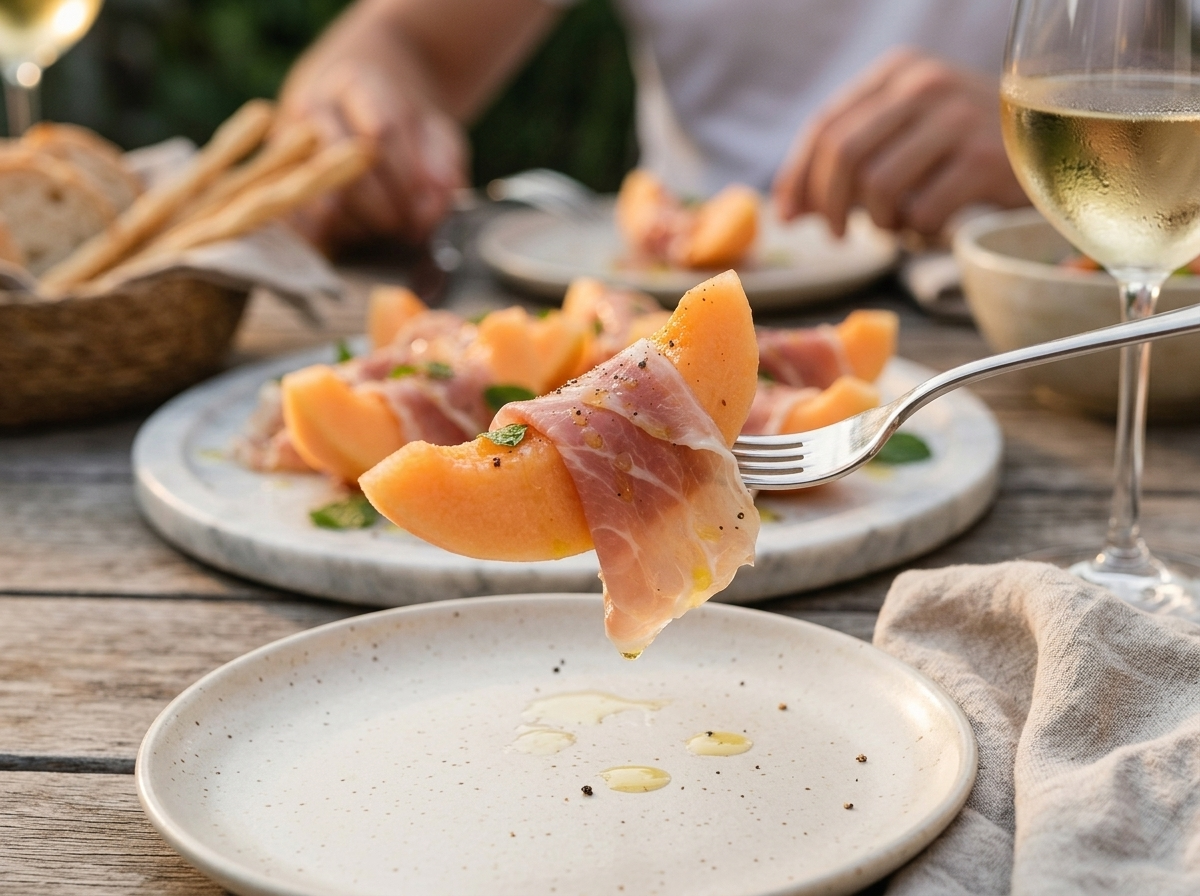
Serve prosciutto e melone as the opening course of an Italian meal, alongside a simple green salad or a plate of marinated olives. A basket of grissini or a wedge of crusty pizza bianca romana on the side rounds out the antipasto without competing with the melon.
A chilled dry white like Vermentino or a glass of Prosecco cuts through the salt in the prosciutto and matches the sweetness of the melon. For a non-alcoholic option, sparkling water with a slice of lime does the same job.
For a bigger spread, add this next to burrata, a bowl of tender carciofi ripieni, and thinly sliced bresaola. It also works well as a light main course for two on a warm evening, paired with just bread and wine.
FAQ
Why does my prosciutto e melone taste watery instead of sweet?
Watery, flat-tasting melon almost always means it was picked underripe. A ripe cantaloupe smells sweet and slightly musky at the stem end and gives a little under gentle thumb pressure. If the melon smells like nothing, it will taste like nothing too, no matter how good the prosciutto is.
Can I use a different melon instead of cantaloupe for prosciutto e melone?
Yes, honeydew is the most common swap and gives a milder, less floral sweetness than cantaloupe. Watermelon also works if you want something juicier and lighter, though it holds less flavor against the salt of the prosciutto. Stick with ripe fruit either way.
Can I prep prosciutto e melone ahead of time for a party?
You can cut the melon into wedges up to a day ahead and keep it covered in the fridge. Keep the prosciutto sealed separately until serving time, then assemble the platter within 20 to 30 minutes so the ham doesn’t dry out or curl at the edges.
What wine goes with prosciutto e melone?
A chilled dry white like Vermentino, Pinot Grigio, or a glass of Prosecco works well, since the acidity and bubbles cut through the salt in the prosciutto. Avoid heavy reds here, they clash with the sweetness of the melon rather than complementing it.
Is prosciutto e melone gluten-free and dairy-free?
Yes, prosciutto e melone is naturally gluten-free and dairy-free as written, since it’s just cured ham, melon, olive oil, and black pepper. Just double-check the prosciutto label, as some cured meats are processed on shared equipment with gluten-containing products.
What’s the difference between prosciutto crudo and regular ham in this dish?
Prosciutto crudo is air-cured and eaten raw, with a firm, silky texture and a concentrated salty flavor that cooked ham doesn’t have. Regular cooked ham is wetter and milder, and it won’t give you the same contrast against sweet melon that makes this dish work.