
Jump to Recipe
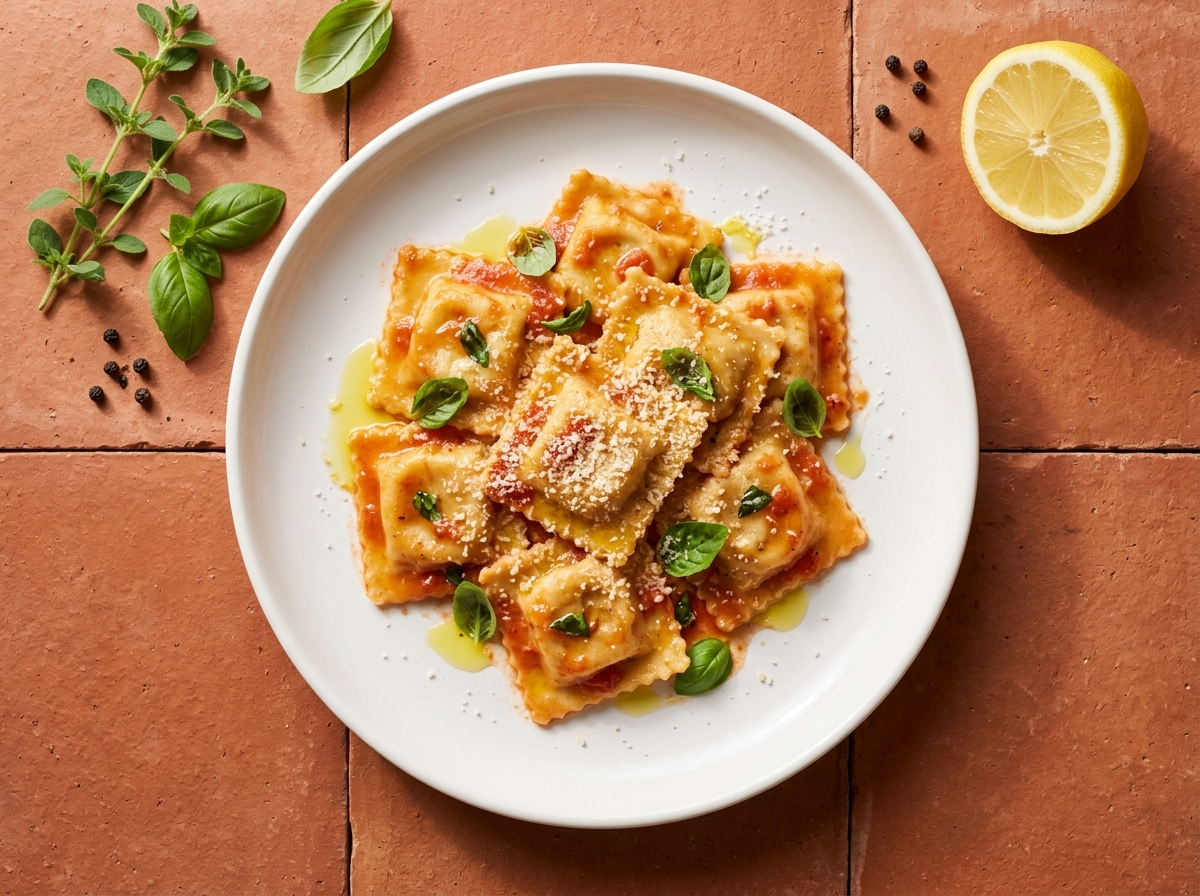
Ravioli capresi are the signature pasta of the island of Capri, and what sets them apart is the filling. Most Italian stuffed pasta leans on meat or sage-and-butter simplicity, but these are strictly vegetarian: a mix of fresh ricotta, caciotta or fior di latte, egg, lemon zest, and fresh marjoram. That combination smells like the island itself.
The sauce is deliberately restrained – a short, lightly cooked tomato passata with basil, nothing more. It frames the filling without competing with it.
This is a weekend project, not a Wednesday-night shortcut. The dough needs a rest, the filling comes together fast, and the shaping takes patience the first time. Once you’ve made a batch, the second time goes twice as quickly.
Why You’ll Love This Recipe
- Fragrant marjoram and lemon zest make the filling genuinely distinctive
- Light tomato sauce keeps the dish clean, not heavy
- Filling preps in under 10 minutes with pantry basics
- Freezes raw beautifully for a future dinner with no extra work
Ingredient Notes
- Ricotta: Use whole-milk ricotta and drain it in a fine-mesh sieve for 30 minutes if it looks wet. A watery filling will tear the pasta and make sealing difficult.
- Caciotta: Caciotta is a soft, mild Italian cow’s-milk cheese common in southern Italy. If you can’t find it, fior di latte (fresh mozzarella, well-drained) or a young provolone works well.
- Fresh marjoram: Marjoram is the defining herb here and dried is not a good substitute – the flavor is flatter and more medicinal. Swap fresh oregano only as a last resort, using half the quantity.
- Lemon zest: Use an unwaxed lemon and zest it finely. The zest lifts the filling without adding acidity – don’t skip it even if it seems like a small detail.
- 00 flour: Italian 00 flour gives the pasta a silky, pliable dough that rolls thin without tearing. Plain all-purpose flour works but the dough will be slightly less elastic.
- Tomato passata: A good-quality strained tomato passata is all you need for the sauce. Avoid crushed tomatoes here – the sauce should be smooth and light, not chunky.
Ravioli Capresi: Capri’s Lemon-Scented Ricotta and Marjoram Pasta
Ingredients
Method
- Mound the flour on a clean work surface and make a well in the center. Crack in the eggs, add the olive oil and salt, and beat with a fork, gradually drawing in flour from the inner wall.
- Once a rough dough forms, knead with your hands for 8 to 10 minutes until the dough is smooth, firm, and elastic. It should not stick to the surface.
- Wrap the dough tightly in plastic wrap and rest at room temperature for 30 minutes. Do not skip this step.
- Combine the drained ricotta, finely grated caciotta, egg, lemon zest, and chopped marjoram in a bowl. Mix with a fork until smooth and uniform.
- Season with salt and a few grinds of black pepper. Taste and adjust. The filling should be fragrant and hold its shape when spooned. Cover and refrigerate until needed.
- Warm the olive oil in a medium saucepan over medium-low heat. Add the crushed garlic clove and cook for 1 minute until pale golden and fragrant, then remove it.
- Add the passata and basil leaves. Season with salt. Simmer uncovered over low heat for 15 minutes, stirring occasionally, until the sauce is slightly thickened and tastes less sharp. Set aside.
- Cut the rested dough into four pieces. Work with one piece at a time, keeping the rest wrapped. Flatten slightly with your palm, then feed through the pasta machine starting at the widest setting. Fold and feed through again twice at the same setting.
- Progressively narrow the setting, rolling the dough through each one. Stop at setting 5 or 6 on most machines - the sheet should be thin but not transparent.
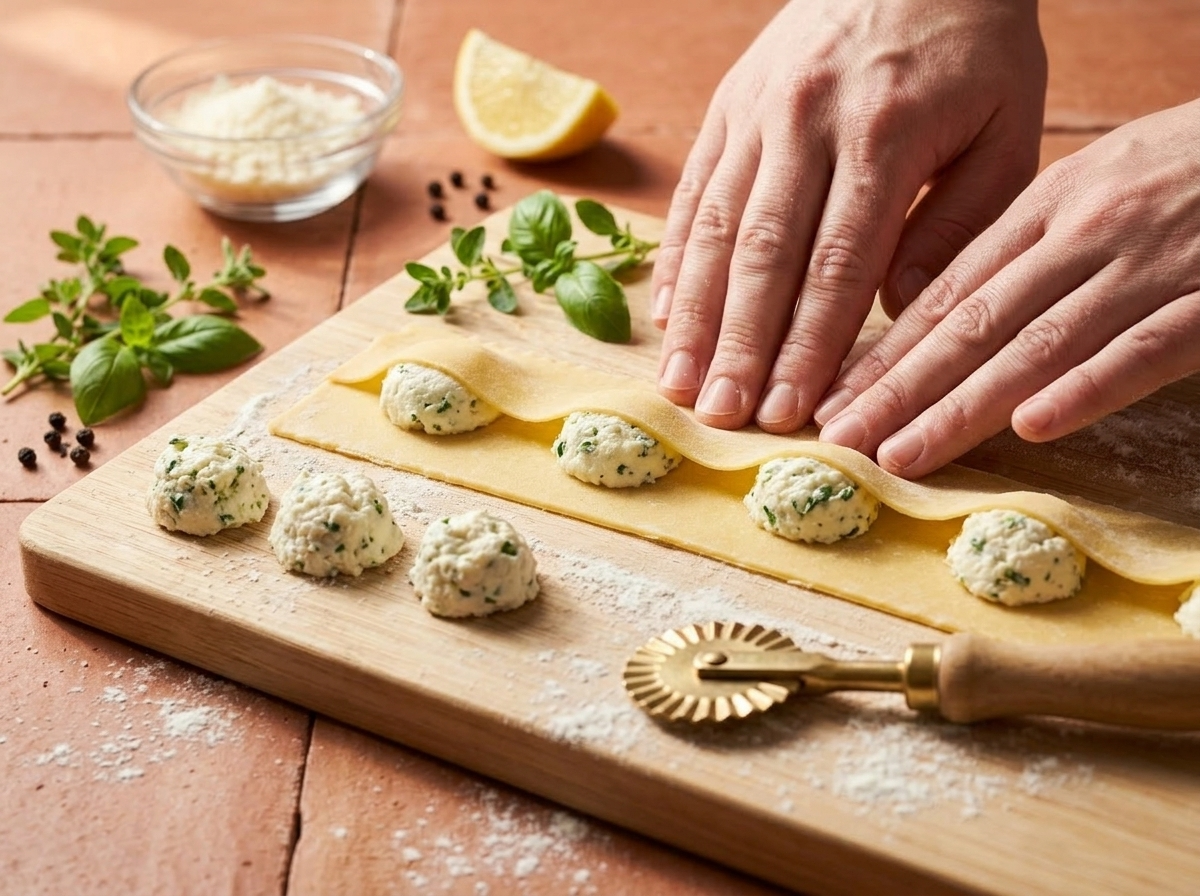
- Lay one pasta sheet on a lightly floured surface. Place teaspoon-sized mounds of filling in a row about 4 cm apart, keeping a 2 cm border at the edges.
- Brush water around each mound with a pastry brush or fingertip. Fold the pasta sheet over the filling or lay a second sheet on top, pressing firmly around each mound to seal and push out all air.
- Cut into squares or rounds with a pasta cutter or knife. Press the edges firmly once more. Lay the finished ravioli on a lightly floured tray in a single layer. Repeat with the remaining dough and filling.
- Bring a large pot of water to a boil and salt it generously. Gently lower the ravioli in batches. Cook at a gentle boil for 3 to 4 minutes until the pasta is tender but still has a slight bite and the ravioli float to the surface.
- Warm the tomato sauce in a wide pan over low heat. Using a slotted spoon, transfer the cooked ravioli directly into the sauce. Toss gently off the heat.
- Divide among warm plates. Finish with fresh basil, a drizzle of extra-virgin olive oil, and grated Parmigiano if using. Serve at once.
Notes
Tips for Success
- Rest the dough wrapped in plastic for at least 30 minutes so the gluten relaxes and rolling is easier.
- Drain ricotta in a sieve lined with cheesecloth for 30 minutes before mixing to prevent a wet filling.
- Roll pasta sheets to setting 5 or 6 on a pasta machine – thin enough to see your hand through slightly.
- Press firmly around each mound of filling to push out all air before cutting, or ravioli will burst in the water.
- Cook ravioli capresi in well-salted water at a gentle boil, not a rolling boil, to keep them from splitting.
Variations
- Add a tablespoon of finely grated Parmigiano to the filling for a nuttier, slightly saltier result.
- Swap tomato sauce for melted butter with extra lemon zest and a handful of basil leaves.
- Use a small pasta cutter to make half-moon ravioli (mezzelune) instead of square shapes for faster assembly.
Storage and Reheating
Raw ravioli capresi keep on a lightly floured tray in the fridge for up to 24 hours, loosely covered. Don’t stack them or they’ll stick.
To freeze, lay the raw ravioli in a single layer on a parchment-lined tray until solid, about 2 hours, then transfer to a freezer bag. They keep for up to 2 months. Cook straight from frozen in boiling salted water – add 1 to 2 extra minutes to the cooking time.
Cooked ravioli with sauce keeps in the fridge for up to 2 days. Reheat gently in a pan with a splash of water over low heat. Don’t microwave – the pasta turns rubbery.
Serving Suggestions
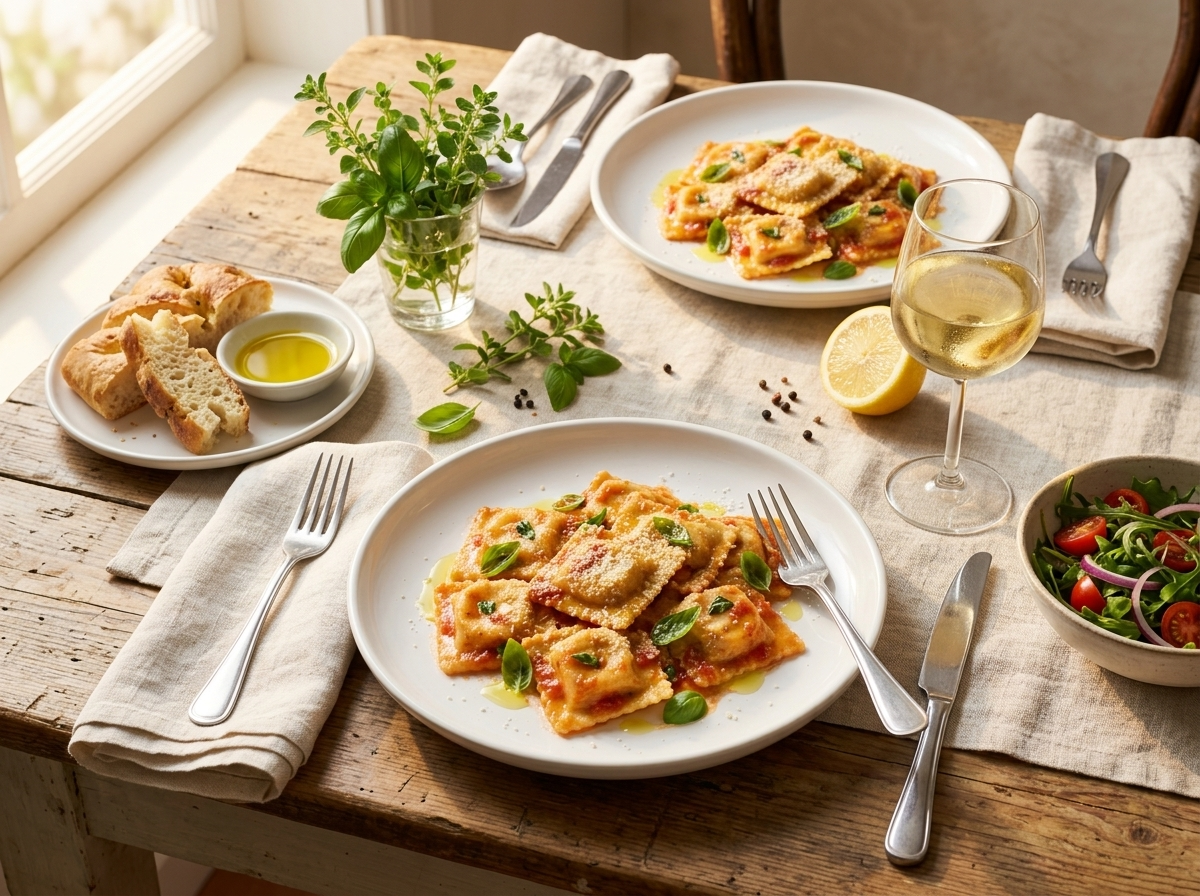
Ravioli capresi work best as a first course (primo), followed by grilled fish or a simple citrus and fennel salad. The lemon and marjoram filling pairs naturally with light white wines – a Greco di Tufo or Fiano di Avellino from Campania are both good choices, and our Italian wine pairing guide for pasta can help you decide between them.
For a more complete meal, serve a larger portion alongside a green salad dressed with lemon and olive oil. The clean flavors don’t need much on the side.
Finish each plate with a few fresh basil leaves, a drizzle of good extra-virgin olive oil, and a light shaving of Parmigiano. Skip heavy toppings – the point of this dish is restraint.
FAQ
Why is my ravioli capresi filling too wet and the pasta keeps tearing?
The problem is almost always undrained ricotta. Spoon it into a fine-mesh sieve over a bowl and let it drain for 30 minutes before mixing. A drier filling holds together cleanly and seals without leaking.
Can I use dried marjoram instead of fresh in the capresi filling?
Technically yes, but the result will be noticeably different. Fresh marjoram has a floral, grassy scent that dried loses almost completely. If you must substitute, use a quarter of the quantity and lean on extra lemon zest to compensate.
Can I freeze ravioli capresi before cooking?
Yes, and freezing raw is the best method. Lay them flat on a floured tray, freeze until solid, then bag them. They cook straight from frozen in salted boiling water with just a couple of extra minutes.
What sauce goes with ravioli capresi besides tomato?
A browned butter sauce with extra lemon zest and fresh basil is a good alternative that keeps the citrus note in the filling at the front. Avoid cream sauces – they mask the marjoram and make the dish heavy.
Is ravioli capresi the same as ravioli alla caprese?
Yes, the two names describe the same dish from Capri. ‘Capresi’ simply means ‘of Capri’ in Italian, so you’ll see both terms used interchangeably on menus and in cookbooks.
Is ravioli capresi suitable for a vegetarian diet?
Yes, the filling and sauce contain no meat or fish. Just check that the caciotta or fior di latte you use is made with vegetarian rennet if that detail matters to you.