
Jump to Recipe
Pairing red wine with Italian comfort food isn’t about memorizing rules. It’s about understanding why high-acid, tannic reds cut through braised fat and make the whole plate taste cleaner.
This recipe builds a braised short rib dish specifically designed to show that principle in action. You’ll use a medium-to-full red in the braise and open the same style at the table. The results speak louder than any pairing chart.
Barolo, Barbera, Chianti Classico Riserva, Amarone – all are good fits here. I use Barbera d’Asti most weeknights because the acidity is honest and the price is reasonable.
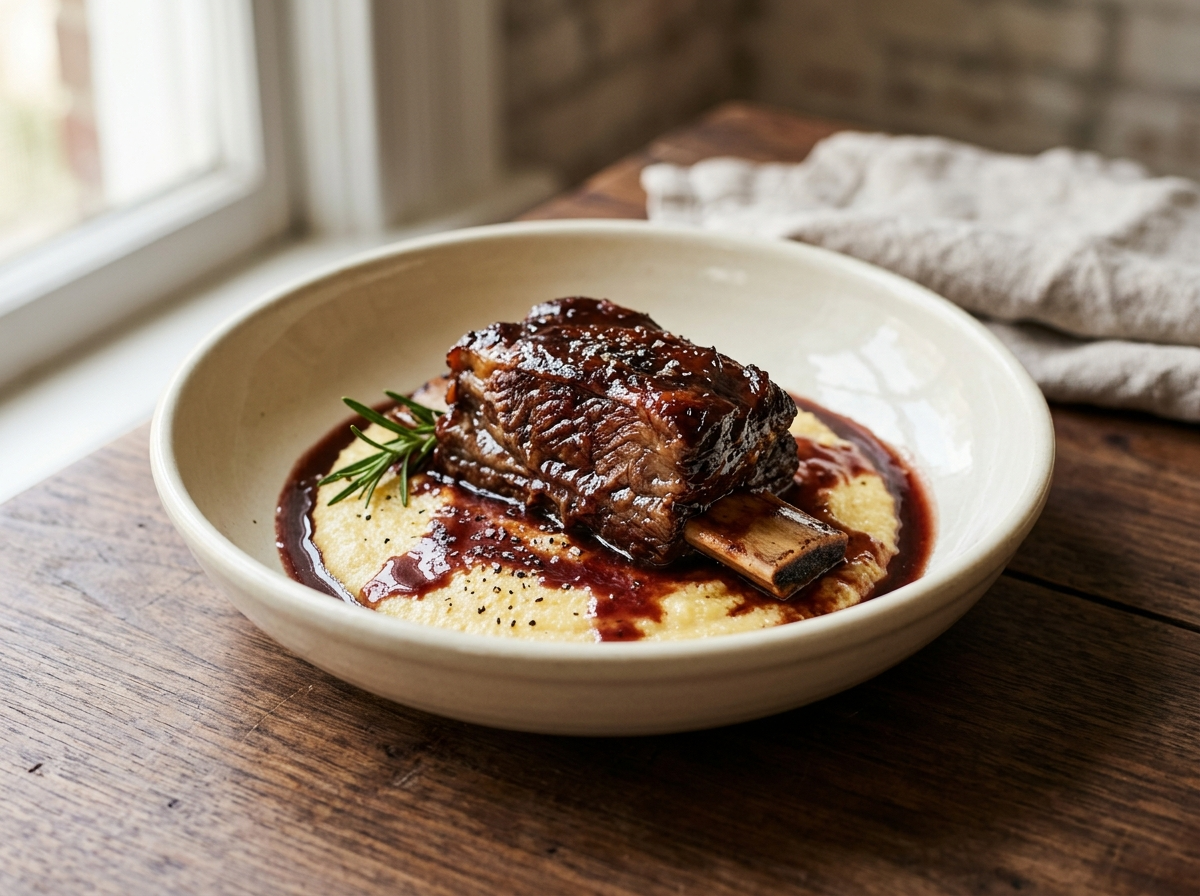
The technique is straightforward: hard sear, slow braise, reduce the braising liquid into a sauce. No thickeners, no cream. The collagen in the short ribs does the work.
Why You’ll Love This Recipe
- Braising liquid doubles as a glossy, wine-forward sauce
- Works with Barolo, Chianti, Barbera, or Amarone
- Make-ahead friendly – tastes better the next day
- No thickeners needed – collagen creates the silky body
Ingredient Notes
- bone-in beef short ribs: Bone-in gives more collagen and better body in the finished sauce. Boneless will work but the sauce will be thinner.
- Italian red wine: Use a wine you’d drink – Barbera d’Asti, Chianti Classico, or a simple Rosso di Montalcino. Avoid anything labeled ‘cooking wine’ as the salt content throws off the braise.
- canned whole San Marzano tomatoes: Crush them by hand before adding. They add acidity and body without making the braise taste like bolognese. Diced tomatoes work in a pinch.
- celery, carrot, white onion (soffritto): Classic Italian base. Cut everything roughly the same size so it cooks evenly. No need for a fine dice since you’ll strain the solids later.
- beef stock: Low-sodium stock lets you control salt at the end. Chicken stock also works and gives a slightly lighter sauce.
- fresh rosemary and bay leaves: Rosemary is assertive – one sprig is enough. Two bay leaves add background depth without dominating.
- tomato paste: Cook it in the pan with the soffritto until it darkens slightly, about 2 minutes. This removes the raw tin flavor and adds a deeper, slightly caramelized note.
Red Wine Pairing for Italian Comfort Foods: A Practical Guide with Braised Short Ribs
Ingredients
Method
- Heat the oven to 160 C / 320 F.
- Pat the short ribs dry with paper towels, then season all sides with salt and black pepper.
- Heat a large cast-iron skillet over high heat until smoking. Add the oil, then sear the short ribs in two batches, about 3 minutes per side, until a deep brown crust forms. Transfer to a plate.
- In the same skillet over medium heat, add a splash more oil if needed, then add the onion, carrot, and celery. Cook for 6 to 8 minutes, stirring occasionally, until softened and pale gold.
- Add the garlic and tomato paste. Stir and cook for 2 minutes until the paste darkens slightly and smells toasty.
- Pour in the red wine and scrape up all the browned bits from the bottom. Let it bubble for 3 minutes.
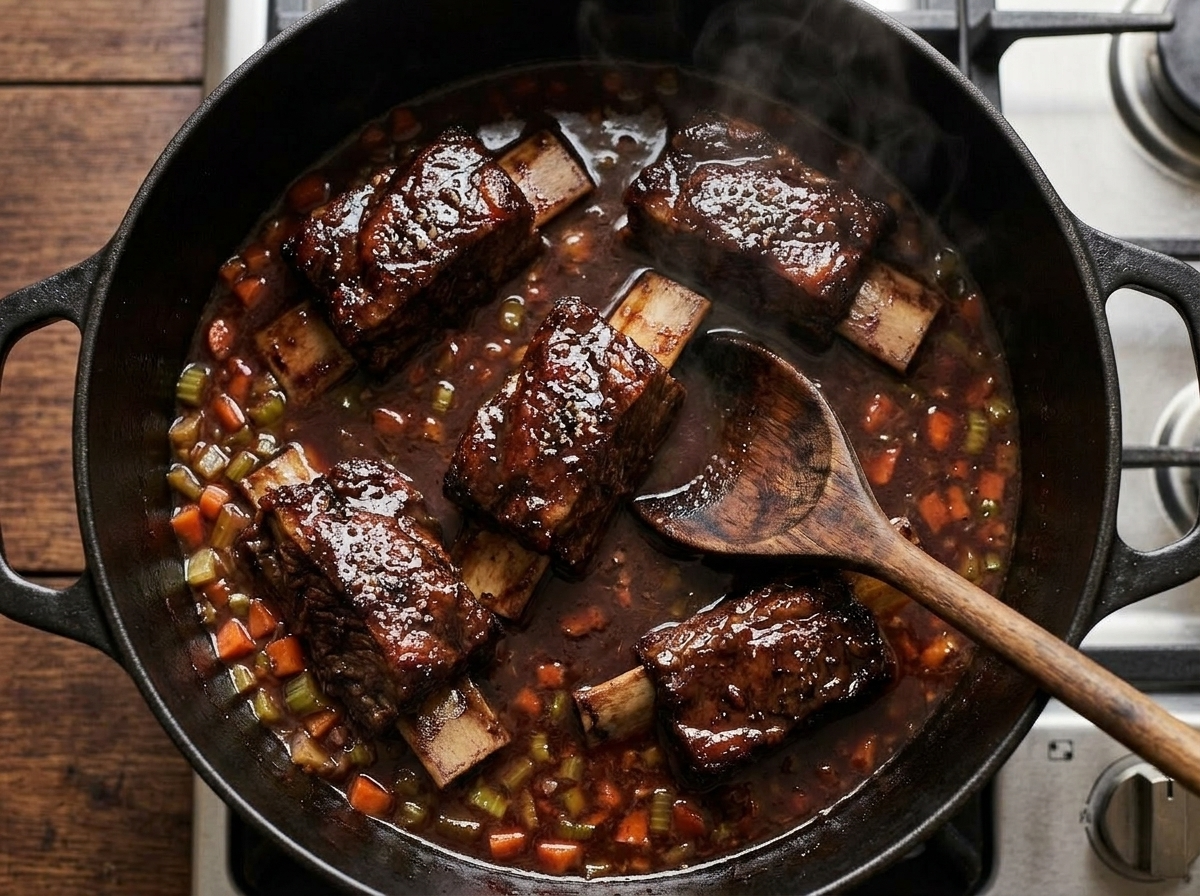
- Transfer the soffritto and wine mixture to a 5-quart Dutch oven. Add the hand-crushed tomatoes, beef stock, rosemary sprig, and bay leaves. Stir to combine.
- Nestle the seared short ribs into the liquid. The liquid should come about halfway up the ribs. Add a splash more stock if needed.
- Bring to a gentle simmer on the stovetop, then cover and transfer to the oven. Braise for 3 hours, turning the ribs once at the halfway mark, until the meat is pull-tender and the bone slides out easily.
- Carefully lift the short ribs out of the braising liquid and set aside on a warm plate. Remove and discard the rosemary sprig and bay leaves.
- Pour the braising liquid through a fine-mesh sieve, pressing on the solids. Discard the solids.
- Return the strained liquid to the Dutch oven and bring to a brisk simmer over medium heat. Reduce by about half, 10 to 15 minutes, until it coats the back of a spoon. Skim any fat from the surface.
- Stir in the extra virgin olive oil, then season with salt. Return the short ribs to the sauce and let them rest in it for 10 minutes off the heat before plating.
Notes
Tips for Success
- Pat the short ribs completely dry before searing – surface moisture causes steaming, not browning.
- Sear in batches with enough space between ribs so the pan stays hot and the crust forms properly.
- Deglaze with wine and scrape up every browned bit – that fond carries most of the flavor into your sauce.
- Braise at 160 C / 320 F, not higher – a gentle oven keeps the meat from seizing and tightening.
- After braising, skim the fat from the surface before reducing the liquid into a sauce.
Variations
- Swap short ribs for bone-in lamb shoulder and use Primitivo or Nero d’Avola for a Southern Italian variation.
- Use pork cheeks instead of beef and pair with Barbera d’Asti for a Piedmontese-style braise.
- Add dried porcini mushrooms to the soffritto for an earthy Umbrian note that suits Sagrantino well.
Storage and Reheating
Store braised short ribs in their cooking liquid in a sealed container in the fridge for up to 4 days. The fat will solidify on top overnight – lift it off before reheating for a cleaner sauce.
Reheat covered in a low oven at 150 C / 300 F for 25 minutes, or gently in a wide pan over low heat with a splash of water or stock. Don’t boil or the meat will dry out.
For freezing, remove bones, portion ribs into the cooled sauce, and freeze for up to 3 months. Thaw overnight in the fridge before reheating.
Serving Suggestions
Serve the short ribs over soft polenta made with good butter and a little Parmigiano – the polenta absorbs the wine sauce and gives the dish its structure. Creamy mashed potato works too if polenta isn’t your preference.
A few bitter greens on the side – radicchio braised in olive oil, or simple sauteed cavolo nero – cut through the richness and extend the pairing logic of the wine.
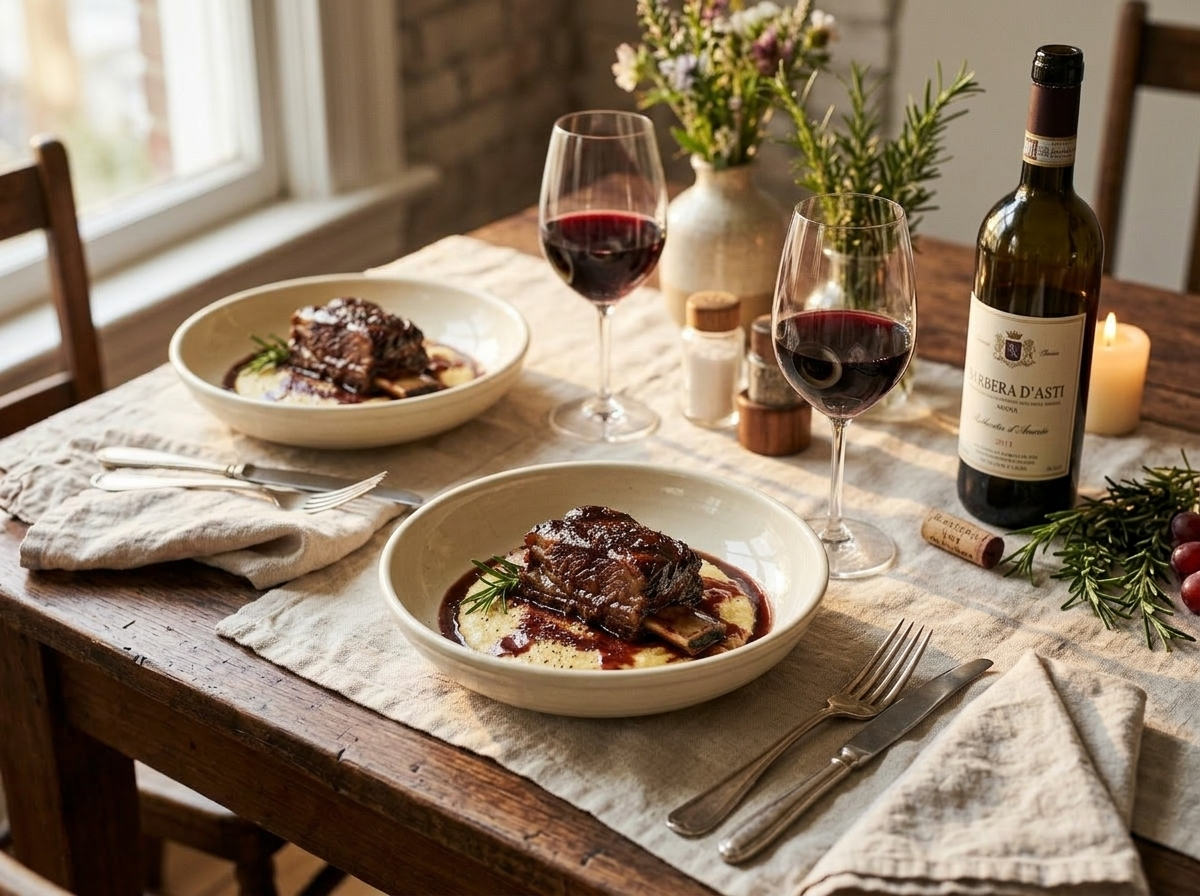
Open the same red you used in the braise, or one from the same region. Barbera d’Asti, Chianti Classico Riserva, or Rosso di Montalcino all complement the beef and the reduced wine sauce without competing.
FAQ
Why does my braised short rib sauce taste bitter after adding the red wine?
Bitterness usually means the wine reduced too fast over high heat before the other liquids went in. Add stock and tomatoes quickly after the wine and let everything braise together slowly. A tiny pinch of sugar at the end can also round off sharp tannins in the finished sauce.
Can I use Chianti instead of Barolo for braising the short ribs?
Chianti Classico works well and is often a better value choice for braising. The acidity is slightly higher than Barolo, which keeps the sauce from tasting flat. Just avoid young, cheap Chianti with harsh tannins – those don’t soften well during the long cook.
Can I braise the short ribs the day before serving?
Braised short ribs are actually better made a day ahead – the fat is easy to skim when cold and the flavors settle into the sauce overnight. Reheat covered at 150 C / 300 F for about 25 minutes before serving.
What Italian red wine pairs best with braised short ribs and polenta?
Barbera d’Asti or Barbera d’Alba are the most practical choices – high acidity, moderate tannin, and wide availability. For a more structured pairing, Chianti Classico Riserva or Rosso di Montalcino both match the weight of the beef and the richness of the polenta.
Is this braised short rib recipe gluten free?
Yes, as written the recipe contains no flour or gluten-containing ingredients. Just confirm your beef stock and tomato paste labels are gluten-free, since some brands add thickeners.
What is the difference between braising short ribs in Barolo versus Amarone?
Barolo gives a drier, more tannic sauce with a clean savory finish. Amarone is made from partially dried grapes, so it adds noticeable sweetness and a richer body to the braising liquid – the resulting sauce is darker and more concentrated. Both work, but Amarone-braised ribs need a slightly longer reduction to balance the sweetness.