
Jump to Recipe
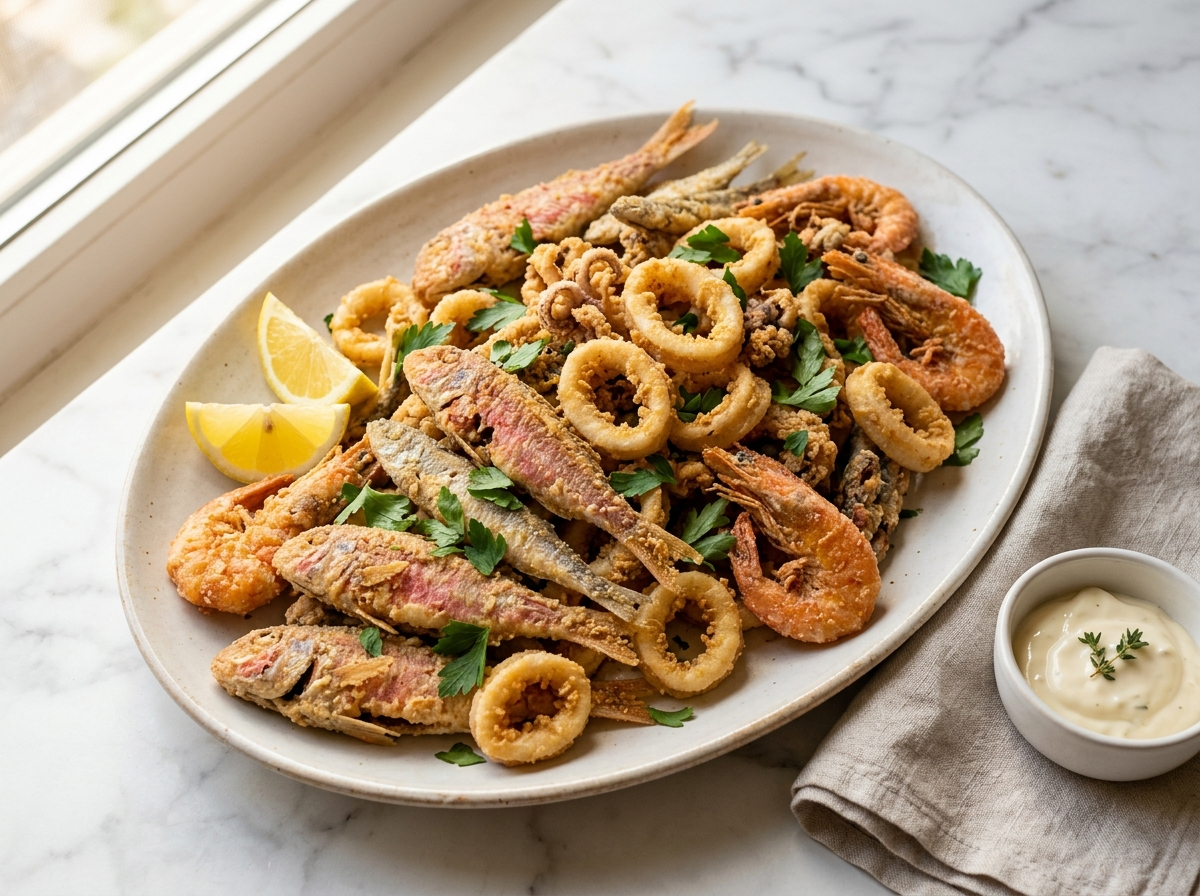
Frittura di paranza is the catch of the day, fried whole. The name comes from the paranza, the small trawler boats that dragged shallow coastal waters along Italy’s Adriatic and Tyrrhenian coasts. Whatever came up in the net – tiny red mullet, sand smelts, baby squid, small shrimp – got floured and fried on the dock or in a simple trattoria nearby.
The frying is straightforward. What matters most is the oil temperature and the size of the fish. Small fish cook fast, and the coating should be thin – semolina only, no batter, no egg. This gives you a dry, crunchy shell rather than a heavy crust.
I fry in batches using sunflower oil, never olive oil. High smoke point, neutral flavor, and the fish can reach the color they need before the oil breaks down. Lemon on the side, nothing else.
Why You’ll Love This Recipe
- Shatteringly crisp semolina crust without any batter
- Ready in under 30 minutes from prep to plate
- Authentic coastal Italian flavor with minimal ingredients
- Uses the whole small fish – no filleting required
Ingredient Notes
- Small whole fish (red mullet, smelts, anchovies, sand eels): Choose fish no longer than 10-12 cm – they cook through fast and eat whole, bones and all. Ask your fishmonger for mixed paranza catch if available; otherwise mix two or three varieties.
- Baby squid (calamari): Clean squid and cut into rings about 1 cm wide; leave tentacles whole. Frozen squid works well here – thaw fully and pat very dry before coating.
- Raw shell-on shrimp: Leave the shells on for flavor and texture. If you prefer peeled shrimp, reduce frying time by about 30 seconds per batch.
- Fine semolina (semola di grano duro): Semolina gives a drier, crunchier coating than plain flour alone. If you can’t find it, use a 50/50 mix of plain flour and fine cornmeal as a substitute.
- Sunflower oil: You need a high smoke-point neutral oil. Peanut oil is the closest alternative. Do not use olive oil for deep frying – the smoke point is too low.
- Lemon: Freshly cut wedges at the table are non-negotiable. Acid cuts through the fat and wakes up the flavor of the fish.
Frittura di Paranza: Italian Mixed Fried Fish the Traditional Way
Ingredients
Method
- Rinse all seafood under cold running water, then spread on a double layer of paper towels. Pat completely dry - press firmly. Any surface moisture will cause dangerous oil splatter and a soggy crust.
- Check squid rings are no more than 1 cm thick. If any whole fish are over 12 cm, score two shallow diagonal cuts on each side to help them cook through evenly.
- Pour semolina into a large shallow bowl and mix in 1 tsp of the sea salt. Set a wire rack over a sheet pan near the stove.
- Pour sunflower oil into the heavy-bottomed saucepan to a depth of at least 6 cm. Clip the thermometer to the side. Heat over medium-high heat until the oil reaches 183 C (360 F). This takes 8-10 minutes.
- Working with the squid first (it tolerates slightly lower oil temp), drop rings and tentacles into the semolina in batches of about 100 g. Toss to coat, then lift out and shake in your cupped hands to drop all loose semolina back into the bowl.
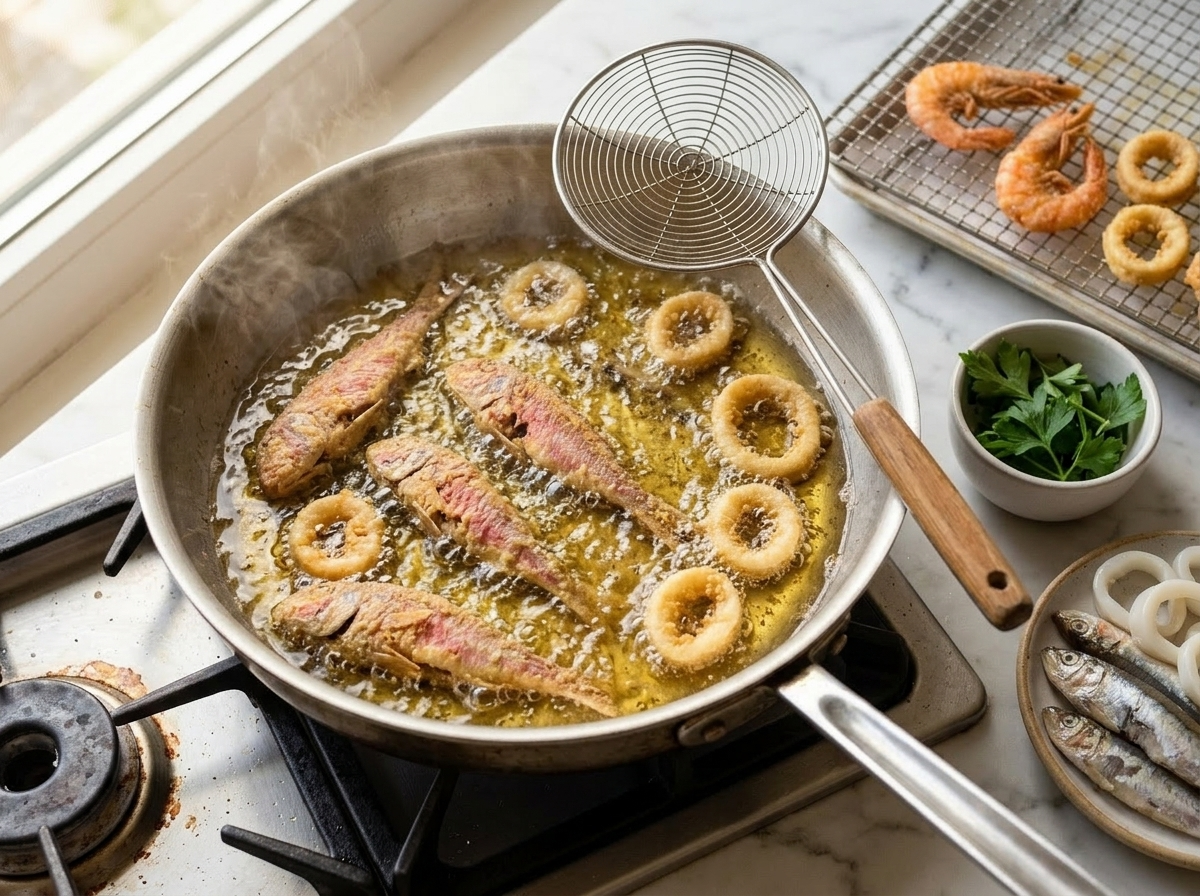
- Lower coated squid carefully into the oil using a spider strainer. Fry for 2 minutes until pale gold and just starting to color at the edges. Remove to the wire rack and do not stack.
- Bring oil back to 183 C. Dredge shrimp in semolina in batches of 150 g, shake off excess, and fry for 2-3 minutes until the shells are crisp and shells turn orange-pink. Transfer to the wire rack.
- Bring oil back to 183 C. Dredge whole fish in semolina, shake firmly to remove loose coating. Fry in a single layer - no more than 5-6 small fish at a time - for 3-4 minutes, turning once with the spider strainer, until golden brown and the tails are visibly crisp.
- Remove to the wire rack. Repeat with remaining fish, letting oil return to temperature between each batch.
- The moment each batch comes out of the oil, season immediately with a pinch of fine salt while still hot - salt won't stick once the crust cools.
- Arrange all the fried seafood on a large plate or directly on food-grade paper. Scatter parsley if using and serve at once with lemon wedges.
Notes
Tips for Success
- Pat every piece of seafood completely dry before dredging – surface moisture steams instead of fries and softens the crust.
- Heat oil to 180-185 C (355-365 F) and check with a thermometer before each batch, not just at the start.
- Fry in small batches – no more than a single layer – so oil temperature does not drop and fish steams instead of crisps.
- Shake off excess semolina vigorously before each piece enters the oil, or the loose coating burns and turns bitter.
- Drain on a wire rack set over a sheet pan, not on paper towels – steam trapped underneath turns the bottom crust soggy.
Variations
- Sicilian style: add thin zucchini rounds and whole sage leaves to the semolina mix and fry alongside the fish.
- Spicy paranza: dust with a pinch of dried calabrian chili powder mixed into the semolina before dredging.
- Freshwater version: replace sea fish with small freshwater fish like bleak, perch, or tench for an inland Italian fry.
Storage and Reheating
Frittura di paranza is one of those dishes you eat immediately. The crust starts losing crunch within 10-15 minutes of coming out of the oil.
If you have leftovers, spread them on a wire rack uncovered in the fridge for up to 24 hours. Reheat in a fan oven at 220 C (425 F) for 5-7 minutes directly on the oven rack – this is the only method that brings back any real crispness.
Do not reheat in a microwave and do not freeze fried seafood. The texture degrades completely.
Serving Suggestions
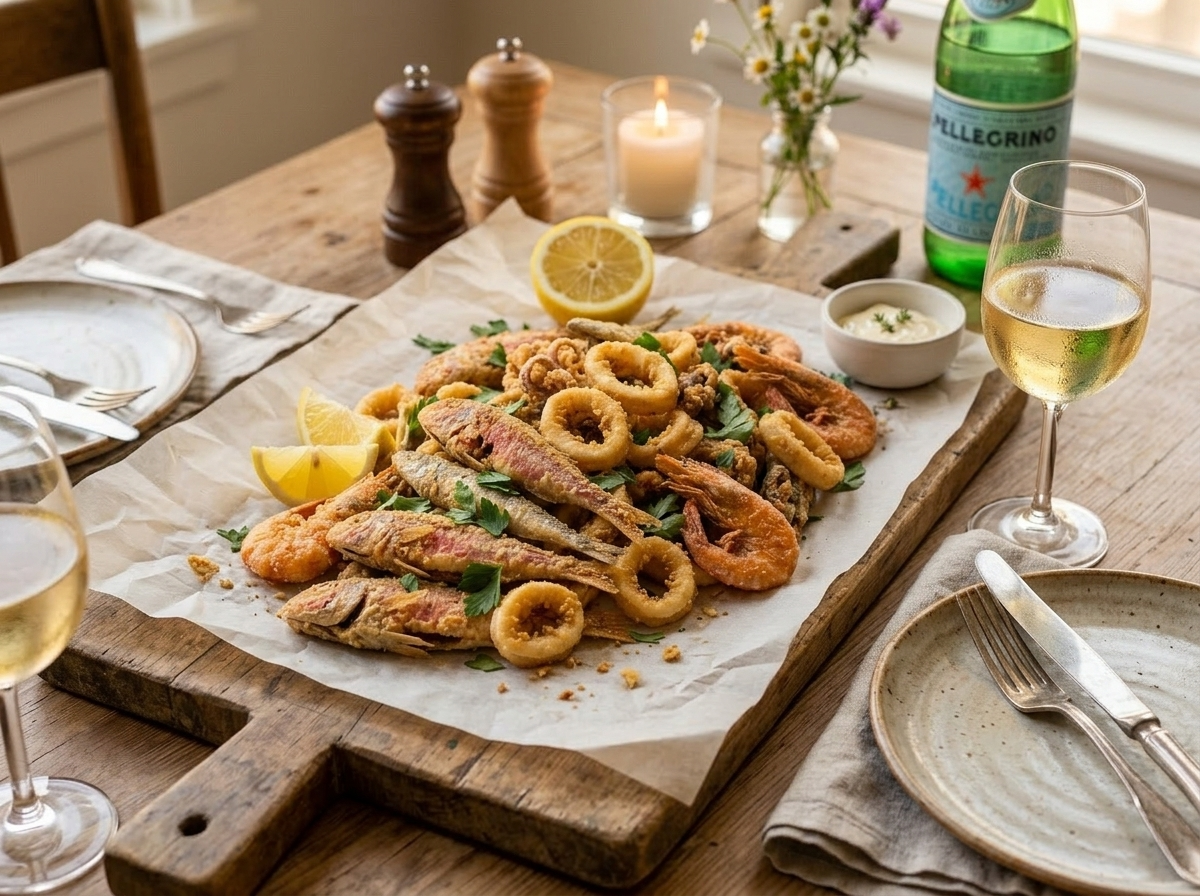
Serve directly from the draining rack onto a sheet of food-grade paper or a warm plate. Pile the fish generously – this is a dish meant to look abundant.
A simple undressed salad of bitter greens or a wedge of fennel alongside is all you need. The acidity of lemon does the work of a sauce.
In coastal trattorias this is often a second course after a light seafood pasta, but it works equally well as a shared starter for four alongside a wine pairing for Italian seafood like a cold Vermentino or Greco di Tufo.
FAQ
Why is my frittura di paranza soggy instead of crisp?
The most common cause is oil that wasn’t hot enough or a pan that was overcrowded. Both problems drop the temperature fast and the fish steams rather than fries. Check your oil hits 180 C before each batch and never fry more than a single loose layer at a time.
Can I use plain flour instead of semolina for the coating?
You can, but the crust will be softer and less textured. Semolina has a coarser grain that creates more surface area and fries drier. A 50/50 mix of plain flour and fine cornmeal is the best substitute if semolina isn’t available.
Can I prep the seafood ahead and coat it just before frying?
Yes – clean and dry the seafood up to 4 hours ahead and refrigerate uncovered on a rack. Dredge in semolina only at the moment you’re ready to fry. Coating too early makes the semolina absorb moisture and the crust turns gummy.
What small fish work best if I can’t find traditional paranza catch?
Sand smelts, whitebait, fresh anchovies, and small sardines are the most available substitutes. The key is keeping to fish no longer than 10-12 cm so they cook through at the same rate as the squid and shrimp.
Is frittura di paranza gluten-free?
Not in the traditional recipe – semolina is made from durum wheat and contains gluten. You can substitute a fine rice flour or chickpea flour for a gluten-free coating that still fries quite crisp.
What’s the difference between frittura di paranza and fritto misto di mare?
Frittura di paranza uses specifically the small whole fish and shellfish caught by inshore trawlers, fried plain with semolina only, much like the approach behind classic Italian calamari fritti. Fritto misto di mare is a broader category that often includes larger filleted fish, scallops, and sometimes vegetables, and may use a lighter batter in northern Italian versions.