Jump to Recipe
Pairing wine with pasta is less about rules and more about matching weight and acid. A light Pinot Grigio drowns next to a meaty Bolognese. A full Barolo overwhelms a delicate pesto linguine. The sauce is what you’re matching, not the pasta shape.
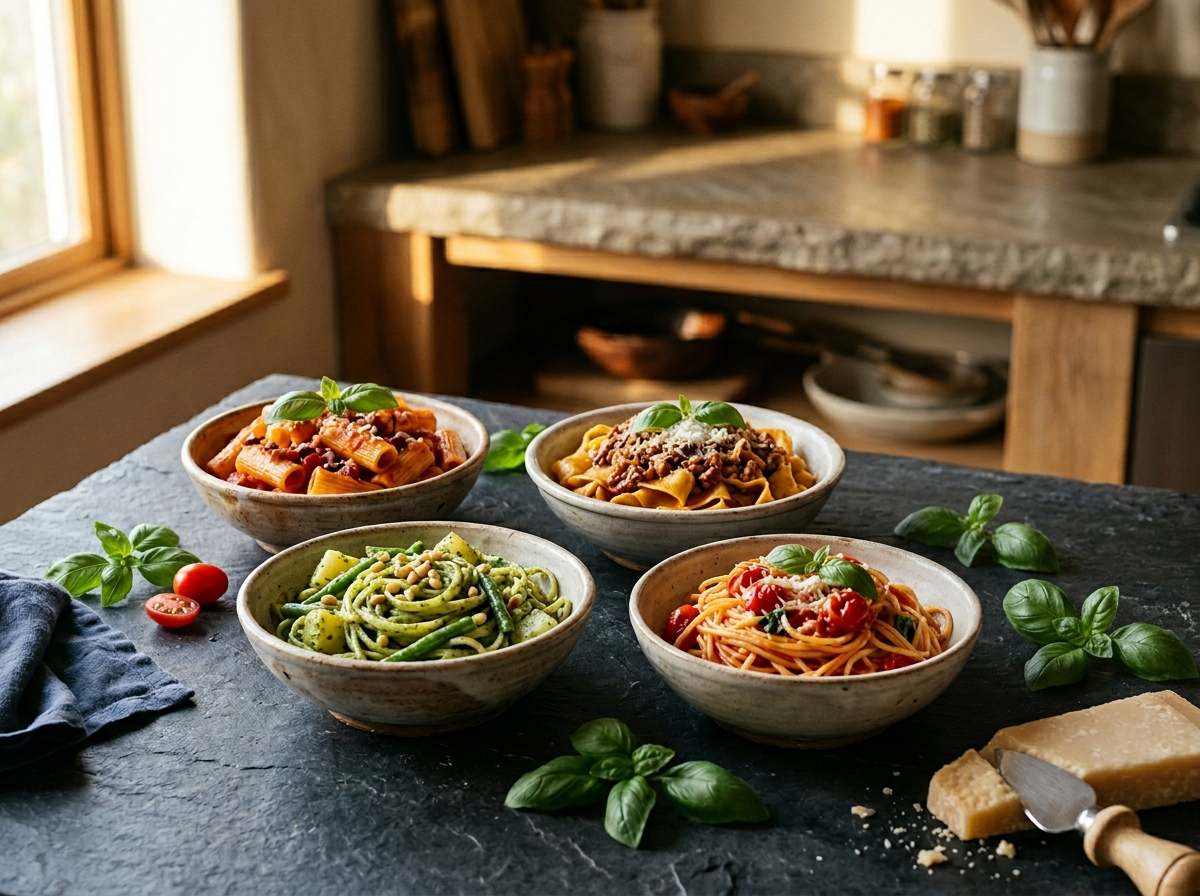
This guide gives you four weeknight-friendly pasta recipes, each paired with a named Italian wine. The pairings are chosen for how the wine behaves on the palate alongside the sauce, not just regional tradition.
I’ve kept every recipe to 30-40 minutes and a single pan or pot where possible. The wines are priced for a regular weeknight, not a special occasion.
All four pairings follow one principle: match acid to acid, and match weight to weight.
Why You’ll Love This Recipe
- Four sauce styles covered: tomato, cream, pesto, and meat ragù.
- Named wine pairings you can find at most grocery stores.
- Each pasta cooks in 30 to 40 minutes on a weeknight.
- Explains the why behind each pairing, not just the what.
Ingredient Notes
- San Marzano tomatoes (canned): Use whole canned San Marzano DOP for the pomodoro pasta. Regular crushed tomatoes work but are slightly less sweet and more acidic, which shifts the Chianti pairing slightly drier.
- Parmigiano-Reggiano: Buy a block and grate it yourself. Pre-grated cheese often has cellulose that prevents it from melting cleanly into cream sauces.
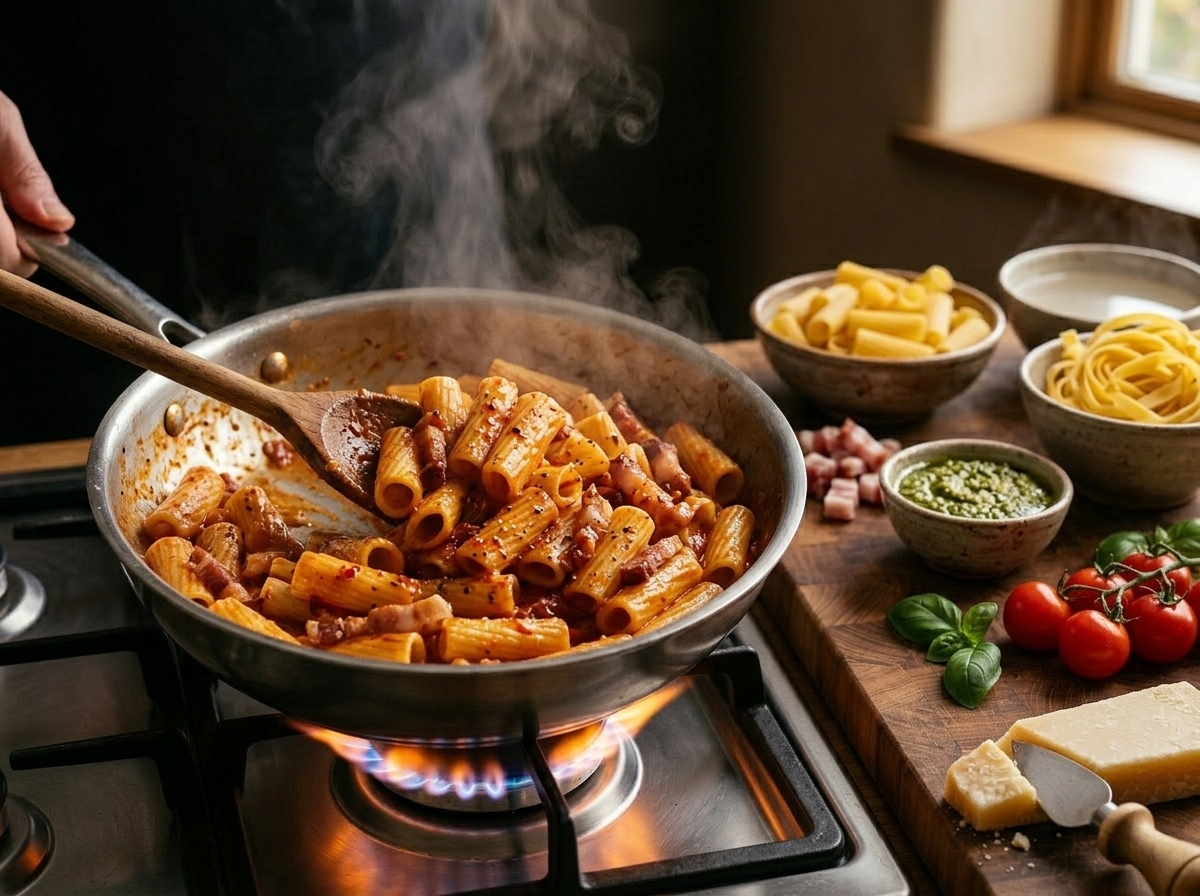
- Guanciale: Used in the amatriciana. Pancetta is a direct substitute but milder. Bacon works in a pinch but adds smokiness that shifts the Montepulciano pairing.
- Basil pesto (jarred or fresh): Homemade pesto gives a cleaner, greener flavor that pairs better with Vermentino. Jarred pesto often has more oil and salt, so taste before adding extra seasoning.
- Ground beef and pork mix (for Bolognese): A 50/50 mix gives better fat content and flavor than pure beef. Ground veal is traditional but optional. Pure beef Bolognese is leaner and still works with Sangiovese.
- Dry white wine (for cooking): Use the same wine you plan to drink when it calls for white wine in the sauce. Avoid cooking wine with added salt.
Italian Wine Pairing for Pasta Night: A Practical Guide with Recipes
Ingredients
Method
- Bring a large pot of water to a boil. Add enough salt so it tastes lightly briny.
- Heat olive oil in a skillet over medium. Add garlic and cook for 90 seconds until pale gold and fragrant. Do not let it brown.
- Add crushed San Marzano tomatoes and a pinch of salt. Simmer uncovered for 15 minutes until the sauce thickens slightly and the color deepens.
- Cook spaghetti until 2 minutes before the package al dente time. Reserve 1 cup pasta water, then drain.
- Add pasta to the sauce with a splash of pasta water. Toss over medium heat for 90 seconds until the spaghetti is coated and glossy.
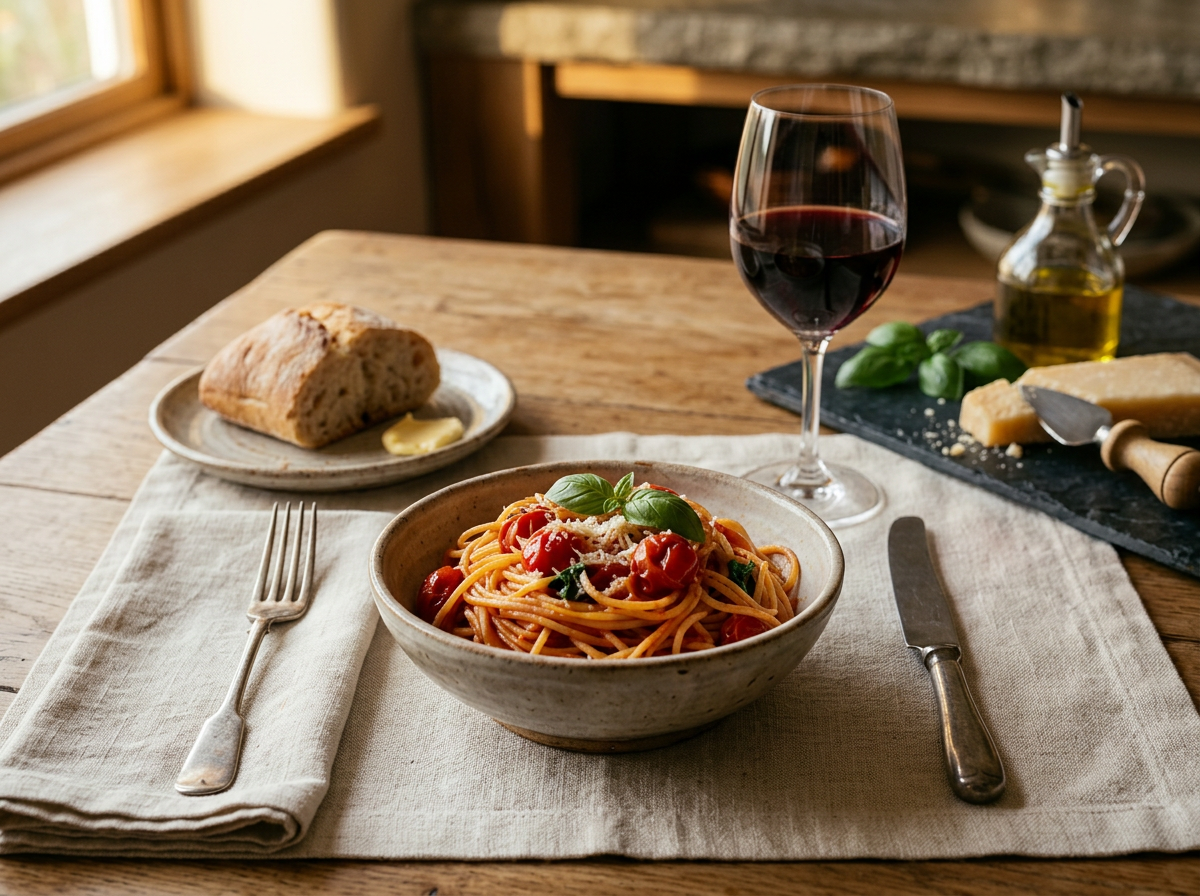
- Remove from heat, add torn basil, and serve immediately with grated Parmigiano. Pour Chianti Classico and serve.
- Bring a large pot of salted water to a boil. Cook linguine until al dente, reserving 1 cup pasta water before draining.
- Toast pine nuts in a dry skillet over medium heat for 2 to 3 minutes, stirring, until golden. Set aside.
- In a large bowl, combine pesto and olive oil. Thin with 3 to 4 tbsp of warm pasta water and stir to a loose sauce.
- Add hot drained linguine to the bowl. Toss to coat, adding more pasta water as needed to keep the sauce fluid.
- Plate, scatter pine nuts and Parmigiano over the top. Serve with chilled Vermentino di Sardegna.
- Heat a large skillet over medium. Add guanciale cubes and cook for 5 to 6 minutes until fat renders and the edges are crisp. Remove with a slotted spoon.
- Add chili flakes to the rendered fat. Deglaze with white wine and let it reduce for 1 minute.
- Add crushed tomatoes. Simmer over medium-low for 12 to 15 minutes until the sauce tightens.
- Cook rigatoni in heavily salted water until 2 minutes shy of al dente. Reserve 1 cup pasta water, then drain.
- Return guanciale to the sauce. Add drained rigatoni and a splash of pasta water. Toss over medium heat for 2 minutes until the pasta is coated.
- Remove from heat and stir in half the Pecorino. Plate and finish with remaining Pecorino. Serve with Montepulciano d'Abruzzo.
- Heat olive oil in a large skillet over medium-high. Add onion, celery, and carrot. Cook for 7 to 8 minutes, stirring, until soft and pale.
- Add the ground meat. Break it up with a wooden spoon and cook in two batches if the pan is crowded. Brown for 6 to 8 minutes until no pink remains.
- Pour in red wine and stir to lift any browned bits from the base. Cook for 2 minutes until the alcohol smell fades.
- Add crushed tomatoes and a pinch of salt. Reduce heat to low. Simmer uncovered for 20 minutes until the sauce is thick and glossy.
- Stir in whole milk and cook for 1 more minute. This rounds off the acidity.
- Cook pappardelle in salted water until al dente. Reserve pasta water, drain, and finish in the sauce for 90 seconds.
- Plate and top with grated Parmigiano. Serve with Barbera d'Asti or a mid-weight Sangiovese.
Notes
Tips for Success
- Salt pasta water to taste like lightly salted broth before adding pasta.
- Reserve 1 cup of pasta cooking water before draining to loosen any sauce.
- Finish pasta in the sauce for 60 to 90 seconds so it absorbs flavor.
- Serve wine slightly cooler than room temperature for reds: 60-62 F works better than 68 F.
- Open full-bodied reds like Barolo 20 minutes before serving to soften the tannins.
Variations
- Swap spaghetti for rigatoni in the amatriciana to catch more sauce in the ridges.
- Use gluten-free pasta (rice-based) in any of the four recipes without changing the wine pairing.
- Make the Bolognese with lentils for a plant-based version that still pairs with Sangiovese.
Storage and Reheating
Cooked pasta stores best separated from its sauce. Keep sauce in an airtight container in the fridge for up to 4 days. Plain cooked pasta keeps for 2 days; toss with a little olive oil to stop it clumping.
To reheat, warm the sauce in a skillet over medium-low heat with a splash of water or stock, then add the pasta and toss for 1 to 2 minutes. Avoid the microwave for cream-based sauces as they tend to separate.
Bolognese and amatriciana freeze well in sauce form for up to 3 months. Pesto and cream sauces do not freeze cleanly.
Serving Suggestions
A simple green salad dressed with lemon and olive oil works alongside any of these four pastas without competing with the wine, or try a spring asparagus pasta with lemon as a lighter starter course before the wine-paired main. Bitter greens like radicchio or arugula are especially good next to the Sangiovese and Montepulciano pairings.
For the cream pasta, a few slices of prosciutto crudo on the side add salt and texture without another pan to wash. Crusty bread is fine but skip it if you want the wine pairing to land clearly, bread blunts acidity.
Finish with a small piece of aged Pecorino or Parmigiano alongside the leftover wine in the glass. It extends the meal without adding cooking time.
FAQ
Why does Chianti taste better with tomato-based pasta than with cream pasta?
Chianti is made from Sangiovese, which is high in acid. Tomato sauce is also acidic, and the two acids balance each other instead of competing. Cream sauces are fat-forward and low in acid, which makes high-acid Chianti taste sharp and thin next to them.
Can I use Pinot Grigio instead of Vermentino with the pesto linguine?
Yes, Pinot Grigio from Alto Adige or Friuli is a solid substitute. It’s lighter than Vermentino and slightly less herbal, but it has enough citrus acidity to cut through the oil in the pesto without overwhelming the basil.
How do I know when the Bolognese is ready to serve alongside a Sangiovese?
The ragù is ready when the fat has separated slightly at the surface and the sauce looks glossy rather than watery. At that point the richness is developed enough to hold up to Sangiovese’s tannins without the wine tasting astringent.
Can I make the amatriciana sauce ahead and still have it pair well with Montepulciano d’Abruzzo?
The amatriciana sauce actually improves after a day in the fridge as the guanciale fat integrates more fully. The Montepulciano pairing holds because the wine’s dark fruit and moderate tannin match the salt and fat in the sauce regardless of when you made it.
Is any of the four pasta and wine combinations naturally gluten-free?
All four pasta recipes can be made gluten-free by swapping in rice-based or corn-based pasta. The wines themselves are naturally gluten-free. The pairings hold because the sauce flavor profile doesn’t change with the pasta type.
What is the difference between pairing wine with pasta alla Norma versus Bolognese?
Pasta alla Norma is vegetable-forward with eggplant and tomato, so it suits a lighter-bodied red like Nero d’Avola or a Sicilian Frappato, much as baked eggplant with tomato stays in lighter red territory. Bolognese is meat-heavy and fat-rich, needing more tannic structure, which is why Sangiovese or Barbera d’Asti fits better.