
Jump to Recipe
Bisciola Valtellinese is a dense, fruit-studded Christmas bread from the Valtellina valley in northern Lombardy, the same region behind dishes like braised trippa alla Valtellinese, built on a mix of wheat and buckwheat flour and packed with dried figs, raisins, and walnuts.
It isn’t sweet the way panettone is. The dough carries just enough sugar to balance the fruit, and buckwheat gives it a slightly nutty, rustic edge you won’t find in a softer holiday loaf.
I learned this one the hard way, with a batch that came out gummy in the center from too much fruit and not enough kneading time. Get the ratio and timing right and the crumb turns dense but tender, closer to a fruit-and-nut cake than an ordinary loaf.
This version uses grappa to plump the raisins, a small nod to the region, though dark rum works fine if that’s what you have open.
Why You’ll Love This Recipe
- Uses buckwheat flour for a rustic, nutty crumb
- Loaded with figs, raisins, and walnuts in every slice
- Keeps well for close to a week, good for holiday baking ahead
- No stand mixer required, just a warm kitchen and patience
Ingredient Notes
- wheat flour: Use a bread flour or all-purpose with 11-12% protein so the dough has enough structure to hold the fruit.
- buckwheat flour: Gives the loaf its dark fleck and mild nutty flavor. Don’t swap it for more wheat flour or the bread loses its character.
- dried figs: Chop into raisin-sized pieces so they distribute evenly instead of sinking to the bottom of the loaf.
- raisins: Soaking in grappa keeps them plump through baking. Golden raisins work too if that’s what you have.
- walnuts: Toast lightly before chopping, about 5 minutes at 160 C / 320 F, for a deeper, less bitter flavor.
- grappa: Substitute dark rum or warm water with a splash of orange juice if you’d rather skip the alcohol.
- honey: Used for the glaze and a touch of sweetness in the dough. Chestnut honey is traditional in Valtellina.
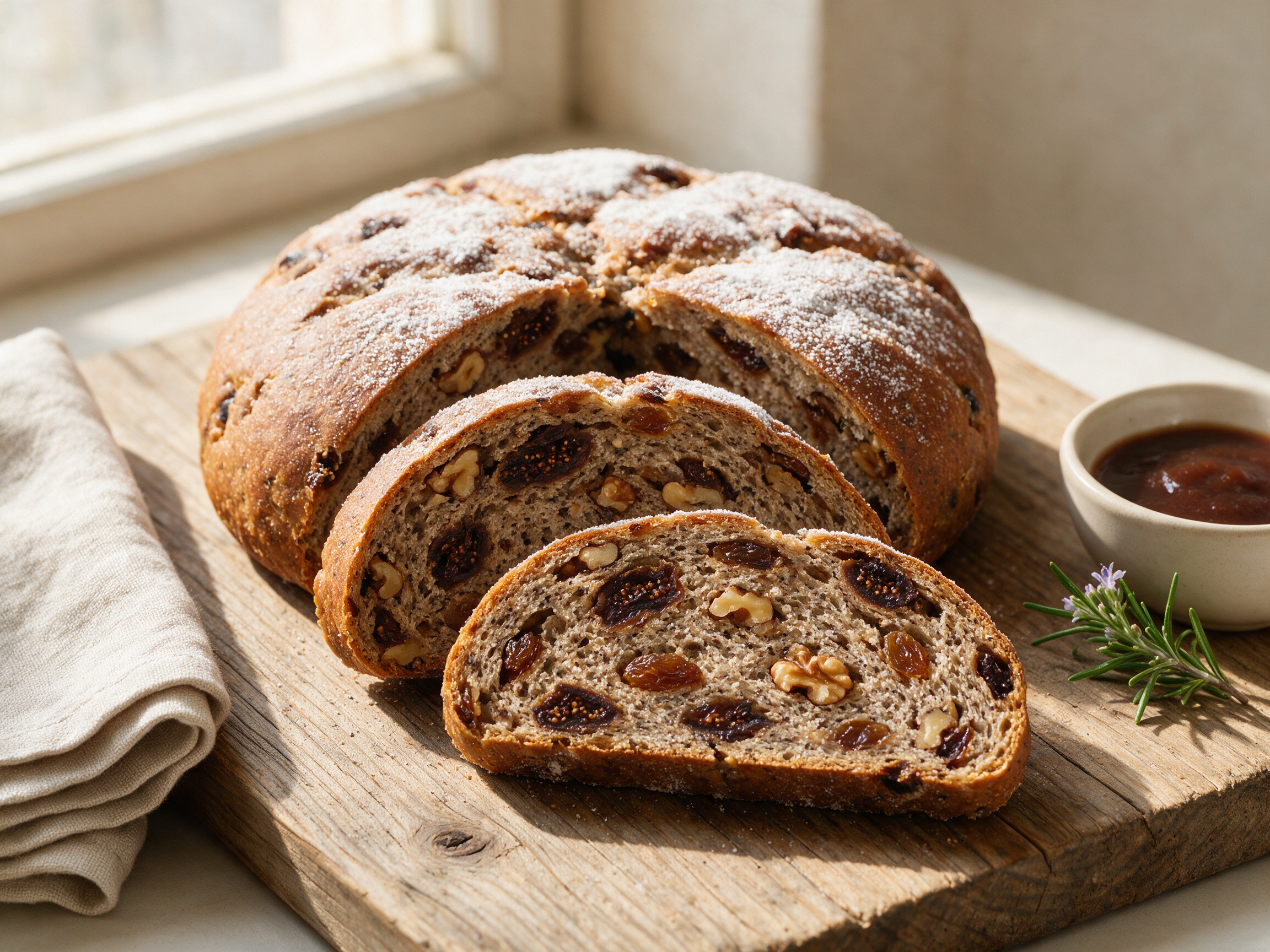
Bisciola Valtellinese: Alpine Fig and Walnut Bread
Ingredients
Method
- Soak the raisins in the grappa (or dark rum) for 15 minutes, then drain and set aside.
- Warm the milk to about 40 C / 105 F and stir in 1 tsp of the sugar. Sprinkle in the yeast and let it sit for 10 minutes until foamy.
- In a large bowl or stand mixer, whisk the wheat flour, buckwheat flour, and salt together. Make a well and add the yeast mixture, eggs, and remaining sugar.
- Mix until a shaggy dough forms, then knead by hand or with a dough hook for 8 to 10 minutes, adding the softened butter a spoonful at a time, until the dough is smooth and passes the windowpane test.
- Add the soaked raisins, chopped figs, walnuts, pine nuts, and orange zest. Knead gently by hand until the fruit and nuts are evenly distributed through the dough.
- Shape into a ball, place in an oiled bowl, cover, and let rise in a warm spot (24 to 26 C / 75 to 79 F) for 60 to 75 minutes, until roughly doubled.
- Turn the dough out, deflate gently, and shape into a round loaf. Transfer to a parchment-lined sheet pan 30 cm / 12-inch. Cover loosely and let rise 45 minutes, until puffy.
- Heat the oven to 180 C / 350 F. Brush the top of the loaf with warm honey thinned with a teaspoon of water, then score a shallow X across the top with a sharp blade.
- Bake for 40 to 45 minutes, rotating the pan once, until the crust is deep golden and an instant-read thermometer inserted in the center reads 92 C / 198 F.
- Cool on the pan for 10 minutes, then transfer to a wire rack and cool at least 30 minutes before slicing.
Notes
- Weigh the dried fruit; volume measures vary too much for a consistent crumb.
- Toast walnuts and pine nuts before folding in for deeper flavor.
- Check internal temp at 92 C / 198 F rather than relying on crust color alone.
- Loaf actually slices cleaner on day two, once the crumb settles.
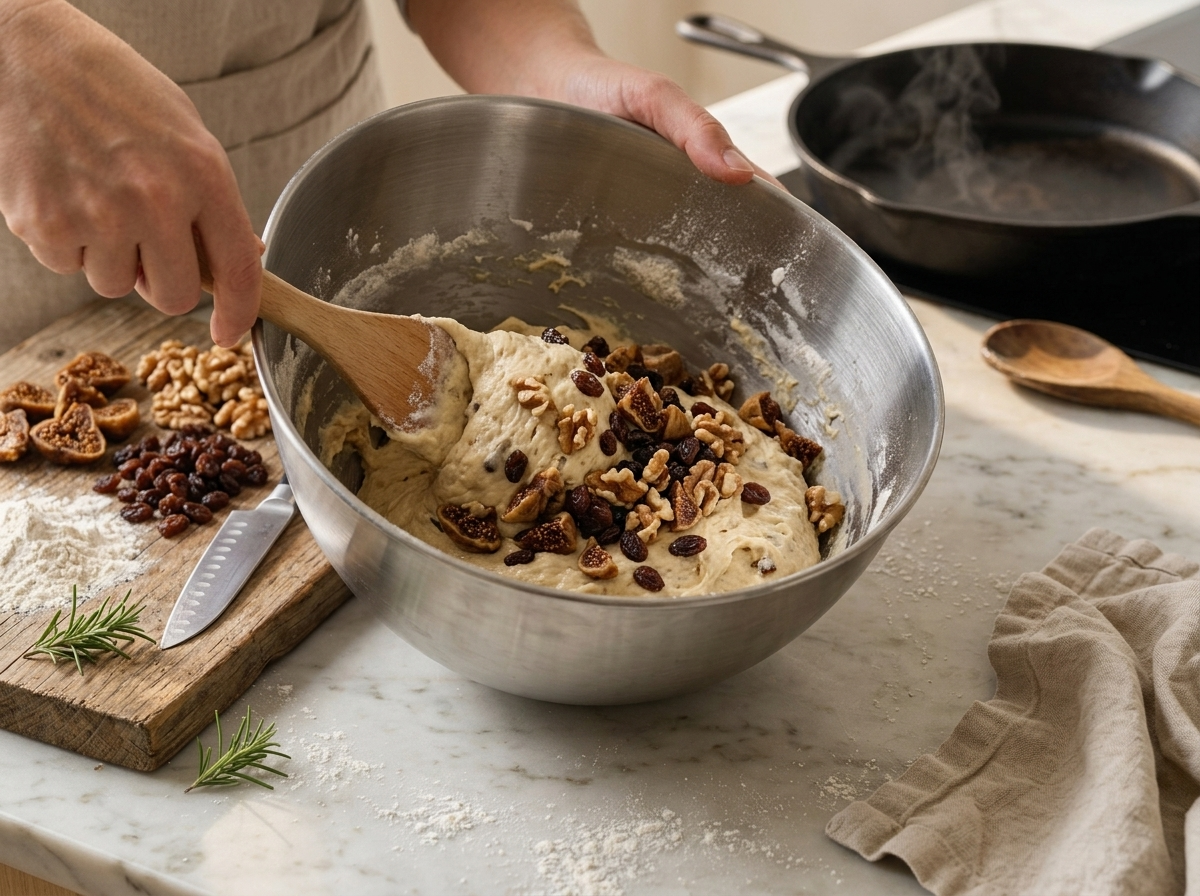
Tips for Success
- Chop the figs small, about the size of a raisin, so the slices hold together when cut.
- Knead the dough until it passes the windowpane test before adding the fruit, about 10 minutes by hand.
- Let the dough rise somewhere around 24 to 26 C / 75 to 79 F; a cold kitchen slows fermentation to a crawl.
- Check doneness with an instant-read thermometer, not just crust color, since the fruit can brown early.
- Wrap the cooled loaf tightly to keep it moist; bisciola actually tastes better on day two.
Variations
- Swap half the raisins for chopped dried apples, a common substitution in some Valtellina villages.
- Add 1 tsp cinnamon and a pinch of clove to the dough for a spiced version closer to older family recipes.
- Replace pine nuts with toasted hazelnuts if that’s what’s in the pantry; the flavor holds up just as well.
Storage and Reheating
Bisciola Valtellinese keeps 4 to 5 days at room temperature wrapped tightly in foil or kept under a cake dome. The dense, fruit-heavy crumb holds moisture better than a plain wheat loaf, so it won’t dry out as fast as you’d expect.
Freeze the whole loaf or individual slices, wrapped tightly in plastic then foil, for up to 2 months. Thaw at room temperature still wrapped.
To refresh a slice, warm it briefly in a 150 C / 300 F oven for 5 minutes, or 10 seconds in the microwave, though it’s just as good eaten straight at room temperature.
Serving Suggestions
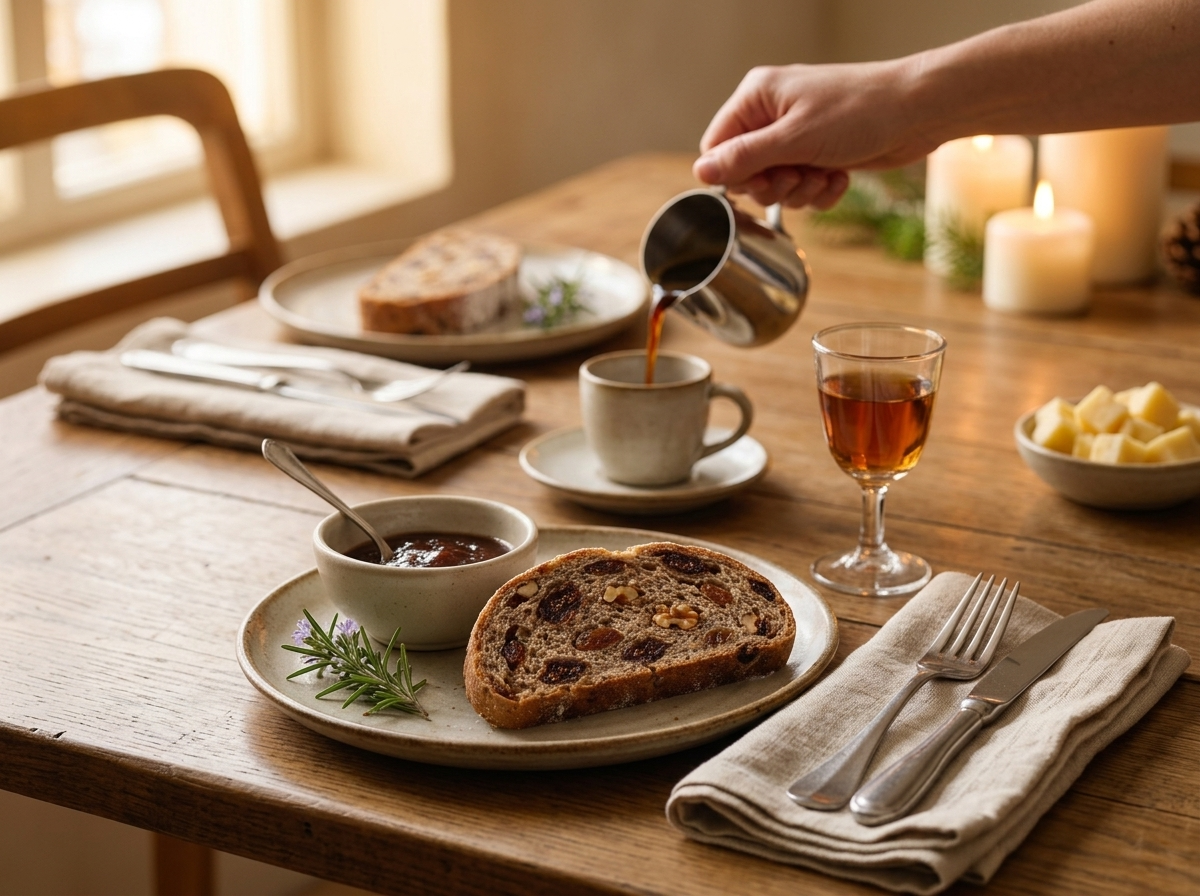
Slice Bisciola Valtellinese thick, about 2 cm / 3/4 inch, and serve with espresso or a mid-morning coffee, the way it’s eaten in Valtellina through December.
A glass of Sfursat or vin santo turns a slice into dessert. Soft cheese works too, a smear of mascarpone or fresh ricotta on top plays well against the dried fruit.
For breakfast, a thin layer of butter is enough, since the bread already carries plenty of fruit and nuts on its own.
FAQ
Why is my Bisciola Valtellinese dense and heavy instead of soft?
Bisciola is meant to be dense, but heavy usually means under-kneading or too much fruit weighing down the dough. Knead until the dough passes the windowpane test before folding in the figs and walnuts, and weigh the fruit rather than eyeballing it. Skipping the first rise or baking with cold dough also flattens the crumb.
Can I use dark rum instead of grappa to soak the raisins?
Yes, dark rum works fine in place of grappa, and it’s actually what many Valtellina home bakers reach for when grappa isn’t on hand. Warm water with a splash of orange juice is a good alcohol-free swap. Whatever you use, soak the raisins at least 15 minutes so they plump before mixing into the dough.
How long does Bisciola Valtellinese keep, and can I freeze it?
Bisciola keeps 4 to 5 days at room temperature when wrapped tightly in foil or kept under a cake dome. It freezes well whole or sliced for up to 2 months; thaw at room temperature still wrapped. The dense, fruit-heavy crumb holds moisture better than a plain wheat loaf.
What goes well with Bisciola Valtellinese besides coffee?
Bisciola pairs naturally with a glass of Sfursat or vin santo, both local to Valtellina, and with soft cheeses like mascarpone or fresh ricotta spread on a slice. For breakfast, a thin layer of butter is enough since the bread already carries plenty of fruit and nuts.
Is Bisciola Valtellinese dairy-free, or can I make it that way?
As written, no, the dough uses butter and the eggs add richness too, so it’s not dairy-free. You can swap the butter for a neutral oil or dairy-free block butter and the loaf will still rise fine, just slightly less rich. The rest of the recipe is naturally dairy-free-friendly since fruit and nuts carry most of the flavor.
What’s the difference between Bisciola and Panettone?
Bisciola is denser and heavier than panettone, made with buckwheat flour and a shorter, single-day rise instead of a days-long natural starter process. Panettone is airy and light in crumb; Bisciola is closer to a fruit-and-nut bread, much like Rome’s golden Christmas fruit bread, meant to be sliced thick and eaten with coffee or dessert wine.