Jump to Recipe
Pancotto della Valtellina is a bread soup from the mountains of northern Lombardy, built from stale rustic bread, savoy cabbage, potatoes, and Valtellina Casera cheese simmered together until the bread dissolves into a dense, spoonable mass.
It’s a genuine use-it-up dish. Valtellina cooks made this to stretch old bread and whatever vegetables were on hand through long Alpine winters, and the result tastes far richer than the short ingredient list suggests.
I use butter and garlic for the base instead of a full soffritto, since the dish only needs a light foundation before the broth and bread take over. The cheese goes in near the end, then the pot goes under the broiler for a few minutes so the top turns golden and pulls into strings when you serve it.
Expect a texture closer to thick porridge than brothy soup. If yours still looks soupy after 45 minutes, keep it simmering uncovered until it thickens like risotto.
Why You’ll Love This Recipe
- Turns stale bread into a substantial one-pot dinner
- Uses pantry vegetables you likely already have on hand
- Melted cheese top adds texture without extra steps
- Reheats well for a second night with almost no work
Ingredient Notes
- stale rustic bread: Bread that’s 2-3 days old works best since it holds some structure before breaking down. A dense country loaf or rye works better than soft sandwich bread.
- Valtellina Casera cheese: A semi-hard Alpine cheese with a mild, nutty flavor. Fontina or young taleggio make a close substitute if you can’t find it.
- savoy cabbage: Adds a mild sweetness once it wilts down. Curly kale or a milder green cabbage both work in a pinch.
- potatoes: Starchy potatoes like Yukon gold break down slightly and help thicken the broth alongside the bread.
- butter: Butter matches the Alpine tradition here better than olive oil and gives the base a rounder flavor.
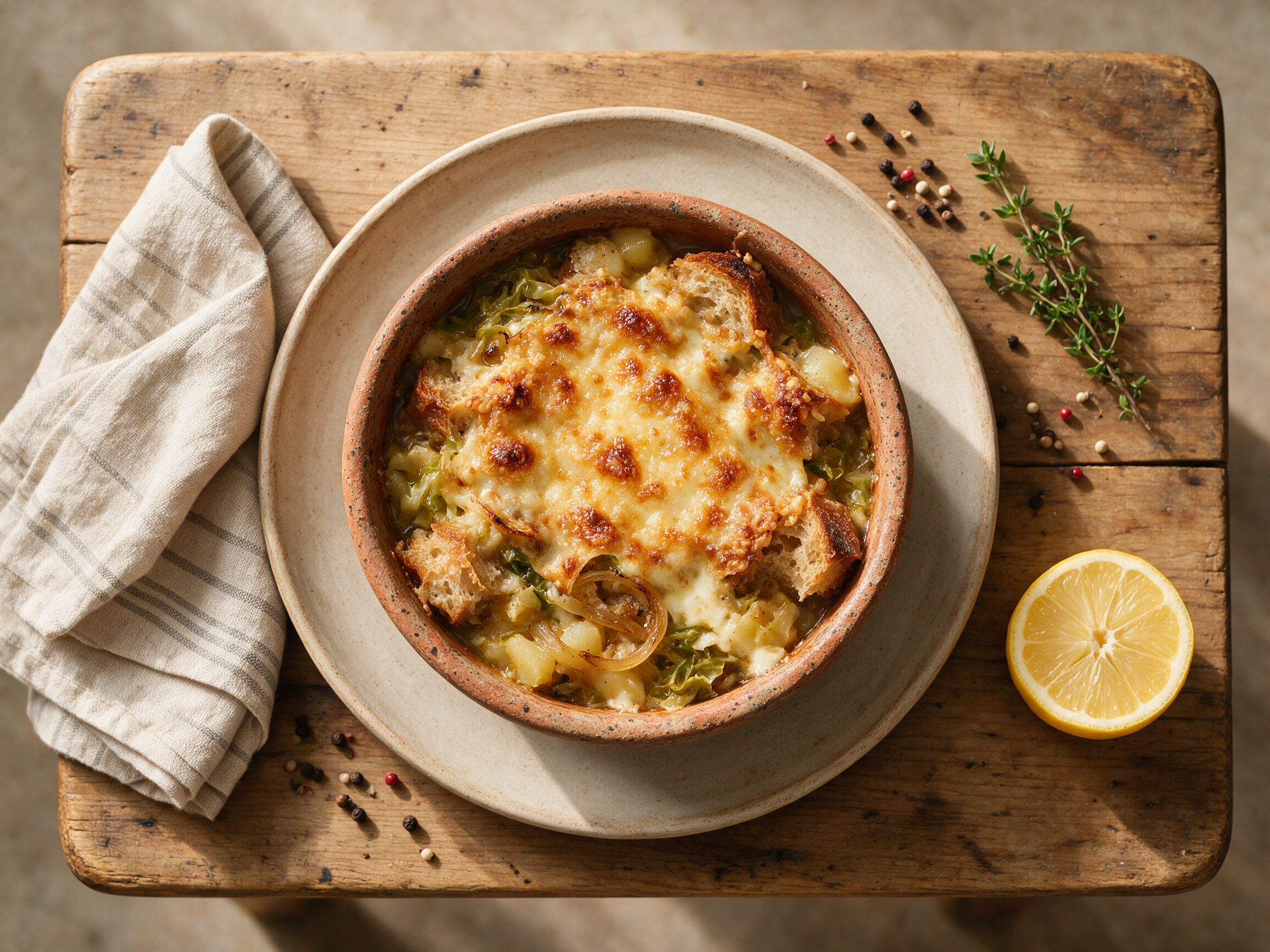
Pancotto della Valtellina: Rustic Alpine Bread Soup
Ingredients
Method
- Melt the butter in a 26 cm / 10-inch oven-safe Dutch oven over medium heat. Add the smashed garlic and cook for 1 to 2 minutes until fragrant, then remove it.
- Add the shredded cabbage to the pot and cook for 5 minutes, stirring, until it wilts and turns bright green.
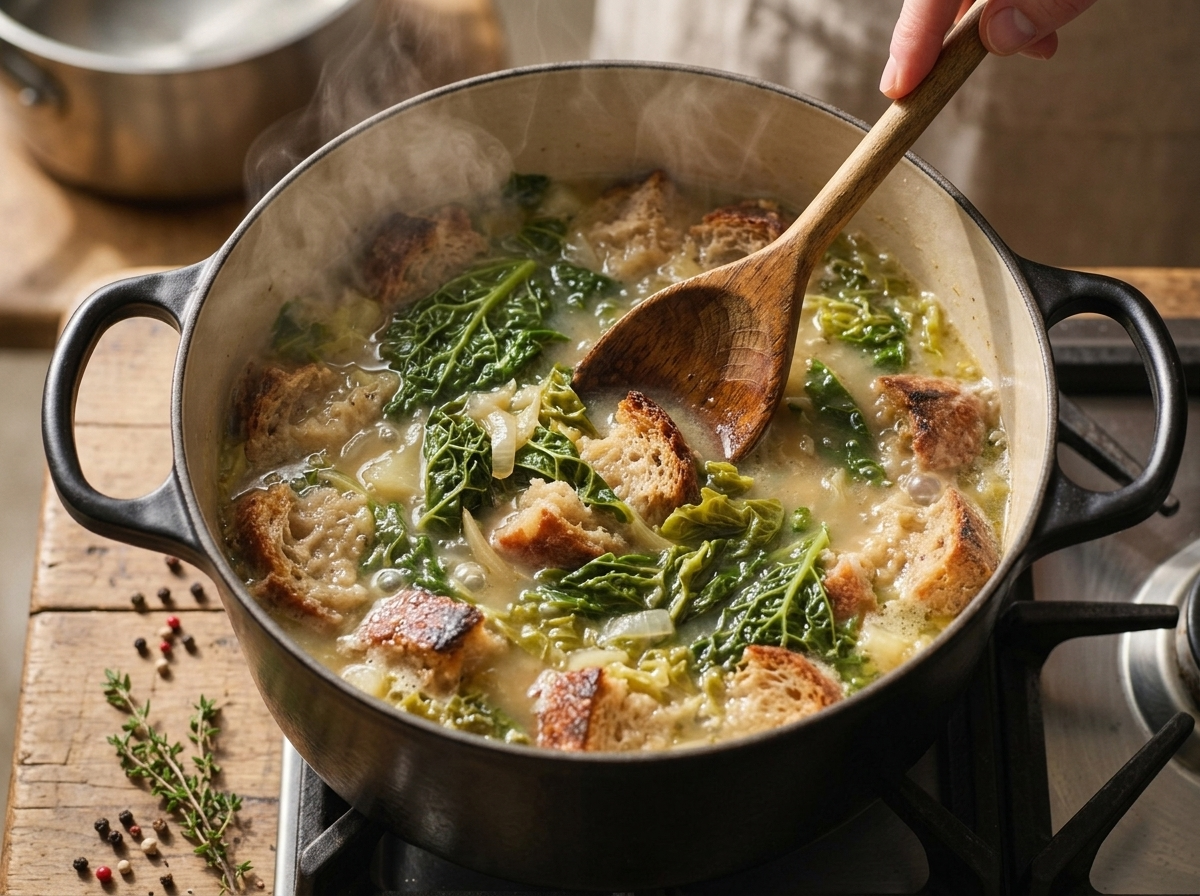
- Add the diced potatoes, hot broth, and bay leaf. Bring to a simmer and cook for 20 minutes, uncovered, until the potatoes are fork-tender.
- Add the torn bread and stir well to submerge it in the broth. Simmer uncovered for 25 to 30 minutes, stirring every few minutes, until the bread has broken down and the soup looks thick like risotto rather than brothy.
- Remove the bay leaf. Season with salt and black pepper, tasting first since the cheese will add saltiness.
- Stir in half the grated cheese until melted through the soup.
- Turn the oven broiler to high. Scatter the remaining cheese over the top of the soup and place the pot under the broiler for 3 to 4 minutes, until the cheese is golden and bubbling.
- Let the pot rest for 5 minutes before ladling into bowls. Serve hot.
Notes
- Tear bread by hand for uneven pieces that break down more naturally.
- Keep the pot uncovered once bread goes in to help it thicken.
- Use an oven-safe pot so it can go straight under the broiler.
- Grate cheese fresh rather than using pre-shredded for smoother melting.
Tips for Success
- Tear the bread by hand rather than cubing it for a more even, rustic breakdown in the pot.
- Simmer uncovered once the bread goes in so excess liquid can evaporate and the soup can thicken.
- Stir every few minutes once the bread is added to keep it from catching on the bottom of the pot.
- Taste before adding salt since aged cheese and broth both bring their own saltiness to the dish.
- Let the soup rest 5 minutes after broiling so the top sets and doesn’t slide off the spoon.
Variations
- Swap half the potatoes for peeled, diced celeriac for a slightly nuttier, earthier finish.
- Add a handful of diced speck or pancetta with the garlic for a meatier version of the soup.
- Use kale instead of savoy cabbage and add a pinch of nutmeg for a different vegetable note.
Storage and Reheating
Pancotto della Valtellina keeps in an airtight container in the fridge for 3-4 days. The texture actually holds up well since the bread has already broken down fully.
Reheat gently in a saucepan over medium-low heat, adding a splash of broth or water to loosen it since it thickens further as it sits. Stir often and heat for 5-7 minutes until it’s hot through and the cheese has re-melted.
Freezing isn’t ideal here. The potato and bread texture turns grainy once thawed, so it’s better made fresh or kept refrigerated for a few days.
Serving Suggestions
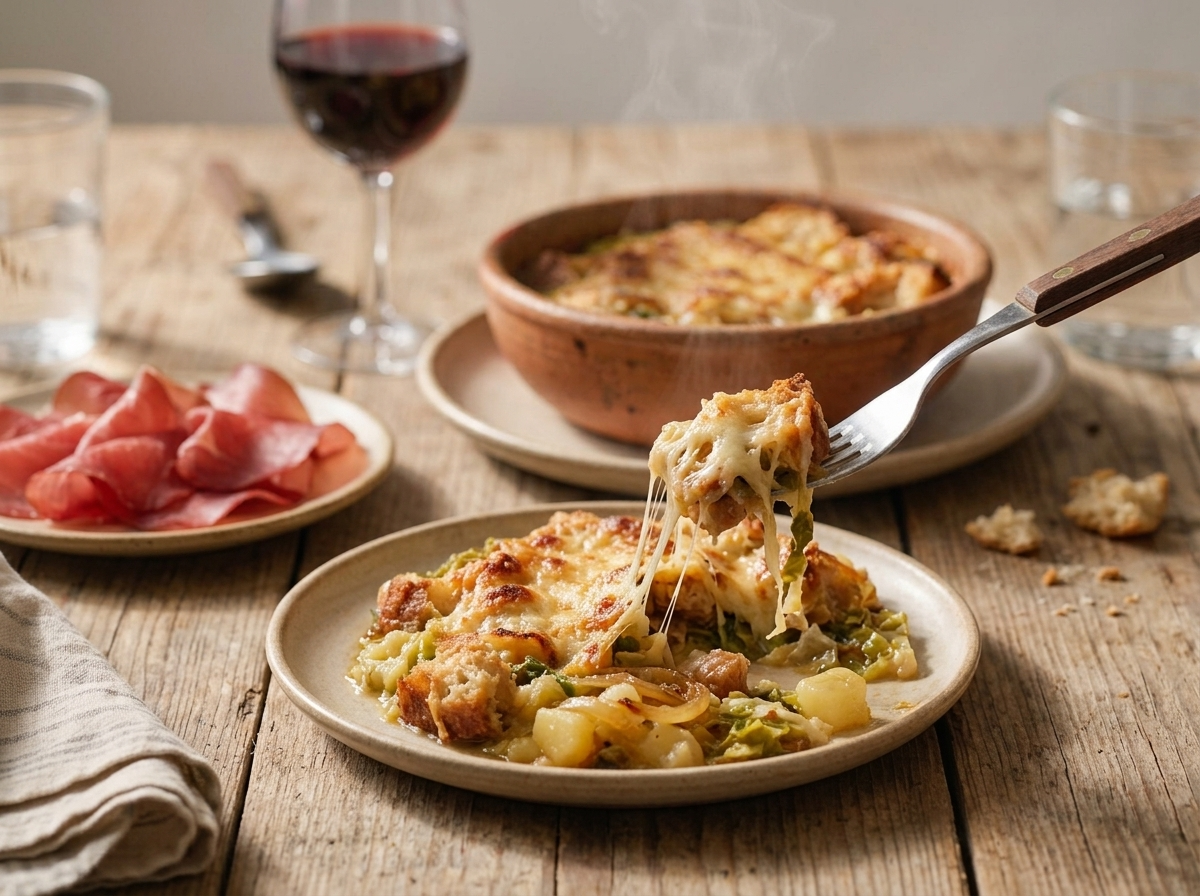
Serve pancotto in shallow bowls with a drizzle of good olive oil or a small extra knob of butter melted on top. A few grinds of black pepper wake up the cheese without adding heat.
Pair it with sliced bresaola or speck, or a side of braised trippa alla Valtellinese, and a simple green salad dressed with lemon to cut the richness of the melted cheese. A glass of Nebbiolo from the Valtellina hills suits the dish’s origin.
This works as a full meal on its own, much like salsiccia e fagioli, so keep sides light. Crusty bread on the side is optional since the dish already contains plenty.
FAQ
Why is my pancotto della Valtellina too soupy instead of thick?
It usually just needs more time uncovered. Bread and potato both need 30-40 minutes of active simmering to release their starch and thicken the broth, so if it still looks loose, keep it on low heat, stirring occasionally, until it holds its shape on a spoon like risotto.
Can I use fontina instead of Valtellina Casera cheese?
Yes, fontina is the closest easy substitute and melts the same way. Young taleggio also works if you want a slightly stronger flavor. Avoid pre-shredded cheese since it melts less smoothly and can leave the soup grainy.
Can I make pancotto della Valtellina ahead and reheat it the next day?
Yes, it reheats well since the bread has already broken down. Store it in the fridge for 3-4 days and reheat over medium-low heat with a splash of broth, stirring often for 5-7 minutes until hot and the cheese re-melts.
What goes well with pancotto della Valtellina for a full Alpine-style dinner?
Cured meats like bresaola or speck pair naturally, along with a simple lemon-dressed green salad to balance the melted cheese. A glass of Nebbiolo from the Valtellina hills fits the region and cuts through the richness.
Is pancotto della Valtellina gluten free?
No, it’s built on stale wheat bread, so it isn’t gluten free as written. You could try a sturdy gluten-free country loaf, though the texture will be softer and may break down faster during the long simmer.
What’s the difference between pancotto della Valtellina and pappa al pomodoro?
Both are Italian bread soups, but pappa al pomodoro is a Tuscan tomato-based dish eaten warm or at room temperature. Pancotto della Valtellina is an Alpine dish built on broth, cabbage, potato, and melted mountain cheese, and it’s served hot as a dense winter meal.