
Jump to Recipe
Spaghetti alle cozze is a coastal Italian pasta, much like the Roman-style seafood dinner of cuttlefish and peas, where mussels steam open in white wine and garlic, and their briny liquid becomes the sauce for spaghetti tossed straight in the pan. No cream, no tomato in this version, just the shellfish liquor and starchy pasta water doing the work.
The dish comes together in about 40 minutes, most of it spent scrubbing mussels rather than cooking. Buy them the day you plan to cook, they should be tightly closed or close when you tap the shell.
One thing that trips people up: mussels that stay shut after 6 minutes of steaming. Discard those, don’t pry them open, they were likely dead before you started cooking and aren’t safe to eat.
I keep this in bianco, no red sauce, so the mussel flavor stays forward. Bronze-die spaghetti grips the thin sauce better than a smooth commercial brand.
Why You’ll Love This Recipe
- Ready in 40 minutes with mostly hands-off steaming time
- No cream or tomato, just mussel liquor doing the sauce work
- One skillet handles the whole sauce from start to finish
- Bronze-die spaghetti and pasta water build body without extra fat
Ingredient Notes
- Mussels: Buy them live, shells tightly closed or closing when tapped. Scrub and debeard right before cooking, not hours ahead, so they stay fresh.
- Spaghetti: Bronze-die pasta has a rougher surface that holds the thin mussel sauce better than a smooth commercial brand.
- Dry white wine: Pinot grigio or vermentino work well. A dry vermouth is a fine substitute if you don’t have wine open.
- Garlic: Slice thin instead of mincing so it cooks evenly in the hot oil without burning and turning bitter.
- Chili flakes: Optional, but a small pinch adds background warmth without making the dish spicy.
- Flat-leaf parsley: Add off the heat at the end so it stays bright and fresh instead of wilting into the sauce.
Spaghetti alle Cozze: Garlic, Wine, and Fresh Mussels
Ingredients
Method
- Scrub mussels under cold running water and pull off any dark beards. Discard any with cracked shells or ones that stay open when tapped.
- Bring a 6 quart / 5.7 L pot of generously salted water to a boil for the spaghetti.
- Warm olive oil in a 30 cm / 12-inch skillet with a lid over medium heat. Add sliced garlic and chili flakes, cook 1 minute until fragrant but not browned.
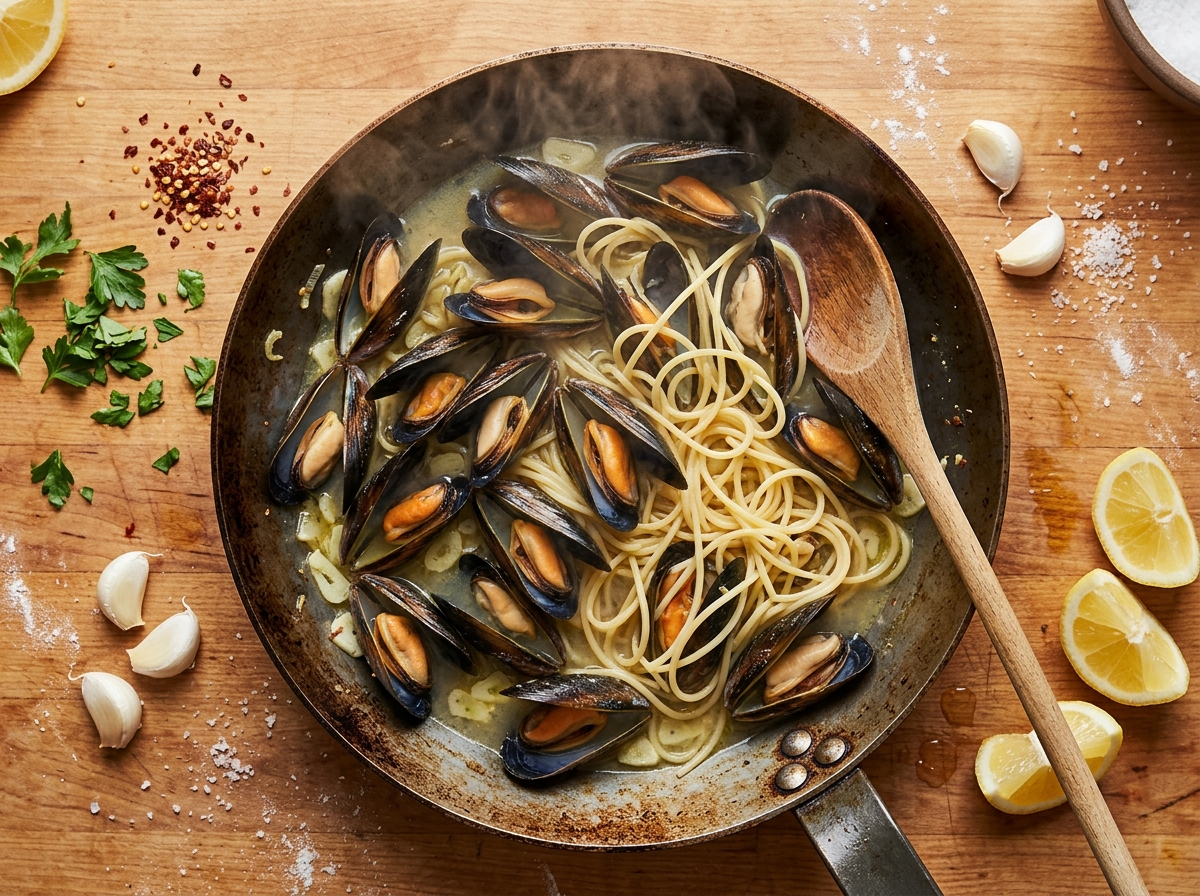
- Pour in the white wine and bring to a simmer, then add the mussels. Cover and steam 5 to 6 minutes, shaking the pan once, until the shells open.
- Lift the mussels into a bowl with tongs, leaving the liquid in the skillet. Discard any mussel that hasn't opened after the full 6 minutes. Once cool enough to handle, shell about two-thirds, leaving the rest in the shell.
- Drop the spaghetti into the boiling water and cook 2 minutes short of the package's al dente time. Scoop out 1 cup / 240 ml pasta water, then drain.
- Add the drained spaghetti to the mussel liquid in the skillet with a splash of reserved pasta water. Toss over medium heat for 2 minutes, adding more pasta water as needed, until the pasta is coated and al dente.
- Return the shelled and unshelled mussels to the skillet with the chopped parsley. Toss for 1 minute to warm through.
- Season with salt and black pepper. Plate straight from the skillet and top with more parsley.
Notes
- Buy mussels the same day you cook them for the best flavor.
- Discard any mussel that stays shut after the full steaming time.
- Undercook the pasta slightly, it finishes in the mussel liquid.
- Keep some mussels in the shell for a better-looking plate.
Tips for Success
- Scrub and debeard mussels right before cooking so they don’t sit around losing freshness.
- Discard any mussel that hasn’t opened after 6 minutes of steaming, don’t force it open.
- Undercook the spaghetti by 2 minutes in salted water, it finishes cooking in the mussel liquid.
- Reserve at least 1 cup of pasta water before draining, you’ll need it to loosen the sauce.
- Slice the garlic instead of mincing it so it doesn’t scorch during the quick saute, the same trick that keeps garlicky cavatelli con broccoli from turning bitter.
Variations
- Spaghetti alle cozze in rosso: stir 200 g crushed San Marzano tomatoes into the wine for a red version.
- Add halved cherry tomatoes and a splash of cream for a lighter pink sauce with rounder acidity.
- Swap half the mussels for clams to make a mixed shellfish pasta with more textural variety.
Storage and Reheating
Spaghetti alle cozze is best eaten fresh, within 20 minutes of tossing. Reheating turns the mussels rubbery and dulls the briny sauce, so I don’t recommend it once the pasta is fully assembled.
If you want to get ahead, clean and debeard the mussels up to 8 hours in advance and keep them covered with a damp towel in the fridge. Slice the garlic and measure the wine ahead too, then cook the sauce and pasta fresh right before serving.
Leftover mussels in their liquid (without the pasta) will keep 1 day in the fridge and can be warmed gently in a 26 cm / 10-inch skillet over low heat, but the texture won’t match a fresh batch.
Serving Suggestions
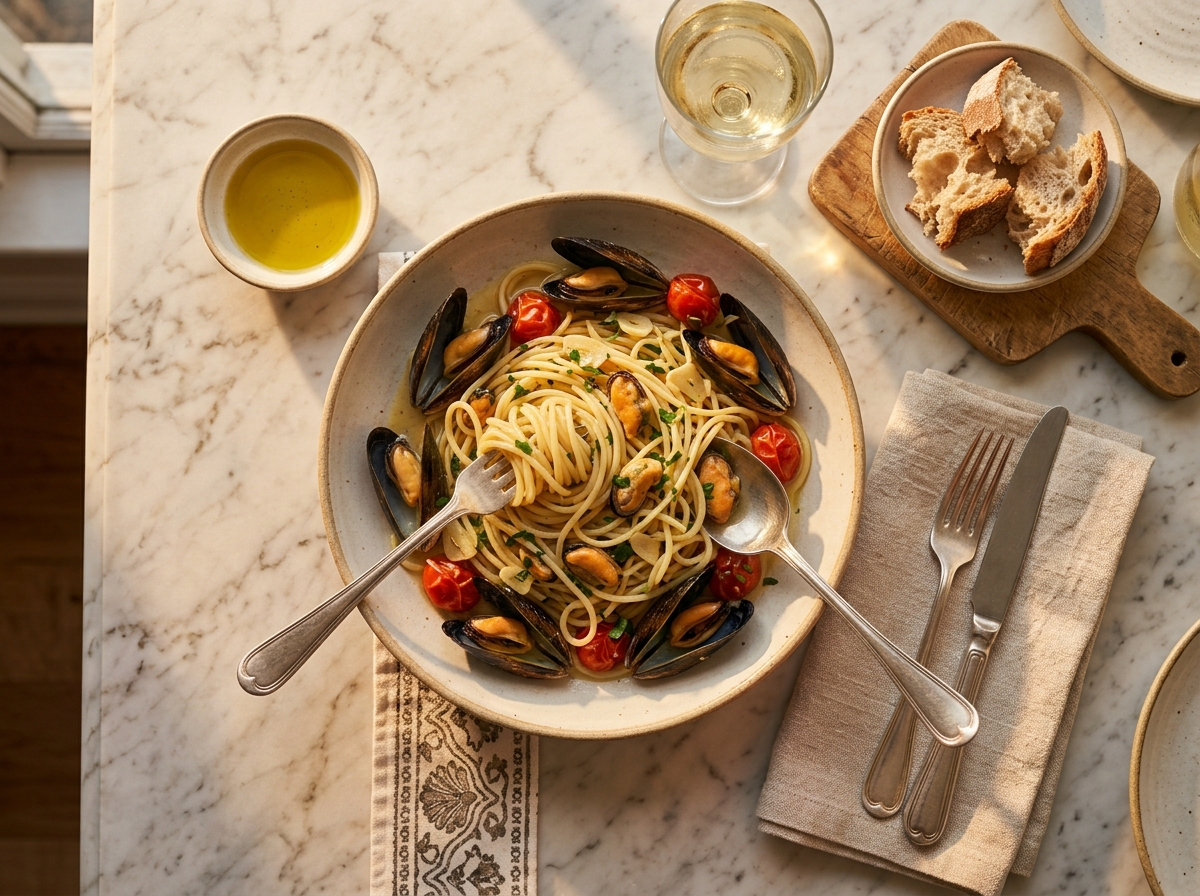
Spaghetti alle cozze wants little else on the plate. A pile of crusty bread on the side is there to mop up the leftover mussel liquor once the pasta’s gone.
A simple arugula salad with lemon and olive oil cuts through the richness without competing for attention. Keep dressings light, the dish already carries plenty of flavor from the wine and shellfish.
Pour the same dry white wine you cooked with, chilled, alongside the pasta, the kind that also pairs well with whole sea bream in salt crust. It’s an easy way to tie the glass to the plate without overthinking a pairing.
FAQ
Why did some of my mussels not open when I cooked spaghetti alle cozze?
Mussels that stay closed after 5 to 6 minutes of steaming were likely dead before cooking and aren’t safe to eat. Discard them rather than prying the shells open. If more than a few stay shut, check that your pot had a tight lid and enough steam to cook evenly.
Can I use frozen mussel meat instead of fresh mussels in their shells?
You can, but the dish loses the steaming step that builds the wine and garlic sauce in the first place. Thaw the meat, then simmer it briefly in the wine and garlic mixture just to warm through and pick up flavor before tossing with the pasta.
Can I make spaghetti alle cozze ahead of time?
Not once it’s assembled, the mussels turn rubbery on reheat. Clean and debeard the mussels up to 8 hours ahead and keep them chilled under a damp towel, then cook the sauce and pasta fresh right before you plan to eat.
What wine pairs well with spaghetti alle cozze?
A dry white like pinot grigio or vermentino works best, the same bottle you cook with. Serve it chilled alongside the pasta so the glass echoes the wine already in the sauce, rather than fighting it with something sweeter or heavier.
Is spaghetti alle cozze gluten-free?
Not as written, since regular spaghetti contains wheat. Swap in a gluten-free spaghetti made from rice or corn, cook it 1 to 2 minutes short of the package time, and finish it in the mussel liquid the same way as the wheat version.
What’s the difference between spaghetti alle cozze in bianco and in rosso?
In bianco uses only white wine, garlic, and olive oil, similar to the base in a Neapolitan-style seafood stew, letting the mussel liquor carry the sauce. In rosso adds crushed tomatoes to the wine, giving a thicker, slightly sweeter sauce. Both use the same mussels and steaming method, just a different base.
If you enjoyed this, try
- our Classic Italian Zabaione Dessert with Marsala Wine
- Crispy Fritto Misto di Mare, Italian Fried Seafood recipe
- the Alici Marinate: Lemon-Cured Fresh Italian Anchovies