Jump to Recipe
An Italian Christmas dinner can stretch across five or six courses, and the wrong wine at the wrong moment flattens the whole table. The goal here is simple: match each dish with a bottle that either echoes or cuts through what’s on the plate.
I’ve built this around a classic Italian Christmas structure, antipasto through dessert, using wines that are widely available outside Italy and priced reasonably for a holiday meal.
You don’t need to open six different bottles. Strategic choices, one sparkling, one white, one red, one sweet, cover the whole meal without anyone needing a spreadsheet.
Why You’ll Love This Recipe
- One guide covers every course from starter to dessert
- Pairings chosen for flavor, not just geography
- Budget-conscious alternatives listed for each wine
- Works as a five-course or simplified three-course meal
Ingredient Notes
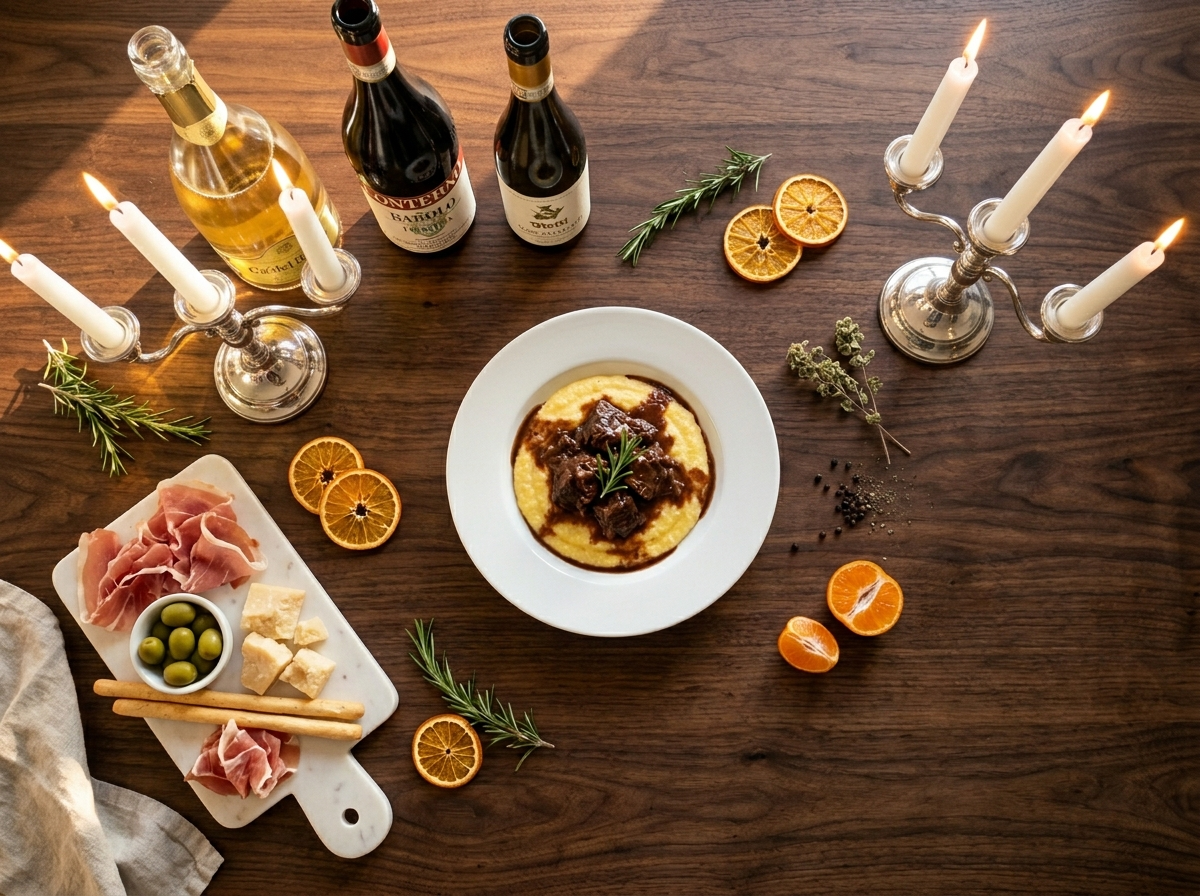
- Franciacorta DOCG (sparkling): Italy’s finest method champenoise sparkler, ideal with cured meats and aged cheeses. Prosecco Superiore di Valdobbiadene DOCG is a solid, lower-cost alternative.
- Vermentino di Sardegna DOC: A coastal white with saline finish that works well with seafood primi like spaghetti alle vongole or baked branzino. Falanghina or Greco di Tufo are close substitutes.
- Barolo DOCG: Nebbiolo-based, high tannin, aged at least three years, built for braised beef or roasted lamb. Barbera d’Asti DOCG or Valpolicella Ripasso offer similar structure at lower cost.
- Amarone della Valpolicella DOCG: Dried-grape wine with 15-17% alcohol and deep dried-fruit character. Pairs with game, aged hard cheeses, or rich roasted meats. Serve it at around 18 C / 64 F.
- Moscato d’Asti DOCG: Low-alcohol, lightly sparkling, floral and peachy. The classic match for panettone or pandoro because its sweetness doesn’t overwhelm the brioche-like crumb.
- Passito di Pantelleria DOC: Fortified dessert wine from dried Zibibbo grapes, rich and amber. Use it with torrone, dried figs, or nut-based confections if Moscato is too light.
Italian Wine Pairing Guide for a Christmas Menu
Ingredients
Method
- Purchase all wines and store reds (Barolo, Amarone) lying on their sides in a cool, dark spot at 14-16 C / 57-61 F.
- Refrigerate sparkling wines (Franciacorta or Prosecco) and whites (Vermentino) upright from the day before the dinner.
- Set up the antipasto board with salumi, Parmigiano chunks, olives, and grissini. Cover and refrigerate until 30 minutes before guests arrive.
- Open the Barolo and Amarone and pour them into a clean decanter. Leave them uncovered at room temperature for 90-120 minutes to open up.
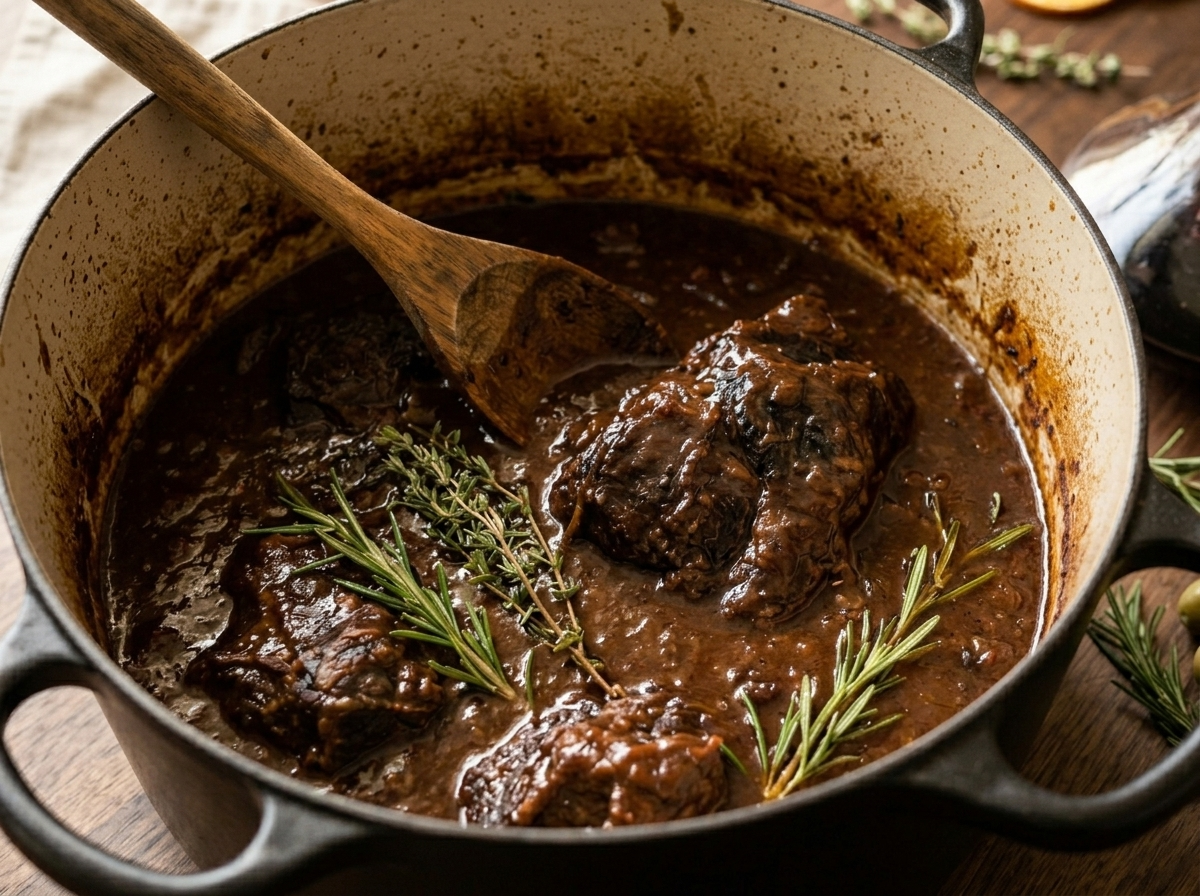
- Begin the brasato or roast preparation so it cooks low and slow through the afternoon.
- Fill a large ice bucket halfway with ice and water. Nestle the Franciacorta or Prosecco bottle in the bucket to bring it to 6-8 C / 43-46 F.
- Pull the antipasto board from the fridge and set it on the table with small plates and cocktail napkins.
- Open the first bottle of sparkling wine when the first guests arrive, pouring 80-100 ml per glass.
- Pull the Vermentino from the fridge 10 minutes before plating the pasta or fish, so it warms slightly to 10-12 C / 50-54 F.
- Pour whites as the first course plates arrive at the table, 80-100 ml per glass.
- For spaghetti alle vongole, finish with a drizzle of extra-virgin olive oil and a pinch of fresh parsley before serving.
- Check decanted Barolo with a thermometer. It should read 17-18 C / 63-64 F. If it's cooler, cup the decanter briefly in your hands.
- Slice the brasato or carve the roast. Plate with roasted vegetables and pour Barolo at the table, 100 ml per glass.
- If offering an optional cheese interlude, set out the Pecorino, Gorgonzola, honey, and walnuts between the meat and dessert courses. Pour Amarone in 75 ml portions at this stage.
- Clear the table of all savory wine glasses before the dessert course. Set fresh glasses: standard 350 ml for Moscato d'Asti, or smaller 150 ml glasses for Passito.
- Slice panettone or pandoro into wedges and set alongside torrone and dried figs on a board at the center of the table.
- Pour Moscato d'Asti in 60-75 ml portions. Its low alcohol means guests can have a second pour without issue. Passito portions should stay at 50-60 ml given its sweetness and strength.
- Finish the meal with espresso, which needs no wine pairing and cleans the palate after the dessert wines.
Notes
Tips for Success
- Chill sparkling wines to 6-8 C / 43-46 F before serving, not colder or the bubbles collapse too fast.
- Open Barolo or Amarone two hours before the meal and decant it to soften the tannins without losing fruit.
- Pour whites at 10-12 C / 50-54 F for seafood courses, pulling them from the fridge 10 minutes before serving.
- Pour dessert wines in smaller 60-75 ml portions so alcohol doesn’t close down guests’ palates at the end.
- Match regional pairings where you can: Ligurian seafood with Vermentino, Piedmontese brasato with Barolo, Sicilian sweets with Passito.
Variations
- Simplified three-bottle menu: one Franciacorta for antipasto and primo, one Barolo for secondi, one Moscato for dessert.
- All-Piedmont menu: Gavi di Gavi for seafood, Barolo for meat, Moscato d’Asti for dessert, all from the same region.
- Vegetarian Christmas menu pairings: Soave Classico with mushroom risotto, Dolcetto d’Alba with truffle pasta, Brachetto d’Acqui with fresh fruit tart.
Storage and Reheating
Opened sparkling wine does not keep well. Use a stopper and finish within 24 hours, keeping it upright in the fridge.
Opened still reds like Barolo or Amarone hold for 2-3 days in a cool, dark spot with a vacuum stopper. Decanting them the next day before serving can actually improve them.
Moscato d’Asti and Passito should be recorked and refrigerated after opening. Drink Moscato within 24 hours as the bubbles fade. Passito keeps up to a week refrigerated.
Serving Suggestions
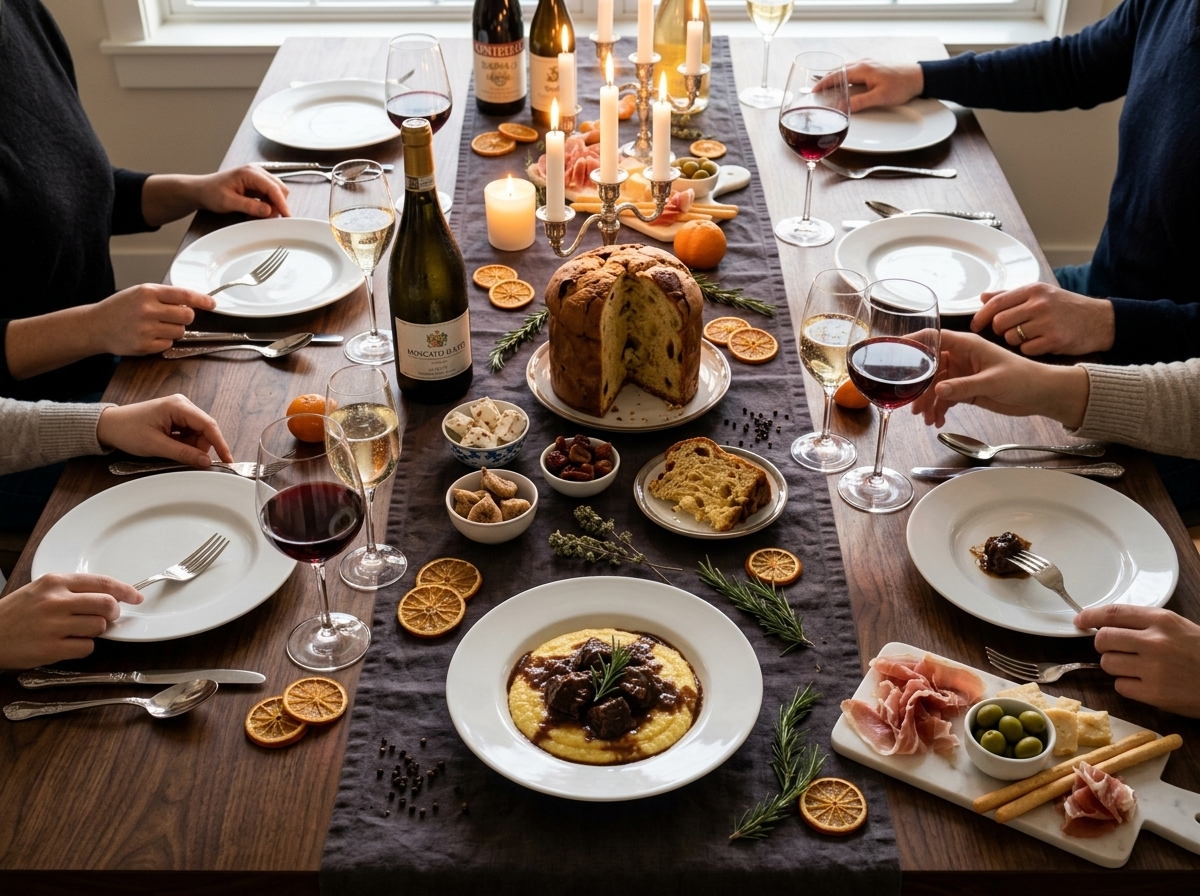
Set the Franciacorta or Prosecco on the table as guests arrive, alongside the antipasto board of salumi, aged Parmigiano, and marinated olives. It frames the meal before anyone sits down.
For the seafood primo, pour the Vermentino at the same time as the pasta arrives. A shared bottle between two to three people works well at this stage.
Finish with Moscato d’Asti in small coupes or standard wine glasses alongside sliced panettone or pandoro. A small plate of torrone or chocolate-covered almonds next to the glass rounds out the end of the meal without needing a formal dessert plated course.
FAQ
Why does Barolo work better than Chianti with Christmas braised beef?
Barolo’s higher tannin structure and dried-fruit depth hold up against the collagen-rich, reduced sauces of a long-braised brasato. Chianti Classico is lighter and gets overshadowed by those concentrated meat juices. That said, a Chianti Classico Riserva is a fair substitute if Barolo is out of budget.
Can I use Prosecco instead of Franciacorta for the antipasto course?
Yes, Prosecco Superiore di Valdobbiadene DOCG is a practical swap and widely available. Franciacorta uses the same secondary fermentation method as Champagne, so it has finer bubbles and more yeasty complexity, but Prosecco carries the antipasto course well at a fraction of the price.
How far in advance can I buy the wines for an Italian Christmas dinner?
Still reds like Barolo benefit from being bought a week ahead and stored lying down in a cool spot around 14-16 C / 57-61 F. Sparkling wines and whites should be purchased two to three days ahead and refrigerated from the night before. Don’t buy Moscato d’Asti more than a few weeks out since it’s meant to be consumed young.
What Italian wine pairs with panettone without making it taste flat?
Moscato d’Asti is the standard answer because its residual sugar and gentle fizz match the light, buttery crumb without competing with it. A dry Prosecco or Franciacorta will make panettone taste bland in comparison. If you want something richer, Passito di Pantelleria works with the dried-fruit version of panettone.
Is there a low-alcohol Italian wine option for a Christmas dinner table?
Moscato d’Asti sits at around 5-5.5% ABV, making it the lowest-alcohol Italian DOC wine you’d normally serve at a formal dinner. For earlier courses, some Prosecco DOC labels come in around 10.5% ABV, noticeably lighter than Barolo at 14-15%. These work well if some guests are watching alcohol intake.
What’s the difference between Amarone and Valpolicella Ripasso for a Christmas meat course?
Amarone is made entirely from dried Corvina grapes and is richer, higher in alcohol, and more concentrated. Ripasso is a younger Valpolicella wine refermented on Amarone grape skins, giving it body and dried-fruit notes at about half the price. For a Christmas roast, Ripasso holds its own and leaves Amarone for a special cheese or post-dinner glass.