Jump to Recipe
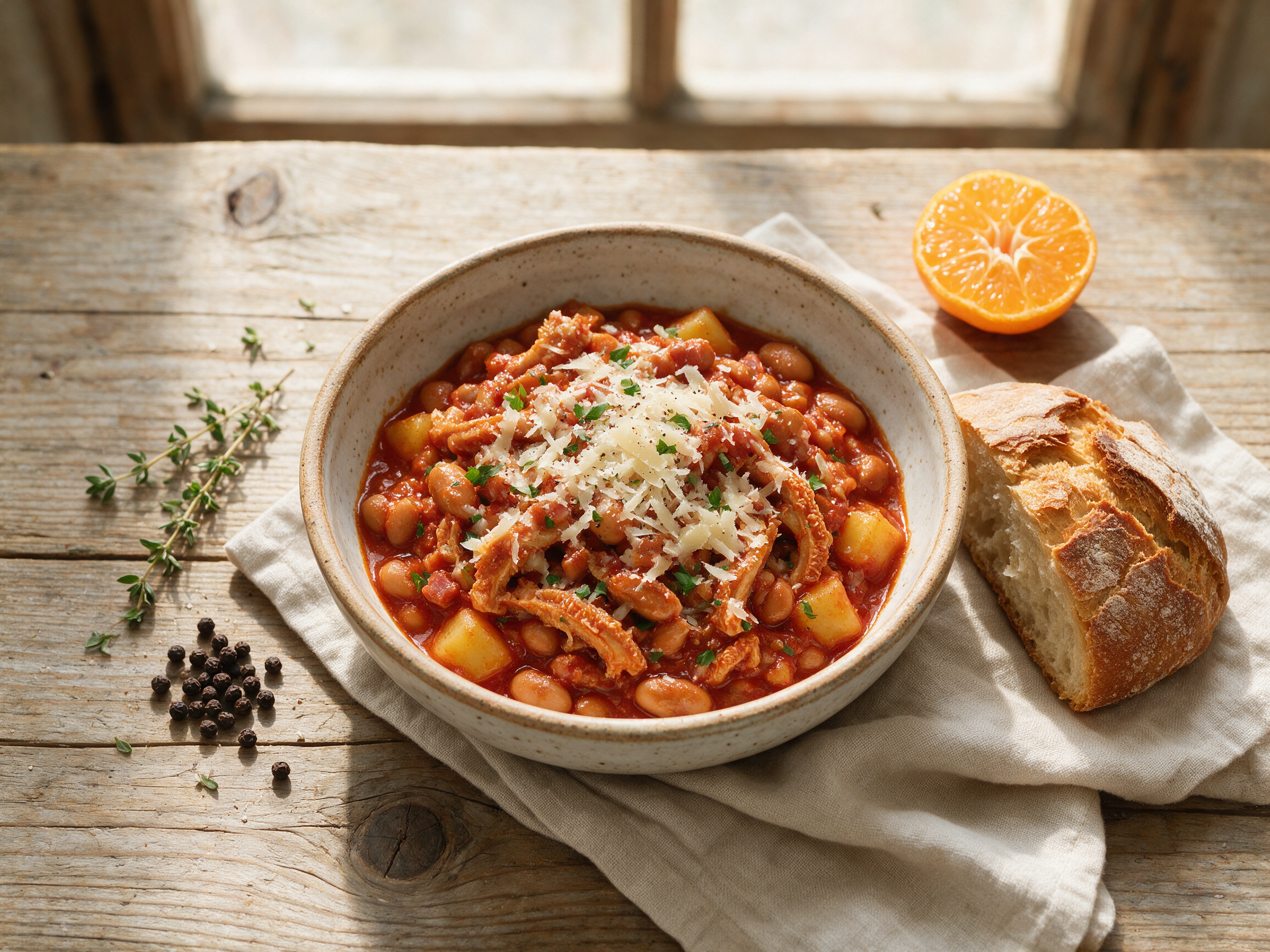
Trippa alla Valtellinese al Pomodoro is a slow-braised tripe stew from Italy’s Valtellina valley, built on tomato, borlotti beans, potatoes and a finish of grated local cheese. The tripe simmers low for about 90 minutes until it turns soft and loses its chew, and the sauce thickens into something worth mopping up with bread.
This is Alpine cooking, not coastal. Butter goes in alongside olive oil, potatoes bulk out the pot, and the cheese melts into the sauce rather than sitting on top as a garnish.
I use pre-cleaned, parboiled tripe from the butcher counter, the kind most Italian delis sell ready to cook. If yours is raw, blanch it first in salted water for 10 minutes and rinse well before you start.
The stew holds up well over several days in the fridge and tastes better on day two, once the sauce has settled into the tripe and beans.
Why You’ll Love This Recipe
- Tripe turns tender after a slow tomato braise
- Borlotti beans and potatoes make it a full meal
- Melted Casera cheese adds a nutty, salty finish
- Tastes better the next day, ideal for make-ahead cooking
Ingredient Notes
- Beef tripe: Look for pre-cleaned, parboiled tripe at an Italian butcher or well-stocked supermarket. It cuts prep time significantly since raw tripe needs a long pre-boil first.
- Pancetta: Diced pancetta builds the fat base for the soffritto. Smoked bacon works in a pinch, though it shifts the flavor toward smokier.
- Tomato passata: Smooth passata gives a cleaner sauce than chopped tomatoes. Canned crushed tomatoes work too if you blend them briefly first.
- Borlotti beans: Canned beans save time here. If using dried, about 300 g dried beans, soaked and cooked, yields roughly the 400 g needed.
- Valtellina Casera cheese: This semi-hard Alpine cheese has a nutty, slightly tangy edge. Fontina or a young Asiago are the closest stand-ins if you can’t find it.
Trippa alla Valtellinese: Alpine Tomato Tripe Stew
Ingredients
Method
- Pat the tripe strips dry with paper towels. If yours isn't pre-parboiled, blanch it in boiling salted water for 10 minutes, then drain and rinse well before continuing.
- Heat the butter and olive oil in a 6-quart / 5.7 L Dutch oven over medium heat. Add the onion, carrot and celery and cook for 6 to 8 minutes, stirring often, until softened and pale gold.
- Stir in the garlic and pancetta and cook for 2 to 3 minutes, until the pancetta releases its fat and turns lightly golden.
- Add the tripe strips and cook for 4 to 5 minutes, stirring, to coat them in the fat and let the edges color slightly.
- Pour in the red wine and let it bubble for 2 minutes, until mostly evaporated and the raw alcohol smell is gone.
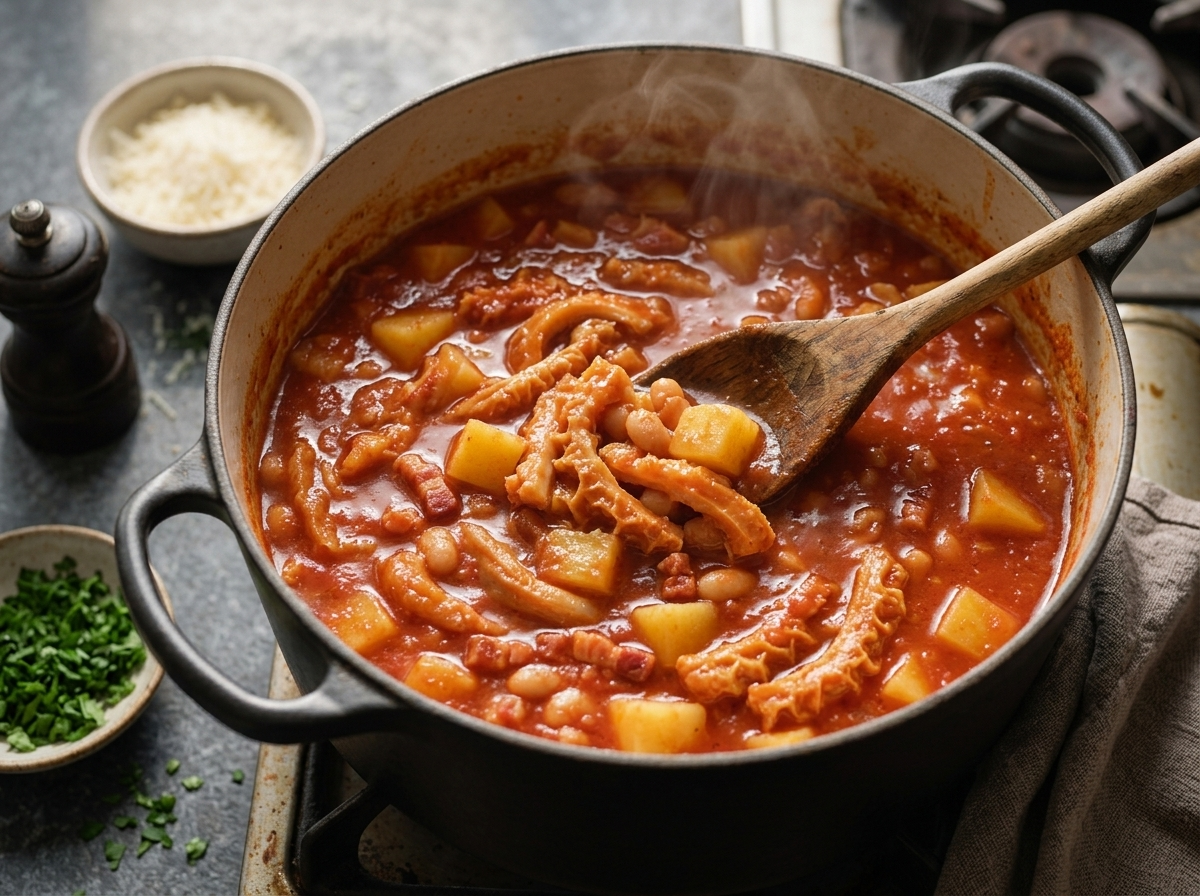
- Add the tomato passata, broth, bay leaves and cloves. Season with salt and pepper, bring to a gentle simmer, then cover and cook on low heat for 90 minutes, stirring occasionally, until the tripe is tender enough to cut with a spoon.
- Add the diced potatoes and cook uncovered for 20 minutes, until fork-tender but still holding their shape.
- Stir in the borlotti beans and a pinch of nutmeg. Simmer for 10 to 15 minutes more to warm the beans through and thicken the sauce slightly.
- Taste and adjust salt and pepper. Remove the bay leaves and cloves before serving.
- Ladle into bowls, grate the Casera cheese generously over each portion, and serve hot with crusty bread on the side.
Notes
- Use parboiled tripe from the butcher to save an hour of prep.
- Don't skip the wine reduction, it cuts the richness of the pancetta.
- Grate cheese straight over each bowl, not into the pot, for texture.
- Salt lightly at first since pancetta and cheese both add sodium later.
Tips for Success
- Simmer the tripe low and slow for at least 90 minutes; rushing the heat leaves it rubbery instead of tender.
- Blanch raw tripe in salted water for 10 minutes first if your butcher hasn’t already parboiled it.
- Swap Valtellina Casera for Fontina or young Asiago if you can’t find the DOP cheese locally.
- Add the potatoes about 20 minutes before the tripe finishes so they don’t turn to mush.
- Skim the fat off the surface before serving if you prefer a cleaner-tasting sauce.
Variations
- Swap borlotti beans for cannellini for a milder flavor and a creamier, paler broth.
- Stir a spoonful of tomato paste into the passata for a deeper, more concentrated tomato base.
- Use pancetta affumicata instead of plain pancetta for a smokier, more rustic finish.
Storage and Reheating
Trippa alla Valtellinese keeps for 3 to 4 days in the fridge in a sealed container. The sauce thickens as it sits, which is normal, and a splash of broth loosens it back up when reheated.
Reheat gently on the stovetop over low heat for 8 to 10 minutes, stirring occasionally, until it bubbles through. A microwave works too, in 1-minute bursts covered loosely, stirring between each burst.
Freeze it in portions for up to 3 months. Thaw overnight in the fridge before reheating, since the potatoes turn grainy if microwaved straight from frozen.
Serving Suggestions
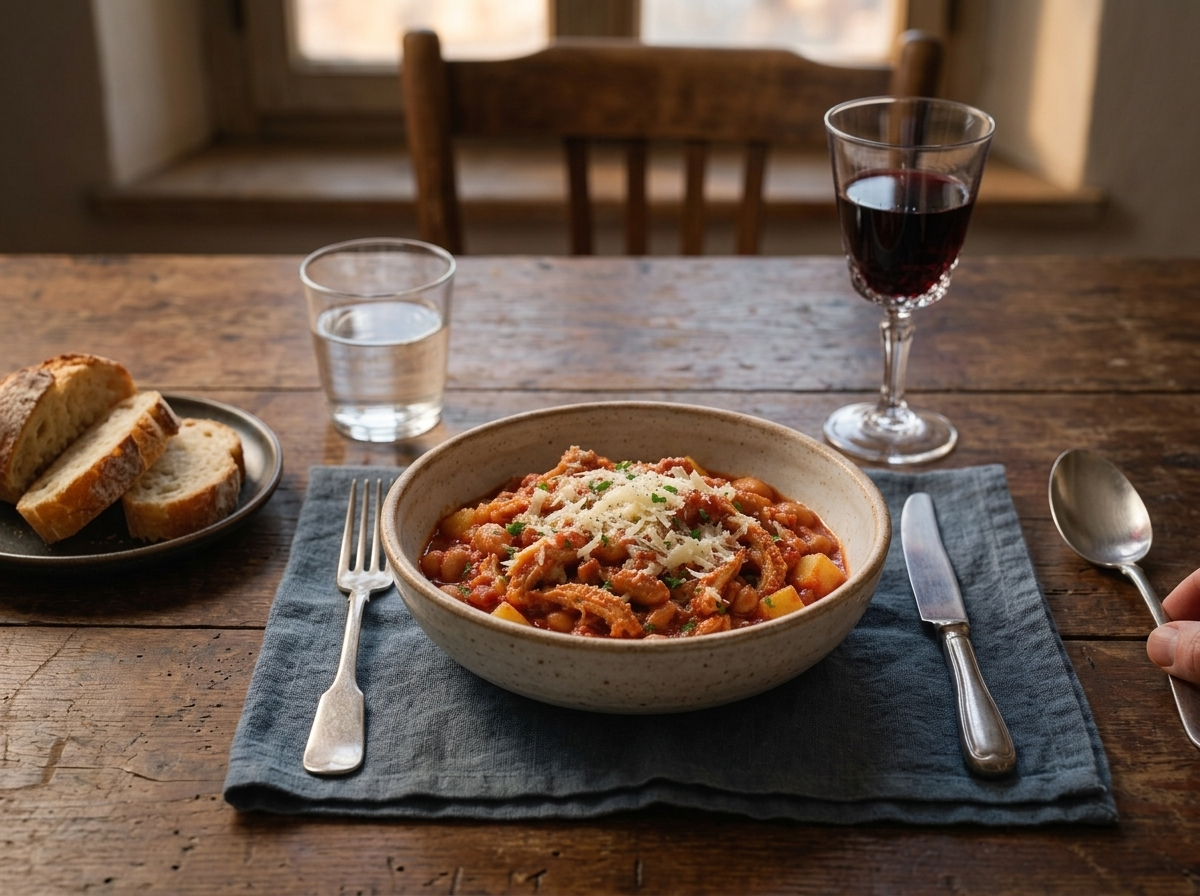
Trippa alla Valtellinese al Pomodoro wants something plain alongside it, since the stew itself carries plenty of flavor. Grilled or toasted country bread is the classic pick, for mopping up the sauce.
A simple green salad with a sharp vinaigrette cuts through the richness of the pancetta and cheese. Polenta is another Alpine-style option if you want something starchier than bread.
Pour a glass of Valtellina Nebbiolo or another light red if you’re serving this for a proper sit-down dinner.
FAQ
Why is my trippa alla Valtellinese still chewy after an hour?
Chewy tripe means it hasn’t simmered long enough. Trippa alla Valtellinese needs a slow, low simmer of about 90 minutes to 2 hours before it turns tender and loses its rubbery bite. Check it after 90 minutes by cutting a strip; if it resists the knife, keep it on low heat and check every 15 minutes.
Can I use cannellini beans instead of borlotti in this tripe stew?
Yes, cannellini beans work fine in place of borlotti. They give a milder flavor and a creamier, paler broth since cannellini break down a bit more during cooking. Drain and rinse canned beans first, then add them at the same step, about 15 minutes before the stew finishes simmering.
Can I make trippa alla Valtellinese ahead of time?
Yes, and it actually improves. Trippa alla Valtellinese tastes better a day after cooking, once the sauce has had time to soak into the tripe and beans. Make it up to 2 days ahead, store it covered in the fridge, and reheat gently on the stovetop before serving.
What cheese goes best on trippa alla Valtellinese al Pomodoro?
Valtellina Casera DOP is the traditional choice, a semi-hard Alpine cheese with a nutty, slightly tangy flavor that melts into the sauce. If you can’t find it, Fontina or a young Asiago works as a substitute. Grate it over the stew right before serving so it softens without turning stringy.
Is trippa alla Valtellinese gluten free?
Trippa alla Valtellinese al Pomodoro is naturally gluten free as written, since tripe, beans, tomato and potatoes contain no wheat. Just check your broth or stock cube label, since some brands add gluten-based thickeners. Serve it with gluten-free bread or polenta instead of regular crusty bread.
What’s the difference between trippa alla Valtellinese and trippa alla romana?
Trippa alla Valtellinese leans Alpine, built with potatoes, pancetta and a finish of local Casera cheese, while trippa alla romana leans Roman, seasoned with mint and pecorino and usually skips the beans. Both start from a tomato base, but the Valtellina version is heartier and suited to cold mountain winters.