
Jump to Recipe
Pane di Segale della Valtellina is a dense, dark rye bread from the Alpine valleys of northern Lombardy, traditionally shaped into a low ring with an opening in the center.
Rye has long played an important role in the mountain diet and baking traditions of Valtellina. The finished bread has a firm crust, a tight, moist crumb, and keeps well for several days.
This version uses 70% rye flour and 30% bread flour, giving the loaf enough structure while preserving its dense Alpine character. Fennel seeds are an optional aromatic variation rather than an essential part of the bread.
The dough is sticky and will not rise like a soft sandwich loaf. That is normal. Rye contains less gluten than wheat, so the crumb remains tight and moist rather than light and fluffy.
Why You’ll Love This Recipe
- Stays fresh at room temperature for up to 5 days
- Made with simple pantry ingredients and no special equipment
- Pairs naturally with bresaola, cheese, and cured meats
- Freezes well sliced for months of quick toast
Ingredient Notes
- Rye flour: Use dark or medium rye flour (segale), not rye meal. It gives the loaf its dense crumb and earthy rye flavor.
- Bread flour: Adds enough gluten to hold the loaf together. All-purpose flour works too, but bread flour gives more structure.
- Active dry yeast: Fresh yeast (20 g) can replace dry yeast; crumble it into the warm water instead of stirring it in dry.
- Fennel seeds: Traditional in Valtellina bakeries, though caraway is a common swap if you want a sharper, German-leaning flavor.
- Honey: Honey adds a faint sweetness and helps the crust brown. Barley malt syrup can be used instead.
- Fine sea salt: Controls fermentation speed and firms up the crumb. Skip it and the rye tastes flat.
- Warm water: Keep it around 40 C / 104 F. Water that’s too hot can kill the yeast before it gets going.
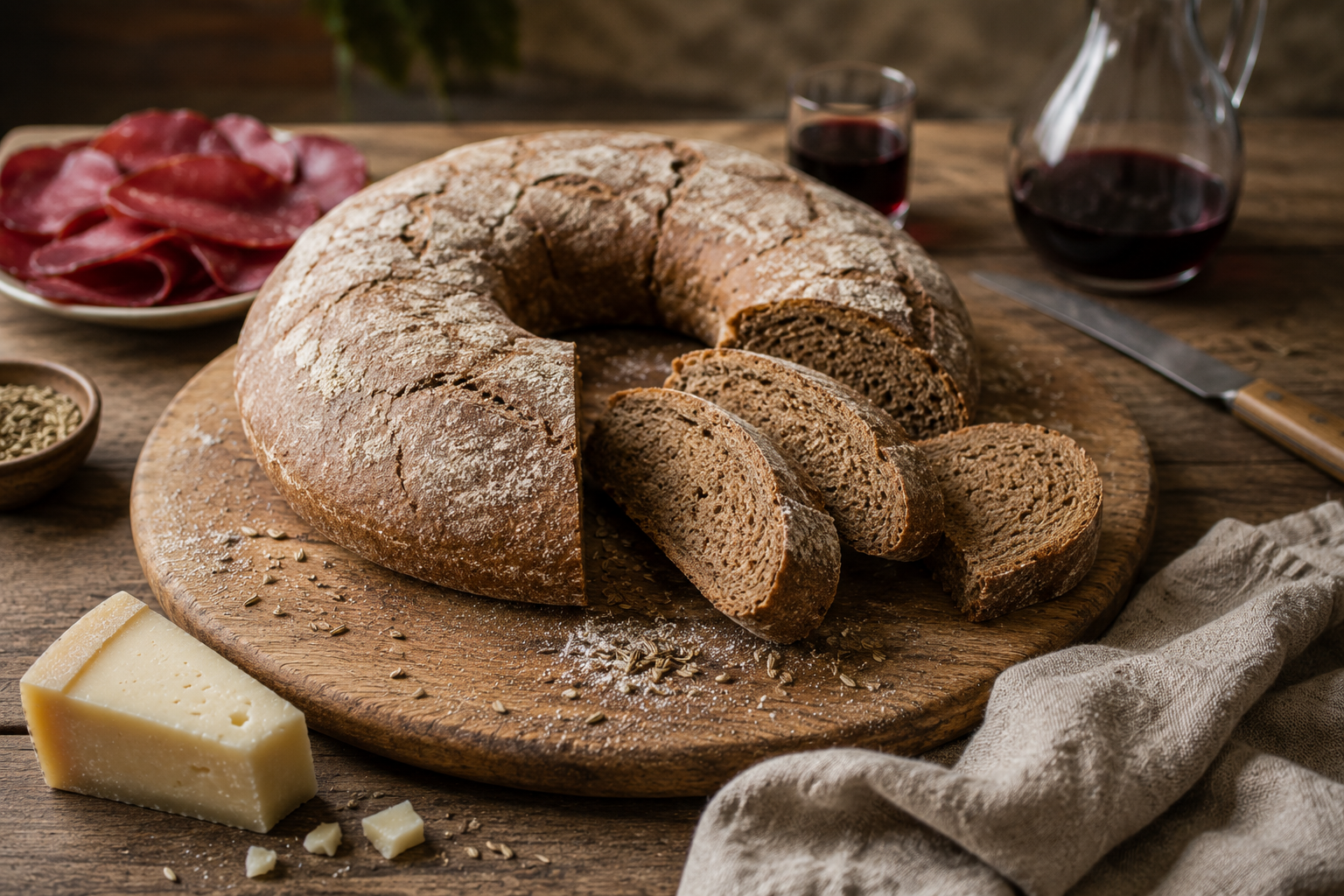
Pane di Segale della Valtellina: Dense Alpine Rye Bread
Ingredients
Method
- Dissolve the yeast and honey in the warm water and let stand 5 minutes, until foamy.
- In a large bowl, whisk together the rye flour, bread flour, and salt. Stir in the fennel seeds if using.
- Pour in the yeast mixture and stir with a wooden spoon until a sticky, shaggy dough forms. It doesn't need to be smooth.
- Knead by hand on a lightly floured counter for 5-6 minutes. Rye dough stays tacky and won't turn elastic like wheat dough; that's normal.
- Shape the dough into a rough ball, place it in a lightly oiled bowl, cover, and let rise at room temperature (about 24 C / 75 F) for 60 minutes, until puffed but not doubled.
- Turn the dough onto a generously floured work surface. With damp or lightly floured hands, shape it into a thick, low ring about 18–20 cm wide, with an opening about 7–8 cm wide in the center. Make the opening fairly generous, since it will narrow as the dough proofs and bakes.
- Transfer the ring to parchment paper, cover loosely, and let rise for about 45 minutes.
- Heat the oven to 220 C / 428 F with a baking stone or heavy sheet pan inside.
- Score the top of the ring with a sharp knife or lame. Using the parchment paper, carefully slide the bread onto the hot baking stone or sheet pan.
- Bake 15 minutes at 220 C / 428 F, then lower the heat to 200 C / 390 F and bake another 30 minutes, until the crust is deep brown and the internal temperature reads 96 C / 205 F.
- Cool on a wire rack for at least 1 hour before slicing. Cutting it warm makes the crumb gummy.
Notes
- Weigh flour for accurate hydration; rye flour compresses more than wheat flour.
- Dough stays sticky and slack; resist adding extra flour during kneading.
- Score the loaf just before baking so the cuts open cleanly.
- Cool completely before slicing; warm rye bread turns gummy fast.
Tips for Success
- Weigh your flour instead of scooping cups; rye flour packs down and throws off hydration fast.
- Skip the stand mixer for this dough; rye doesn’t need long gluten development and overworking makes it gummy.
- Add fennel or caraway seeds straight into the dry flour so they distribute evenly through the crumb.
- Score the loaf immediately before baking so the cuts open cleanly in the oven.
- Let the loaf rest a full hour before slicing so the crumb sets and doesn’t gum up under the knife.
Variations
- Swap half the rye for whole wheat flour for a milder, less rye-forward crumb that rises a bit taller.
- Stir 1 tbsp caraway seeds into the dough instead of fennel for a sharper, German-leaning flavor.
- Build a rye sourdough version by replacing the yeast with 150 g active rye starter and stretching the first rise to 3-4 hours.
Storage and Reheating
Pane di Segale della Valtellina keeps well because rye bread stales slower than wheat bread. Wrap the cooled loaf in a clean kitchen towel or paper bag and store it at room temperature for up to 5 days; the crust softens a little but the crumb stays moist.
Skip the fridge, it dries rye bread out faster than the counter does. For longer storage, slice the loaf and freeze in a zip-top bag for up to 3 months.
To refresh a slice, toast it straight from frozen or warm whole slices in a 160 C / 320 F oven for 8-10 minutes.
Serving Suggestions
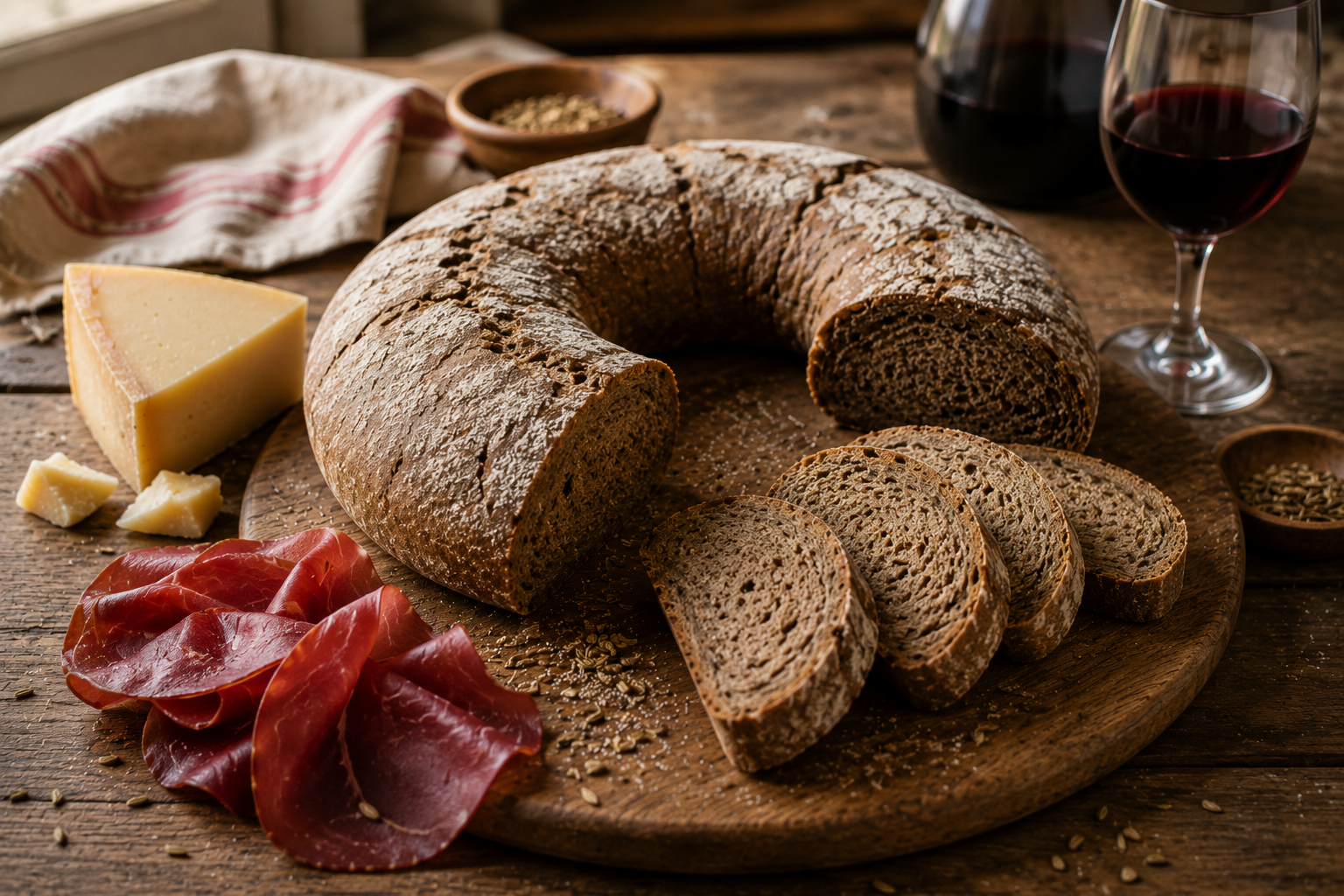
Pane di Segale della Valtellina is built for a board of alpine cheeses and cured meats, the classic Valtellina pairing being bresaola, a slice of Casera cheese, and a drizzle of good olive oil.
Toast a thick slice and top it with butter and honey for breakfast, or use it under a soft egg and greens for a rustic open sandwich.
It also holds up well next to a bowl of minestra or an alpine-style soup, since the dense crumb doesn’t turn to mush when it soaks up broth.
FAQ
Why is my pane di segale della Valtellina gummy in the middle?
Gummy crumb usually means the loaf was cut before it cooled or wasn’t baked long enough. Let the bread rest at least 1 hour after baking, since rye keeps setting its crumb as it cools. Also check that the internal temp hit 96 C / 205 F before pulling it out; rye needs a higher finish temp than wheat bread.
Can I use whole wheat flour instead of bread flour in this rye bread?
Yes, whole wheat flour works in place of bread flour, though the crumb turns denser and the flavor gets earthier. Keep the rye flour amount the same and only swap the 150 g wheat portion. You may need an extra tablespoon or two of water since whole wheat absorbs more liquid.
How long does pane di segale della Valtellina stay fresh, and can I freeze it?
The loaf stays good at room temperature for up to 5 days wrapped in a towel or paper bag, longer than most wheat breads thanks to the rye. For longer storage, slice and freeze for up to 3 months. Thaw slices at room temp or toast them straight from frozen.
What do you eat with Valtellina rye bread?
The traditional pairing is bresaola, Casera or Bitto cheese, and a drizzle of olive oil, all classic Valtellina products. It also works toasted with butter and honey, or alongside a bowl of alpine-style soup. The dense crumb holds up under wet toppings without falling apart.
Is pane di segale della Valtellina vegan?
The bread is dairy-free and egg-free. To make it fully vegan, replace the honey with barley malt syrup or sugar.
What’s the difference between pane di segale della Valtellina and German-style rye bread?
Pane di segale della Valtellina is traditionally associated with its round, holed ring shape. German rye bread covers many different formulas, flour ratios, shapes, and fermentation methods, so the clearest distinction in this recipe is its Valtellina-style shape and regional context rather than a universal fennel-versus-caraway rule.
Loved this? Try these next
- Homemade Limoncello: Bright, Silky Italian Liqueur
- the Brazzadelle Valtellinesi: Alpine Baked Bread Rings
- Manfrigole della Valtellina: Buckwheat Cheese Crepes
- Baked Gnocchetti della Valchiavenna with Savoy Cabbage