
Jump to Recipe
This salad comes from the Sicilian tradition of pairing citrus with raw fennel, a combination that works because the two ingredients do opposite things. The orange is sweet and yielding, the fennel is crisp and faintly bitter. Together they make sense.
It’s a winter salad by instinct – blood oranges peak from January to March, and fennel is at its best in the cold months. But navel oranges work well outside that window, so the recipe holds up year-round.
The dressing isn’t a dressing in the emulsified sense. It’s just olive oil, a little lemon juice, salt, and time. The orange juice that pools on the plate does the rest.
You don’t need to cook anything. You do need a sharp knife or a mandoline, and the patience to slice the fennel thin enough that it softens slightly once dressed.
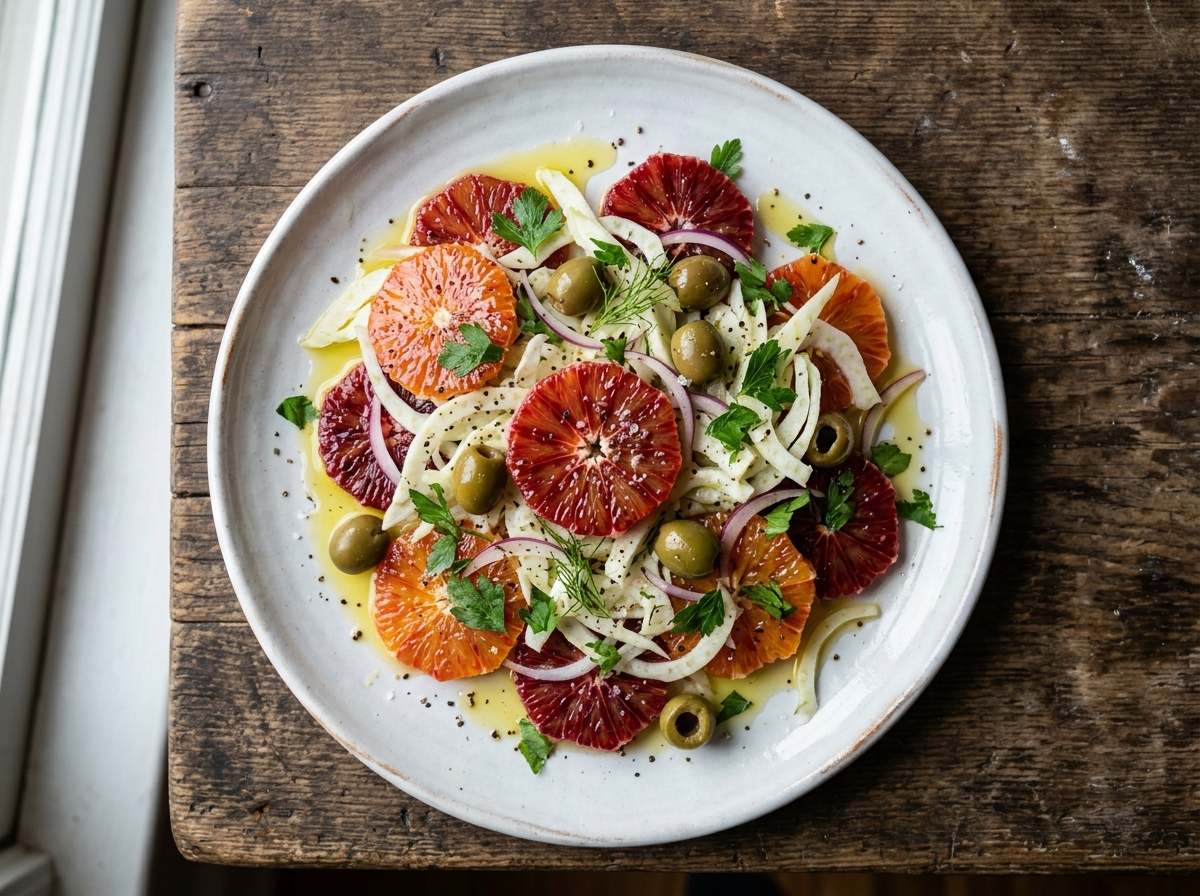
Why You’ll Love This Recipe
- Ready in 15 minutes with zero cooking required
- Blood oranges make it visually striking on any table
- Works as a side dish or a light standalone lunch
- Fennel and citrus combination tastes clean and genuinely refreshing
Ingredient Notes
- Blood oranges: Blood oranges give the salad its color and a faint raspberry note. Navel or cara cara oranges are a solid substitute when blood oranges aren’t in season.
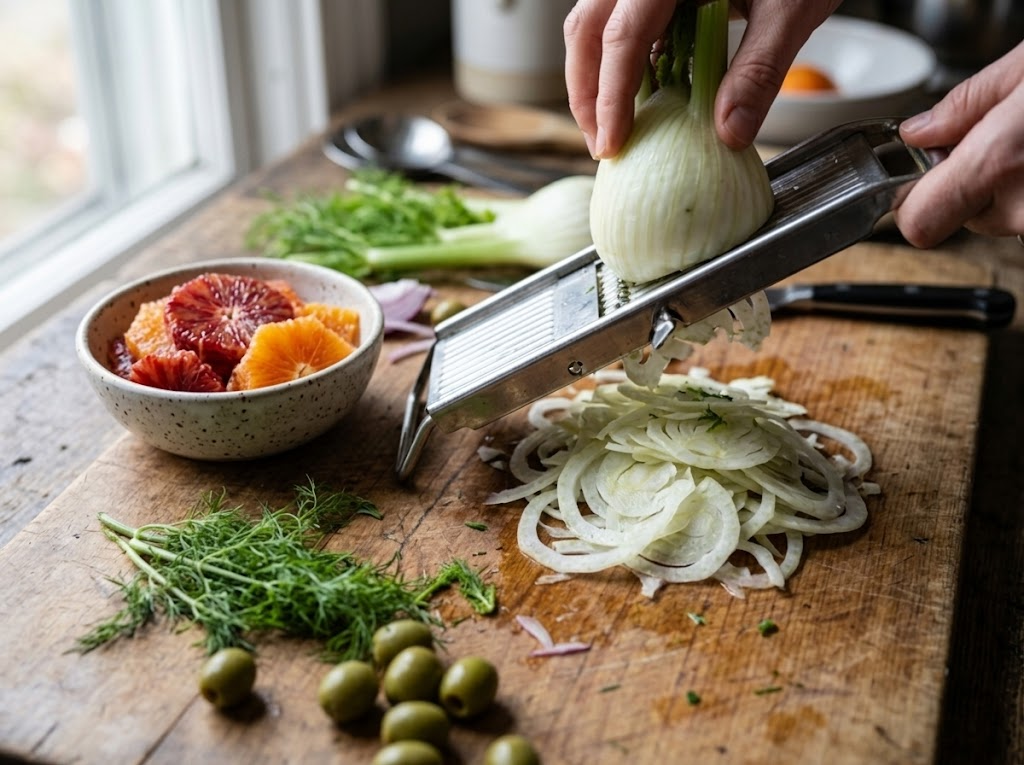
- Fennel bulb: Use the bulb and the pale inner fronds; discard the tough outer layer and thick stalks. A mandoline set to 2 mm gives the most consistent, tender slices.
- Red onion: Soak the sliced red onion in cold water for 10 minutes before adding it to the salad to mellow the sharpness without losing the color.
- Castelvetrano olives: Castelvetrano olives are buttery and mild, which suits the salad better than sharp Kalamata. Pitted green olives work if Castelvetrano aren’t available.
- Extra-virgin olive oil: Use the best olive oil you have here – it’s effectively the dressing, so quality is noticeable. A Sicilian or Southern Italian oil with a grassy, peppery finish is ideal.
- Fresh herbs: Flat-leaf parsley is traditional and clean-tasting. Fresh mint also works well and adds a cooler note that lifts the sweetness of the orange.
Sicilian Orange and Fennel Salad
Ingredients
Method
- Slice the red onion as thinly as you can and place it in a small bowl of cold water. Set aside for 10 minutes, then drain and pat dry.
- Remove the tough outer layer of the fennel bulb. Set the fronds aside. Using a mandoline or a sharp knife, shave the fennel bulb into slices no thicker than 2 mm.
- Peel the oranges with a knife, removing all the white pith. Slice into rounds about 5 mm thick, or segment them over the serving plate to catch the juice.
- Arrange the orange slices across a large flat serving plate, slightly overlapping.
- Scatter the shaved fennel over and around the orange slices in small, loose piles.
- Distribute the drained red onion and halved olives evenly over the top.
- Whisk the olive oil, lemon juice, salt, and pepper together in a small bowl. Drizzle the dressing over the salad.
- Scatter the torn parsley and reserved fennel fronds over the top. Let the salad sit for 10 minutes before serving so the fennel softens slightly and the flavors come together.
Notes
Tips for Success
- Slice fennel on a mandoline at 2 mm for even, tender pieces that absorb the dressing properly.
- Segment the oranges over the serving plate to catch every drop of juice for the dressing.
- Dress the salad 10 minutes before serving so the fennel softens slightly at the edges.
- Soak red onion slices in cold water for 10 minutes to reduce bitterness before adding to the bowl.
- Add a few pinches of flaky sea salt just before serving to sharpen all the flavors at once.
Variations
- Add thinly sliced raw beetroot for extra color and an earthy counterpoint to the citrus.
- Scatter toasted pistachios over the finished salad for a Sicilian-style crunch and richness.
- Add crumbled ricotta salata or shaved pecorino for a savory, salty contrast to the orange.
Storage and Reheating
This salad is best eaten within 30 minutes of dressing. Once dressed, the fennel continues to soften and the orange releases more juice, which can make the plate watery after an hour.
If you need to prep ahead, keep the sliced fennel, oranges, and onion in separate airtight containers in the fridge for up to 4 hours. Dress and assemble just before serving.
Leftovers don’t store well – the texture degrades overnight. This is a make-and-serve dish.
Serving Suggestions
In Sicily this salad sits alongside grilled fish or roasted Sicilian swordfish. The acidity cuts through rich, oily fish particularly well. It also works next to a simple herb-roasted chicken.
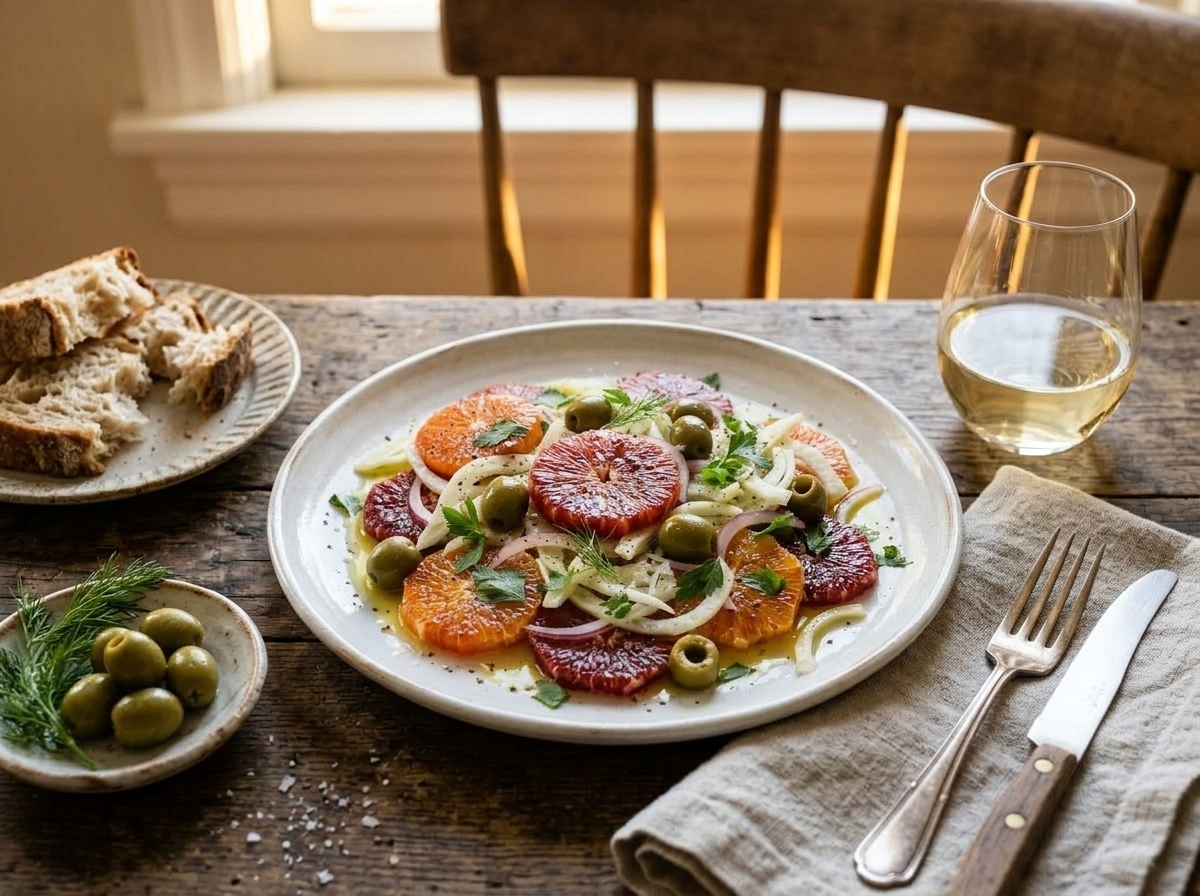
For a light lunch, serve it on a board with good bread and a few slices of cured meat – it needs no further cooking and holds its own as the centerpiece.
A glass of chilled Sicilian white wine, like an Etna Bianco or Grillo, pairs naturally with the citrus and fennel.
FAQ
Why is my fennel still tough even after dressing the Sicilian orange and fennel salad?
The slices are likely too thick. Fennel needs to be no more than 2 mm thin to soften in the dressing within 10 minutes. A mandoline is the most reliable way to get consistent, thin cuts.
Can I use navel oranges instead of blood oranges in this salad?
Yes, navel oranges work well and are a practical swap outside the January-to-March blood orange season. The flavor is slightly less complex but the salad still tastes balanced and bright.
Can I prep the fennel and oranges for this salad the night before?
You can slice and store them separately in the fridge for up to 4 hours. Slicing the night before isn’t ideal – the fennel oxidizes and the orange dries out at the cut edges.
What protein goes well with Sicilian orange and fennel salad?
Grilled Sicilian swordfish or sea bass is the most traditional pairing in Sicily. The salad also works alongside herb-roasted chicken or pan-seared shrimp for a lighter meal.
Is this Sicilian fennel and orange salad vegan and gluten-free?
Yes, the base recipe is both vegan and gluten-free with no substitutions needed, much like a bright Italian summer salad. If you add ricotta salata or pecorino from the variations section, it will contain dairy.
What’s the difference between this Sicilian salad and an insalata di arance?
Insalata di arance is a broader category of Italian orange salads found across the south. The Sicilian version specifically pairs oranges with fennel and often includes olives and red onion, reflecting the island’s Arab and Greek culinary influences.