
Jump to Recipe
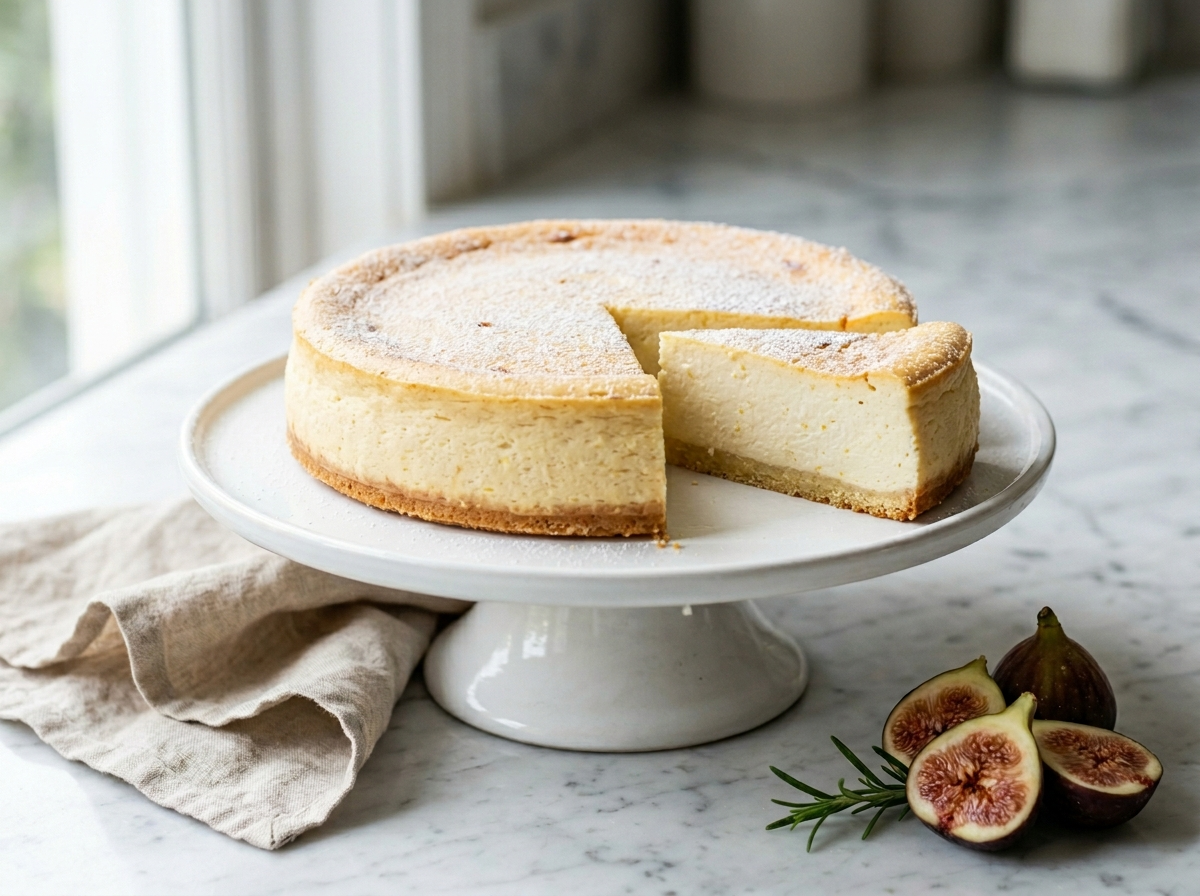
This is not the dense, cream-cheese-heavy kind of cheesecake. Italian ricotta cheesecake is lighter, more delicate, and closer to a baked custard than a New York-style slice.
The texture comes from well-drained ricotta, a small amount of egg, and nothing more. No heavy cream. No cornstarch thickener. The ricotta does the work.
A strip of lemon and orange zest keeps the flavor clean and bright without competing with the cheese. I use a thin almond-biscuit base built along the same lines as a Sardinian fried cheese dessert, but the filling is honest enough to stand without any crust at all.
This bakes low and slow, so the top stays pale and the inside stays just set. It firms up as it cools, so patience matters more here than technique.
Why You’ll Love This Recipe
- Far lighter than cream cheese versions, never heavy or dense
- Only 8 ingredients, most already in your pantry
- Make it the night before – texture improves with chilling
- Naturally gluten-free with a simple swap on the base
Ingredient Notes
- Whole-milk ricotta: Drain it in a fine sieve for at least 30 minutes before using. Wet ricotta is the main reason Italian cheesecakes turn out grainy or sunken.
- Lemon and orange zest: Use both if you can. The combination gives a cleaner, rounder citrus note than lemon alone. Just zest, no juice, so the filling stays firm.
- Eggs: Three whole eggs plus one extra yolk give richness without making the cake heavy. Separate and whip the whites if you want a slightly airier crumb.
- Caster sugar: Caster dissolves more easily into the ricotta than granulated. If you only have granulated, pulse it briefly in a blender first.
- Almond flour (for base): Mixed with crushed amaretti biscuits and butter for the crust. Swap the amaretti for digestive biscuits if you prefer a milder base, or skip the crust entirely.
- Vanilla extract: A small amount only. Half a teaspoon is enough. This filling is about the ricotta and citrus, not vanilla.
Light Italian Ricotta Cheesecake
Ingredients
Method
- Heat the oven to 160 C / 320 F. Grease a 23 cm springform pan and line the base with parchment paper.
- Combine the crushed amaretti, almond flour, melted butter, and sugar in a bowl and mix until the texture resembles damp sand.
- Press the mixture firmly and evenly into the base of the pan using the back of a spoon. Refrigerate for 10 minutes while you make the filling.
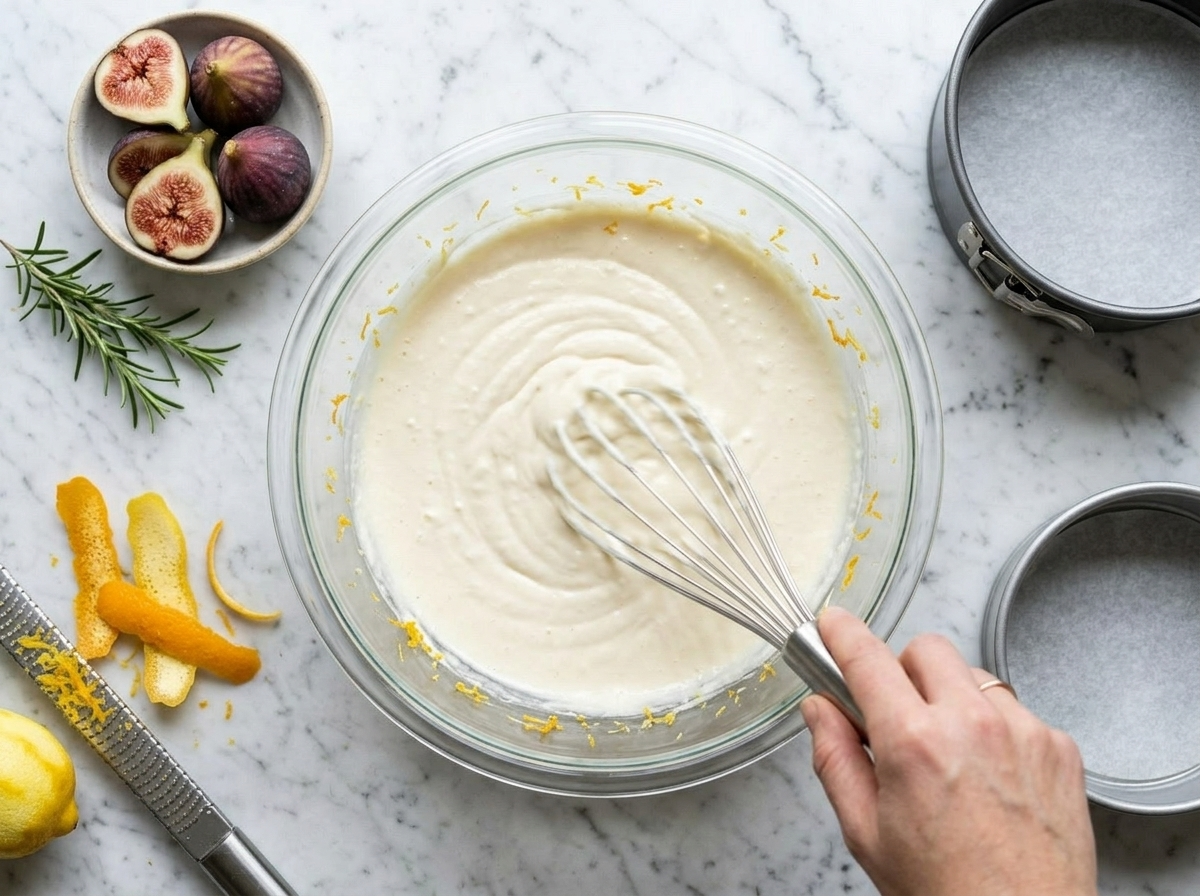
- Whisk the drained ricotta and caster sugar together by hand until smooth and no lumps remain.
- Add the eggs and egg yolk one at a time, whisking gently after each addition until just combined.
- Stir in the lemon zest, orange zest, vanilla extract, and salt. Do not overwork the mixture.
- Pour the filling over the chilled base and smooth the top with a spatula.
- Place the springform pan inside a deep roasting tray. Pour enough hot water into the tray to reach 2 cm up the side of the pan.
- Bake at 160 C / 320 F for 50 to 55 minutes, until the edges are set and opaque but the center still has a gentle wobble.
- Turn off the oven and leave the cheesecake inside with the door ajar for 20 minutes.
- Remove from the water bath and cool completely on a wire rack, then refrigerate for at least 4 hours or overnight before slicing.
Notes
Tips for Success
- Drain ricotta in a fine sieve over a bowl for at least 30 minutes, pressing gently, before mixing.
- Mix the filling by hand with a whisk, not a stand mixer, to avoid incorporating air that causes cracking.
- Bake in a water bath by placing the springform pan in a roasting tray with 2 cm of hot water around it.
- Turn the oven off when the edges are set but the center still has a slight wobble, then leave the door ajar for 20 minutes.
- Chill the finished cake for at least 4 hours before slicing so the texture sets fully and slices cleanly.
Variations
- Swap citrus zest for 1 tsp of pure vanilla and add a handful of dark chocolate chips folded into the filling.
- Use sheep’s milk ricotta (ricotta di pecora) for a slightly richer, more pronounced flavor traditional to southern Italy.
- Skip the biscuit base and dust the greased pan with fine semolina for a crustless, gluten-free version.
Storage and Reheating
Store the cheesecake covered in the refrigerator for up to 4 days. The texture is best on day two, once it has had time to firm and the citrus flavor deepens.
To freeze, wrap individual slices in cling film and place in an airtight container. Freeze for up to 6 weeks. Thaw overnight in the fridge, not at room temperature, to keep the texture stable.
This cheesecake is served cold or at cool room temperature. Do not reheat it. Warming ricotta-based cakes causes them to weep and lose their structure.
Serving Suggestions
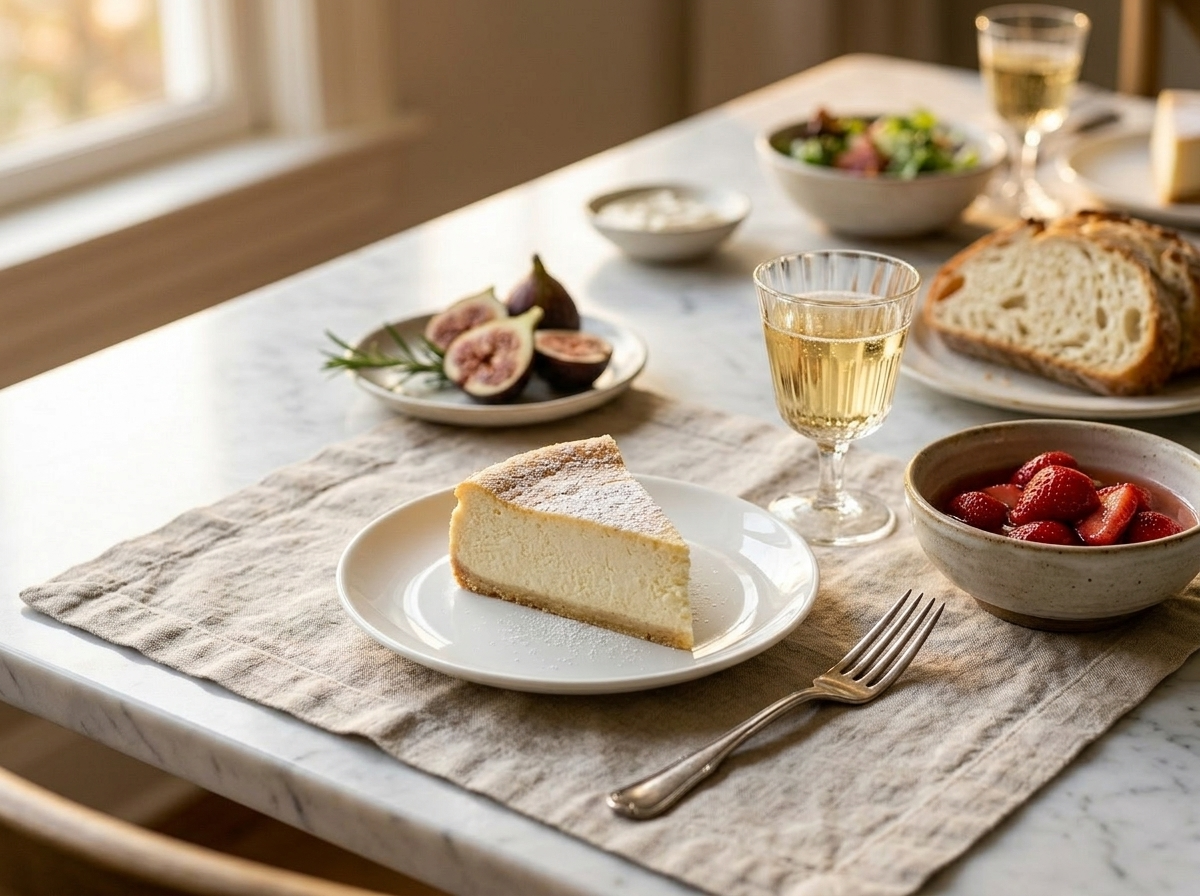
Serve slices plain with a light dusting of icing sugar. That is the traditional approach and it does not need anything else.
If you want something alongside, a spoonful of macerated strawberries or a few fresh figs work well. The fruit adds color and a little acidity that cuts through the richness of the ricotta.
For an after-dinner option, a small glass of Moscato d’Asti or Limoncello alongside a thin slice is a straightforward pairing, much like pairing Italian wine with food in general.
FAQ
Why did my Italian ricotta cheesecake crack on top?
Cracking usually means the oven was too hot or the cake cooled too fast. Bake it in a water bath and leave it in the turned-off oven with the door slightly open for 20 minutes before removing it.
Can I use part-skim ricotta instead of whole-milk ricotta?
You can, but the filling will be slightly less rich and more prone to a grainy texture. Whole-milk ricotta has enough fat to stay silky after baking, which part-skim does not always do.
How do I know when the ricotta cheesecake is done baking?
The edges should look set and opaque, but the center 5 cm should still wobble gently when you shake the pan. It will continue to firm up as it cools and chills.
Can I make this Italian ricotta cheesecake gluten-free?
Yes. Replace the amaretti biscuit base with certified gluten-free almond cookies or skip the base entirely and bake the filling in a semolina-dusted pan. The filling itself contains no gluten.
What is the difference between Italian ricotta cheesecake and New York cheesecake?
New York cheesecake uses cream cheese and heavy cream, giving it a dense, rich, tangy result, while other traditional Italian dessert recipes rely on eggs and aged technique for their character. Italian ricotta cheesecake is lighter, less sweet, and has a finer, more delicate crumb closer to a baked custard.
Can I freeze the whole ricotta cheesecake before it is sliced?
Yes, wrap the whole cake tightly in two layers of cling film once fully chilled, then freeze for up to 6 weeks. Thaw it overnight in the fridge still wrapped so condensation does not form on the surface.