
Jump to Recipe
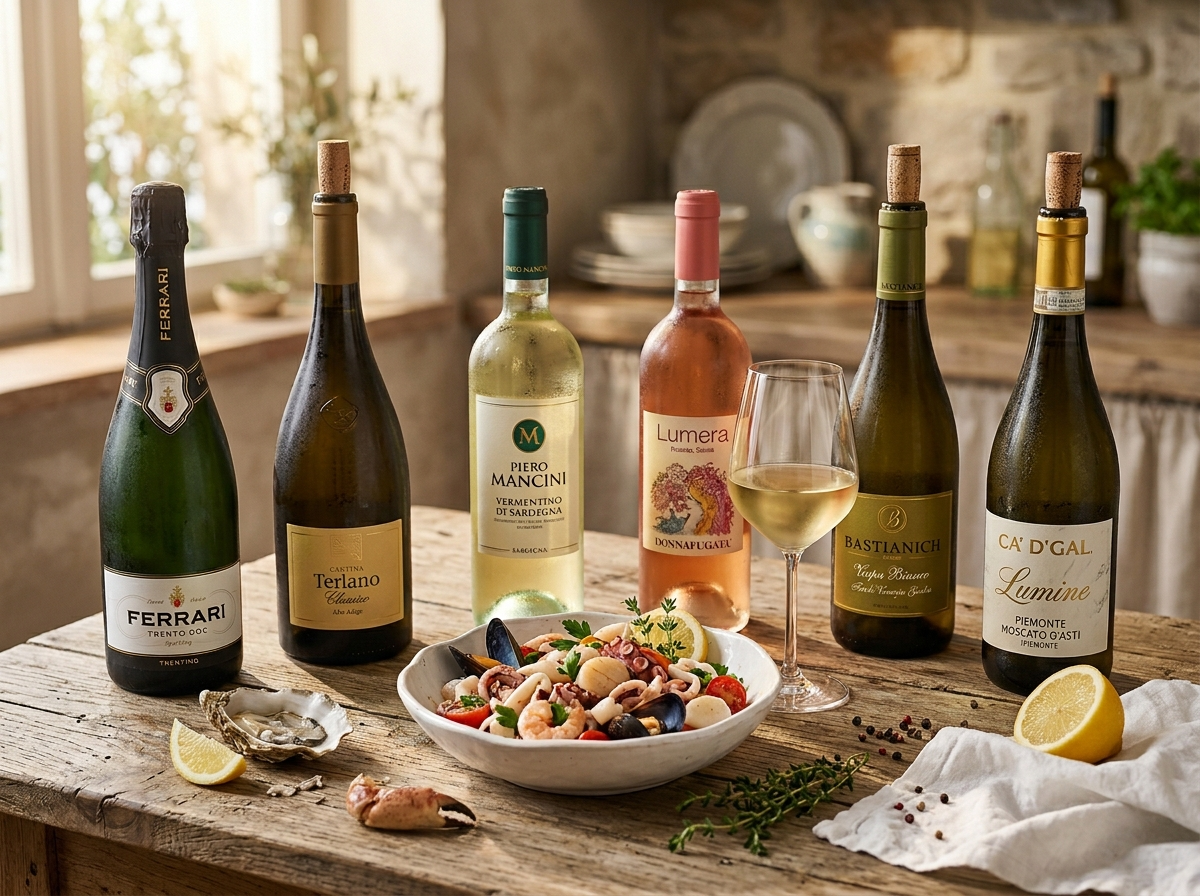
An Italian seafood feast built around, say, crudo, spaghetti alle vongole, grilled branzino, and a slow brodetto needs wines that move with each course rather than fight them.
The rule I follow is simple: match the weight of the wine to the weight of the dish. Raw shellfish wants a lean, mineral-driven white. A rich fish stew can handle something with more body and even a touch of oak.
Italy makes this easier than most countries. The coastlines of Campania, Sicily, Friuli, and Sardinia produce whites built specifically around seafood. You don’t need to look far.
This guide pairs six Italian seafood courses with six specific bottles, with tasting notes and real substitutes at each step.
Why You’ll Love This Recipe
- Every bottle is Italian, keeping the table coherent
- Pairing logic explained so you can adapt it
- Budget-friendly alternatives listed at each course
- Works for four-course dinners or a full six-course feast
Ingredient Notes
- Crudo or raw oysters (first course): Choose a Vermentino di Sardegna or a Greco di Tufo. Both have enough saline minerality to complement iodine-forward shellfish without competing. A dry Prosecco Brut Nature works as a substitute.
- Spaghetti alle vongole (pasta course): Falanghina from Campania is the natural match here. Its low oak and citrus-forward profile mirrors the white wine and clam liquor in the pan. Verdicchio dei Castelli di Jesi is a solid, cheaper alternative.
- Grilled branzino or orata (main fish course): A Sicilian Carricante from Etna Bianco has volcanic minerality that pairs well with flame-kissed skin and lemon. If you can’t find it, a Fiano di Avellino holds up similarly.
- Fritto misto (fried course): Sparkling wine cuts through the oil. A Franciacorta Brut or a Trentodoc Brut are the Italian alternatives to Champagne. They both have the acidity and bubble size to clean the palate between pieces.
- Brodetto or fish stew (hearty course): This is the one course where you can open a Vermentino with some age or even a light-bodied Cerasuolo d’Abruzzo rosé. The stew’s tomato and shellfish depth needs a wine with some structure, not a sharp, lean white.
- Dessert (optional: granita or citrus sorbet): A Moscato d’Asti at low alcohol (around 5.5%) and slight sweetness pairs cleanly with lemon granita. Its floral apricot note also works with almond-based Sicilian pastries.
Wine Pairing for an Italian Seafood Feast
Ingredients
Method
- Place all white wine bottles in the refrigerator 2 hours before the feast begins. Sparkling wines go in 3 hours ahead to reach 7 C.
- Set out wine glasses in two rows: one for the current course and one clean glass ready for the next pour.
- Label each bottle with a small tag noting which course it belongs to, so service moves without confusion.
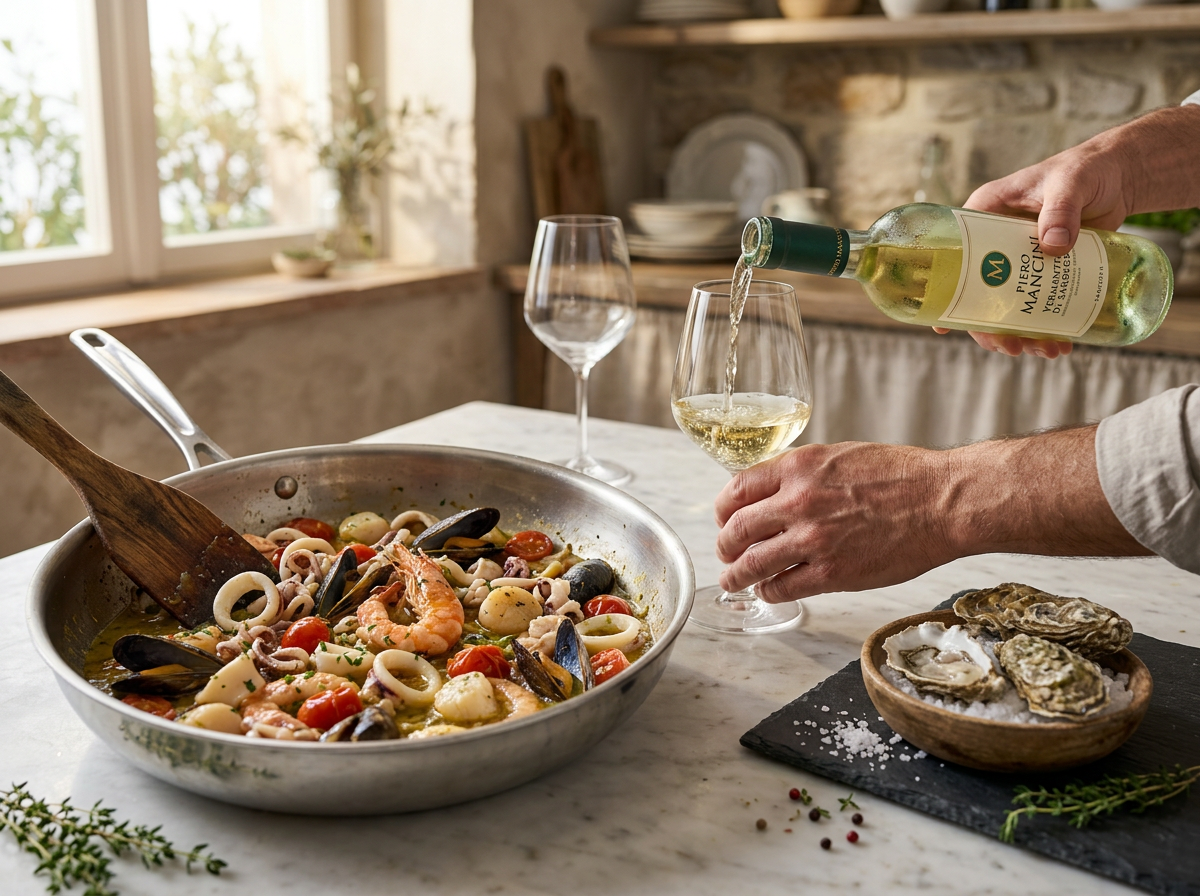
- Open the Vermentino di Sardegna or Greco di Tufo just before guests sit down. Pour 125 ml per person.
- Serve alongside raw oysters, tuna crudo, or clams on the half shell. The mineral and citrus notes in the wine match the iodine salinity of the shellfish.
- If using Prosecco Brut Nature as substitute, pour into a wide white wine glass rather than a flute for better aroma.
- Open the Falanghina just as the pasta is plated. Its light body and citrus profile mirror the white wine and clam liquor in the dish.
- Pour 125 ml per person. Collect used glasses from course one and set clean glasses for this pour.
- The wine should smell clean and slightly floral. If it smells flat or oxidized, it has been stored too warm.
- Open the Etna Bianco Carricante as the fish comes off the grill. Its volcanic minerality pairs with the smoky, lemon-dressed skin.
- Pour 125 ml per person into fresh glasses. This is usually the most complex wine of the evening, so give guests a moment to nose it before the fish arrives.
- If you can't source Carricante, open the Fiano di Avellino at the same temperature and pour the same amount.
- Open the Franciacorta Brut just before the fritto misto arrives. Pour into clean wide glasses, 100 ml per person.
- The fine bubbles and sharp acidity cut through the fried coating on each piece. Sip between pieces, not just at the start and end of the course.
- Keep a second bottle chilled if serving a large group. Fritto misto is the course that always prompts a second pour.
- Open the Cerasuolo d'Abruzzo rosé as the stew bowls are ladled. Serve at 10 C, slightly warmer than the whites so its fruit structure comes through.
- Pour 125 ml per person. The rosé's cherry and tomato notes echo the stew's base without the sharpness of a lean white.
- This is the right moment to set out good bread for the end of the bowl. The wine and the stew together make a natural pause before dessert.
- Open the Moscato d'Asti cold, around 7 C, just before dessert is served. Its low alcohol means guests can finish the glass without fatigue.
- Pour 100 ml per person into clean glasses. The slight effervescence and apricot note pair with lemon granita, almond biscotti, or light ricotta-based sweets.
- Avoid serving Moscato d'Asti with chocolate or coffee-based desserts. The delicate floral sweetness disappears against strong flavors.
Notes
Tips for Success
- Chill whites to 8-10 C before serving; anything colder flattens the aromatics you’re pairing with.
- Open one bottle per two people for a six-course feast; smaller pours keep palates fresh across courses.
- Serve sparkling wine in a regular white wine glass, not a flute, to let the aromas open.
- Pour the lightest wine first and move toward the fuller-bodied bottle as courses progress.
- Keep a small bowl of plain bread on the table to reset the palate between pours without water washing flavors away.
Variations
- Replace Falanghina with a Chablis Premier Cru for the clam pasta if Italian options are unavailable locally.
- For a budget six-bottle feast under $120 total, use Verdicchio, Pinot Grigio Friuli, and Cerasuolo d’Abruzzo throughout.
- For a Sicilian-only feast, anchor every course to Etna Bianco Carricante and rotate through producers by course.
Storage and Reheating
Wine opened during a long feast can be recorked and refrigerated overnight. Sparkling wine loses its bubble within 12 hours even with a stopper, so finish it the same evening.
Leftover brodetto and vongole pasta reheat well the next day. Open a fresh glass from the same bottle used in cooking rather than a new pairing. The match won’t be perfect but it works.
Unopened bottles store best at 12-14 C, on their sides, away from direct light. Italian whites at this price range (under $30) are not meant for long cellaring. Drink within one to two years of vintage.
Serving Suggestions
Lay the courses out in order of weight: raw and chilled dishes first, then pasta, then grilled fish, then fritto misto, then the stew. This lets you move from the lightest wine to the most structured.
A clean linen tablecloth, a good white candle, and a central platter of lemon wedges and sea salt set the right context without over-staging the meal. The food and wine do the work.
For a smaller group of two or four, you don’t need six full bottles. Buy 375 ml half-bottles where available, or split a full bottle across two courses when the wines are close in style.
FAQ
Why does my wine taste too acidic with the brodetto but fine on its own?
A lean, high-acid white like Vermentino or Pinot Grigio can clash with the tomato base in brodetto because acidity stacks. Switch to a Cerasuolo d’Abruzzo rosé or a fuller Fiano for the stew course. The fruit weight in those wines balances the tomato without the sharp edge.
Can I use Pinot Grigio instead of Falanghina with spaghetti alle vongole?
You can, but choose a Friuli or Alto Adige Pinot Grigio, not the mass-market Delle Venezie style. Friuli Pinot Grigio has enough body and minerality to hold against clam liquor. The generic supermarket versions are too neutral to add anything to the pairing.
How do I know when an Etna Bianco is too old to pair well with grilled branzino?
A fresh Etna Bianco should be pale straw with a citrus and volcanic mineral nose. If it’s showing deep gold color or smells nutty and oxidized, it’s past its window for delicate grilled fish. Drink those aged bottles with richer dishes or on their own.
What’s the difference between Franciacorta and Prosecco for the fritto misto course?
Franciacorta is made by the traditional method, like Champagne, giving it finer bubbles and more yeast-driven complexity. Prosecco uses the tank method and is fruitier and simpler. Both cut through fried fish, but Franciacorta holds up better across a full course rather than just the first few bites.
Is a full Italian seafood feast wine pairing gluten-free?
The wines themselves are gluten-free. Whether the feast is gluten-free depends entirely on the dishes: spaghetti contains gluten, but crudo, grilled fish, and most brodetti are naturally gluten-free. Swap pasta for rice or polenta to make the full menu gluten-free.
What goes well with Moscato d’Asti beyond lemon granita at the end of the feast?
Moscato d’Asti pairs naturally with almond biscotti, Sicilian cannoli with ricotta, and fresh fruit plates with peach or apricot. It also works with light panna cotta. Avoid pairing it with chocolate-based desserts, where its delicate sweetness disappears.