
Jump to Recipe
Spaghetti cacio e pepe is a Roman pasta made from just spaghetti, Pecorino Romano, black pepper, and starchy pasta water whisked into a sauce that clings to every strand.
There’s no cream, no butter, no garlic. The whole dish comes down to temperature and the ratio of cheese to starchy water, too hot and the pecorino clumps into rubbery strings, too cold and it never melts into sauce at all.
I make the sauce in a separate bowl off the heat instead of in the pasta pot. That one change fixed the clumping problem for me after years of grainy, broken batches.
Toast the pepper in a dry skillet first, until it smells sharp and a little smoky. That step alone changes the whole dish.
Why You’ll Love This Recipe
- Just four ingredients, no special shopping trip needed
- Ready in 25 minutes start to finish
- No cream or butter, the sauce is pure cheese and starch
- Teaches an emulsion technique that carries over to other pasta sauces
Ingredient Notes
- spaghetti: Standard wheat spaghetti works best here since its surface holds the starch that thickens the sauce. Bucatini or tonnarelli are traditional swaps if you want something closer to the Roman original.
- Pecorino Romano: Buy a block and grate it yourself as fine as possible, pre-shredded bags don’t melt smoothly. Parmesan works in a pinch but tastes milder and less salty, so adjust seasoning.
- black pepper: Use whole peppercorns cracked coarsely just before cooking. Pre-ground pepper has lost most of its aroma and the dish tastes flat without it.
- pasta water: This is the actual thickener in the sauce, starchy and hot. Reserve more than you think you’ll need, at least 2 cups / 480 ml.
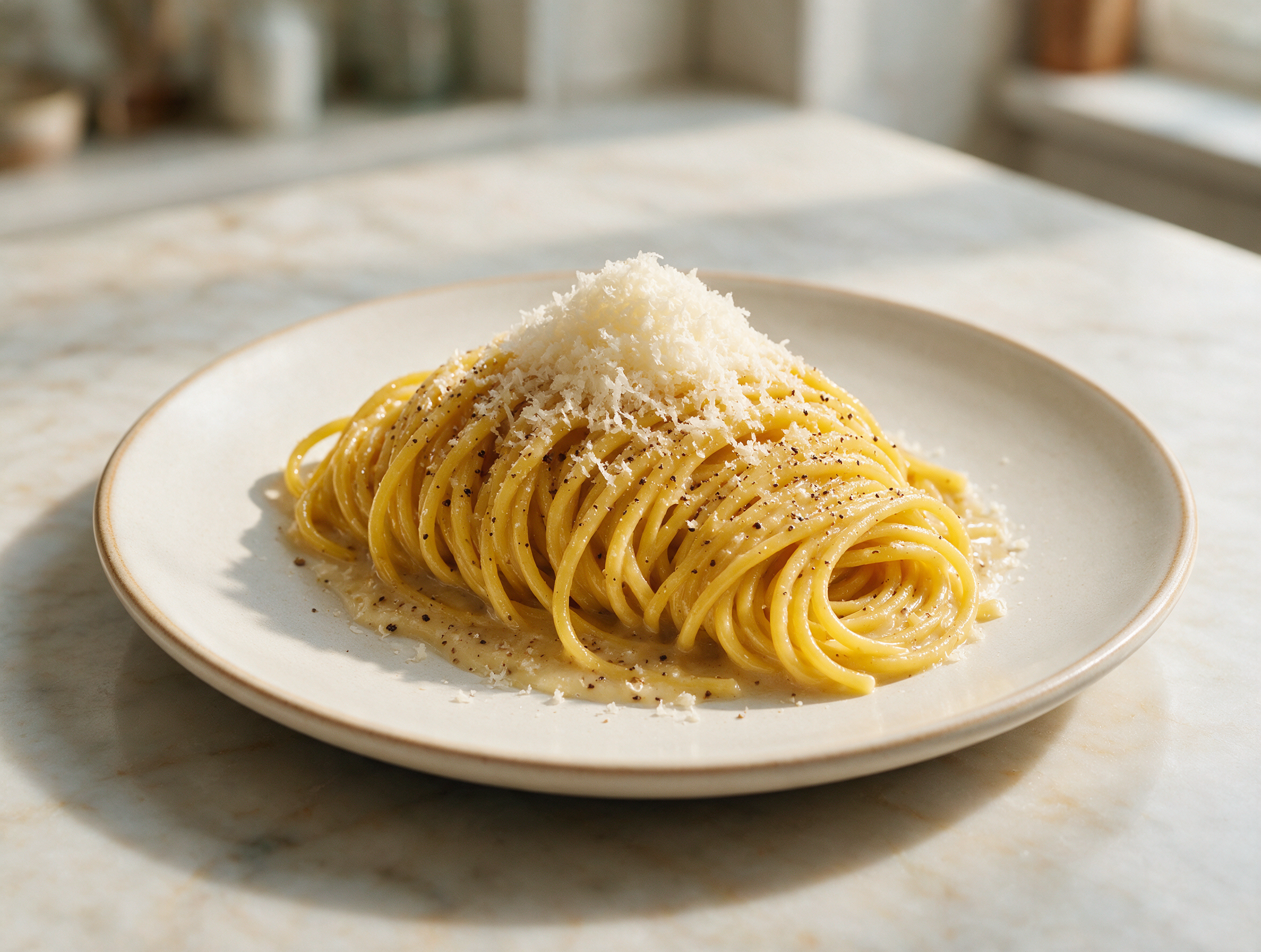
Silky Spaghetti Cacio e Pepe with Pecorino Romano
Ingredients
Method
- Crack the black peppercorns coarsely with a mortar and pestle or the bottom of a skillet. Don't use pre-ground pepper, the flavor is flatter and loses its aroma fast.
- Toast the cracked pepper in a dry 10-inch / 26 cm skillet over medium heat for 60 to 90 seconds, shaking the pan, until it smells sharp and lightly smoky.
- Bring 3 quarts / 2.8 L water to a boil in a 6-quart pot. Salt lightly, the pecorino brings plenty of salt on its own.
- Add the spaghetti and cook 1 minute less than the package time, until just shy of al dente, it finishes cooking in the sauce.
- Scoop out 2 cups / 480 ml pasta water before draining, using a heatproof cup or ladle. Lift the pasta straight from the pot with tongs instead of tipping it into a colander, so you don't lose the starchy water.
- In a large heatproof bowl, whisk the finely grated pecorino with 1/2 cup / 120 ml of the hot pasta water, added a little at a time, until you get a smooth, loose paste with no lumps.
- Add the drained pasta to the bowl along with the toasted pepper. Toss constantly with tongs off the heat, adding splashes of the reserved pasta water as needed until the sauce turns glossy and coats the strands.
- If the sauce looks tight or stringy, add another splash of hot pasta water and keep tossing, it loosens as the starch relaxes. Plate immediately with extra grated pecorino and a final crack of pepper.
Notes
- Use tongs to lift pasta from the pot, don't drain in a colander
- Mix cheese into a paste with warm pasta water before adding pasta
- Work quickly once pasta and cheese meet, the sauce sets fast
- Reserve extra pasta water, you can always add more, never subtract
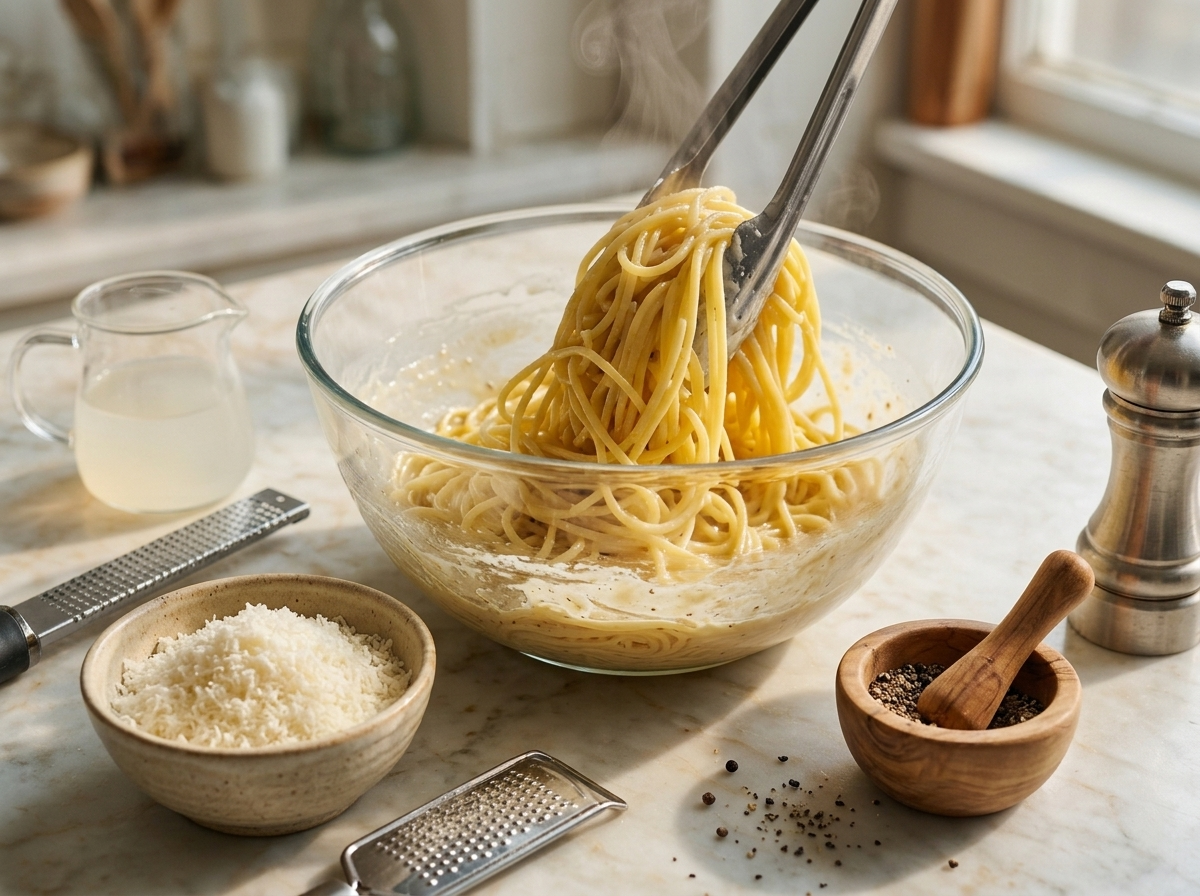
Tips for Success
- Grate the pecorino as fine as sand, coarse shreds won’t melt smoothly and will clump instead.
- Reserve at least 2 cups pasta water before draining, you’ll need more than you think to loosen the sauce.
- Toss the pasta off direct heat when mixing in cheese, direct heat is the main reason the sauce breaks.
- Crack whole peppercorns yourself and toast them briefly, pre-ground pepper tastes flat and loses its aroma fast.
- Serve the pasta the moment it’s plated, cacio e pepe tightens up and turns gluey as it cools.
Variations
- Add crisped guanciale or pancetta for cacio e pepe con guanciale, a heartier Roman variation with rendered pork fat in the sauce.
- Use a mix of Pecorino Romano and Parmesan for a milder, less sharp version if straight pecorino tastes too salty for you.
- Finish with lemon zest and a pinch of chili flakes for a brighter, spicier twist that keeps the classic sauce base intact.
Storage and Reheating
Cacio e pepe is best eaten right away, since the emulsion is fragile and can break as it cools. Leftovers keep in an airtight container in the fridge for 2-3 days.
To reheat, use a 10-inch skillet over low heat with a splash of hot water or reserved pasta water, tossing constantly until the sauce loosens and turns glossy again.
Skip the microwave. It heats unevenly and turns the pecorino grainy and rubbery instead of smooth.
Serving Suggestions
Spaghetti cacio e pepe is rich enough to stand on its own, so keep sides plain. A simple green salad with a sharp vinaigrette cuts through the cheese and pepper.
Roasted or blistered vegetables, like the garlicky broccoli in cavatelli con broccoli or blistered cherry tomatoes, work well on the side without competing with the sauce.
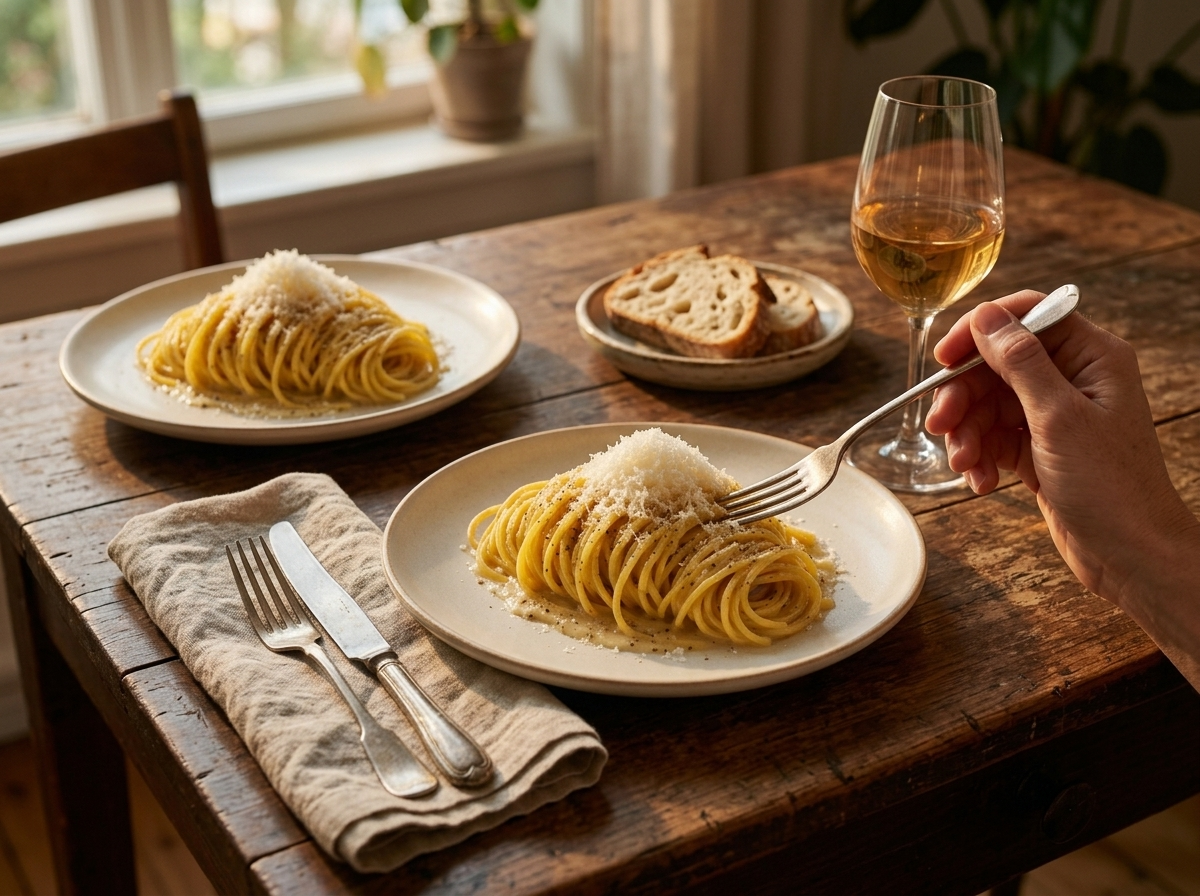
Pour a crisp white wine, a Frascati or a dry Vermentino both work, and finish each bowl at the table with extra grated pecorino and one more crack of black pepper.
FAQ
Why did my cacio e pepe sauce turn clumpy instead of silky?
Clumping happens when pecorino hits pasta that’s still too hot, so the proteins seize instead of melting into sauce. Mix the cheese into a paste with warm, not boiling, pasta water in a separate bowl first, then fold in the pasta off the heat. Constant tossing while it cools slightly keeps the emulsion smooth.
Can I use Parmesan instead of Pecorino Romano in cacio e pepe?
You can, but the dish changes character. Pecorino Romano is sheep’s milk, sharper and saltier, the same cheese that anchors Rome’s classic offal pasta, and it’s what gives cacio e pepe its traditional taste. Parmesan melts a bit smoother and tastes milder, similar to the golden crust in gnocchi alla romana, so if you swap it in, cut back the added salt and taste as you go.
Can I make cacio e pepe ahead of time or reheat leftovers?
Cacio e pepe is best made fresh and eaten right away, since the emulsion can break as it sits. Leftovers reheat fine in a 10-inch skillet over low heat with a splash of hot water, tossed constantly until the sauce loosens again. Skip the microwave, it turns the pecorino rubbery.
What goes with spaghetti cacio e pepe besides more cheese?
A simple green salad with a sharp vinaigrette cuts through the richness, and roasted or blistered vegetables like broccolini work well alongside. Keep sides plain, cacio e pepe is already built around cheese and pepper, so anything heavy or garlicky competes with it instead of complementing it.
Is spaghetti cacio e pepe gluten-free friendly?
Not as written, since regular spaghetti is wheat pasta, but the sauce itself has no gluten in it. Swap in a gluten-free spaghetti, and reserve extra pasta water since GF pasta releases less starch, you may need more of it to help the sauce come together smoothly.
What’s the difference between cacio e pepe and fettuccine alfredo?
Cacio e pepe uses only pecorino, black pepper, and starchy pasta water for its sauce, no cream or butter involved. Alfredo relies on butter and often cream along with Parmesan for a richer sauce. Cacio e pepe tastes lighter and sharper, alfredo comes out rounder and more mellow.