
Jump to Recipe
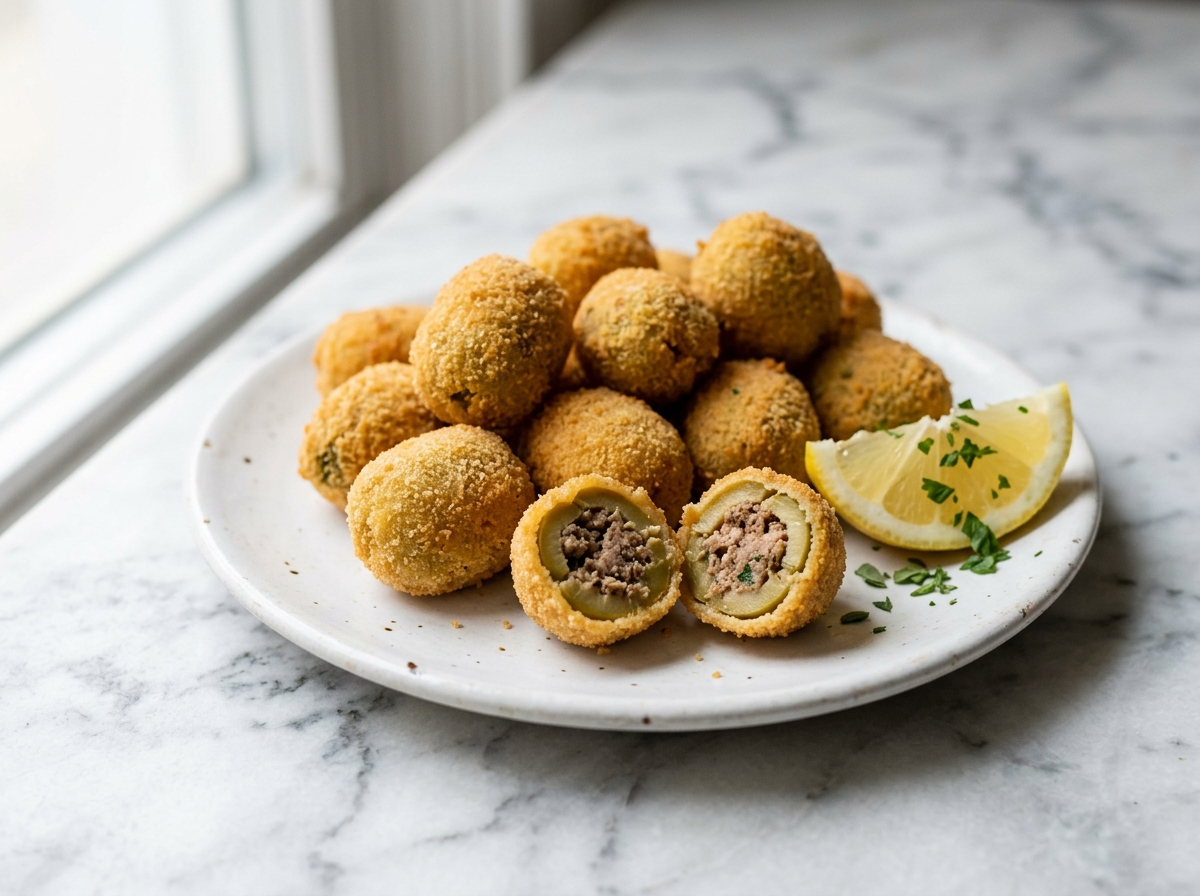
Olive ascolane come from Ascoli Piceno in Le Marche, where they’re stuffed with a slow-cooked meat mixture, breaded three times, and fried until pale gold. You’ll find them at every local fritto misto stand in central Italy.
The key is the olive itself. You need large, firm, green olives with enough flesh to pit without tearing. The Ascolana Tenera variety is traditional, but any plump Cerignola-style olive works.
The filling uses a small amount of finely ground cooked meat – often a mix of veal, pork, and chicken – bound with egg and nutmeg. It’s subtle, not heavy.
Frying technique matters here. A double or triple breadcrumb coat gives you the audible crunch that defines a good olive ascolana. Eat them hot, straight from the oil.
Why You’ll Love This Recipe
- Audible crunch from a triple breadcrumb coat
- Savory meat filling that stays juicy inside
- Ready in under an hour with make-ahead filling
- Authentic street food flavor without a flight to Italy
Ingredient Notes
- Large green olives: You need firm, fleshy olives you can pit cleanly. Cerignola or Queen olives work well. Avoid small cocktail olives – there’s no room for filling.
- Ground veal: Traditional blends use veal, pork, and chicken in roughly equal parts. All-pork works fine as a weeknight substitute and gives a slightly richer result.
- Dry white wine: Used to deglaze the meat mixture while cooking. A light Verdicchio or Pinot Grigio is ideal, but any dry white you’d drink works.
- Nutmeg: Freshly grated nutmeg is key to the signature flavor of the filling. Pre-ground nutmeg goes stale fast and tastes flat.
- Fine breadcrumbs (pangrattato fine): Use very fine, dry breadcrumbs – not panko. Panko is too coarse and the coating won’t adhere tightly around a curved olive.
- Eggs: You’ll need eggs both for the filling binder and the egg wash stage. Two eggs is enough for a batch of 20-24 olives.
- Neutral frying oil: Sunflower or peanut oil holds a steady 175-180 C without smoking. Olive oil can be used but has a lower smoke point and stronger flavor.
Olive Ascolane: Italian Fried Stuffed Olives
Ingredients
Method
- Heat 1 tbsp olive oil in a small pan over medium heat. Add the diced onion and cook for 5 minutes until soft and pale.
- Add the ground veal, pork, and chicken. Break up any lumps and cook for 6-7 minutes, stirring often, until the meat is cooked through and any liquid has evaporated.
- Pour in the white wine. Stir and cook for 2 minutes until the wine has fully evaporated and the pan smells clean, not sharp.
- Remove from heat. Transfer the meat mixture to a food processor and pulse 10-12 times until very fine but not a paste.
- Tip into a bowl and mix in the Parmigiano, egg yolk, nutmeg, lemon zest, salt, and pepper. Stir until uniform. Cover and refrigerate for 30 minutes.
- Pat the olives completely dry with paper towel. Using a small sharp knife, cut a spiral around each olive from stem end to base, keeping the flesh in one piece. Remove the pit carefully.
- Take a small amount of chilled filling (about 1 tsp) and press it firmly into the cavity of each olive, reshaping the olive around it with your fingers. The olive should look whole again.
- Place stuffed olives on a tray in a single layer.
- Set up three shallow bowls: one with flour, one with beaten egg, one with fine breadcrumbs.
- Roll each olive in flour until lightly coated, shaking off any excess.
- Dip in beaten egg, letting any excess drip off, then roll in breadcrumbs, pressing gently so they adhere all around.
- Repeat the egg and breadcrumb steps a second time for a double coat. Place breaded olives back on the tray. Refrigerate for 20 minutes before frying.
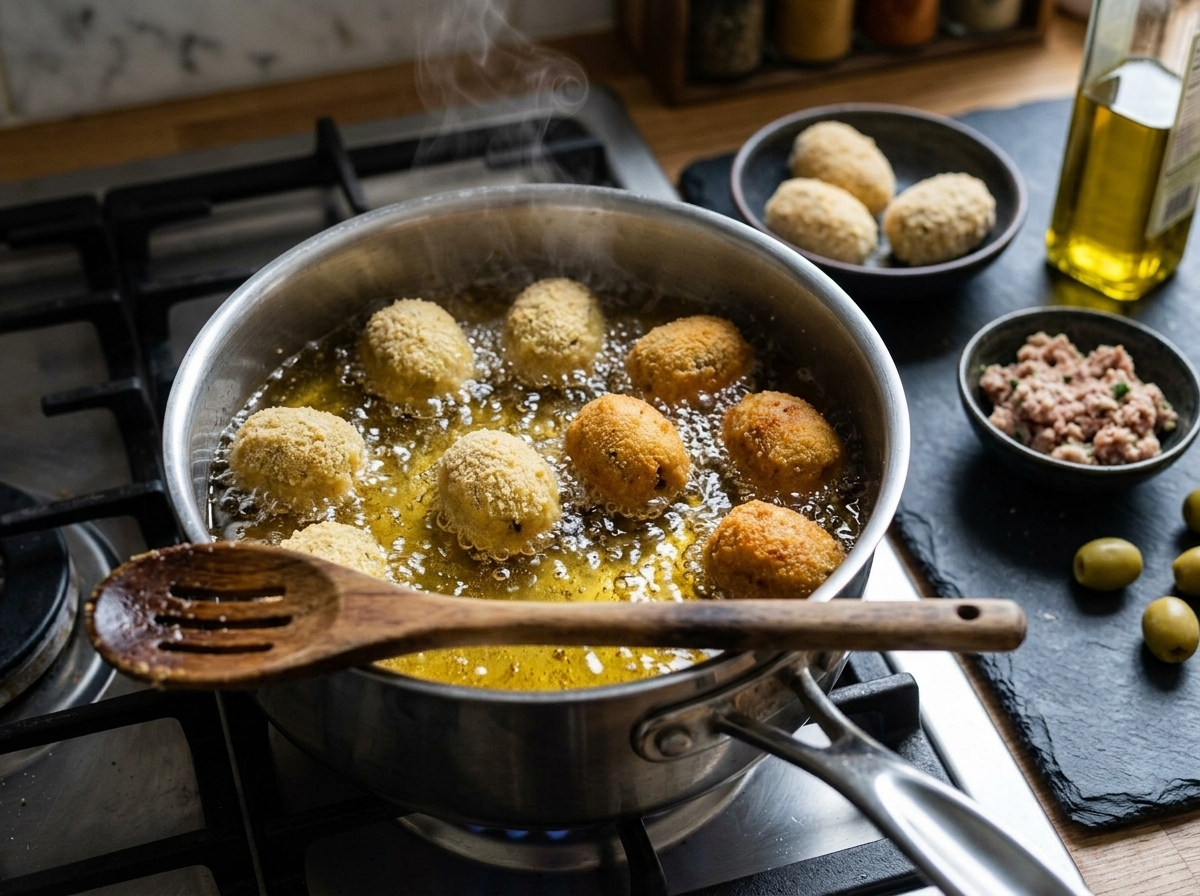
- Pour the frying oil into a deep, heavy saucepan. Heat to 175-180 C / 345-355 F, checking with a kitchen thermometer.
- Fry 6-8 olives at a time for 2-3 minutes, turning once, until pale golden all over. Do not crowd the pan.
- Remove with a slotted spoon and drain on a wire rack. Check the oil temperature returns to 175 C before each new batch.
- Serve immediately while the crust is crisp.
Notes
Tips for Success
- Chill the meat filling for 30 minutes before stuffing – cold filling holds its shape inside the olive.
- Pit each olive with a small sharp knife in a spiral cut, keeping the olive intact rather than halving it.
- Coat each olive in flour, egg, then breadcrumbs twice for a crack-free crust that won’t open in hot oil.
- Fry in small batches of 6-8 olives so the oil temperature stays at 175 C and the coating crisps rather than steams.
- Drain on a wire rack, not paper towel, so the bottom crust stays crisp while you fry the next batch.
Variations
- Vegetarian version: fill with a mix of ricotta, lemon zest, and finely chopped sun-dried tomatoes.
- Pecorino and black pepper filling for a sharper, cheese-forward bite instead of meat.
- Add 1 teaspoon of finely chopped chicken liver to the meat mixture for a deeper, earthier filling.
Storage and Reheating
Uncooked, breaded olives keep in a single layer on a tray in the fridge for up to 24 hours before frying. Cover loosely with cling film so the coating dries slightly – this helps it crisp faster in the oil.
Fried olive ascolane are best eaten immediately. If you have leftovers, store them uncovered in the fridge for up to 1 day. Reheat in an air fryer at 180 C / 355 F for 4-5 minutes until hot through and the crust is crisp again, using the same approach that works for crispy air fryer Italian dishes. Avoid the microwave – it turns the coating soft.
For longer make-ahead, freeze the breaded raw olives on a tray until solid, then transfer to a bag. Fry from frozen at 170 C for about 5-6 minutes, adding 1-2 minutes to the usual cook time.
Serving Suggestions
In Ascoli Piceno, olive ascolane are part of a wider fritto misto that includes fried cream squares (crema fritta) and fried vegetables, much like the spirit behind classic Italian street food traditions. Arrange them together on a paper-lined plate for a proper Marchigiano spread.
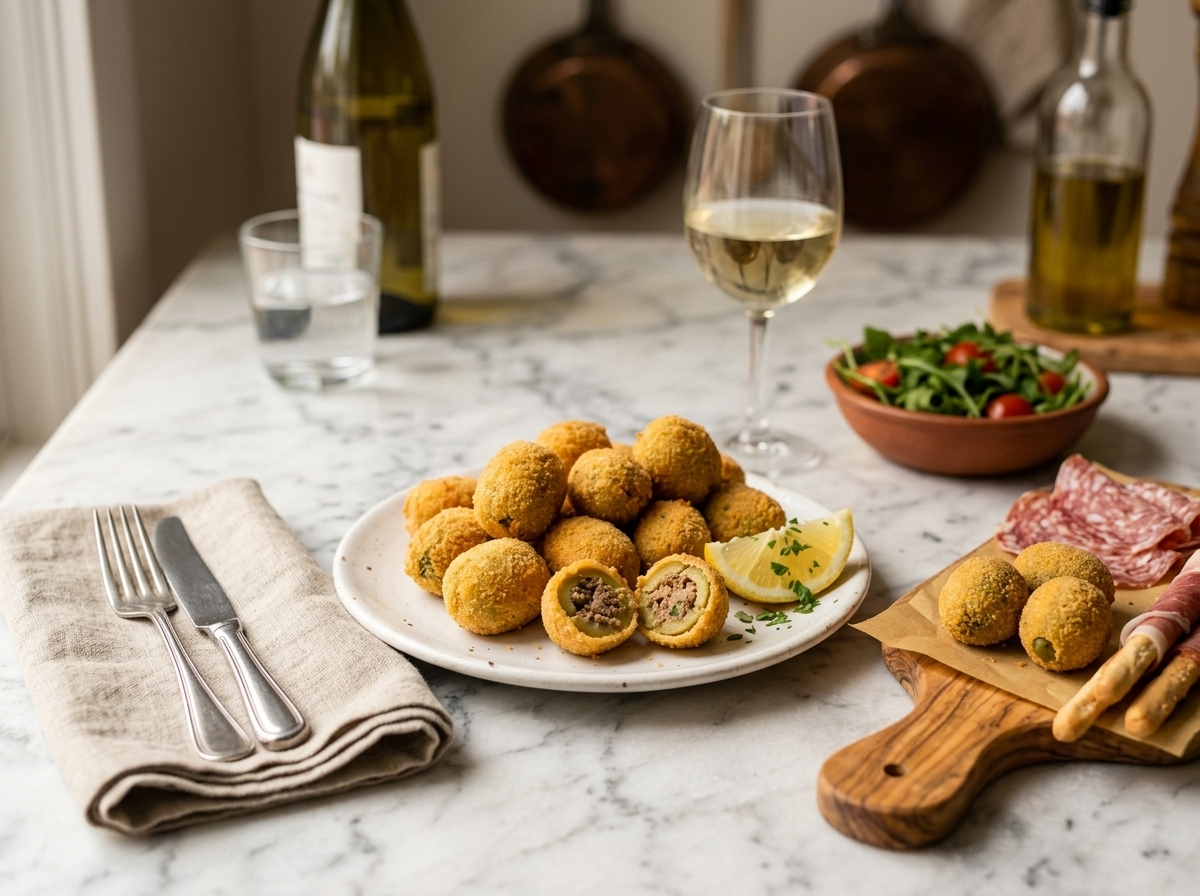
They work equally well as a standalone appetizer with a cold glass of Verdicchio dei Castelli di Jesi, the local white wine that shines when you know how to pair Italian wine with antipasto. The clean acidity cuts through the fried coating.
For a simple home aperitivo, serve them alongside a small bowl of lemon wedges, a few slices of cured meat, and some grissini. No dipping sauce needed – the filling is seasoned enough to stand on its own.
FAQ
Why is my olive ascolane coating falling off in the oil?
The coating usually falls off when the olive surface is wet or oily before breading. Pat each olive completely dry, then press the breadcrumbs firmly around the olive twice. Chilling the breaded olives for 20 minutes before frying also helps the coating bond.
Can I use Castelvetrano olives instead of Ascolana Tenera for this recipe?
Castelvetrano olives are buttery and large enough to pit, so they work reasonably well. They’re a bit softer than Ascolana Tenera, so handle them carefully when stuffing to avoid tearing the flesh.
Can I freeze olive ascolane before frying them?
Yes, freeze the fully breaded raw olives on a flat tray first, then bag them once solid. Fry from frozen at 170 C for 5-6 minutes – no need to thaw, and the coating stays intact.
What pairs well with olive ascolane at an Italian aperitivo?
A glass of dry white Verdicchio or a light sparkling Prosecco pairs cleanly with the fried meat filling. On the food side, crema fritta, thin slices of salume, and grissini are the classic companions in Le Marche.
Is there a way to make olive ascolane without meat for vegetarians?
A ricotta-based filling with lemon zest, finely grated Parmigiano, and a pinch of nutmeg is the most practical swap. It holds together well when chilled and gives a clean, savory result without the meat.
What is the difference between olive ascolane and regular stuffed olives?
Olive ascolane use a cooked, spiced meat filling that is packed into a pit-out whole olive, then breaded and deep-fried. Regular stuffed olives (jarred varieties) are usually cold-filled with pimento, cheese, or almonds and not breaded or fried.