
Jump to Recipe
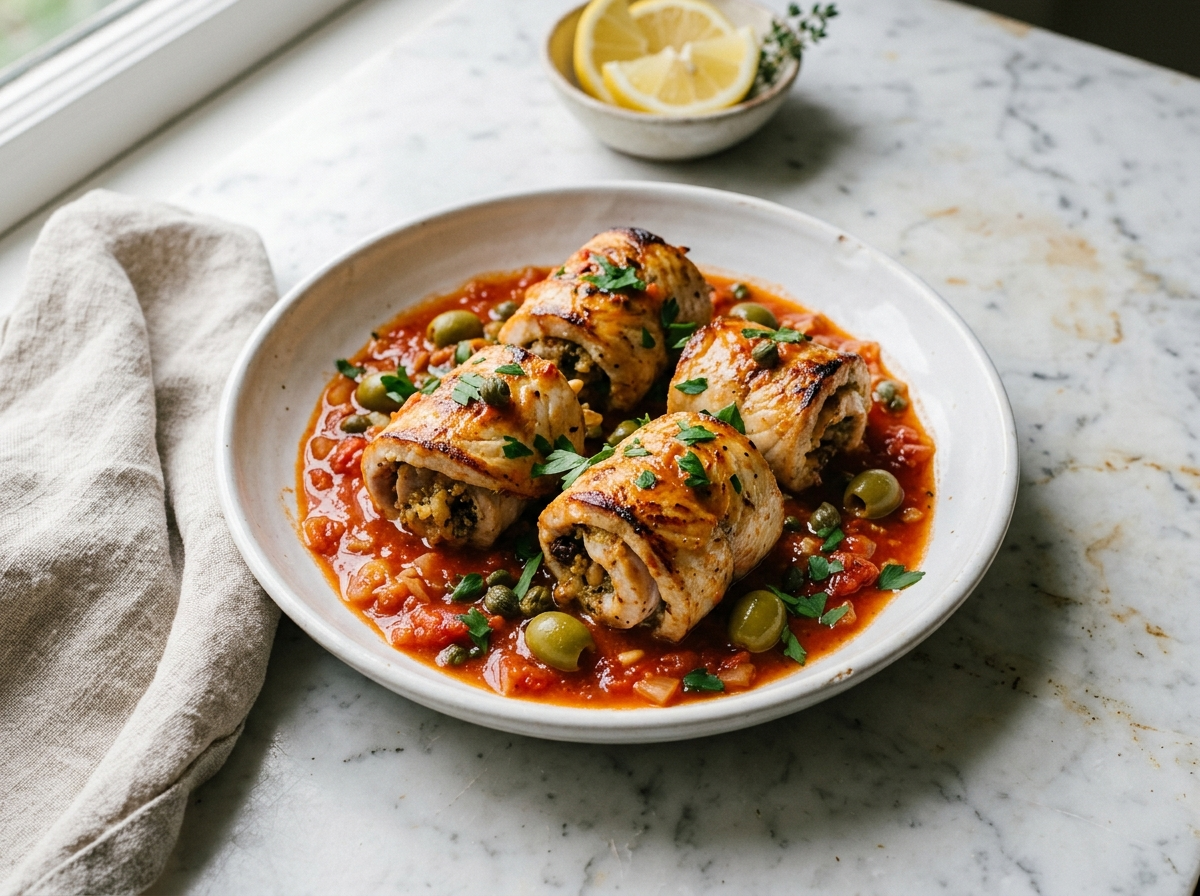
Involtini di pesce spada are a classic of Sicilian coastal cooking, especially around Messina. Thin swordfish slices wrap around a savory-sweet filling of toasted breadcrumbs, pine nuts, raisins, and capers, then get cooked in a light tomato sauce.
The agrodolce character of the filling, sweet raisins against briny capers and olives, is the signature of this dish. It sounds like a lot of components, but the prep is straightforward once you have your fish sliced and your filling mixed.
I find this works well as a weeknight dinner when I can get the fish sliced thin at the counter. The whole thing comes together in about 40 minutes, and it holds beautifully if you need to plate it ahead.
Why You’ll Love This Recipe
- Authentic Sicilian agrodolce flavor in under 40 minutes
- One pan from sear to sauce, minimal cleanup
- Make-ahead friendly, rolls firm up nicely when chilled
- Impressive presentation with straightforward technique
Ingredient Notes
- swordfish: Ask your fishmonger to slice it about 5 mm thin for easy rolling. If swordfish isn’t available, large tuna steaks or thick-cut marlin slices work the same way.
- fresh breadcrumbs: Day-old white bread pulsed in a food processor gives a coarser, more textured crumb than panko. Panko works but the filling will be slightly lighter and drier.
- pine nuts: Toast them dry in a pan for 2 minutes until pale gold before mixing into the filling. Unsalted chopped almonds are a common Sicilian substitute.
- raisins: Soak them in warm water for 10 minutes to plump before using. Sultanas or currants work just as well here.
- salted capers: Rinse well under cold water to remove the excess salt before chopping. Capers in brine are fine if that’s what you have, just drain and pat dry.
- canned crushed tomatoes: A 400 g can is enough for a light sauce that coats the rolls without drowning them. Good-quality passata works equally well.
Sicilian Swordfish Rolls (Involtini di Pesce Spada)
Ingredients
Method
- Heat 1 tbsp olive oil in a small pan over medium heat. Add the breadcrumbs and stir for 3-4 minutes until golden and crisp. Transfer to a bowl.
- Add the toasted pine nuts, drained raisins, chopped capers, parsley, minced garlic, lemon zest, and grated pecorino to the breadcrumbs.
- Drizzle in the remaining 2 tbsp olive oil and mix well. Taste for seasoning and add salt and pepper as needed. The filling should taste savory, slightly sweet, and a little briny.
- Lay a swordfish slice flat on a cutting board. Place a sheet of cling film on top and pound gently with a meat mallet or rolling pin until 4-5 mm thick and even.
- Spoon about 1 heaped tbsp of filling onto the lower third of the slice. Press gently to compact it.
- Roll the fish firmly away from you, tucking in the sides as you go. Secure with two toothpicks, one near each end. Repeat with all slices.
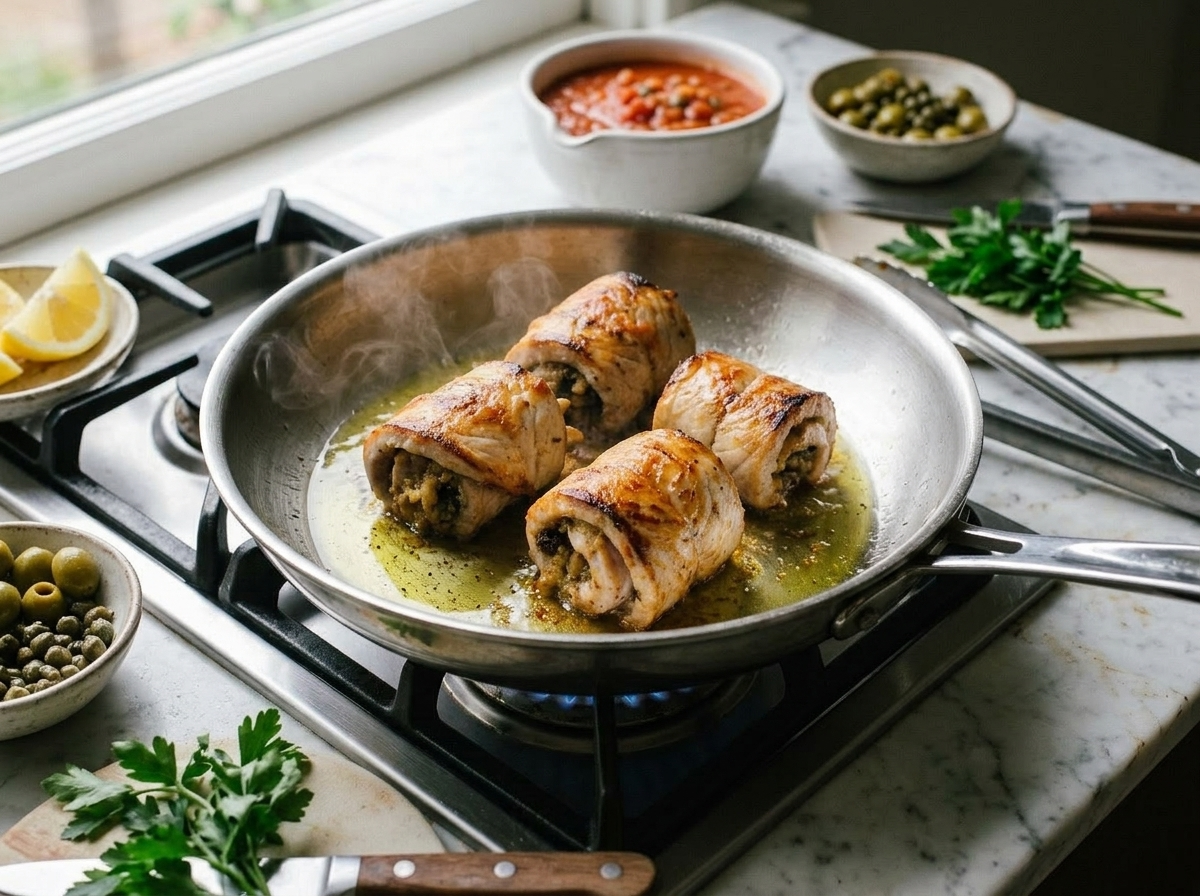
- Heat 2 tbsp olive oil in a wide skillet over medium-high heat. Add the crushed garlic cloves and cook for 1 minute until pale gold, then remove.
- Add the rolls seam-side down and sear for 2 minutes until lightly browned. Turn them gently with tongs to brown the other side, about 1-2 minutes more.
- Pour in the white wine and let it reduce for 1 minute, scraping up any bits from the pan.
- Add the crushed tomatoes and chopped olives. Season lightly with salt and pepper. Stir to combine.
- Reduce heat to medium-low, cover the pan, and simmer for 8 minutes until the fish is opaque all the way through and the sauce has thickened slightly.
- Remove toothpicks. Scatter fresh parsley or basil over the top and serve immediately with the sauce spooned over.
Notes
Tips for Success
- Pound each swordfish slice gently between two sheets of cling film to an even 4-5 mm thickness before filling.
- Season the filling and taste it before rolling. The balance of sweet raisins and salty capers should be noticeable.
- Secure each roll with two toothpicks, one at each end, so the filling doesn’t push out during searing.
- Sear the rolls seam-side down first in a hot pan to lock the shape before adding the tomato sauce.
- Simmer the rolls covered for no more than 8 minutes in the sauce or the fish will tighten and dry out.
Variations
- Add a pinch of saffron to the tomato sauce for a deeper, more aromatic Sicilian version.
- Use chopped green Castelvetrano olives in the filling instead of capers for a milder, buttery flavor.
- Grill the rolls on skewers over high heat instead of pan-searing, skipping the tomato sauce entirely.
Storage and Reheating
Store leftover rolls in an airtight container with the sauce, in the fridge for up to 2 days. The filling holds its texture well when chilled.
Reheat gently in a small covered pan over low heat with a splash of water added to the sauce, about 5 minutes. Microwaving works but the fish can tighten slightly.
I don’t recommend freezing these. Swordfish becomes grainy and loses moisture after freezing and thawing, and the breadcrumb filling turns soft.
Serving Suggestions
In Sicily these rolls are typically served as a second course with nothing more than good bread to mop the sauce, much like the approach taken with a classic Sicilian seafood dish. A simple bitter green salad, chicory or radicchio dressed with olive oil and lemon, cuts through the richness of the filling.
For a fuller plate, serve the rolls over a bed of white polenta or alongside roasted new potatoes. Both absorb the tomato sauce well.
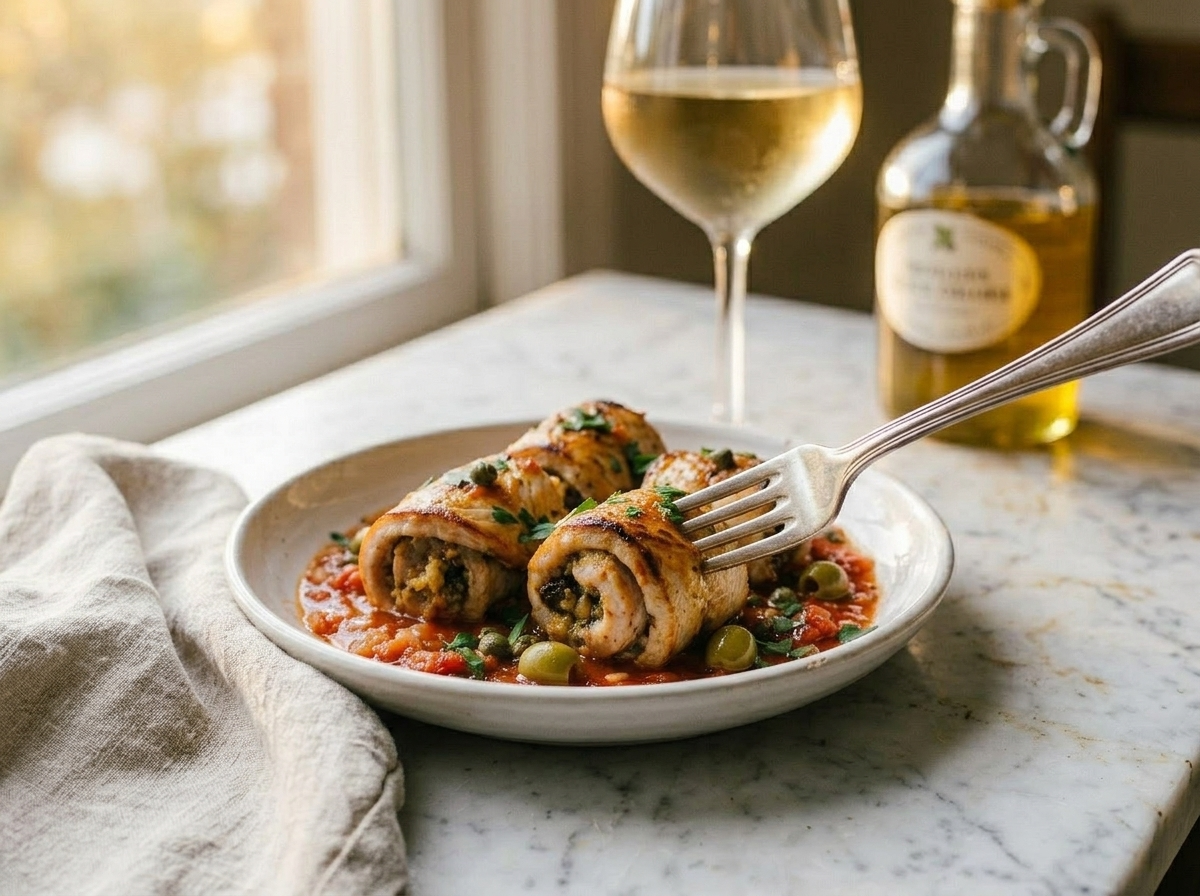
A chilled Sicilian white, Grillo or Catarratto, pairs cleanly with the fish without competing with the agrodolce notes in the filling.
FAQ
Why are my swordfish rolls falling apart in the pan?
The rolls most likely weren’t secured tightly enough or the swordfish slices were too thick to roll without cracking. Use two toothpicks per roll and make sure each slice is pounded to a consistent 4-5 mm before filling. Searing seam-side down first also helps hold the shape.
Can I use tuna instead of swordfish for these involtini?
Yes, thick-cut fresh tuna steaks sliced thin are the most common substitute in Sicilian home cooking, and the same briny, agrodolce sensibility runs through other Italian seafood main courses worth exploring. The flavor is slightly more pronounced than swordfish but the technique and filling are identical.
Can I assemble the swordfish rolls the night before and cook them the next day?
You can roll and secure them up to 12 hours ahead, then cover and refrigerate on a plate. Take them out 15 minutes before cooking so they aren’t cold at the center when they hit the pan.
What’s the difference between Sicilian involtini di pesce spada and the Messina version?
The Messina-style version, called spiedini di pesce spada, threads the rolls onto skewers between bay leaves and onion pieces before grilling. The filling is the same but the cooking method and presentation differ.
Is this swordfish rolls recipe gluten free?
It isn’t as written because the filling uses breadcrumbs. Swap the breadcrumbs for an equal weight of finely ground blanched almonds or certified gluten-free breadcrumbs and the rest of the recipe is naturally gluten free.
How do I know when the swordfish rolls are cooked through?
The flesh should turn from translucent to opaque white all the way through, which takes about 8 minutes in a covered pan over medium heat. If you press the roll gently and it feels firm with just a slight give, it’s done.