
Jump to Recipe
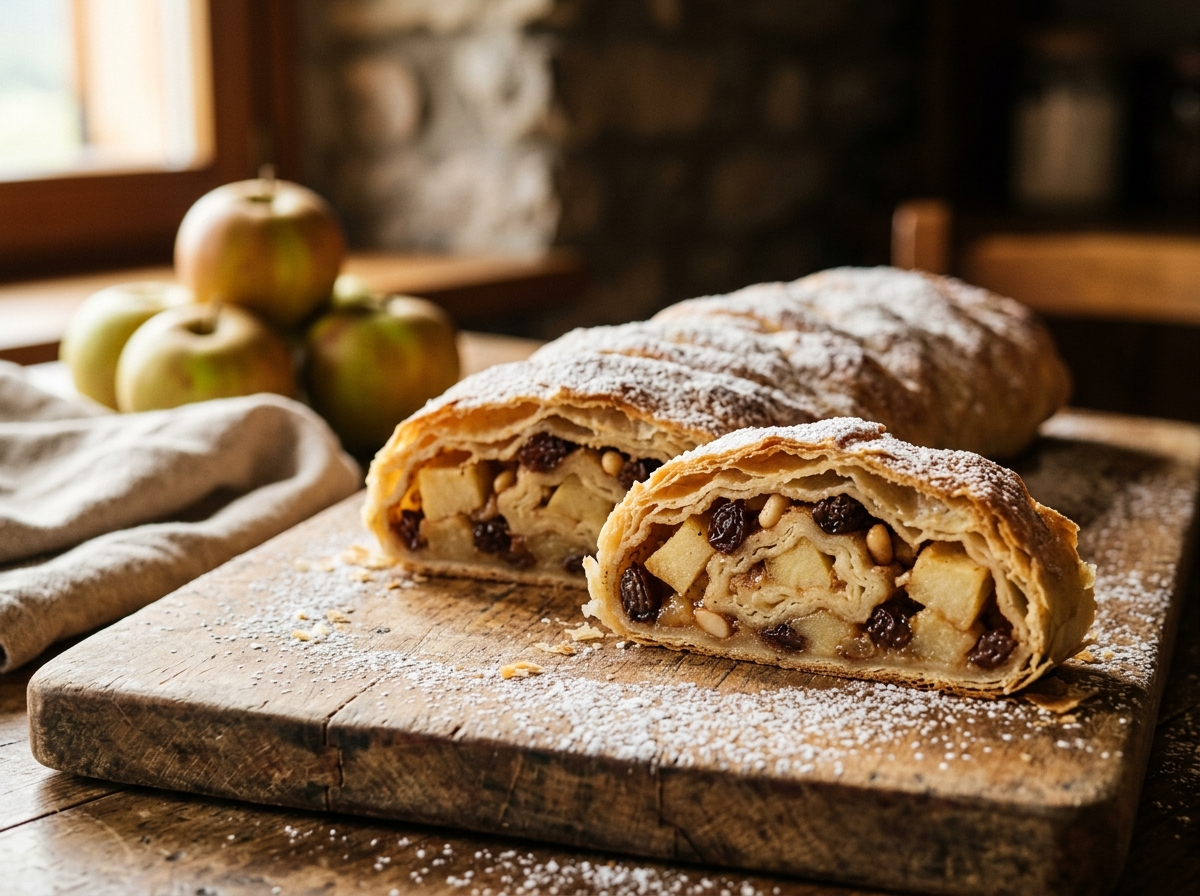
Trentino strudel is not the same as its Austrian cousin, even though the two share a border and a name. The Italian alpine version uses a softer, oil-based dough instead of butter pastry, and the filling leans on local varieties like Renetta or Golden Delicious apples, pine nuts, and a handful of soaked raisins.
The dough stretches thin enough to read through, which sounds intimidating but is mostly a matter of patience and warm hands. Once you’ve done it once, the technique clicks.
This recipe makes one log that serves 6 to 8 people. It keeps well for two days at room temperature and reheats cleanly in a low oven.
Why You’ll Love This Recipe
- Hand-stretched dough produces a genuinely thin, crisp crust
- Filling uses pantry staples: apples, raisins, pine nuts, cinnamon
- Keeps two days at room temperature without going soggy
- Lighter than butter-pastry versions, with a clean apple flavor
Ingredient Notes
- apples: Renetta (Reinette) is the traditional Trentino choice for its tartness and low moisture. Golden Delicious or Granny Smith both work well. Avoid Fuji or Gala, which release too much juice and soften the dough.
- raisins: Soak in warm water or grappa for 20 minutes before using. Grappa adds an authentic alpine note, but warm water is fine for a non-alcoholic version.
- pine nuts: Toast them dry in a pan for 2 minutes before adding to the filling. This deepens their flavor noticeably. Chopped walnuts are a common Trentino substitute.
- breadcrumbs: Fine dry breadcrumbs are scattered under the filling to absorb apple moisture and keep the base crisp. Don’t skip this step.
- oil for the dough: Use a neutral oil like sunflower or a mild olive oil. Extra-virgin olive oil works but adds a slight fruitiness to the dough.
- flour: Plain 00 flour or all-purpose flour both work. 00 gives a slightly more elastic dough that stretches a little easier.
Trentino Apple Strudel: The Italian Alpine Version
Ingredients
Method
- Combine the flour and salt in a bowl. Add the oil and warm water, then mix until a rough dough forms.
- Turn out onto a lightly floured surface and knead for 8 to 10 minutes until the dough is smooth, soft, and slightly tacky but not sticky.
- Shape into a ball, brush lightly with oil, wrap in plastic wrap, and rest at room temperature for 30 to 40 minutes.
- Combine the sliced apples, drained raisins, toasted pine nuts, sugar, cinnamon, and lemon zest in a large bowl. Toss well and set aside.
- Toast the breadcrumbs in a small dry pan over medium heat for 2 minutes until lightly golden. Set aside to cool.
- Heat the oven to 180 C / 350 F. Line a large baking tray with parchment paper.
- Spread a large, clean linen cloth on a table and dust it generously with flour. Place the rested dough in the center.
- Using a rolling pin, roll the dough into a rough rectangle about 3 to 4 mm thick.
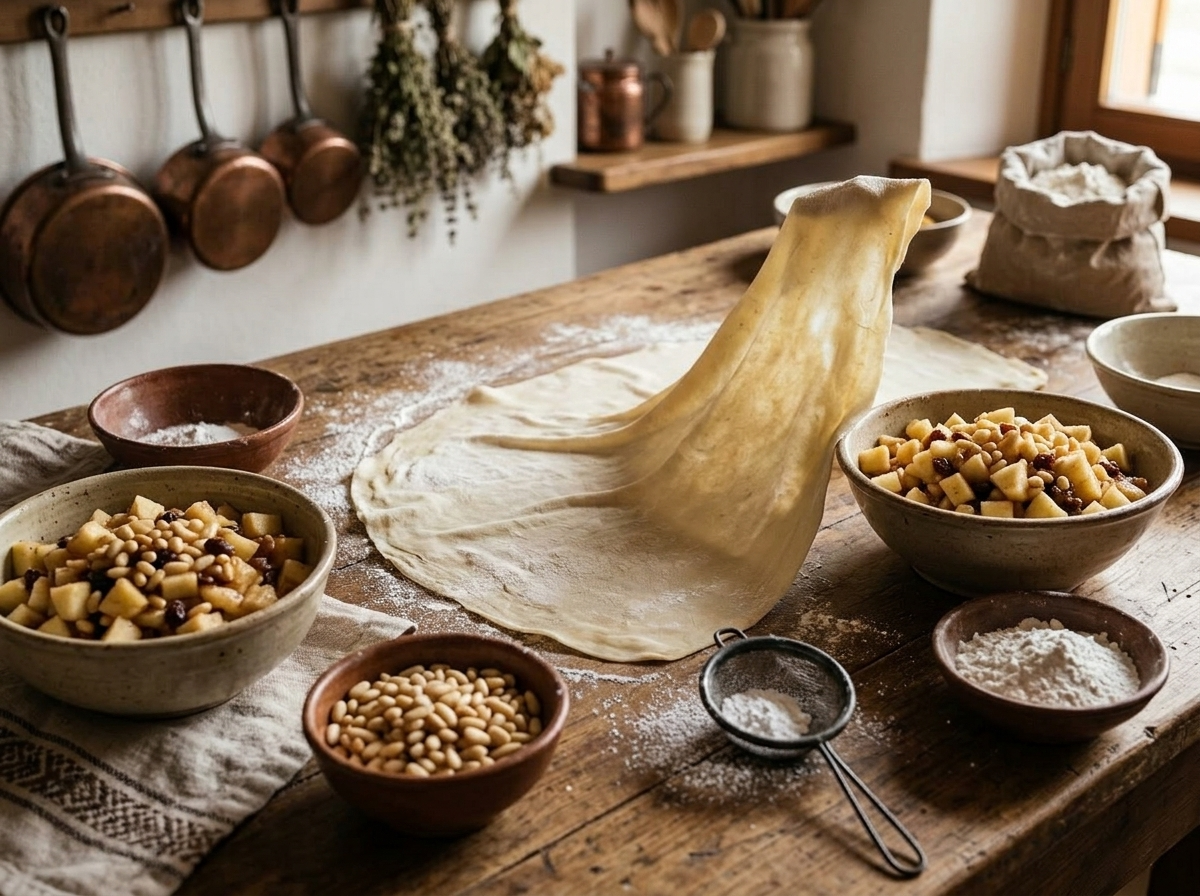
- Place both hands under the dough, palms down. Working from the center outward, stretch the dough gently using the backs of your hands until it is thin enough to see light through it, roughly 50 x 70 cm. Trim any thick edges with scissors.
- Brush the stretched dough with half the melted butter, leaving a 5 cm border along one long edge.
- Scatter the toasted breadcrumbs evenly over the buttered dough, staying within the border.
- Spread the apple filling in an even layer over the breadcrumbs.
- Using the cloth to help you, fold the short sides in by about 3 cm to seal the ends. Then roll the strudel away from you into a tight log, using the cloth to guide it without touching the dough directly.
- Transfer the strudel seam-side down to the prepared baking tray. Brush the top and sides with the remaining melted butter.
- Bake for 20 minutes, then brush again with any remaining butter. Continue baking for 18 to 20 minutes more until the crust is deep golden and crisp.
- Transfer to a wire rack and cool for at least 15 minutes before slicing. Dust with powdered sugar just before serving.
Notes
Tips for Success
- Rest the dough for at least 30 minutes wrapped in plastic so the gluten relaxes and stretching becomes easier.
- Stretch the dough on a floured linen cloth, using the backs of your hands rather than pulling with your fingertips.
- Scatter breadcrumbs in a thin, even layer before adding apples to prevent a wet, undercooked base.
- Roll the strudel away from you using the cloth, keeping the log tight without tearing the dough.
- Brush with melted butter halfway through baking for a golden, lightly crisp top layer.
Variations
- Add 1 tsp finely grated lemon zest to the filling for a brighter, more fragrant result.
- Replace raisins with dried cranberries and pine nuts with slivered almonds for a modern twist.
- Use pears instead of apples for a softer, floral filling that works especially well in autumn.
Storage and Reheating
Wrap the cooled strudel loosely in foil or beeswax wrap and store at room temperature for up to 2 days. The dough stays acceptably crisp on day two, though not as shatteringly thin as on the day it’s baked.
For longer storage, refrigerate for up to 4 days. To reheat, place slices on a baking tray at 160 C / 320 F for 8 to 10 minutes. This restores most of the crispness that the refrigerator takes away.
You can freeze the unbaked, assembled strudel (before egg wash) on a lined tray, then wrap tightly once frozen solid. Bake from frozen at 180 C / 350 F for 45 to 50 minutes, adding the butter wash after the first 20 minutes.
Serving Suggestions
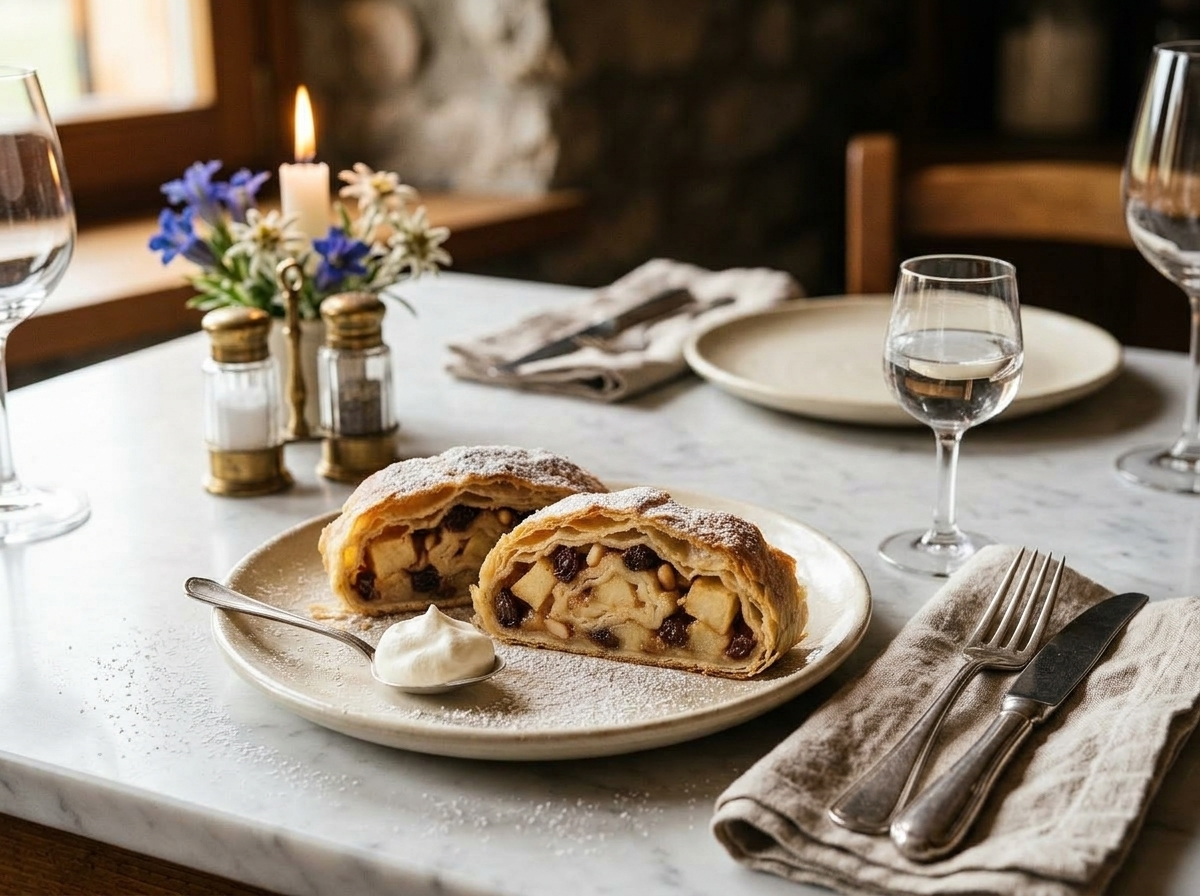
Serve warm, cut into thick slices and dusted with powdered sugar. A spoonful of lightly whipped cream or a scoop of vanilla gelato alongside is the standard Trentino approach, and it works because the unsweetened cream offsets the spiced apple filling, much like the contrast you find in a traditional Italian regional dessert.
For a simpler weekday version, pair with a small glass of cold whole milk or a cup of strong black tea. The strudel is rich enough that it doesn’t need much.
If you’re serving it as part of a larger spread, a drizzle of light honey over the whipped cream ties the plate together without adding complexity.
FAQ
Why is my Trentino strudel dough tearing when I stretch it?
The dough hasn’t rested long enough. Give it a full 30 to 40 minutes wrapped at room temperature so the gluten relaxes fully. Also make sure you’re using the backs of your hands rather than pulling from the edges, which creates weak spots.
Can I use puff pastry instead of hand-stretched dough for this Italian strudel?
You can, but the result is a different pastry. Puff pastry makes the strudel heavier and butterier, which shifts it away from the lighter Trentino style. If you’re short on time, a store-bought strudel dough sheet is a closer substitute than puff pastry.
How do I stop the apple filling from making the strudel base soggy?
Two things help: scatter a thin layer of toasted breadcrumbs directly on the dough before adding the filling, and make sure your apple slices are thin (about 3 mm) so they cook through without releasing too much steam. Patting the raisins dry after soaking also reduces excess moisture.
What apples do they actually use for strudel in Trentino?
Renetta (Reinette) is the traditional local variety, prized for its firm texture and tart flavor that holds up during baking, a regional specificity comparable to the way Valle d’Aosta alpine cooking draws on strictly local ingredients. Golden Delicious grown in the Val di Non valley is also widely used in Trentino. Both stay firm and don’t turn to mush inside the dough.
Is Trentino apple strudel dairy free?
The dough itself contains no butter or milk, so it’s dairy free. The finishing butter brush on top is the only dairy component. Replace it with a neutral oil or plant-based butter and the strudel is fully dairy free without changing the structure.
What is the difference between Trentino strudel and Austrian strudel?
The main difference is the dough. Austrian strudel traditionally uses a butter-enriched or neutral-fat dough that stretches paper-thin and turns almost flaky when baked. The Trentino version uses an oil-based dough that’s softer and slightly chewier, and the filling often includes pine nuts, which are less common in Austrian versions.