
Jump to Recipe
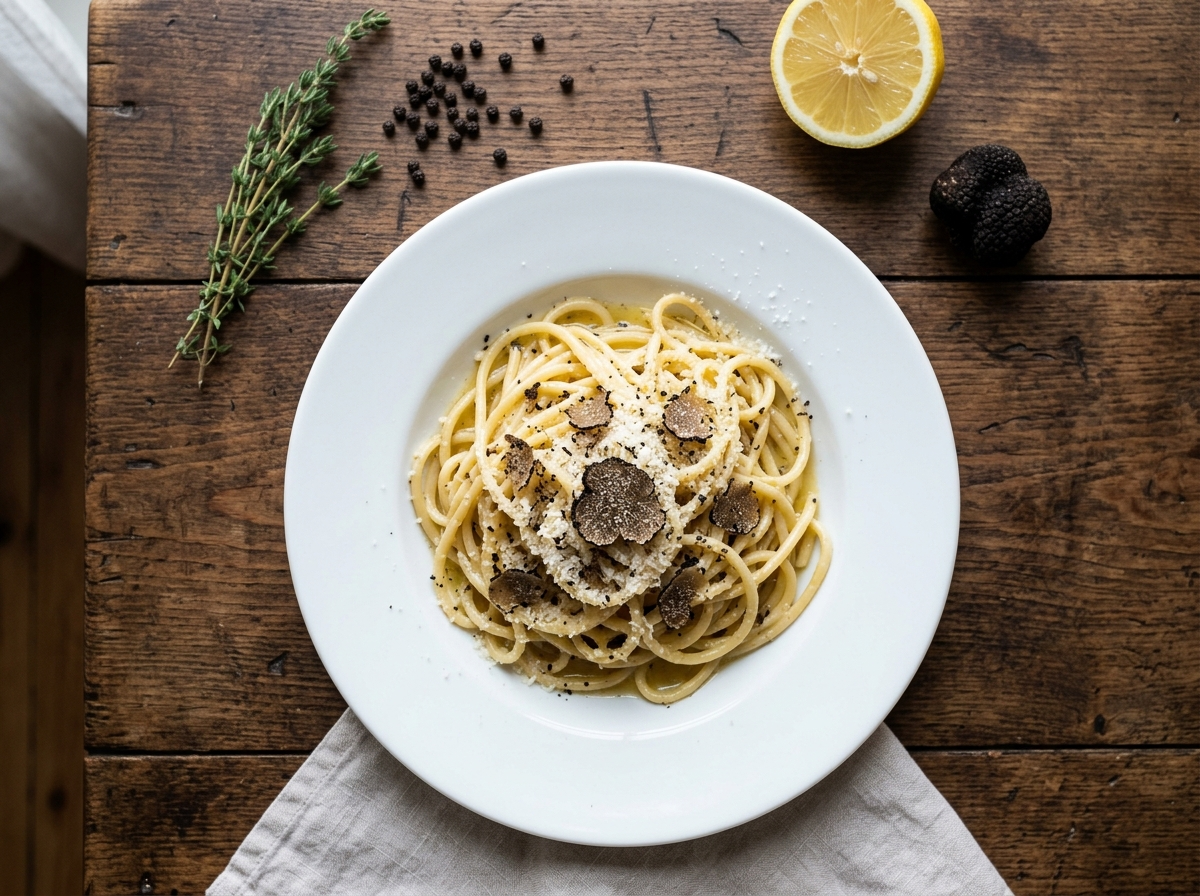
Molise is one of Italy’s smallest and least visited regions, but its black truffles are serious. The local pasta tradition pairs them with minimal ingredients so the truffle does the work.
The dish is built on a short pasta, good butter, a touch of anchovy, and freshly grated or shaved black truffle. No cream, no heavy sauce. The fat carries the aroma and the pasta holds it.
I use spaghetti alla chitarra or tagliolini when I can find them, but a dry tonnarelli or even spaghetti works well. What matters more is the quality of the truffle and not overcooking the pasta.
This is a weeknight recipe that looks and tastes like a special occasion. The technique is straightforward once you understand that the heat has to stay low once the truffle goes in.
Why You’ll Love This Recipe
- Real truffle flavor without cream masking it
- Ready in 40 minutes with minimal prep
- Five core ingredients, no complex technique
- Works with fresh or jarred black truffle
Ingredient Notes
- Black truffle: Fresh black truffle from Molise or Norcia is ideal. A good-quality jarred truffle in oil is a practical substitute and widely available year-round.
- Tonnarelli or spaghetti alla chitarra: This square-cut pasta holds the butter sauce better than round spaghetti. Dry tonnarelli from a Italian deli works fine if you can’t source it fresh.
- Unsalted butter: Use European-style high-fat butter for a richer, silkier sauce. Don’t substitute olive oil here – the butter fat is what binds and carries the truffle aroma.
- Anchovy fillets in oil: Just one or two fillets dissolve completely into the butter and add depth without tasting fishy. Skip them if you’re cooking for vegetarians.
- Pecorino Romano: Freshly grated Pecorino adds a sharp, slightly salty note that complements the earthy truffle. Parmigiano Reggiano is a milder substitute.
- Garlic: One clove, used to scent the butter and then removed. Don’t brown it or it will overpower the truffle.
Molise Pasta with Truffles
Ingredients
Method
- Bring a large pot of water to a boil. Salt it generously, then add the tonnarelli and cook according to packet instructions until al dente.
- While the pasta cooks, melt the butter in a wide skillet over low heat. Add the whole garlic clove and anchovy fillets, if using. Stir gently for 2 to 3 minutes until the anchovies dissolve and the butter smells faintly nutty. Do not let the butter brown.
- Remove the garlic clove and discard it. Keep the pan on the lowest heat setting.
- Reserve 1 cup of pasta cooking water, then drain the pasta.
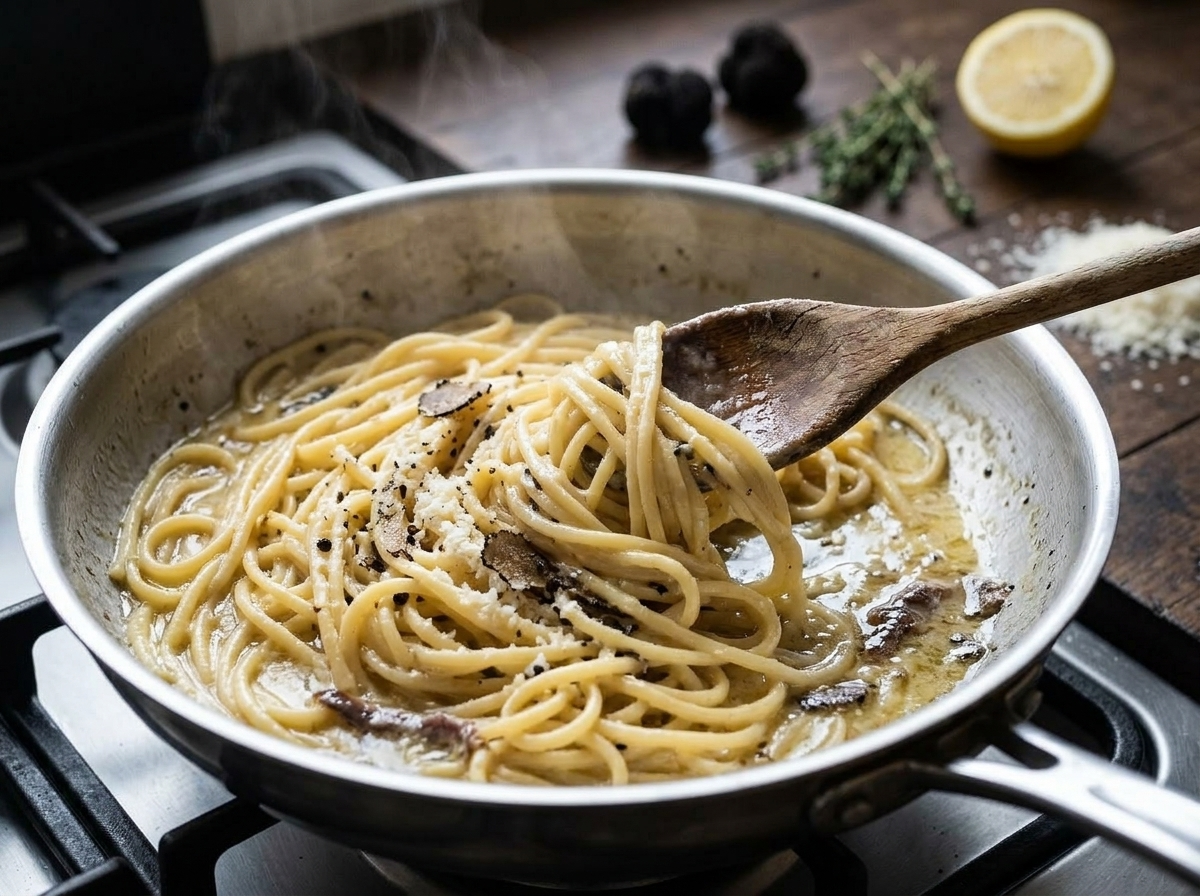
- Add the drained pasta to the skillet and toss to coat in the butter. Add a splash of pasta water and toss again until the sauce looks glossy and clings to the pasta.
- Remove the pan from the heat completely. Grate half the truffle over the pasta using a microplane and toss once more. The residual heat will release the aroma without burning off the fragrance.
- Add the grated Pecorino and a few grinds of black pepper. Toss gently until the cheese melts into the sauce.
- Divide between four warm bowls. Shave the remaining truffle over each portion using a mandoline or sharp knife. Serve immediately with extra Pecorino on the side.
Notes
Tips for Success
- Grate or shave the truffle only after the pan is off the heat to preserve its volatile aroma.
- Reserve a full cup of pasta water before draining so you can loosen the sauce without losing flavor.
- Keep the butter sauce on low heat throughout – high heat breaks the emulsion and dulls the truffle.
- Use a microplane for half the truffle and a mandoline or knife for thin shavings on top for texture contrast.
- Salt the pasta water generously so the pasta itself carries seasoning before it hits the sauce.
Variations
- Swap tonnarelli for fresh tagliolini and reduce cook time to 2 minutes for a more delicate texture.
- Add a small handful of chopped flat-leaf parsley at the end for a clean, herbal contrast to the earthy truffle.
- Use truffle oil (sparingly) as a finishing drizzle if fresh or jarred truffle is unavailable, but reduce the quantity.
Storage and Reheating
Store leftovers in an airtight container in the fridge for up to 2 days. The truffle aroma fades noticeably after the first day, so this dish is best eaten fresh.
To reheat, add the pasta to a non-stick pan with a small knob of butter and a splash of water over low heat. Stir gently for 2 to 3 minutes until warmed through. Don’t use a microwave – it dries the pasta and kills what’s left of the truffle fragrance.
This dish doesn’t freeze well. The butter sauce splits on thawing and the truffle loses all aroma.
Serving Suggestions
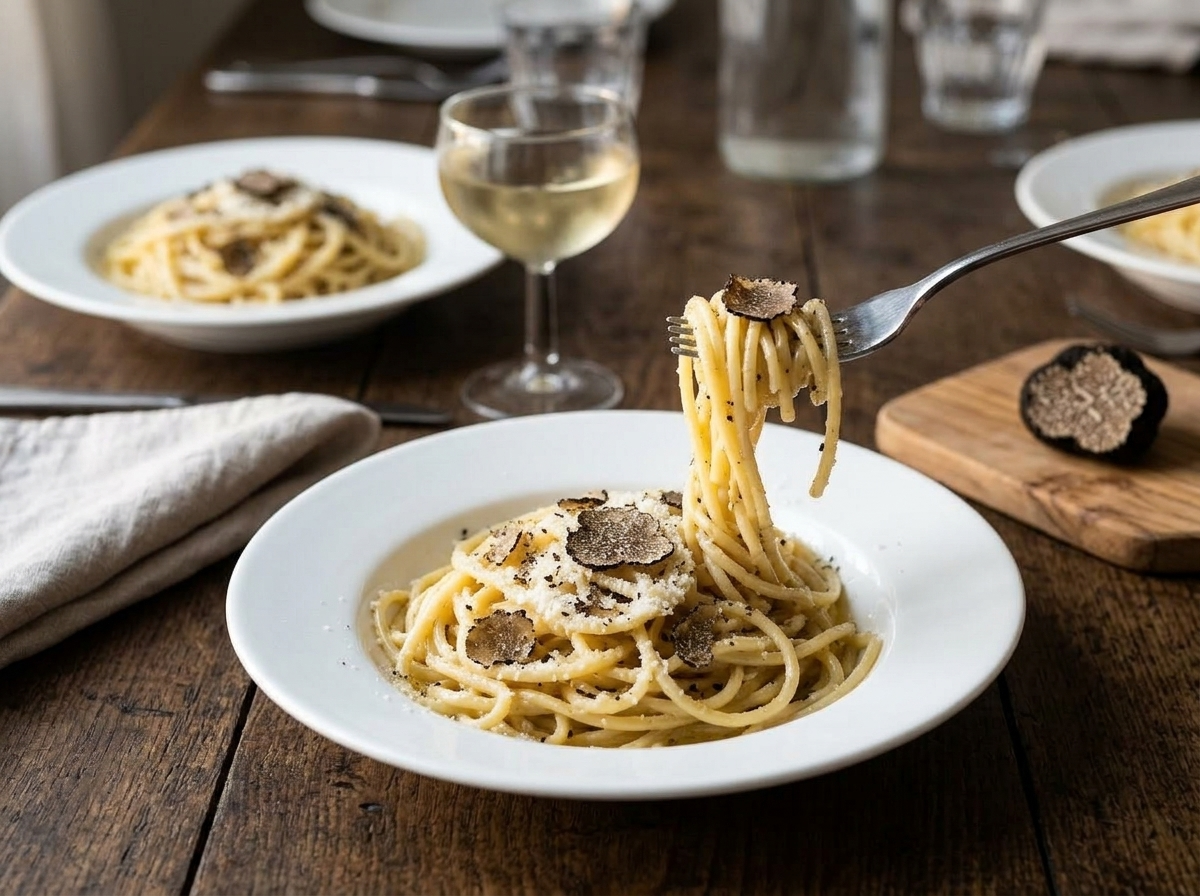
Serve this pasta as a primo – the first course before a simple meat or fish secondo such as a classic Italian chicken cacciatore. A small portion goes a long way because the flavor is concentrated.
A glass of dry white wine from Molise works well alongside it, such as a Falanghina del Molise or a light Trebbiano, and the broader principles in this guide to Italian wine pairing apply here too. Both have enough acidity to cut through the butter without competing with the truffle.
Finish the plate with a few extra shavings of truffle and a light dusting of Pecorino at the table. Keep the table setting simple – the dish doesn’t need competing flavors on the side.
FAQ
Why does my truffle pasta smell less intense after I add it to the pan?
Heat destroys the volatile compounds that give black truffle its aroma. Always add grated or shaved truffle after turning off the heat and toss quickly. The residual warmth of the pasta is enough to release the fragrance without burning it off.
Can I use truffle oil instead of fresh black truffle in this Molise pasta?
You can, but use it sparingly as a finishing drizzle, not a cooking fat. Most truffle oils are synthetic and turn bitter if heated. A few drops over the finished plate is enough.
Can I make the butter sauce for this pasta ahead of time and reheat it later?
The butter sauce itself can be made up to an hour ahead and kept warm off the heat. Don’t add the truffle until you’re ready to toss with the pasta, and don’t reheat the sauce above a gentle simmer or it will split.
What pasta shape works best with a black truffle butter sauce from Molise?
Tonnarelli or spaghetti alla chitarra are the traditional choices in Molise because their square cross-section grips the butter sauce well. Tagliolini is a close second. Avoid short pasta like rigatoni here – the sauce needs something long to coat properly.
Is this Molise truffle pasta suitable for vegetarians?
The base recipe uses anchovy, which makes it non-vegetarian. Leave out the anchovy fillets and it becomes fully vegetarian without losing the essential character of the dish. Add a pinch of extra salt to compensate for the depth the anchovy provides.
What is the difference between Molise black truffle and Umbrian truffle?
Both regions produce Tuber melanosporum, the same species of black truffle, and Norcia’s tradition also shapes dishes like the herb-driven recipes of Umbria. Molise truffles grow in the Matese and Mainarde mountains and are considered comparable in quality to those from Norcia in Umbria. The main difference is availability – Umbrian truffles are more widely exported and easier to find outside Italy.