
Jump to Recipe
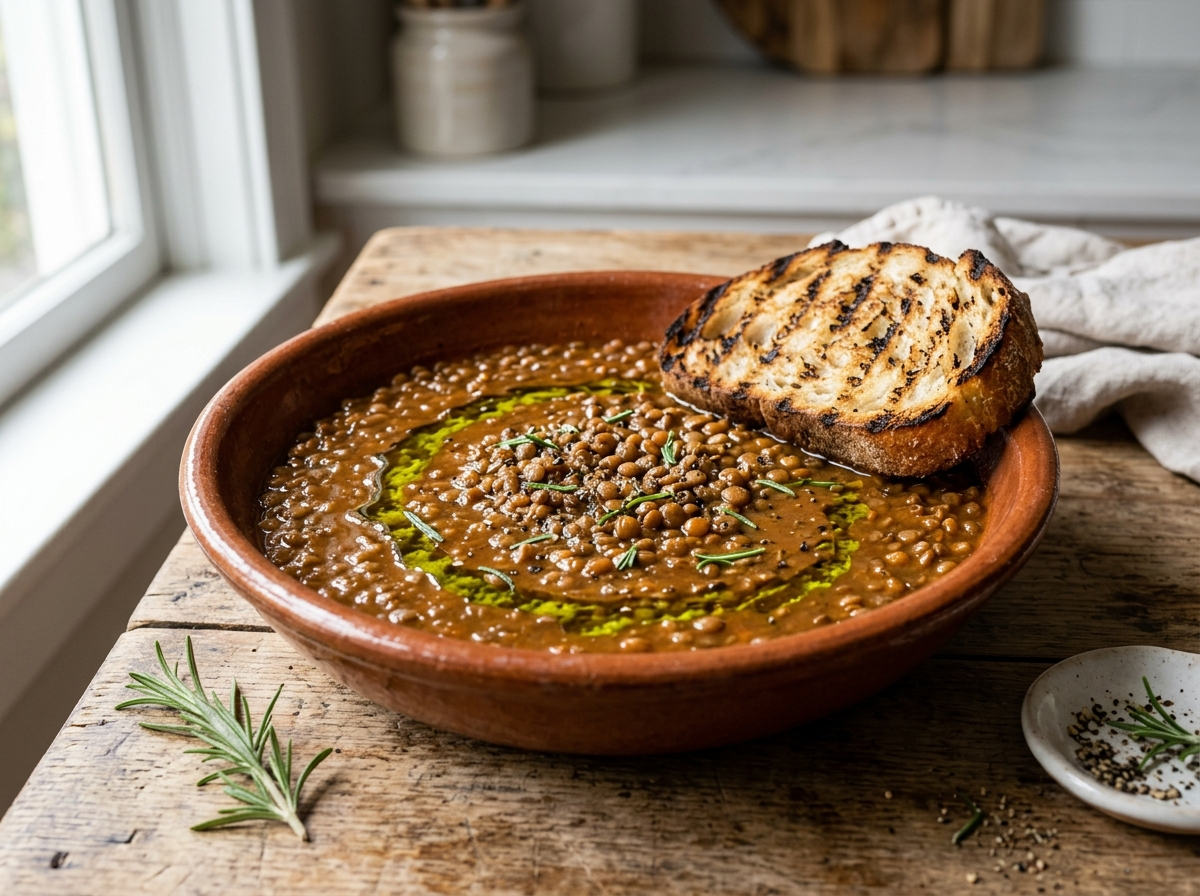
This is the stew that Central Italy has been cooking for centuries, and for good reason. Umbrian lentils – particularly the tiny, firm ones from Castelluccio – hold their shape during a long simmer and absorb flavor without turning to mush.
The technique is simple: a patient soffritto of onion, celery, and carrot, then lentils cooked low and slow with rosemary, tomato, and good olive oil. No soaking needed.
What makes it taste different from other lentil stews is restraint. The ingredient list is short, so each one has to do its job. Use the best olive oil you have and don’t rush the soffritto.
Why You’ll Love This Recipe
- No soaking – small Umbrian lentils cook straight from dry
- One pot, minimal prep, and a 40-minute simmer
- Tastes richer on day two – make-ahead friendly
- Naturally vegan and high in plant protein
Ingredient Notes
- Castelluccio or small green lentils: Castelluccio lentils from Umbria are the traditional choice – small, thin-skinned, and they stay firm. French Puy lentils are the closest substitute and work well. Avoid red lentils here; they’ll dissolve into soup.
- Extra-virgin olive oil: Use a grassy, slightly peppery Umbrian or Tuscan oil if you can find one. This is not a place to use a light or flavorless oil – the fat carries the whole base flavor.
- Rosemary: Fresh rosemary is worth it here. One sprig infuses the stew without overpowering. Dried rosemary can be used in a pinch – use half a teaspoon and add it with the lentils, not the soffritto.
- Celery: Use the inner stalks with their leaves attached if possible – they add a faint bitterness that balances the sweet carrot. No substitute needed; it’s part of the traditional soffritto.
- Canned whole tomatoes: Crush them by hand before adding. A single 400 g can adds enough acidity and body without making the stew taste like tomato sauce. In summer, two ripe fresh tomatoes work just as well.
- Vegetable stock or water: A light vegetable stock deepens the flavor, but plain water is traditional in Umbrian farmhouse cooking. If you use stock, taste before adding salt – most commercial stocks are already salted.
Umbria Lentil Stew with Rosemary and Garlic
Ingredients
Method
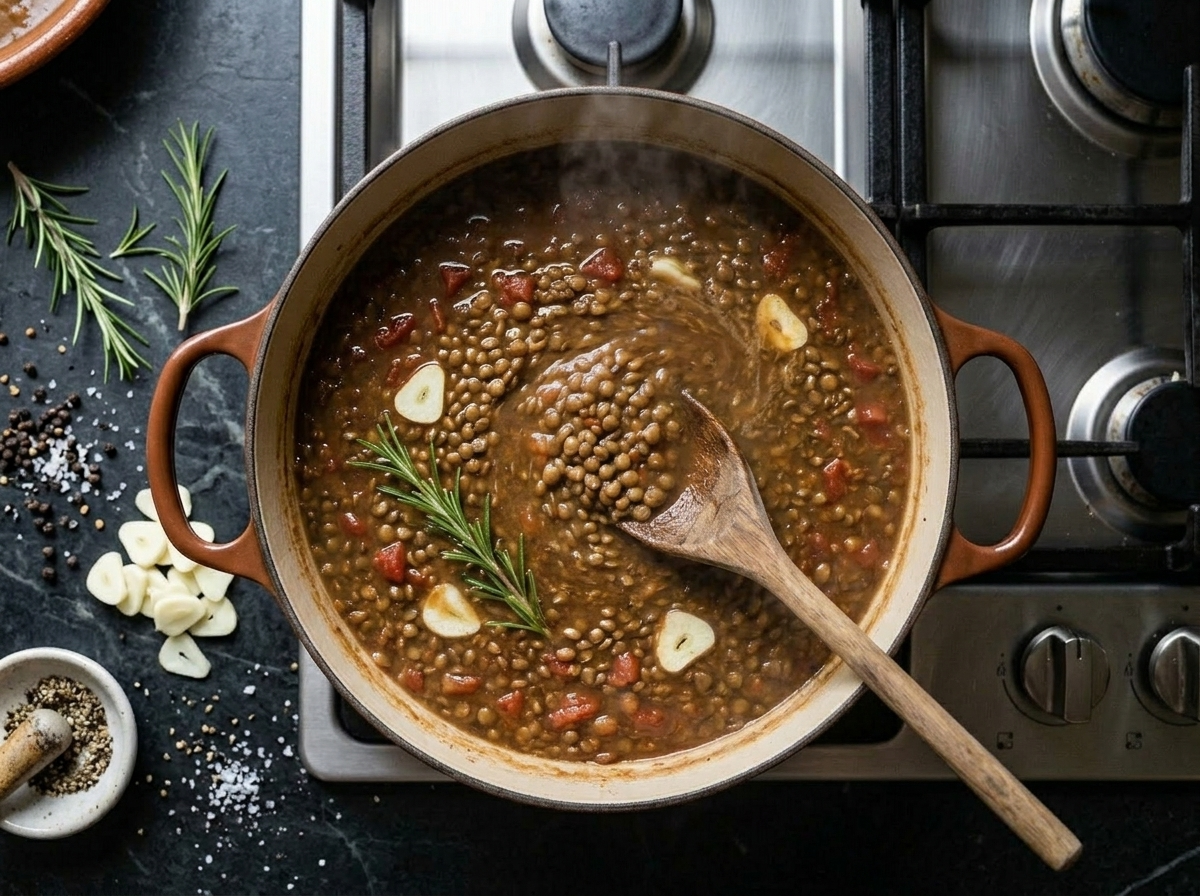
- Warm the olive oil in a large heavy pot over medium-low heat. Add the onion, celery, and carrot and cook for 10 minutes, stirring occasionally, until soft and pale gold but not browned.
- Add the sliced garlic and the rosemary sprig. Cook for 2 minutes more until the garlic is fragrant and just starting to turn translucent.
- Add the crushed tomatoes and stir well. Cook for 3 minutes, scraping the base of the pot, until the tomato darkens slightly and smells less raw.
- Add the rinsed lentils and pour in the stock or water. Stir to combine, then raise the heat to bring the liquid to a gentle boil.
- Reduce the heat to low, cover partially with a lid, and simmer for 30 to 35 minutes until the lentils are tender but intact. Check the liquid level halfway through and add a splash of water if the stew looks dry.
- Remove the rosemary sprig. Season with salt and a generous crack of black pepper. Taste and adjust.
- Ladle into bowls, drizzle with raw olive oil, and serve with thick slices of grilled or toasted country bread.
Notes
Tips for Success
- Cook the soffritto on medium-low heat for a full 10 minutes until it’s soft and pale gold, not browned.
- Rinse the lentils and pick through them briefly – small stones occasionally hide in the bag.
- Add the rosemary sprig whole and pull it out before serving; it can turn bitter if left in.
- Keep the simmer gentle – aggressive boiling breaks the lentils apart and muddies the texture.
- Finish with a drizzle of raw olive oil directly in the bowl; it makes a noticeable difference to flavor.
Variations
- Stir in 100 g diced pancetta with the soffritto for a richer, meaty Umbrian version.
- Add one teaspoon of smoked paprika with the tomatoes for a gentle Spanish-influenced smokiness.
- Fold in a large handful of wilted cavolo nero in the last 5 minutes for extra greens and texture.
Storage and Reheating
Store the cooled stew in an airtight container in the fridge for up to 4 days. The lentils continue to absorb liquid overnight, so the stew will thicken – this is normal and the flavor improves.
To reheat, add a splash of water or stock, cover, and warm over medium-low heat for 5 to 7 minutes, stirring occasionally. Alternatively, microwave in a covered bowl on medium power for 2 to 3 minutes.
This stew also freezes well. Portion into freezer-safe containers and freeze for up to 3 months. Thaw overnight in the fridge before reheating.
Serving Suggestions
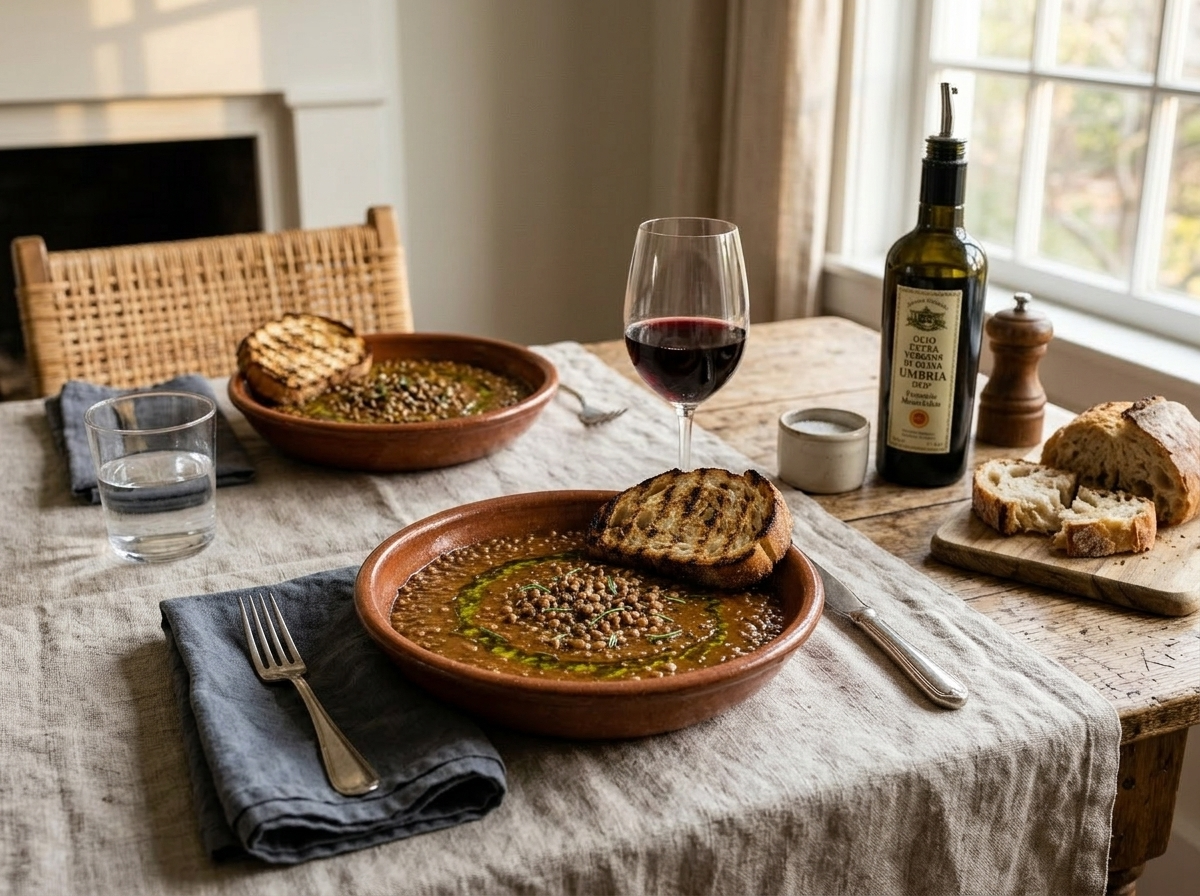
Serve the stew in wide, shallow bowls with a thick slice of grilled country bread rubbed with a cut clove of garlic. In Umbria, the bread often goes in the bowl first and the stew is ladled over it.
A sharp finishing drizzle of olive oil and a crack of black pepper are the only garnish you need. A wedge of Pecorino or Parmigiano on the side is optional but welcome.
For a more substantial meal, serve alongside an Umbrian herb-scented roast or a simple fennel and orange salad, which cuts through the earthiness of the lentils cleanly.
FAQ
Why are my Umbrian lentils turning mushy instead of staying firm?
The most common cause is too-high heat or cooking them too long. Castelluccio and Puy lentils need a gentle simmer, not a boil. Start checking for doneness at the 30-minute mark – they should be tender but still hold their shape.
Can I use red lentils instead of Castelluccio lentils in this stew?
Red lentils aren’t a good swap here – they dissolve completely within 15 minutes and you’ll end up with a thick puree, not a stew. Puy lentils or any small green or brown lentil are the right substitutes.
Can I freeze this lentil stew with the rosemary already in it?
Remove the rosemary sprig before freezing. Rosemary left in during freezing and reheating can turn resinous and slightly bitter. Add a fresh small sprig when reheating if you want the aroma back.
What’s the difference between Umbrian lentil stew and a French lentil soup?
Umbrian lentil stew is denser and meant to be eaten with bread, not drunk from a bowl. French lentil soup typically has more liquid and often includes cream or a blended component. The Umbrian version leans on olive oil, rosemary, and tomato rather than cream or stock for its body, a philosophy shared by other authentic Italian lentil recipes.
Is this Umbrian lentil stew gluten free?
Yes, the stew itself is naturally gluten free. Just make sure your vegetable stock is certified gluten free if you’re cooking for someone with celiac disease, as some commercial stocks contain gluten-based additives.
What bread pairs well with Umbrian lentil stew?
Pane sciocco – the salt-free Umbrian and Tuscan bread – is the traditional match because its mild flavor doesn’t compete with the savory stew. A sourdough country loaf or any sturdy rustic bread also works well, especially grilled or toasted.