
Jump to Recipe
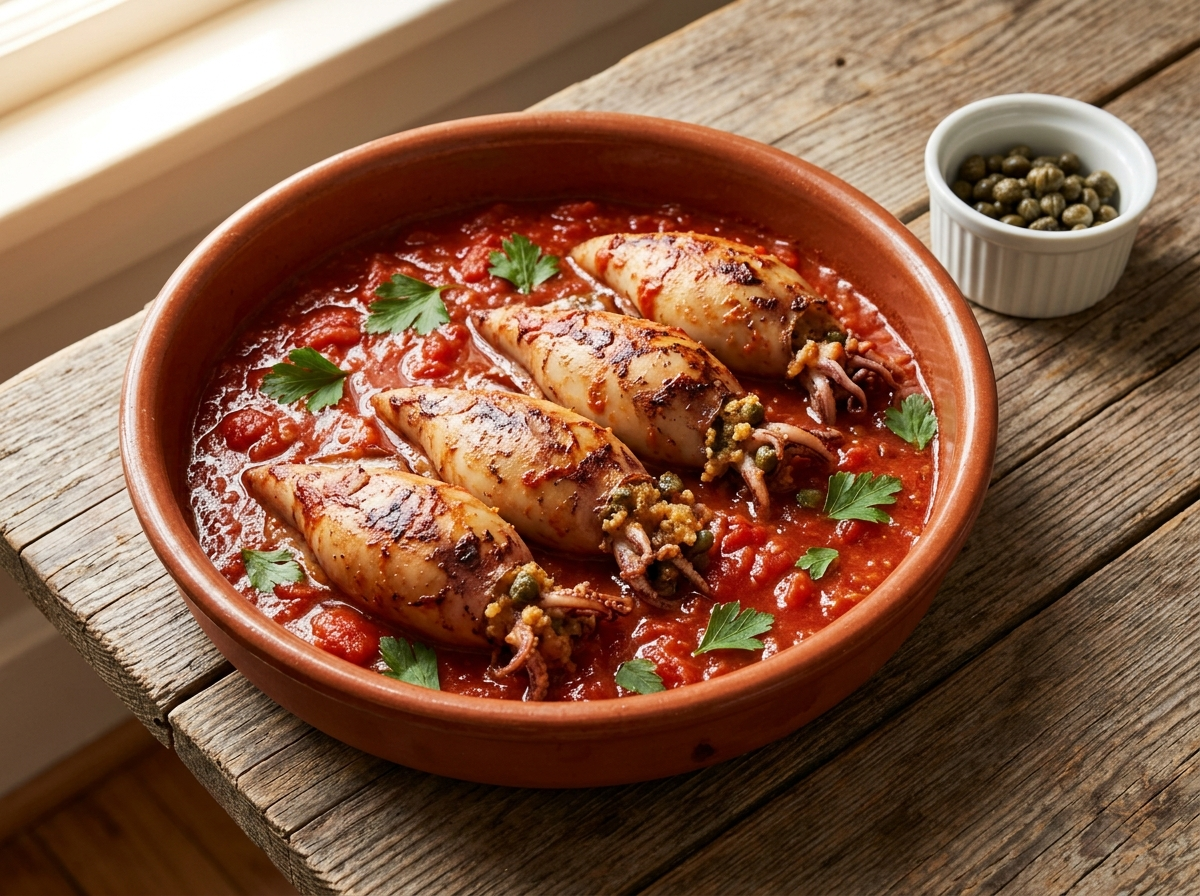
Totani ripieni is a dish you find along the Adriatic and Tyrrhenian coasts, usually on a Tuesday when the fish market has just restocked. Flying squid, slightly larger and firmer than calamari, hold a breadcrumb filling without falling apart during cooking.
The filling is simple: chopped tentacles, stale bread, capers, parsley, a little garlic, and enough olive oil to bind it loosely. Nothing expensive, nothing hard to find.
The squid braise in a thin tomato sauce on the stovetop for about 25 minutes, a technique shared with Italian tomato-braised seafood dishes from the same coastal tradition. That sauce does two jobs – it keeps the squid from drying out and turns into the finishing sauce you spoon over everything at the table.
This is weeknight cooking dressed up. One pan, affordable fish, and ingredients most Italian home cooks keep on hand.
Why You’ll Love This Recipe
- One pan from stovetop to table, minimal cleanup
- Budget-friendly seafood with a restaurant-quality result
- Make-ahead friendly, tastes better the next day
- Filling uses the tentacles, so nothing goes to waste
Ingredient Notes
- Totani (flying squid): Totani are slightly larger and meatier than common calamari, which makes them better suited for stuffing. If you can only find calamari, reduce the simmering time by 5 minutes.
- Stale bread: Use crustless day-old white bread or a firm sourdough. Fresh bread goes gummy inside the filling. Breadcrumbs from a bag work if that’s what you have.
- Capers: Salt-packed capers rinsed well give a cleaner flavor than brine-packed ones. Either works – just taste before adding extra salt to the filling.
- Canned tomatoes: Whole peeled San Marzano tomatoes, crushed by hand, give the best sauce. Passata works as a quick substitute and needs no extra cooking down.
- Dry white wine: Use a wine you’d drink, not cooking wine. A Trebbiano or Pinot Grigio suits the dish. You can skip it and add a splash of extra stock or water.
- Flat-leaf parsley: Goes into both the filling and the finishing sauce. Curly parsley is a fine substitute, though the flavor is milder.
Totani Ripieni (Stuffed Flying Squid)
Ingredients
Method
- Soak the stale bread in the milk for 3 minutes, then squeeze out the liquid firmly and crumble the bread into a mixing bowl.
- Heat 1 tbsp olive oil in a small skillet over medium heat. Add the chopped tentacles and half the minced garlic. Cook for 2 to 3 minutes, stirring, until the tentacles are opaque and any liquid has evaporated.
- Add the tentacle mixture to the bowl with the bread. Add the capers, 2 tbsp parsley, and the remaining 2 tbsp olive oil. Season lightly with salt and pepper and mix until the filling holds together loosely.
- Pat the squid tubes dry with paper towels. Using a small spoon, fill each tube two-thirds full with the breadcrumb mixture - do not pack it tight.
- Close the open end of each squid by folding it over and securing with a wooden toothpick. Set aside on a plate.
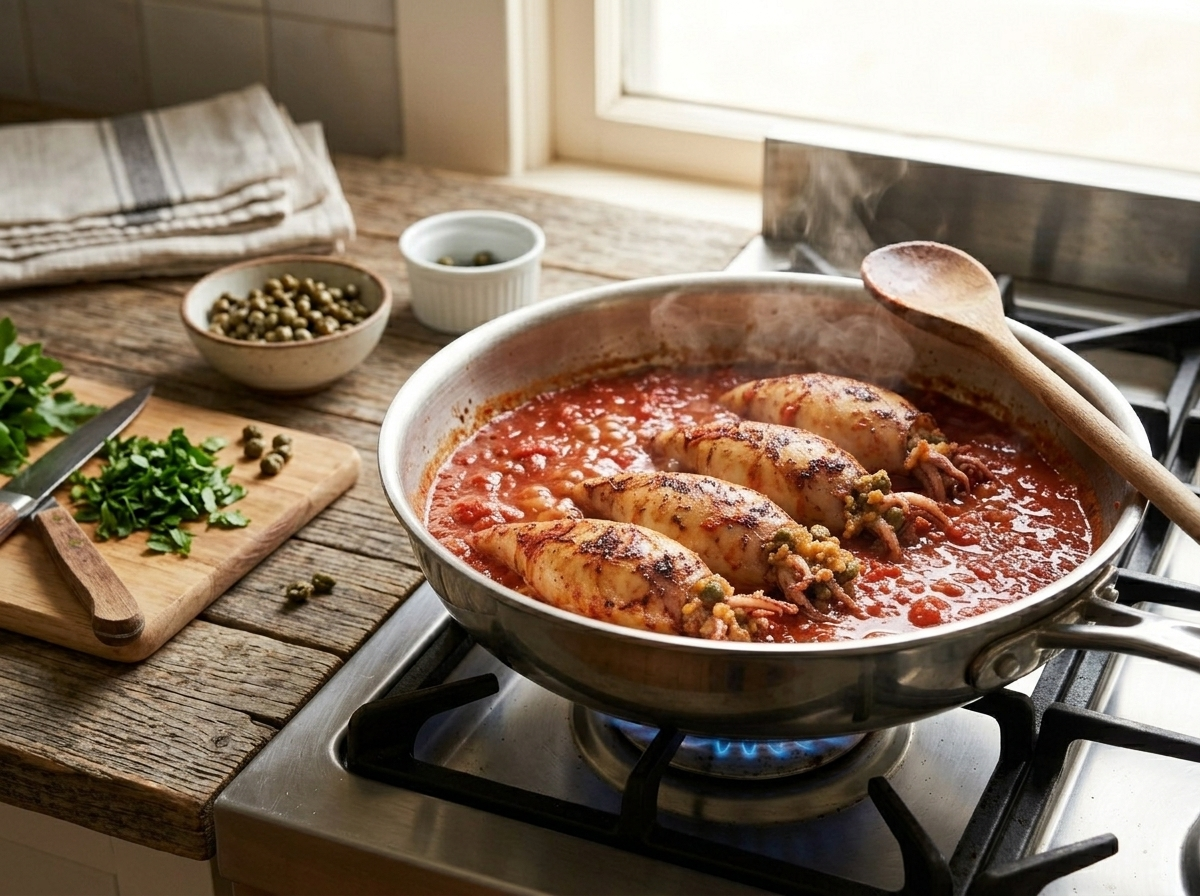
- Heat the olive oil for the sauce in a 28 cm saute pan over medium-high heat. Add the stuffed squid in a single layer and cook for 2 minutes per side until lightly golden. Work in batches if needed. Remove the squid and set aside.
- Reduce the heat to medium. Add the crushed garlic clove to the same pan and cook for 30 seconds until pale and fragrant. Pour in the white wine and scrape up any browned bits from the pan. Let it reduce by half, about 1 minute.
- Add the hand-crushed tomatoes, stir to combine, and season with salt. Nestle the browned stuffed squid back into the pan in a single layer.
- Cover the pan with a lid set slightly ajar. Reduce heat to low and simmer gently for 25 minutes, turning the squid once halfway through, until the squid are opaque and tender when pierced with a knife.
- Remove the pan from the heat and let the squid rest for 5 minutes. Remove the toothpicks from each squid.
- Scatter the remaining chopped parsley over the pan. Taste the sauce and adjust salt. Serve with the sauce spooned generously over the squid.
Notes
Tips for Success
- Stuff each squid body no more than two-thirds full, or the filling expands and splits the tube during cooking.
- Seal the opening with a wooden toothpick so the filling stays in place as the squid simmers.
- Brown the stuffed squid in olive oil for 2 minutes per side before adding tomato, which builds a slightly deeper flavor in the sauce.
- Keep the heat at a steady low simmer, not a boil, so the squid stays tender rather than rubbery.
- Let the finished dish rest off the heat for 5 minutes before serving so the filling firms up slightly and slices cleanly.
Variations
- Add a small pinch of dried chili flakes to the tomato sauce for a Calabrian-style spicy version.
- Mix a tablespoon of pine nuts and golden raisins into the filling for a Sicilian agrodolce twist.
- Replace the tomato sauce with dry white wine and fish stock for a lighter, broth-based version.
Storage and Reheating
Store leftover totani ripieni in an airtight container in the fridge for up to 2 days. The sauce thickens overnight, which actually improves the flavor.
Reheat gently in a covered pan over low heat with a tablespoon of water or stock added to loosen the sauce. Aim for 5 to 7 minutes until warmed through. Microwaving works in a pinch but can make the squid slightly rubbery.
Freezing is possible but not ideal. The squid texture becomes softer after thawing. If you do freeze, store in the sauce, freeze for up to 1 month, and thaw in the fridge overnight before reheating on the stovetop.
Serving Suggestions
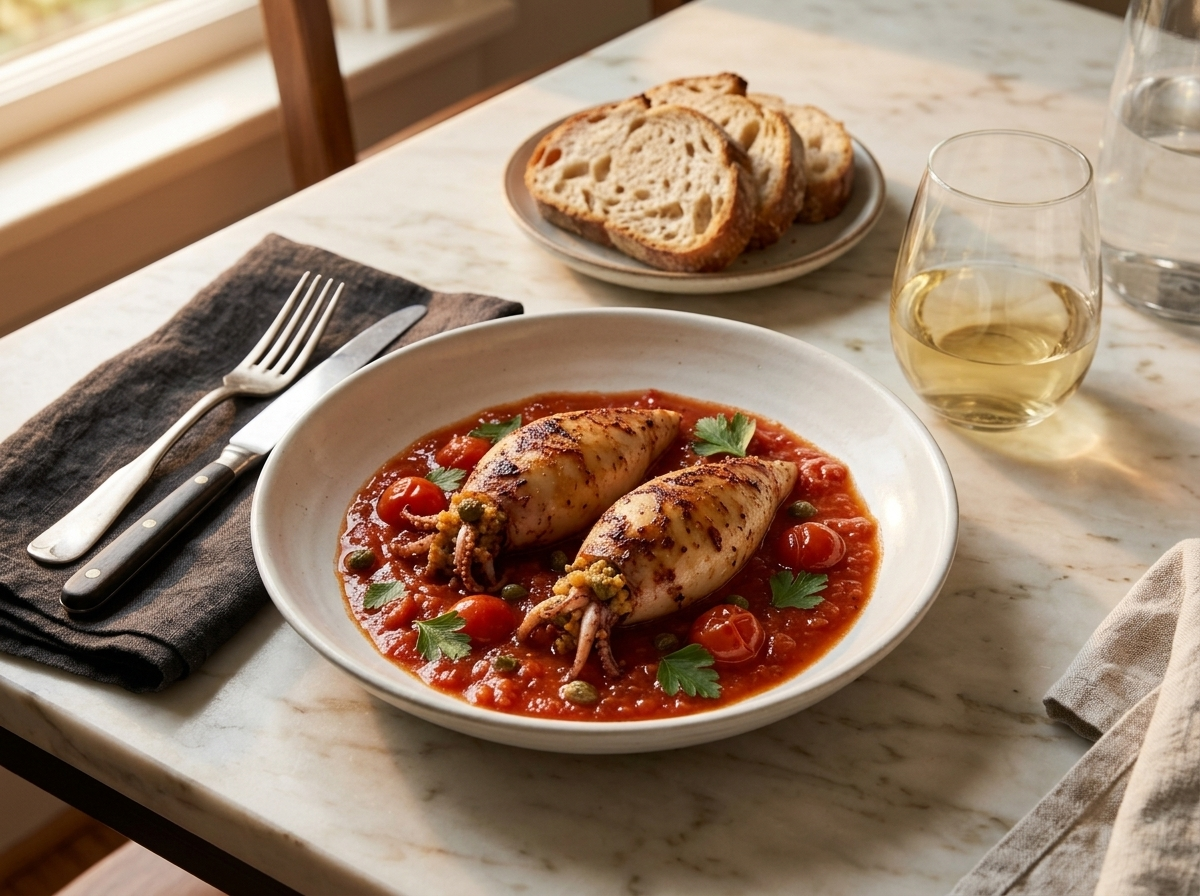
Totani ripieni work well as a main course with good crusty bread to soak up the tomato sauce. A simple green salad dressed with lemon and olive oil is all you need alongside.
For a more substantial meal, serve over plain white rice or a soft polenta. The sauce coats both well. Some cooks spoon the squid over thick spaghetti or linguine, treating the tomato as a pasta sauce the way Neapolitan tomato-based pasta dishes do.
A cold glass of dry Verdicchio or Trebbiano d’Abruzzo suits the briny, herby flavors of the dish.
FAQ
Why did my totani split open during cooking?
The two most common causes are overfilling the tube and cooking at too high a heat. Fill each squid only two-thirds full and keep the simmer gentle throughout. A toothpick seal helps too, but it won’t save an overstuffed squid.
Can I use calamari instead of totani for this stuffed squid recipe?
Yes, calamari work well and are easier to find at most fishmongers, and you’ll recognize the same rings used in Italian mixed fried fish platters. They’re smaller, so you’ll get more individual stuffed pieces per serving. Reduce the simmering time by about 5 minutes since calamari cook faster.
Can I stuff the totani the night before and cook them the next day?
Yes, and it’s a practical move. Stuff and toothpick the squid, then lay them in a single layer on a plate, cover tightly, and refrigerate overnight. Pull them out 15 minutes before cooking so they’re not fridge-cold when they hit the pan.
What’s the difference between totani and calamari in Italian cooking?
Totani (Todarodes sagittatus) are flying squid with a slightly firmer, less sweet flesh than the common squid used for calamari. They hold up better to stuffing and braising, which is why recipes like this one specify them. In practice, Italian cooks use both interchangeably depending on what’s at the market.
Is totani ripieni gluten-free?
Not as written, because the filling uses stale bread. To make it gluten-free, substitute the stale bread with certified gluten-free breadcrumbs and check your capers are processed on a gluten-free line. Everything else in the recipe is naturally gluten-free.
How do I know when the stuffed squid are fully cooked in the tomato sauce?
The squid should be opaque all the way through and tender when pierced with a knife tip. After 25 minutes of gentle simmering, a toothpick or thin skewer should slide in with no resistance. If the flesh still feels springy or hard, give it another 5 minutes covered.