
Jump to Recipe
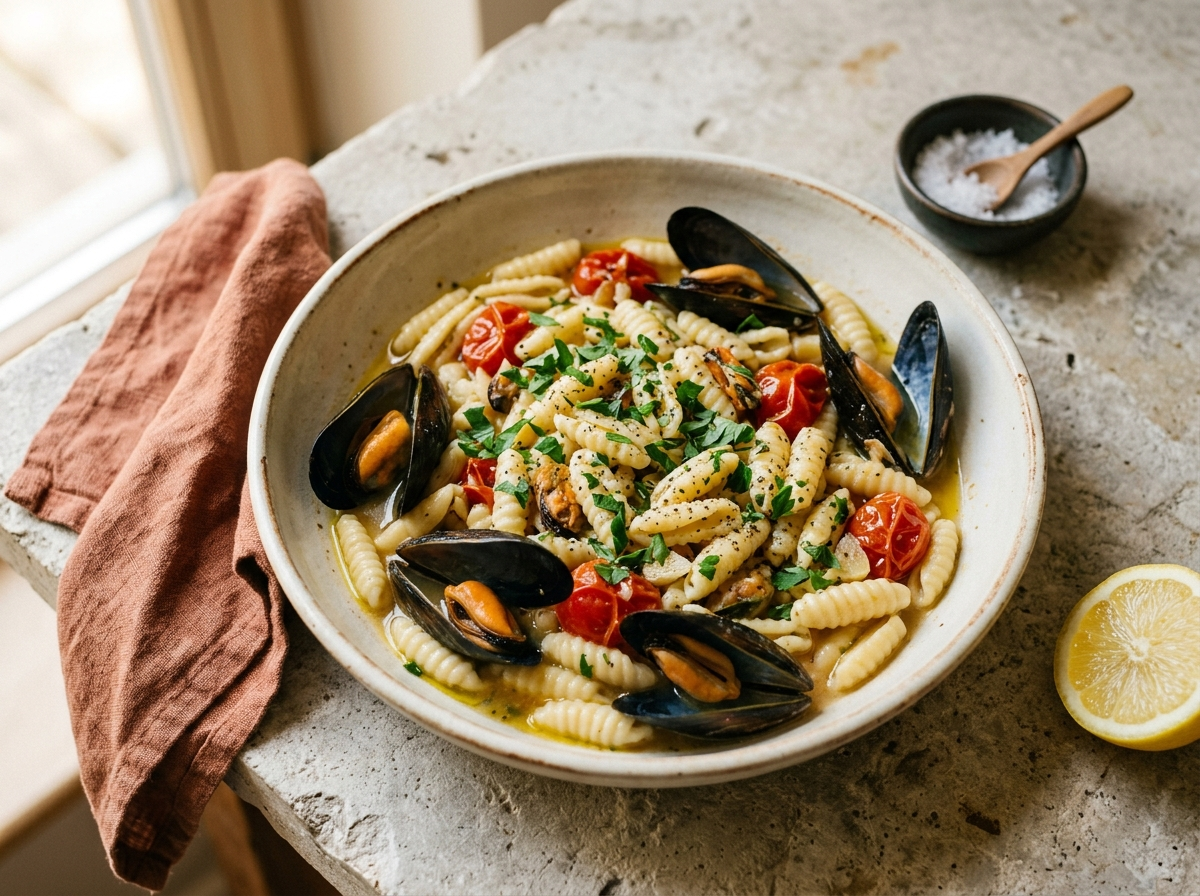
Cavatelli e cozze is a coastal Southern Italian pasta, most associated with Puglia and Basilicata. The pasta is small, shell-shaped, and ridged – built to trap the cooking liquid from the mussels as they open.
The broth is not a heavy tomato sauce. It’s closer to a zuppa: white wine, a handful of cherry tomatoes, garlic, and the natural liquor the mussels release. Light, clean, and faintly saline.
Store-bought cavatelli works well here. Fresh or frozen cavatelli from a good Italian deli is even better. The shape is what matters – smooth pasta like spaghetti won’t hold the broth the same way.
This is a weeknight-practical dish despite looking restaurant-worthy. The mussels cook fast, the broth comes together in minutes, and the whole thing is on the table in under 45 minutes.
Why You’ll Love This Recipe
- Ready in 40 minutes with mostly pantry staples
- Mussels create their own deeply flavored broth naturally
- Cavatelli ridges trap every drop of the sauce
- One pan finish means less washing up
Ingredient Notes
- cavatelli: Dried cavatelli from a Southern Italian brand works well. Fresh or frozen cavatelli from a deli gives a slightly chewier, more satisfying result. Don’t substitute with a smooth-surfaced pasta – the ridges matter.
- fresh mussels: Buy live mussels and use them the same day. Discard any that stay open after tapping. Frozen mussel meat can substitute in a pinch, but you’ll lose the natural broth they release, so add an extra splash of clam juice or fish stock.
- dry white wine: A dry, unoaked white like Vermentino, Pinot Grigio, or Falanghina works best. Avoid anything oaked or sweet – it muddies the broth.
- cherry tomatoes: Piccadilly or Datterini tomatoes are the Italian preference here – sweeter and less acidic. Regular cherry tomatoes are a fine substitute. Don’t use canned whole tomatoes – the sauce needs to stay light.
- garlic: Slice it thin rather than mincing – you want it to melt gently into the oil without turning sharp. Two cloves is right for four servings; add a third if your cloves are small.
- fresh parsley: Flat-leaf parsley only. Stir half into the pan at the end and scatter the rest over plated bowls for a fresh finish.
Cavatelli e Cozze (Cavatelli with Mussels)
Ingredients
Method
- Rinse the scrubbed mussels under cold running water. Pull off any remaining beards with a sharp tug. Discard any mussels that are open and don't close when tapped firmly on the counter.
- Set the cleaned mussels aside in a colander and let them drain while you prepare the rest.
- Bring a large pot of water to a boil for the pasta. Add 1 tbsp coarse salt once boiling.
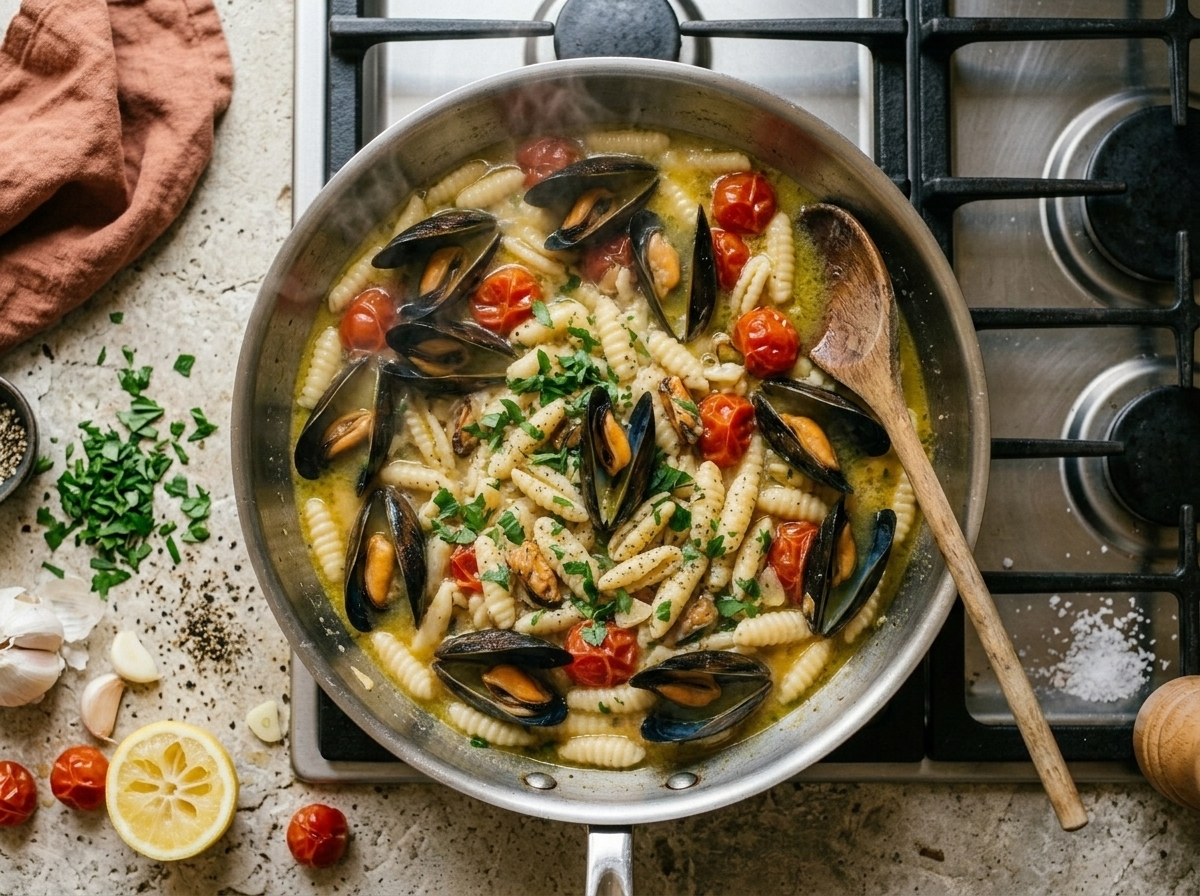
- Heat 3 tbsp olive oil in a large wide skillet over medium-low heat. Add the sliced garlic and, if using, the chili flakes. Cook for 2 minutes until the garlic is pale golden and fragrant. Do not let it brown.
- Add the cherry tomatoes and increase the heat to medium. Cook for 3 minutes, pressing them lightly with the back of a spoon until they begin to soften and release juice.
- Raise the heat to high. Add all the mussels to the pan and pour in the white wine. Cover immediately with a tight-fitting lid and cook for 3 to 4 minutes, shaking the pan once halfway through, until all shells have opened.
- Remove the lid. Discard any mussels that have not opened. If you prefer a cleaner presentation, remove half the mussels from their shells and set aside, leaving the rest in shell for plating. Keep the pan and all the broth over low heat.
- Add the cavatelli to the boiling salted water. Cook for 2 minutes less than the package al dente time, then ladle out a cup of pasta cooking water before draining.
- Drain the cavatelli and transfer directly to the mussel pan. Increase the heat to medium-high. Toss the pasta through the broth and cook for 2 to 3 minutes, adding a splash of pasta water if the sauce reduces too fast, until the cavatelli is al dente and has absorbed most of the broth.
- Stir in half the chopped parsley. Taste the broth before adding any salt - the mussel liquor is often salty enough on its own.
- Remove from the heat. Drizzle with the remaining 1 tbsp olive oil. Divide into warmed shallow bowls, making sure each portion has a few mussels in shell on top. Scatter the remaining parsley over each bowl and serve immediately.
Notes
Tips for Success
- Scrub mussels under cold running water and pull off any beards just before cooking, not in advance.
- Toast the garlic in olive oil over medium-low heat until pale golden – stop before it browns or the broth will taste bitter.
- Add mussels to the pan in a single layer if possible, then cover immediately so they steam open evenly in 3 to 4 minutes.
- Drain cavatelli 2 minutes before the package al dente time and finish cooking directly in the mussel broth.
- Taste the broth before adding any salt – mussel liquor is already salty and you may need none at all.
Variations
- Add a pinch of dried Calabrian chili flakes with the garlic for a spicy southern-style version.
- Stir in a handful of fresh baby clams alongside the mussels for a mixed shellfish broth.
- Use nduja in place of chili for a smoky, slightly fatty broth that coats the cavatelli well.
Storage and Reheating
Cavatelli e cozze is best eaten immediately. The pasta continues to absorb the broth as it sits, and leftover mussels in shell become rubbery when reheated.
If you have leftovers, remove the mussels from their shells, store the pasta and mussel meat together in an airtight container, and refrigerate for up to 1 day. Reheat gently in a pan with a small splash of water or white wine over low heat, stirring often.
Do not freeze this dish. Mussels do not hold their texture after freezing and thawing.
Serving Suggestions
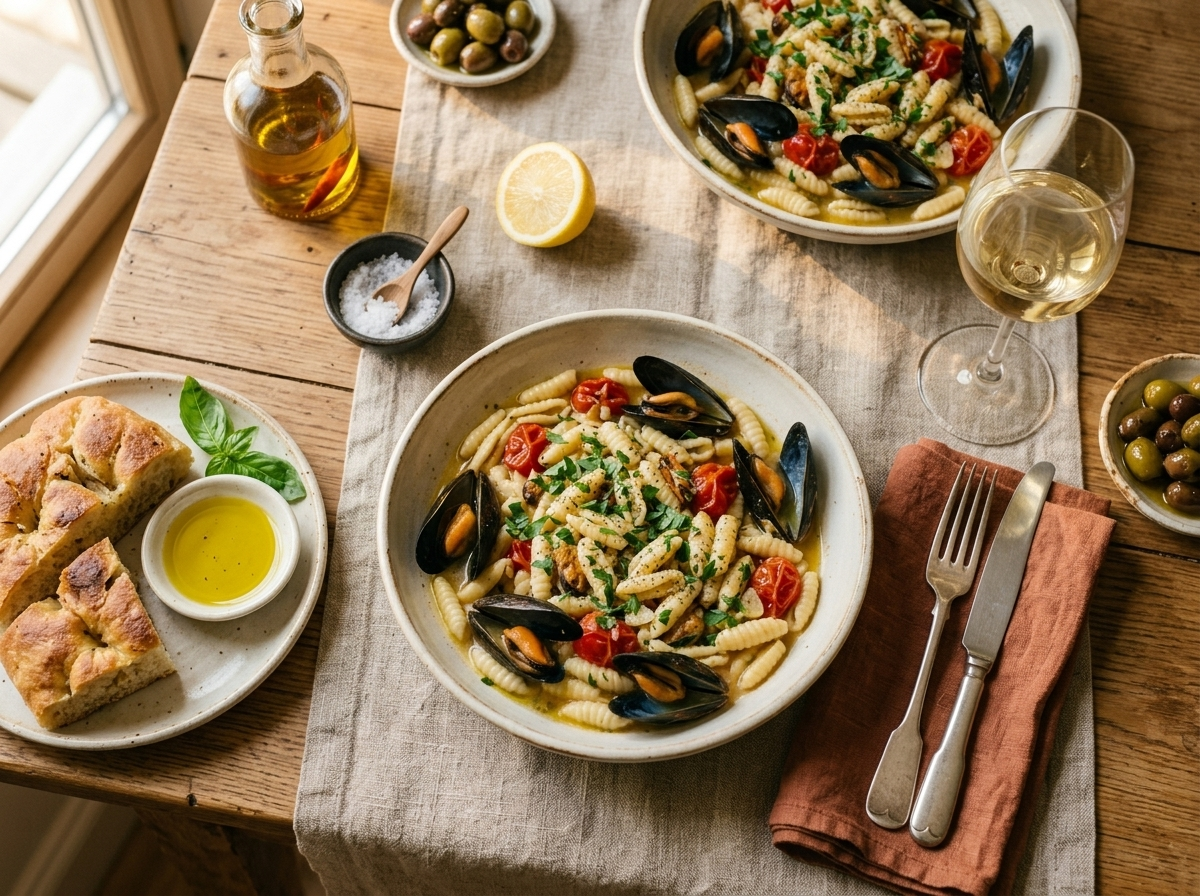
Serve cavatelli e cozze straight from the pan into shallow wide bowls. The broth should pool at the bottom – you want a spoon alongside to catch it. A few reserved mussels in shell arranged on top make it look pulled-together without any extra effort.
A slice of grilled or toasted crusty bread on the side is practical: it soaks up the broth left in the bowl. In Puglia, friselle – twice-baked barley or durum bread rounds softened with water – are traditional alongside seafood pasta.
A glass of chilled Vermentino or a light Fiano completes the meal. Skip heavy sides – the dish is already complete as a primo.
FAQ
Why is my cavatelli e cozze broth watery instead of coating the pasta?
The broth thins out when there’s too much liquid and not enough time to reduce. After adding the pasta to the pan, cook uncovered over medium heat for 2 to 3 minutes, tossing constantly so the pasta absorbs the liquid and the sauce tightens.
Can I use frozen cavatelli instead of dried for this mussel pasta?
Frozen cavatelli works well and actually gives a better texture than dried. Cook it for about 1 minute less than the package suggests before transferring it to the mussel broth to finish.
How do I know when the mussels are done in the pan?
They’re ready as soon as the shells open fully, usually 3 to 4 minutes over high heat with the lid on. Any mussel that hasn’t opened after 5 minutes should be discarded.
Can I make cavatelli e cozze without wine?
You can replace the white wine with a mix of half fish stock and half water plus a small squeeze of lemon juice. The depth of flavor changes slightly but the dish still works.
Is cavatelli e cozze gluten-free?
Traditional cavatelli is made from durum wheat semolina, so it contains gluten. Gluten-free cavatelli made from rice or corn flour exists but can be harder to find – check Italian specialty stores or online.
What’s the difference between cavatelli e cozze and spaghetti alle vongole?
The main difference is the pasta shape and the shellfish. Spaghetti alle vongole uses thin spaghetti with clams and tends to have a more restrained, almost dry sauce. Cavatelli e cozze uses ridged pasta with mussels and carries more broth, making it closer to a wet pasta or light stew.