
Jump to Recipe
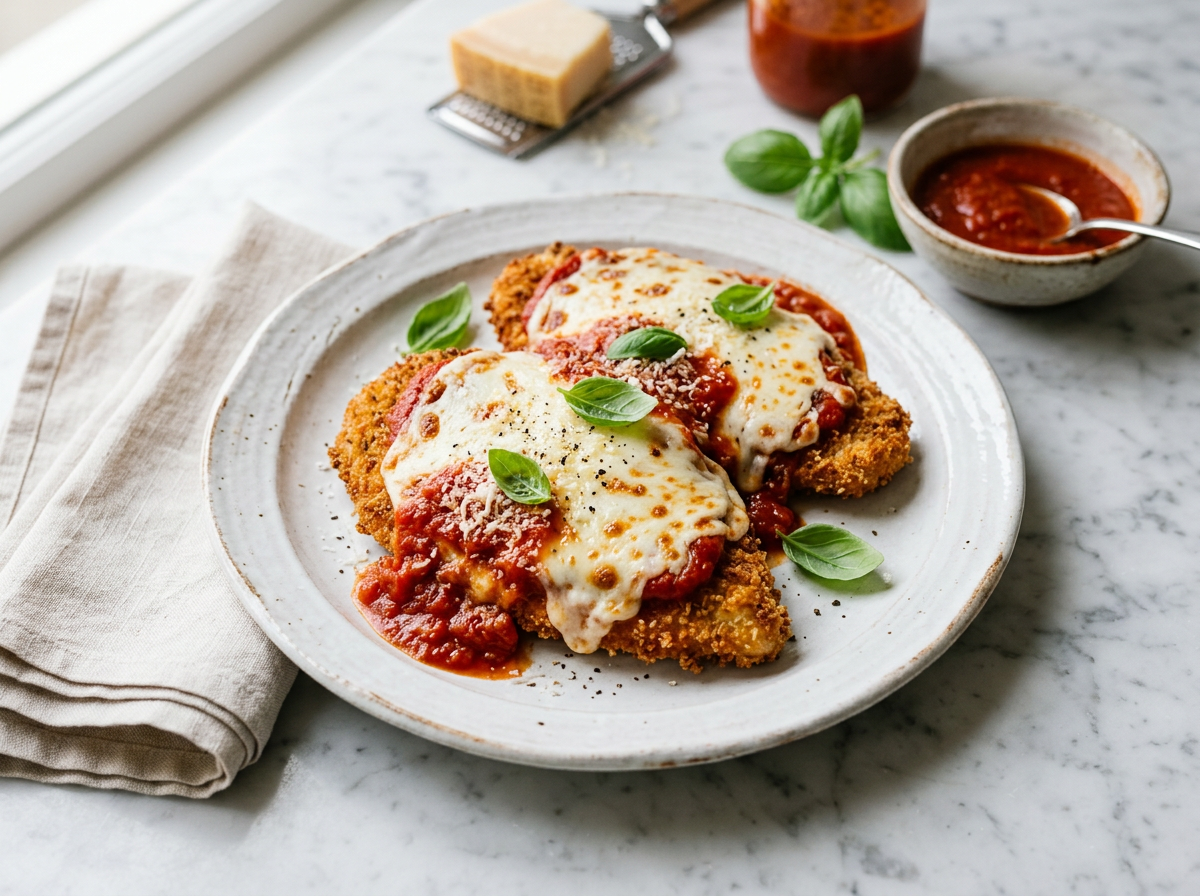
Petto di pollo alla parmigiana is a breaded chicken cutlet layered with tomato sauce and mozzarella, then finished under oven heat until the cheese bubbles and the crust holds its texture underneath. It lands somewhere between a weeknight staple and something worth plating carefully.
The key is pounding the breast to an even thickness before breading. Uneven chicken means one end overcooks while the other stays raw. A flat cutlet cooks in minutes and stays moist under the sauce.
I fry the cutlets in olive oil just long enough to set the crust, then move them to the oven on a rack. The rack keeps the bottom from steaming and turning soft, which is the main reason home versions disappoint.
This recipe uses a simple passata-based sauce and a mix of mozzarella and Parmigiano, the same pairing that anchors a classic Italian eggplant parmigiana. Both choices are deliberate: passata stays tight and doesn’t waterlog the crust, and the Parmigiano adds salt and depth without extra effort.
Why You’ll Love This Recipe
- Crust stays crisp under the sauce when baked on a rack
- Thin cutlet cooks through fast without drying out
- Only one pan and one baking sheet to clean
- Sauce and cheese can be prepped hours ahead
Ingredient Notes
- chicken breasts: Choose medium-sized breasts around 180-200 g each. Pound them to roughly 1 cm thickness so they cook evenly. You can use chicken thigh fillets if you prefer darker meat – they stay a bit juicier.
- breadcrumbs: Fine dried breadcrumbs give the most even crust. Panko works but creates a chunkier texture that can separate under the sauce. Use gluten-free breadcrumbs for a GF version.
- passata (tomato puree): Passata is thicker than crushed tomatoes and less watery, which matters here. If you only have crushed tomatoes, drain them briefly or simmer the sauce an extra 5 minutes before using.
- mozzarella: Use low-moisture mozzarella or fior di latte torn and patted dry. Fresh buffalo mozzarella releases too much water and makes the crust soggy. Slice it thin so it melts quickly in the oven.
- Parmigiano Reggiano: Grate it fresh. Pre-grated Parmigiano has anti-caking agents that affect how it melts. Pecorino Romano is a sharper substitute if that’s what you have.
- eggs: One large egg beaten with a tablespoon of water makes the breading adhere cleanly. You can substitute a thin layer of Dijon mustard brushed on the chicken if you’re avoiding eggs.
Petto di Pollo alla Parmigiana
Ingredients
Method
- Heat 1 tbsp olive oil in a small saucepan over medium heat. Add the minced garlic and cook for 60 seconds until pale and fragrant.
- Pour in the passata, add the oregano and salt, and stir to combine. Simmer uncovered for 8-10 minutes until slightly thickened. Remove from heat and set aside.
- Heat the oven to 200 C / 390 F with a wire rack set over a rimmed baking sheet inside.
- Set up three shallow bowls: one with flour seasoned with 1/2 tsp salt and pepper, one with the beaten eggs, and one with the breadcrumbs mixed with 40 g grated Parmigiano and the remaining 1/2 tsp salt.
- Coat each chicken cutlet in flour and shake off the excess. Dip in the egg, letting any excess drip off. Press firmly into the breadcrumb mixture on both sides. Set on a plate and rest for 5 minutes.
- Heat 60 ml olive oil in a 10-inch skillet over medium-high heat until shimmering, about 180 C / 355 F.
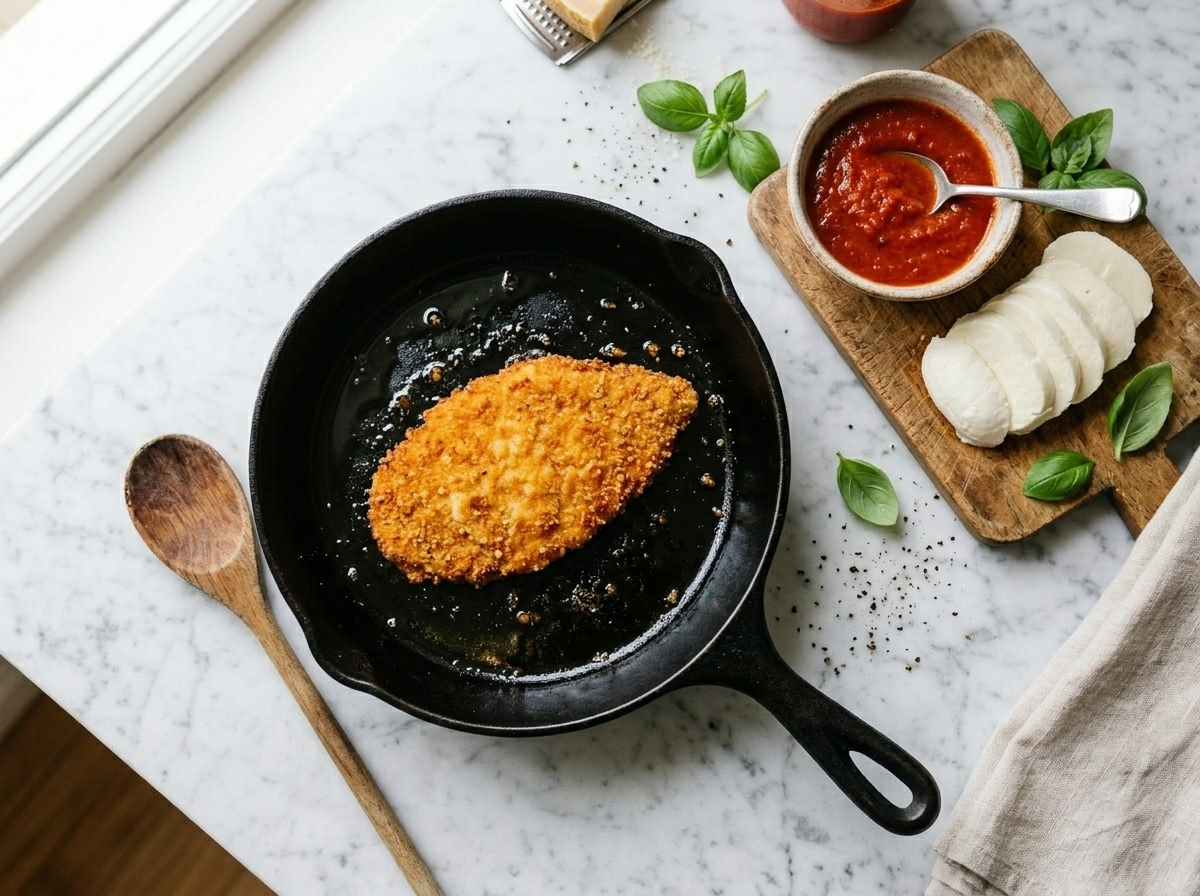
- Fry two cutlets at a time for 2-3 minutes per side until the crust is deep golden and set. Do not move them for the first 2 minutes or the crust will tear.
- Transfer the fried cutlets to the warm wire rack in the oven to keep hot while you fry the remaining two.
- Spoon 2-3 tbsp of tomato sauce onto the center of each cutlet, leaving a 1 cm border of bare crust around the edge.
- Lay mozzarella slices over the sauce and scatter the remaining 30 g grated Parmigiano on top.
- Bake at 200 C / 390 F for 8-10 minutes until the mozzarella is fully melted with light golden spots and the internal temperature reads 74 C / 165 F.
- Rest the cutlets for 2 minutes on the rack, then plate with fresh basil leaves and serve.
Notes
Tips for Success
- Pound each chicken breast to 1 cm before breading so the crust browns before the meat overcooks.
- Press the breadcrumbs firmly onto the egg-coated chicken and let the cutlets rest 5 minutes before frying so the coating doesn’t fall off.
- Fry in oil at 180 C / 355 F – use enough oil to come halfway up the cutlet so the bottom crust sets without burning.
- Place fried cutlets on a wire rack set over a baking sheet so hot air circulates underneath and the crust stays crisp during oven finishing.
- Spoon the tomato sauce only in the center of each cutlet, leaving the edges bare so they remain crunchy.
Variations
- Swap mozzarella for smoked scamorza for a deeper, slightly smoky top layer.
- Add a slice of cooked ham between the chicken and sauce for a saltimbocca-style variation.
- Use ground almond flour and gluten-free breadcrumbs for a fully gluten-free version with the same crunch.
Storage and Reheating
Store leftover petto di pollo alla parmigiana in an airtight container in the fridge for up to 3 days. Keep the cutlets flat so the topping doesn’t slide off.
To reheat, place cutlets on a wire rack in the oven at 180 C / 355 F for 10-12 minutes. This firms the crust back up better than a microwave, which turns the breading soft and chewy.
You can freeze the fried but un-sauced cutlets for up to 2 months. Freeze them flat on a tray, then transfer to bags. Add the sauce and cheese fresh when you’re ready to bake.
Serving Suggestions
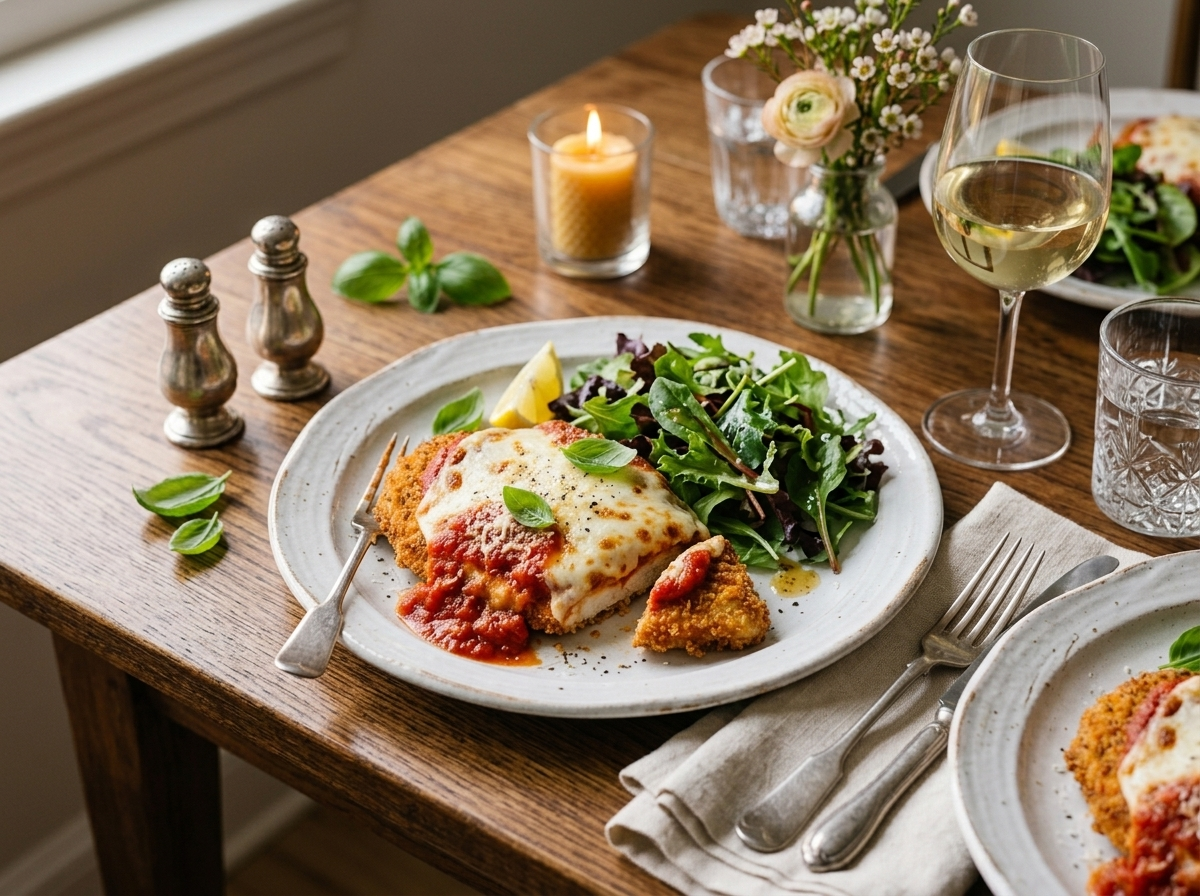
A simple green salad dressed with lemon juice and olive oil cuts through the richness of the cheese well. A plate of roasted zucchini or sauteed spinach works the same way and keeps the meal light.
For a more filling plate, serve the parmigiana over a small portion of spaghetti with olive oil or a simple pomodoro. The pasta picks up any extra sauce on the plate and makes the meal more substantial without extra effort.
A cold glass of dry Italian white – Verdicchio or Falanghina – pairs cleanly with the tomato acidity. If you’re skipping wine, sparkling water with a slice of lemon balances the richness just as well.
FAQ
Why does the breading fall off my chicken parmigiana during frying?
The most common reason is skipping the resting step. After breading, let the cutlets sit on a plate for 5 minutes so the egg and breadcrumbs bond to the surface. Also make sure the oil is hot before the chicken goes in – cold oil soaks into the crust instead of sealing it.
Can I use panko instead of fine breadcrumbs for chicken parmigiana?
You can, but the result is a chunkier, coarser crust that tends to separate from the chicken when you spoon the sauce on top. Fine dried breadcrumbs give a tighter, more even coating that holds together better under the mozzarella.
How do I know when the chicken parmigiana is done in the oven?
The mozzarella should be fully melted with a few light golden spots, and an instant-read thermometer inserted into the thickest part of the cutlet should read 74 C / 165 F. With a 1 cm cutlet that’s already been pan-fried, this usually takes 8-10 minutes at 200 C.
Can I assemble chicken parmigiana ahead and refrigerate it before baking?
Yes, but only up to 2 hours ahead. Sauce sitting on the crust for longer starts to soften the breading noticeably. Keep the assembled cutlets uncovered in the fridge so the surface stays dry, and add the mozzarella just before it goes into the oven.
What is the difference between petto di pollo alla parmigiana and the American chicken parmesan?
The Italian version typically uses a thinner, more lightly sauced cutlet with less cheese, often served as a secondo without pasta, much like thin pan-seared veal cutlets in Roman cooking. American chicken parmesan tends to be thicker, saucier, and usually arrives on top of spaghetti as a one-plate meal.
Is petto di pollo alla parmigiana gluten-free?
Not in the standard recipe, since the breading uses wheat flour and breadcrumbs. To make it gluten-free, replace the flour with rice flour and use certified gluten-free breadcrumbs. The texture holds up well with both substitutions.