
Jump to Recipe
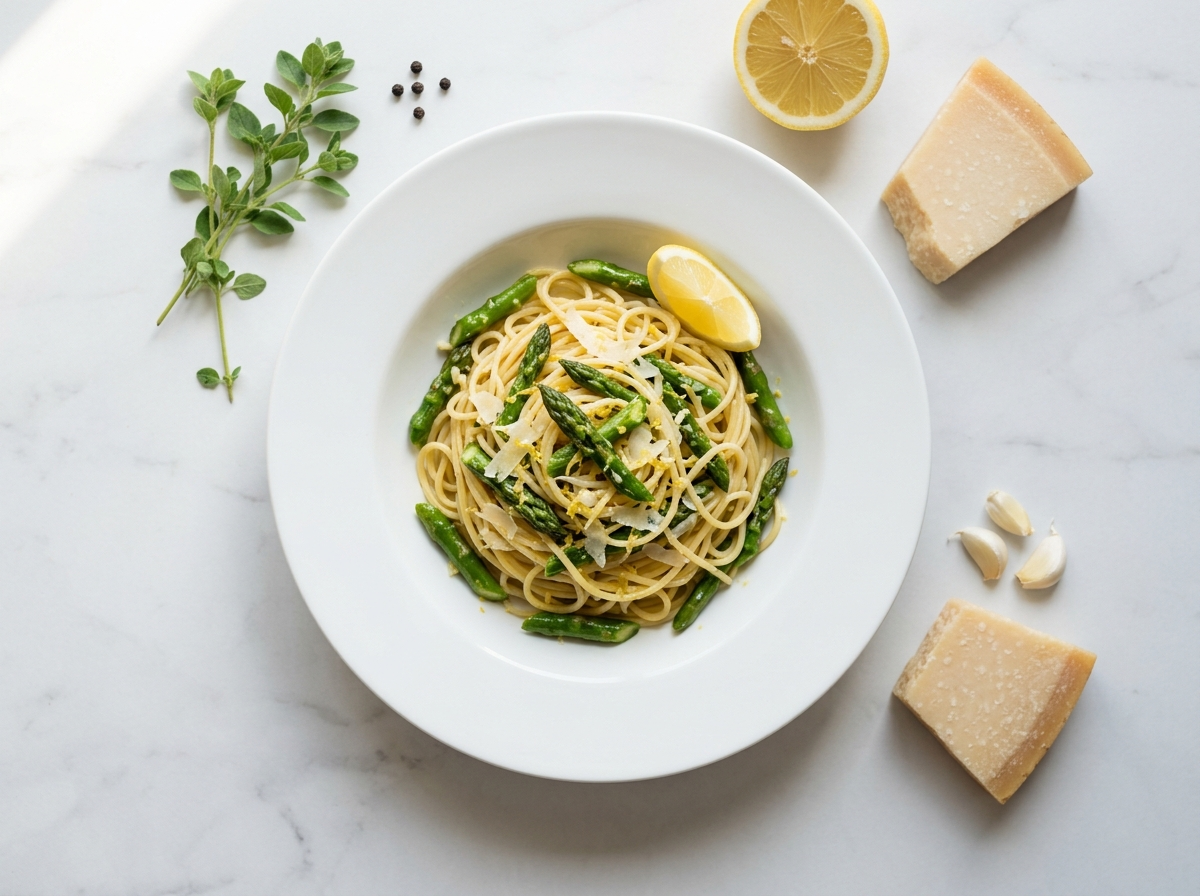
Asparagus has a short window – roughly six weeks in spring – and this pasta is one of the best uses of it. Thin spears go into the pan with garlic and olive oil, soften just enough to stay slightly firm, and carry the whole dish.
The sauce isn’t cream-based. It’s built from pasta water, lemon juice, and Parmesan, which emulsifies into something silky and clean-tasting without feeling heavy. The starch does the work.
This comes together in about 30 minutes and uses one skillet plus the pasta pot. It works on a weeknight and holds up well enough to serve to guests with a glass of white wine.
Why You’ll Love This Recipe
- Silky sauce with no cream, just pasta water and Parmesan
- Uses peak-season asparagus in under 30 minutes
- One skillet plus pasta pot – minimal cleanup
- Bright lemon flavour balances the earthy asparagus well
Ingredient Notes
- Asparagus: Use medium-thin spears for the best texture here – thick ones take longer to cook and can turn mushy before the pasta is done. Snap off the woody ends and cut the spears into 2-inch pieces.
- Spaghetti or linguine: Long pasta works best because the asparagus pieces tangle into it naturally. Linguine or tagliolini are good alternatives; penne works if that’s what you have.
- Parmesan: Use a block and grate it finely yourself – pre-grated Parmesan doesn’t melt into the sauce the same way and can leave a grainy texture.
- Lemon: You need both zest and juice. The zest goes in early for fragrance; the juice goes in at the end to keep the brightness sharp rather than cooked-out.
- Garlic: Two to three cloves, sliced thin rather than minced – sliced garlic gives a milder, slightly nutty flavour without the sharpness of finely minced.
- Pasta water: Reserve at least 200 ml before draining. This is what makes the sauce cling to the pasta – don’t skip it or substitute plain water.
Spring Asparagus Pasta with Lemon and Parmesan
Ingredients
Method
- Bring a large pot of water to a boil. Add 10 g of salt per litre and cook the pasta according to the packet, but plan to pull it 1 minute early.
- While the pasta cooks, heat the olive oil in a large skillet over medium heat. Add the sliced garlic and cook for 1 to 2 minutes until pale gold and fragrant.
- Add the asparagus pieces to the skillet with a pinch of salt. Cook for 4 to 5 minutes, turning occasionally, until bright green and just tender when pierced with a knife.
- Add the lemon zest and chilli flakes if using. Stir for 30 seconds.
- Before draining the pasta, scoop out at least 200 ml of pasta water and set aside.
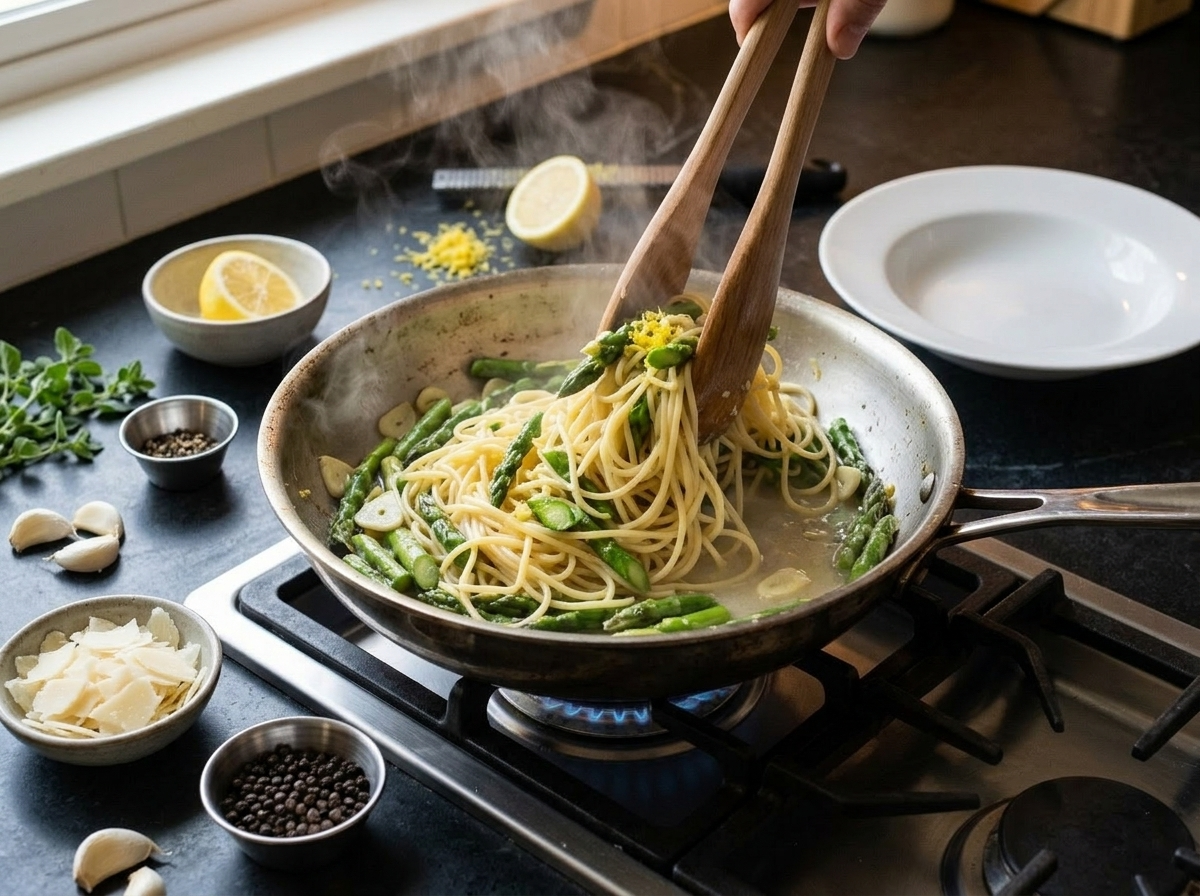
- Drain the pasta and transfer it directly into the skillet with the asparagus over low heat. Add 80 ml of the reserved pasta water and toss well.
- Remove the skillet from the heat. Add the grated Parmesan in two additions, stirring constantly and adding more pasta water, a splash at a time, until the sauce is silky and coats the pasta.
- Add the lemon juice, taste for salt, and adjust. Add more pasta water if the sauce tightens too much.
- Divide into warm bowls. Finish with extra Parmesan, black pepper, and a drizzle of olive oil.
Notes
Tips for Success
- Salt the pasta water generously – at least 10 g per litre – so the pasta itself carries flavour.
- Add the asparagus to the skillet after the garlic is pale gold, not before, to avoid overcooking the spears.
- Pull the pasta 1 minute before the packet says al dente and finish it in the skillet with reserved pasta water.
- Grate the Parmesan off the heat to prevent it from clumping; stir constantly as you add it in small additions.
- Taste before adding lemon juice – Parmesan is salty, so check the seasoning first and adjust with pasta water if too sharp.
Variations
- Add 100 g of pancetta or guanciale, fried crisp, for a salty, fatty contrast to the asparagus.
- Stir in a handful of fresh or frozen peas with the asparagus for extra sweetness and a more substantial dish.
- Use pecorino Romano instead of Parmesan for a sharper, saltier flavour that pairs well with the lemon.
Storage and Reheating
Store leftovers in an airtight container in the fridge for up to 2 days. The pasta will absorb the sauce as it sits, so it will look drier than when freshly made.
To reheat, add a splash of water to the container or pan and warm over low heat, stirring frequently until the sauce loosens again. Avoid the microwave on high power – it turns the asparagus grey and limp.
This pasta doesn’t freeze well. The asparagus loses its texture completely once frozen and thawed, so make only what you’ll eat within two days.
Serving Suggestions
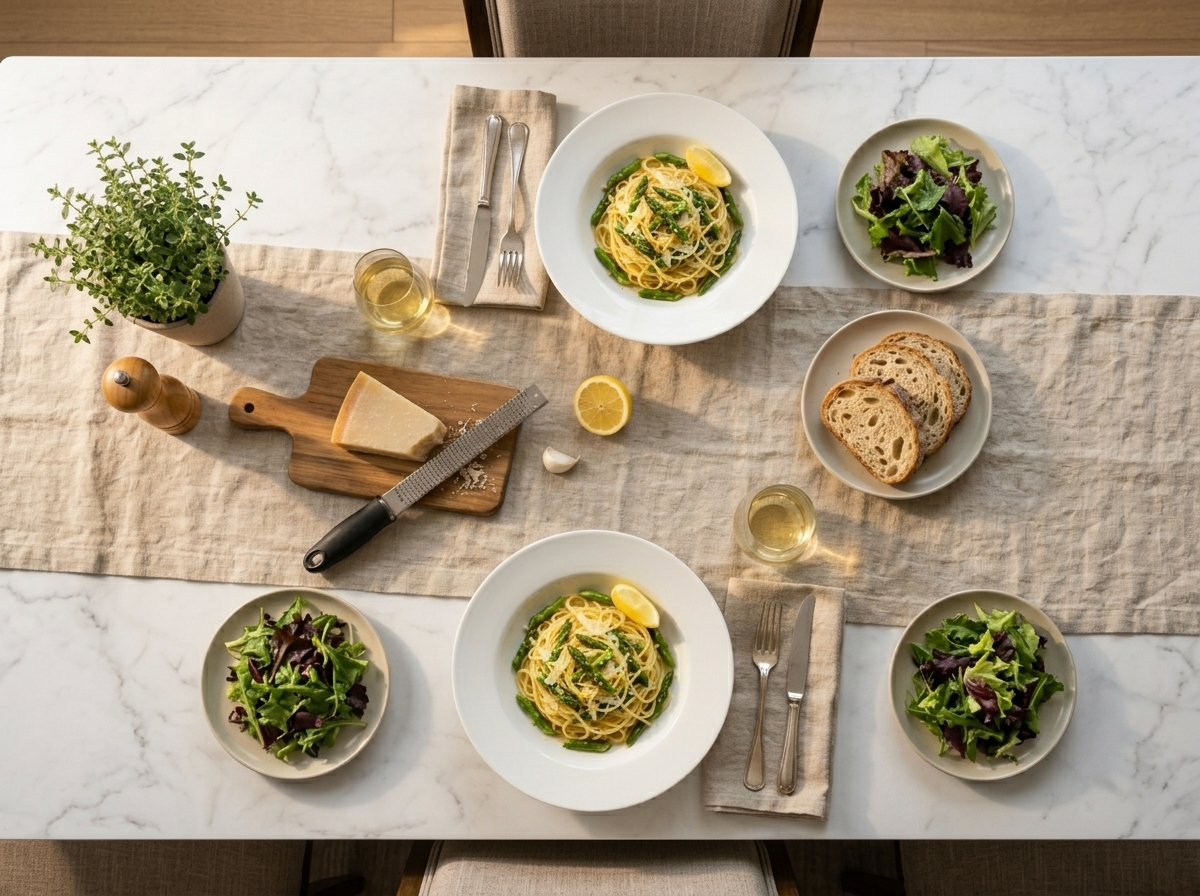
Serve straight from the skillet into warm bowls with an extra grating of Parmesan and a few turns of black pepper. A drizzle of good olive oil over the top at the table adds a fruity note that finishes the dish.
A simple green salad with a sharp vinaigrette works alongside it – the acidity cuts through the richness of the cheese – or try a Campania zucchini scapece whose bright, vinegar-lifted flavour plays the same role. A glass of chilled Vermentino or Pinot Grigio is a natural match for the lemon and asparagus.
For a more substantial meal, serve with Italian lemon chicken or a fried egg on top. Both add protein without competing with the clean spring flavours.
FAQ
Why does my asparagus pasta sauce turn out watery instead of silky?
The most common cause is adding too much pasta water at once or not stirring fast enough once the Parmesan goes in. Add the reserved pasta water in small splashes – about 2 tablespoons at a time – and stir constantly off the heat to help the starch and cheese emulsify properly.
Can I use white wine instead of lemon juice in this asparagus pasta?
Yes. Add about 60 ml of dry white wine to the skillet after the garlic is softened and let it reduce by half before adding the asparagus. It gives a slightly rounder, less sharp acidity than lemon juice – you can still add a little lemon zest at the end for fragrance.
Can I prep the asparagus ahead for this pasta and keep it overnight?
You can snap off the ends and cut the spears a day ahead – store them in a zip bag or covered container in the fridge. Don’t cook them ahead of time; asparagus goes from just-tender to soft very quickly and won’t hold well once cooked.
Is this spring asparagus pasta gluten free?
Not as written, but it’s easy to adapt. Swap the spaghetti for a good-quality rice or corn-based gluten-free pasta and use the same sauce method. Add an extra splash of pasta water when finishing in the skillet since gluten-free pasta releases less starch.
What’s the difference between this pasta and a classic pasta primavera?
Pasta primavera typically uses a wider mix of spring vegetables – zucchini, bell peppers, cherry tomatoes – often with cream, whereas a bold Southern Italian pasta builds its character from a deeply reduced, meat-forward sauce instead. This recipe focuses only on asparagus and builds the sauce from Parmesan and pasta water, giving it a lighter, more concentrated flavour.
How do I know when the asparagus is cooked correctly in the pan?
The spears should be bright green and bend slightly when lifted with tongs but still hold their shape – not floppy. A knife should slip in with light resistance. If they look dull or olive-coloured, they’ve gone too far.