
Jump to Recipe
Pizzoccheri della Valtellina is a buckwheat pasta dish from the Alpine valleys of northern Lombardy, boiled with potatoes and cabbage, then layered with melted Casera cheese and butter crisped with sage and garlic.
It comes together in one pot, much like Basilicata’s pasta and chickpea stew. The pasta, the potatoes, and the cabbage all cook in the same starchy water, so there’s no separate sauce to build on the side.
I cut the potatoes small and pull the pasta the moment it goes tender, because buckwheat pasta has no gluten holding it together and turns mushy fast if you leave it a minute too long.
The result is a dense, cheese-heavy plate, closer to a savory casserole than a typical pasta dinner. It’s built for cold weather and a hard day outside, not a light Tuesday supper.
Why You’ll Love This Recipe
- One pot handles the pasta, vegetables, and finishing step
- Buckwheat pasta gives a nuttier bite than regular wheat noodles
- Melted Casera and sage butter build flavor in layers
- Built for cold weather, feeds a hungry table generously
Ingredient Notes
- Pizzoccheri pasta: Look for dried pizzoccheri in the pasta aisle or an Italian specialty shop. Short lengths of broken tagliatelle work as a stand-in, though the texture comes out smoother.
- Potatoes: Waxy potatoes like Yukon gold hold their shape better than starchy russets once boiled alongside the pasta.
- Savoy cabbage: Savoy’s crinkled leaves wilt down gently. Regular green cabbage works too but needs an extra minute or two to soften.
- Casera cheese: Valtellina Casera DOP is the traditional choice. Fontina or taleggio are the closest substitutes if you can’t find it.
- Grana Padano: Adds a salty, aged edge over the milder Casera. Parmigiano Reggiano does the same job.
- Butter: Use unsalted butter so you control the seasoning, since both cheeses already bring plenty of salt.
- Sage: Fresh leaves crisp up in the hot butter and turn nutty. Dried sage won’t give you the same texture.
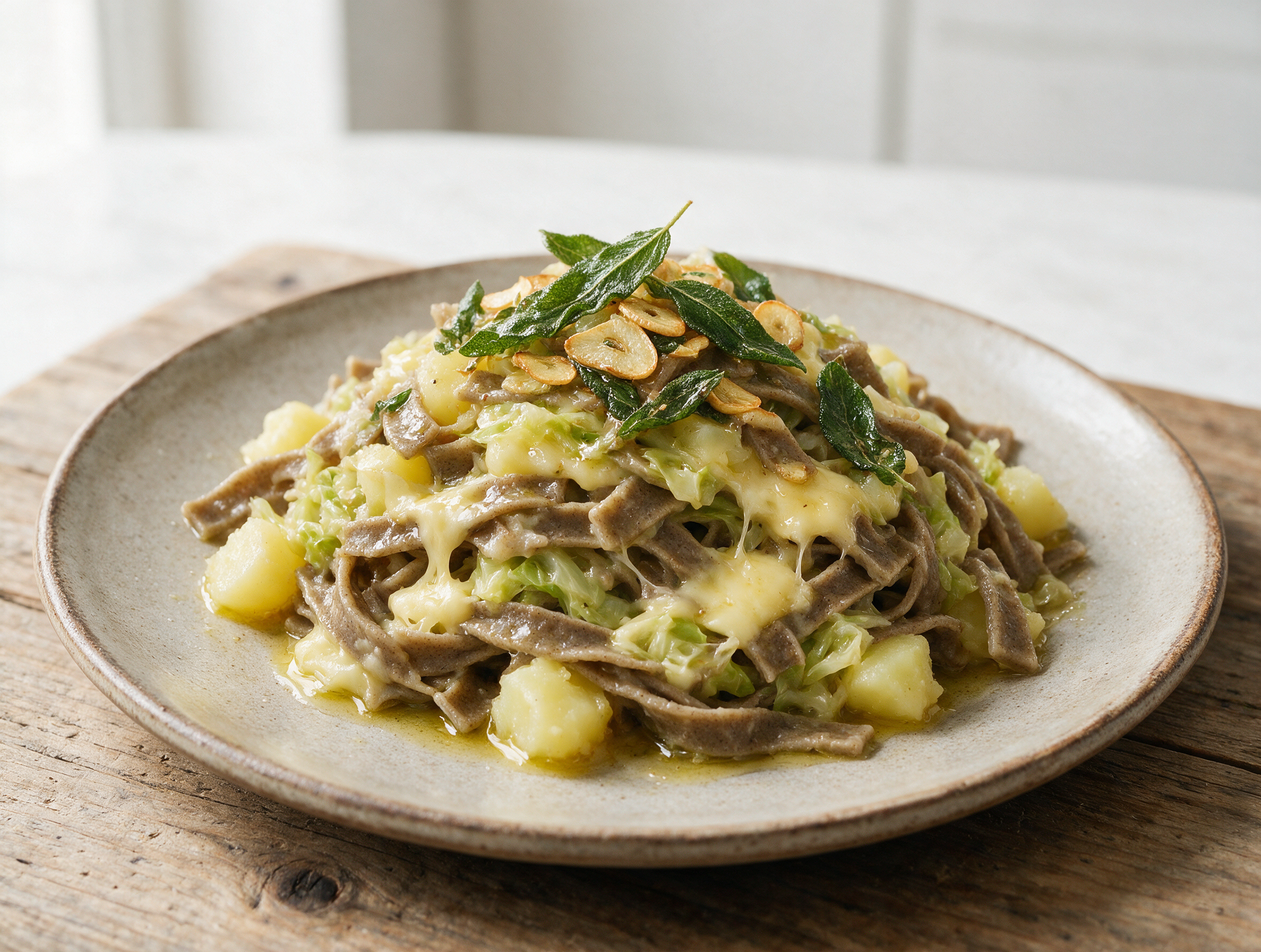
Pizzoccheri della Valtellina with Crispy Sage Butter
Ingredients
Method
- Bring 5 to 6 liters of water to a boil in a 6-quart / 5.7 L stockpot and season generously with fine salt.
- Add the potato cubes and simmer 5 minutes until they start to soften at the edges.
- Add the sliced savoy cabbage and simmer another 5 minutes until wilted.
- Add the pizzoccheri and cook 10 to 12 minutes, stirring occasionally, until the pasta bends easily and the potatoes are fully tender when pierced with a fork. Buckwheat pasta has no gluten to hold it together, so pull it as soon as it's tender rather than waiting for a firmer bite.
- While the pasta cooks, melt the unsalted butter in a small saucepan over medium heat, then add the garlic and fresh sage leaves and cook 2 to 3 minutes until fragrant and the butter turns golden. Remove from heat.
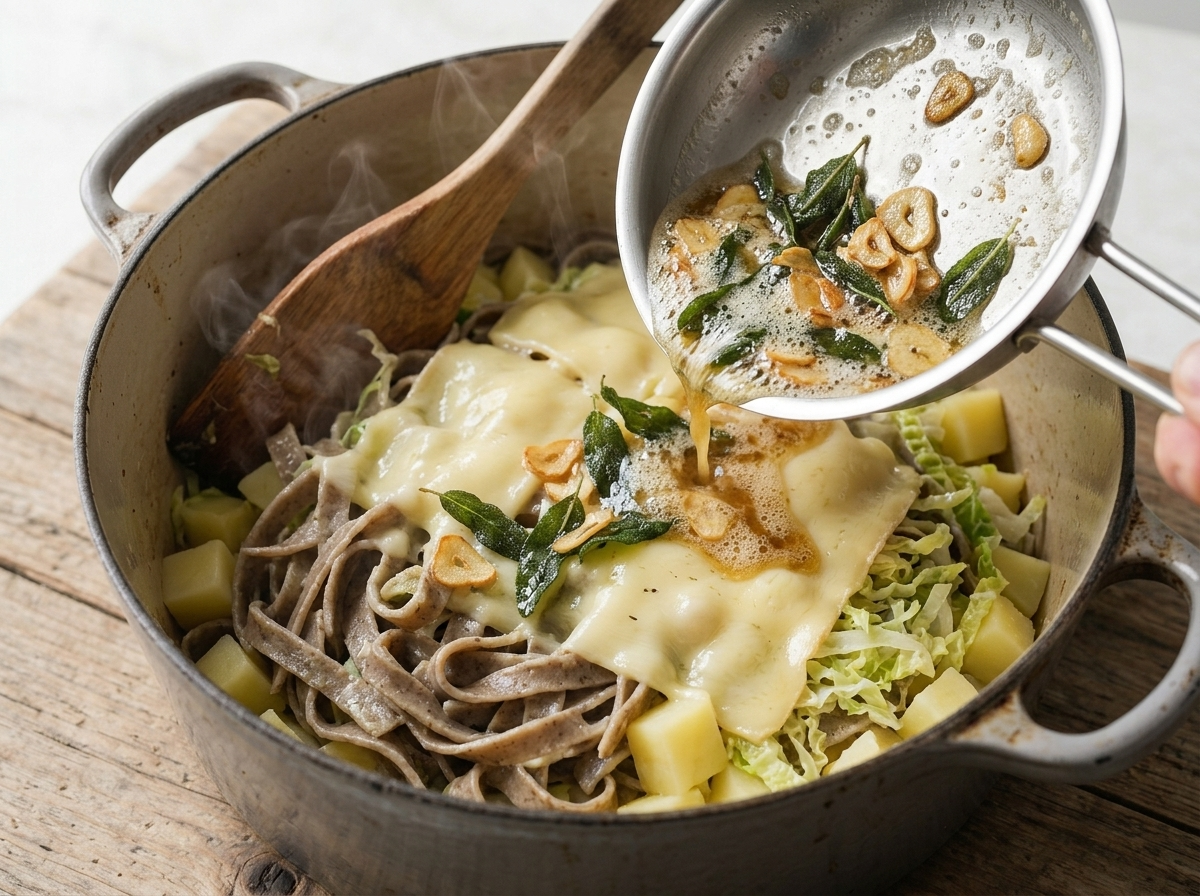
- Drain the pasta and vegetables, reserving a little cooking water, then layer half of the mixture in a warmed serving dish with a scattering of Casera cheese and Grana Padano.
- Add the remaining pasta and vegetables, top with the rest of the Casera cheese and Grana Padano, then pour the sage butter and garlic over the top and toss gently to combine before serving.
Notes
- Cut potatoes and cheese to matching sizes for even cooking and melting.
- Don't walk away from the browning butter, garlic burns within seconds.
- Layer cheese between pasta, not just on top, for even melting.
- Serve immediately, pizzoccheri stiffens fast as the butter cools.
Tips for Success
- Cut the potatoes into 1 cm cubes so they finish cooking in the same 10 to 12 minutes as the pasta.
- Slice the Casera thin, not cubed, so it melts into strands instead of sitting in unmelted lumps.
- Keep the butter at medium-low heat with the sage and garlic, since it scorches fast once it starts to brown.
- Save a ladle of the starchy cooking water before draining, in case the layered pasta needs loosening at the end.
- Warm the serving dish or pot before layering, so the cheese starts melting the moment the pasta hits it.
Variations
- Swap savoy cabbage for Swiss chard or kale for a more bitter, mineral edge closer to some Valtellina farmhouse versions.
- Use half Casera and half fontina for a milder, stretchier melt with less funk.
- Stir a few tablespoons of heavy cream into the butter for a richer, silkier version some Alpine kitchens make.
Storage and Reheating
Pizzoccheri della Valtellina keeps 3-4 days in the fridge in an airtight container. The cheese firms up as it chills, so the texture won’t look as loose as fresh, but the flavor holds well.
Reheat it in a skillet over low heat with a splash of milk or a small pat of butter, stirring for 5-7 minutes until the cheese loosens and turns stretchy again. A microwave works too, in 60-second bursts, though the cheese stays less silky.
Freezing isn’t recommended. The potatoes turn grainy and the melted cheese separates once thawed.
Serving Suggestions
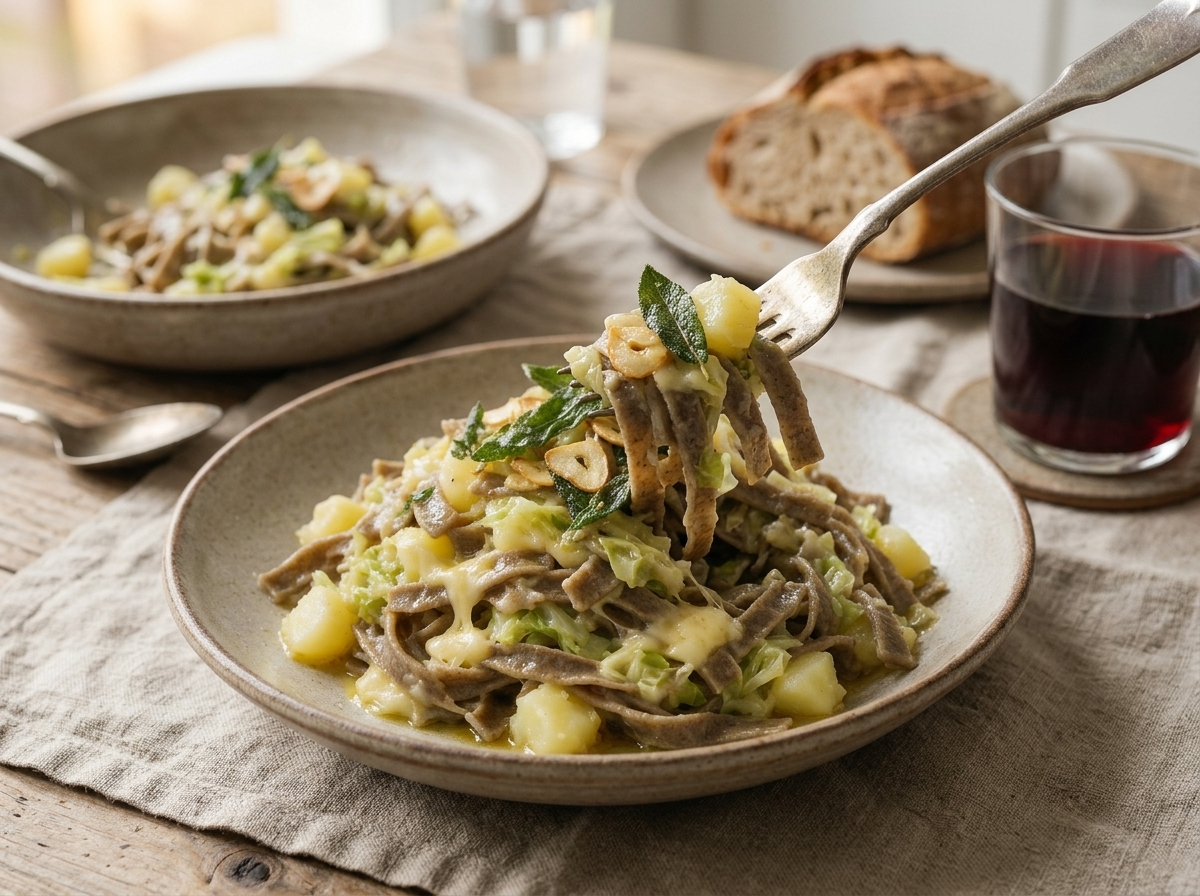
Pizzoccheri della Valtellina is rich enough to stand alone as a full meal, similar to strozzapreti alla Romagnola. A simple green salad with a sharp vinaigrette on the side cuts through the butter and cheese.
Pour a glass of Chiavennasca, the local name for Nebbiolo in Valtellina, or a dry Alpine white if you’d rather stay lighter. Crusty bread on the side is good for scraping the last of the melted cheese from the bowl.
Finish the meal the way it’s done in the mountains, with a small glass of grappa.
FAQ
Why did my pizzoccheri turn out mushy instead of holding its shape?
Mushy pizzoccheri usually means the pasta sat in the boiling water too long. Buckwheat pasta has no gluten network to hold it together, so it breaks down fast once it passes tender. Start checking at the 10 minute mark and pull it the moment it bends easily and the potatoes are soft when pierced.
Can I use taleggio or fontina instead of Casera cheese?
Yes, both work well if you can’t find Valtellina Casera. Fontina melts into strands much like in pasta ai quattro formaggi, and taleggio adds a stronger, tangier edge. Slice either one thin so it melts evenly into the hot pasta and potatoes rather than sitting in unmelted chunks.
Can I make pizzoccheri della Valtellina ahead and reheat it later?
Yes, it keeps 3-4 days in the fridge in an airtight container. Reheat gently in a skillet over low heat with a splash of milk or butter, stirring for 5-7 minutes until the cheese loosens back into strands. A microwave works in a pinch but the cheese won’t stretch as nicely.
What wine goes well with pizzoccheri della Valtellina?
A crisp Alpine white or a light red suits pizzoccheri best. Valtellina’s own Chiavennasca, a local expression of Nebbiolo, has enough acidity to cut through the butter and melted cheese. A dry Sauvignon Blanc works too if you’d rather stay with white.
Is pizzoccheri della Valtellina gluten-free?
No, traditional pizzoccheri pasta is not gluten-free. Classic recipes blend buckwheat flour with roughly 20 percent wheat flour for structure, so the dough holds together. To make it gluten-free, look for a pure buckwheat pizzoccheri or swap in a certified gluten-free pasta shape and check the Casera label too.
What’s the difference between pizzoccheri and regular buckwheat pasta?
Pizzoccheri isn’t just any buckwheat noodle, it’s a specific short ribbon shape from Valtellina traditionally cut by hand and always cooked with potatoes, cabbage, butter, and Casera cheese. Other buckwheat pastas, like soba, are thinner, made differently, and served in a different style of dish.