
Jump to Recipe
This is a thick, filling minestrone built for cold months, not the pale broth-heavy version you get in summer. The base is a slow soffritto of onion, carrot, and celery, and the body comes from cannellini beans, diced potato, and cavolo nero.
The broth gets its depth from a Parmesan rind simmered low and slow, a technique that also works beautifully in a roasted Italian squash soup. It’s not a shortcut I invented – it’s what most Italian home cooks do with the rinds they keep in the freezer. If you don’t have one, a small splash of soy sauce does similar work without changing the flavor profile.
I use tinned tomatoes and tinned beans here. Both are weeknight-practical and produce a clean, sturdy result. The soup firms up as it sits, which means leftovers the next day are even better than the pot you made.
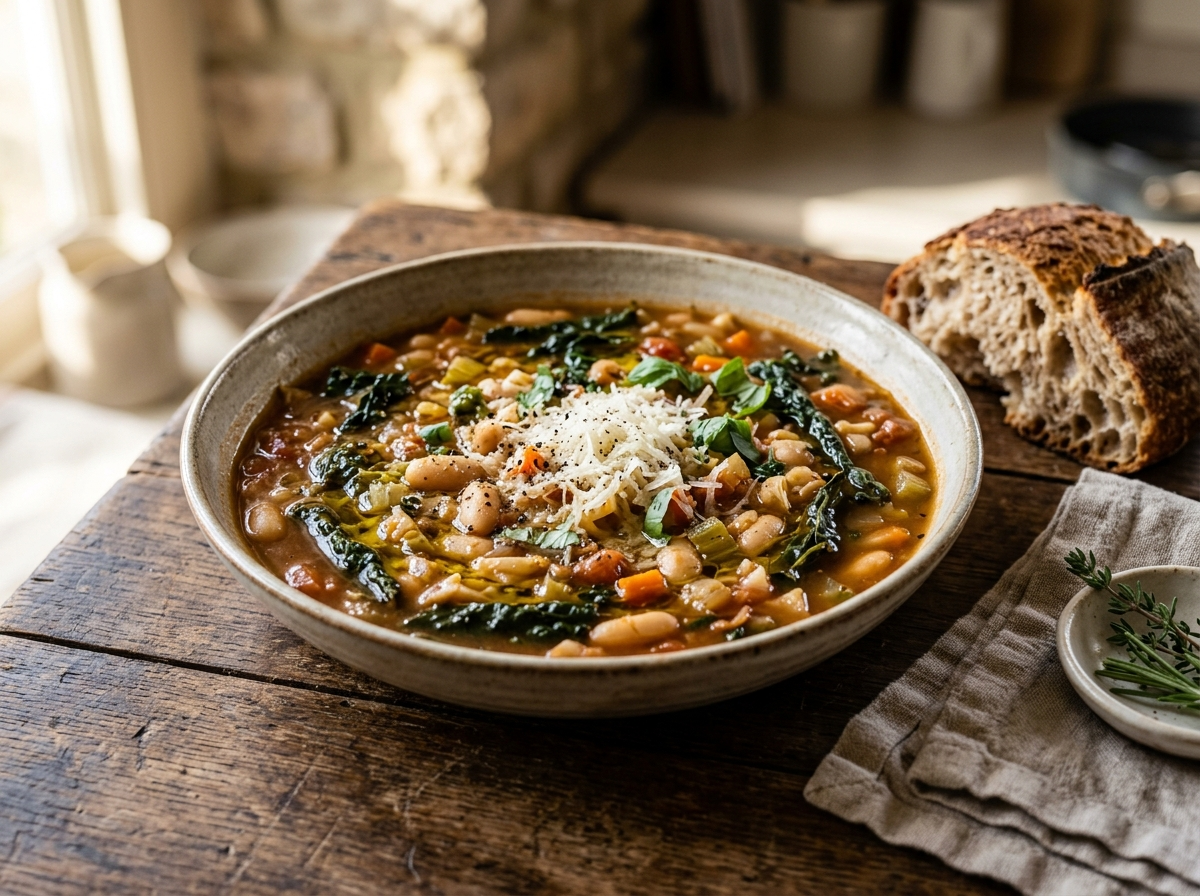
Why You’ll Love This Recipe
- One pot, minimal cleanup, ready in 40 minutes
- Parmesan rind broth adds savory depth without extra effort
- Freezes well for up to three months
- Easily made vegan by skipping the rind
Ingredient Notes
- Cavolo nero: Also sold as Tuscan kale or lacinato kale. Regular curly kale works fine but needs an extra 5 minutes of cooking. Savoy cabbage is a softer swap if neither is available.
- Cannellini beans: Two 400 g tins, drained, give you the right amount. Dried beans cooked from scratch work too – you’ll need about 250 g dried weight, soaked overnight.
- Parmesan rind: Store rinds in a zip-lock bag in the freezer as you finish blocks of Parmesan. One small piece around 5 cm is enough to change the broth noticeably.
- Tinned whole plum tomatoes: Crush them with your hand before adding. Passata or good-quality chopped tomatoes are fine substitutes in equal volume.
- Short pasta (ditalini or small elbows): Cook the pasta separately and add to each bowl rather than the pot if you plan to store leftovers – pasta absorbs all the broth overnight.
- Celery: Use the inner stalks with their leaves if you have them – the leaves add a grassy note to the soffritto that outer stalks lack.
Winter Minestrone Soup with Cannellini Beans and Cavolo Nero
Ingredients
Method
- Heat the olive oil in a large heavy pot over medium-low heat. Add the onion, celery, and carrots with a pinch of salt and cook for 10 minutes, stirring occasionally, until the onion is pale and completely soft.
- Add the garlic and cook for 2 minutes until fragrant but not colored. Stir in the tomato paste and cook for 1 minute until it darkens slightly.
- Add the crushed tinned tomatoes to the pot and stir well, scraping up any bits from the base. Cook for 3 minutes until the tomatoes reduce slightly.
- Pour in the vegetable stock. Add the Parmesan rind, dried thyme, and bay leaf. Bring to a gentle simmer over medium heat.
- Add the diced potato and cook for 10 minutes until just starting to soften.
- While the potato cooks, take one-third of the drained cannellini beans and crush them roughly with a fork or the back of a spoon. Add all the beans (whole and crushed) to the pot and stir to combine.
- Simmer for 10 minutes until the broth thickens and the potato is cooked through. Add the cavolo nero strips and cook for a further 8 minutes until tender but still vivid green.
- While the soup finishes, cook the ditalini in a separate pot of well-salted boiling water until al dente according to packet instructions. Drain and set aside.
- Remove and discard the Parmesan rind and bay leaf. Taste the soup and adjust salt and pepper.
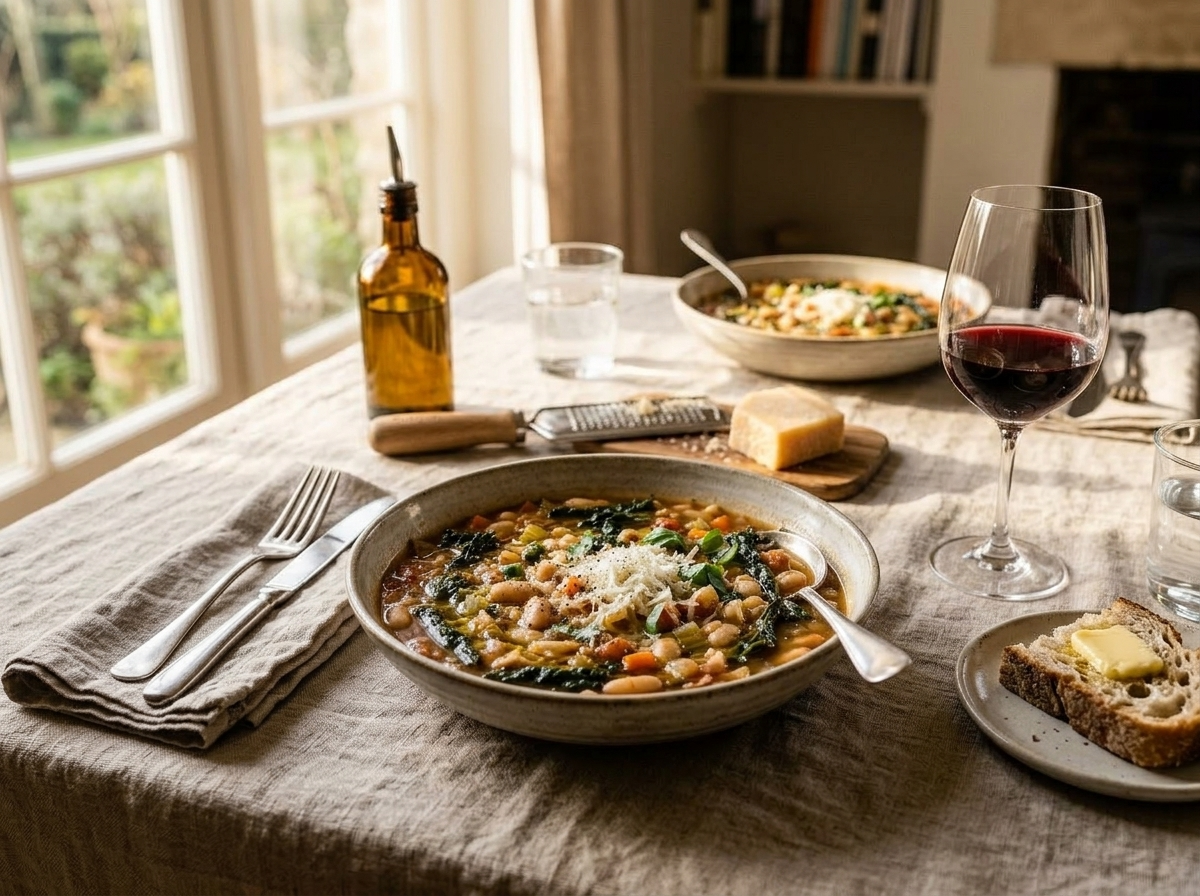
- Rest the soup off the heat for 5 minutes. Spoon pasta into each bowl, ladle the hot soup over the top, drizzle with extra-virgin olive oil, and finish with grated Parmesan.
Notes
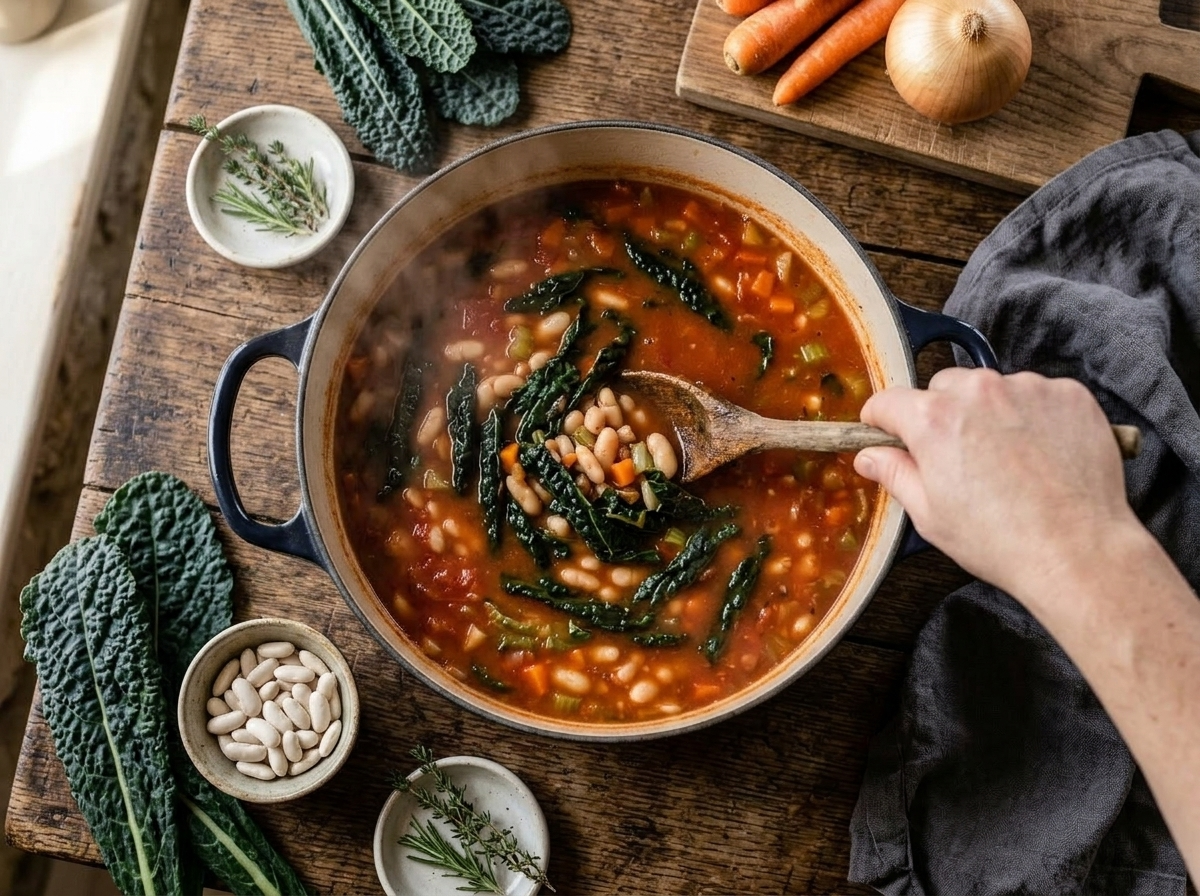
Tips for Success
- Cook the soffritto on medium-low for 10 full minutes until the onion is pale and soft, not just translucent.
- Crush one-third of the cannellini beans with a fork before adding to thicken the broth without a blender.
- Add cavolo nero in the last 8 minutes only – longer cooking turns it drab and slightly bitter.
- Season the soup in stages: a pinch at the soffritto, another after the tomatoes, and a final check before serving.
- Rest the finished soup off the heat for 5 minutes before ladling – it thickens and the flavors settle.
Variations
- Add 150 g of diced pancetta to the soffritto for a smoky, meatier base before the vegetables.
- Swap cannellini for borlotti beans and add a small sprig of rosemary with the broth.
- Stir in a tablespoon of red pesto per bowl at the table instead of Parmesan for a Ligurian finish.
Storage and Reheating
Store the soup without pasta in an airtight container in the fridge for up to 4 days. It thickens considerably as it sits – add a splash of water or stock when reheating on the stovetop over medium heat.
To freeze, cool completely and portion into containers. Freeze for up to 3 months. Thaw overnight in the fridge, then reheat gently on the stove, stirring occasionally.
If you cooked pasta directly in the pot, the soup still keeps but the pasta will be very soft by day two. It’s still good – just a different texture.
Serving Suggestions
A thick slice of sourdough or ciabatta rubbed with garlic and drizzled with a fruity olive oil is the classic pairing. Grilled bread works better than plain bread here because the slight char balances the sweetness of the root vegetables.
Finish each bowl with a drizzle of good extra-virgin olive oil and a small handful of finely grated Parmesan. Both add fat and salt that pull the broth together at the table.
For a larger meal, follow the soup with a simple bitter green salad dressed with lemon and olive oil. The acidity cuts through the starchy body of the minestrone cleanly.
FAQ
Why does my winter minestrone taste flat even after seasoning?
The most common cause is underseasoning at the soffritto stage and skipping the Parmesan rind. Add a small pinch of salt when the onions go in, and stir in a teaspoon of tomato paste with the tinned tomatoes to boost depth.
Can I use regular kale instead of cavolo nero in this minestrone?
Yes, curly kale works but needs about 5 extra minutes of simmering to soften properly. Remove the tough central ribs and slice the leaves into thin strips before adding.
Can I make this winter minestrone two days ahead and does it keep well?
It keeps well for up to 4 days in the fridge, and the flavor improves after a day as the beans and vegetables absorb the broth. Cook and store the pasta separately so it doesn’t turn to mush.
What pasta shape holds up best in a thick winter minestrone?
Ditalini is the traditional choice because the small cylinders stay firm and don’t clump. Small elbows or tubetti are easy substitutes – avoid long pasta, which breaks awkwardly in a chunky soup.
Is this winter minestrone recipe gluten free?
It is gluten free if you use a gluten-free short pasta or simply leave the pasta out and add an extra potato for body. Check that your stock or broth is also certified gluten free, as some contain wheat.
What is the difference between a winter minestrone and a ribollita?
Both are Tuscan-style bean and vegetable soups but ribollita is specifically made by reheating leftover minestrone with stale bread stirred in until thick and porridge-like, much like the layered patience behind a slow Italian lentil soup. Winter minestrone stays broth-based on the first cook.