
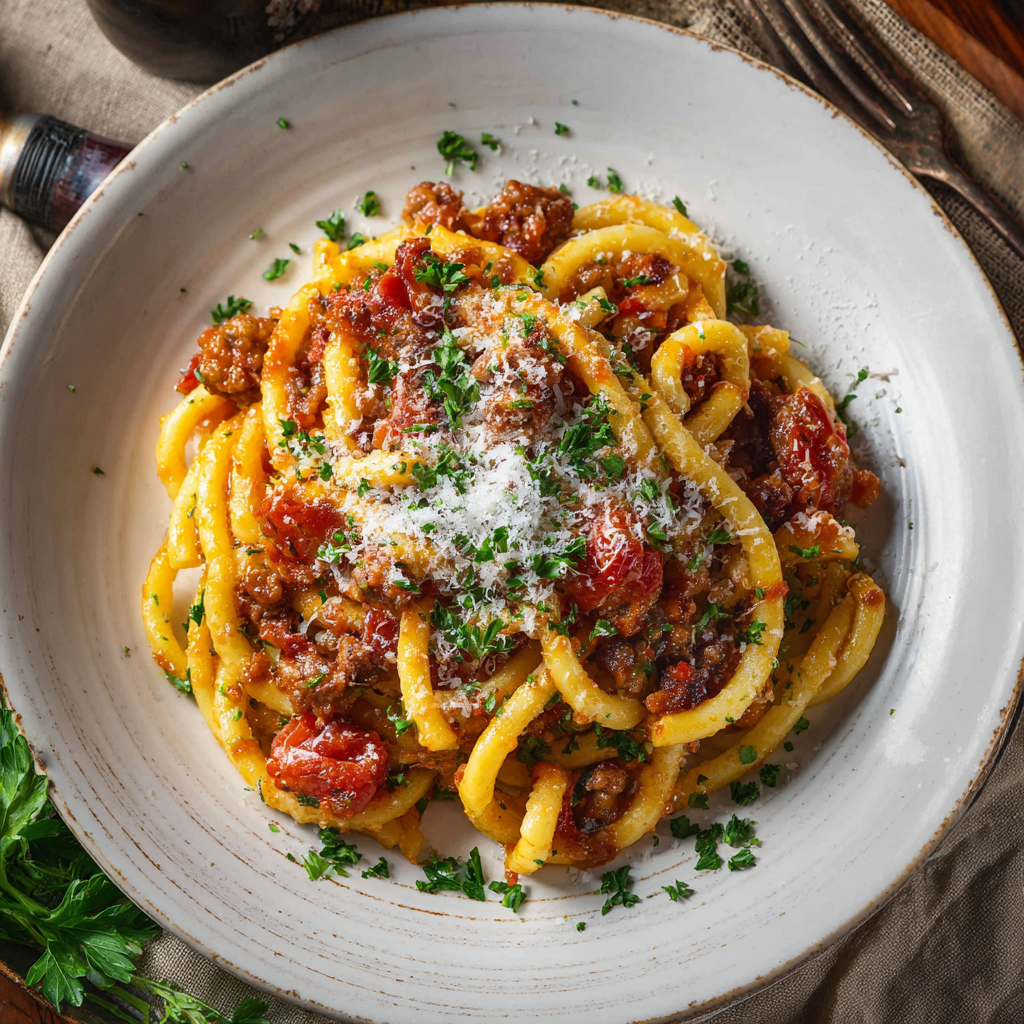
Jump to Recipe
Have you ever wondered why a bold Southern Italian sauce can taste like home in under an hour?
I’ll show you a clear, workaday recipe that delivers a thick, peppery tomato sauce with crumbled meat that clings to every forkful.
This dish feels like comfort food without fuss. Expect sweet tomatoes, warming heat from peperoncino, and a satisfying texture rather than a brothy finish.
In about 40 minutes total you’ll brown the meat, build a rich sauce, boil the pasta, and finish everything together in one pan. Prep is quick and realistic for a U.S. weeknight.
Two simple choices steer the result: use ’nduja for a deeper chili punch or skinless Italian sausage for a cleaner, meatier profile. Both work; pick what you can buy.
Your success comes down to three things: a sauce that tastes “finished,” pasta that stays al dente, and heat that warms, not overwhelms.
Key Takeaways
- This recipe yields a bold Southern-Italian pasta ready in about 40 minutes.
- Expect a thick tomato sauce that clings to the noodles and a warm, balanced heat.
- Cook flow: brown the meat, build the sauce, boil the pasta, finish together.
- Choose ’nduja for chili depth or skinless sausage for a meatier bite.
- Kitchens with simple tools and basic ingredients can reproduce authentic flavor.
Why this Calabrian pasta hits different: ’nduja heat, tomato sweetness, and real Southern Italian comfort
You notice the difference when heat, tomato sweetness, and meat combine to make each forkful complete. The result is a thick, clingy sauce that feels like a true comfort meal at the table.
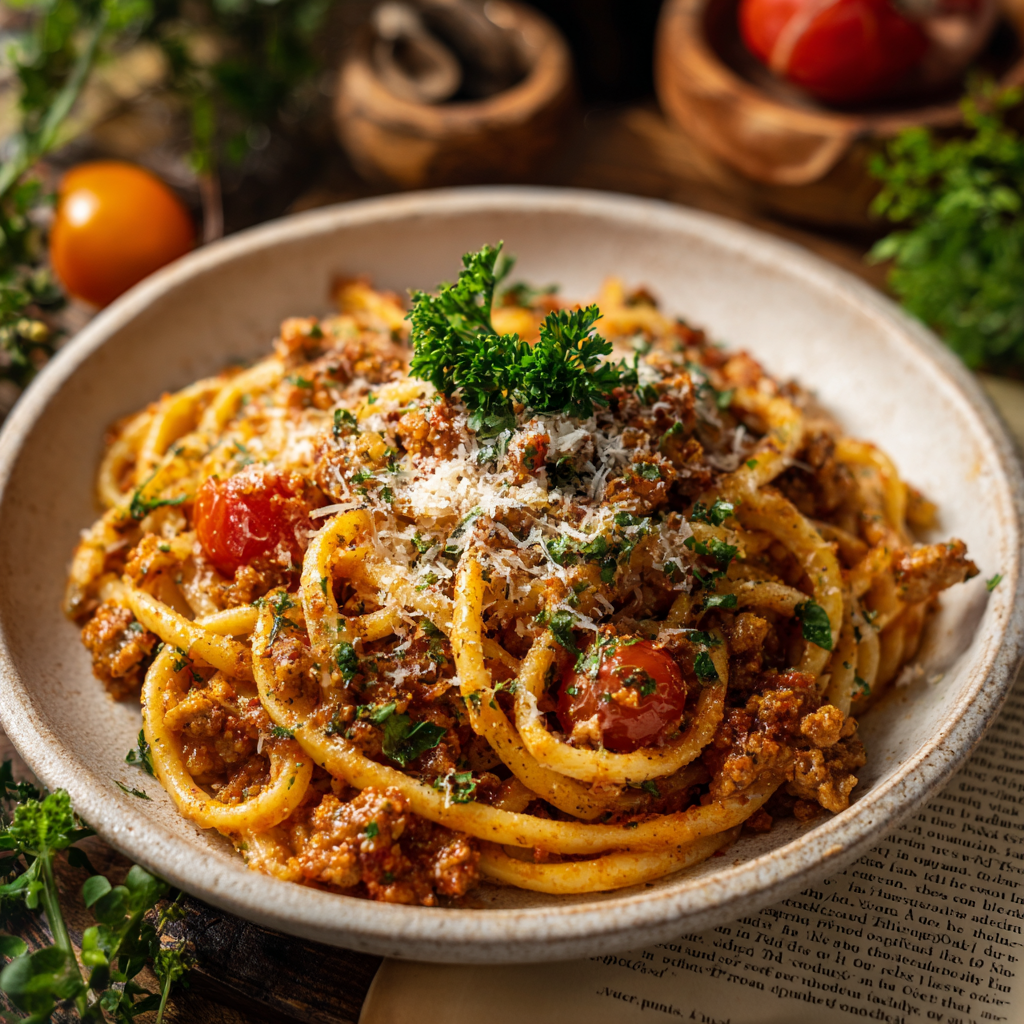
What makes the pepper heat distinctive
Peperoncino Calabrese isn’t just fiery. It is aromatic and lingering, folded into pork and tomato so the kick feels integrated rather than tacked on. This gives the dish an earthy, warm finish rather than a sharp sting.
’Nduja vs. crumbled links: flavor and texture you’ll notice
’Nduja melts into the sauce and deepens both chili notes and mouthfeel. It makes the pasta sauce silkier and richer.
By contrast, a browned spicy sausage gives clearer pork flavor and a chunkier bite. Brown the links well and you get crisped edges and texture to punctuate the sauce.
Why tubular noodles matter when the sauce is chunky
Tubes like rigatoni or penne trap meat and peppers inside, so every forkful tastes balanced. Spaghetti reads lighter, while tubes eat heartier and hold the chunky sauce better.
- Choose ’nduja for depth and higher heat.
- Choose crumbled links for texture and a meatier note.
Ingredients that give the sauce its bold Calabrian character
The right pantry choices make this sauce bold without extra fuss. Below I explain what to buy in the U.S., sensible swaps, and how each change alters flavor and texture.
Picking a sausage-style option
Go from melty ’nduja to firm soppressata or a good salsiccia piccante. In the U.S. look for imported ’nduja jars, Calabrian-style salami, or labeled “spicy pork sausage” in the deli case.
’Nduja melts into the sauce and raises heat; use one-third to one-half the amount if you want milder heat. Browned links give texture and crisp edges that contrast with the sauce.
Tomatoes and aromatics
San Marzano-style canned tomatoes or quality crushed tomatoes offer natural sweetness. Passata yields smooth body. Use peeled fresh tomatoes only when they’re ripe and flavorful.
Onion brings background sweetness; garlic adds depth. Add basil at the end for lift, not during long simmering.
Fat, oil, and finishing cheese
If the meat renders enough fat, skip heavy oil while sautéing. Reserve extra virgin olive oil for finishing and aroma. Pecorino sharpens and salts the dish; Parmigiano gives a milder, nutty finish. For melting pockets, swap in caciocavallo or provolone.
- Balance with black pepper, measured salt, and an optional pinch of sugar if tomatoes taste harsh.
- These ingredient choices keep the sauce robust and predictable in a quick weeknight recipe.
| Ingredient | Typical US buy | Behavior in pan | Flavor/Texture result |
|---|---|---|---|
| ’Nduja | Imported jar or specialty deli | Melts quickly into sauce | Deep chili heat, silky mouthfeel |
| Soppressata / salsiccia | Deli slices or fresh links | Holds shape; browns | Pork-forward, chewy bites |
| Tomatoes | San Marzano-style can, crushed, or passata | Simmer to thicken | Sweetness and body; less acidity |
| Cheese | Pecorino, Parmigiano, caciocavallo | Grate or cube before finish | Pecorino = sharp; Parm = nutty; caciocavallo = melty pockets |
Calabria spicy sausage pasta: the step-by-step method that keeps it fast and authentic
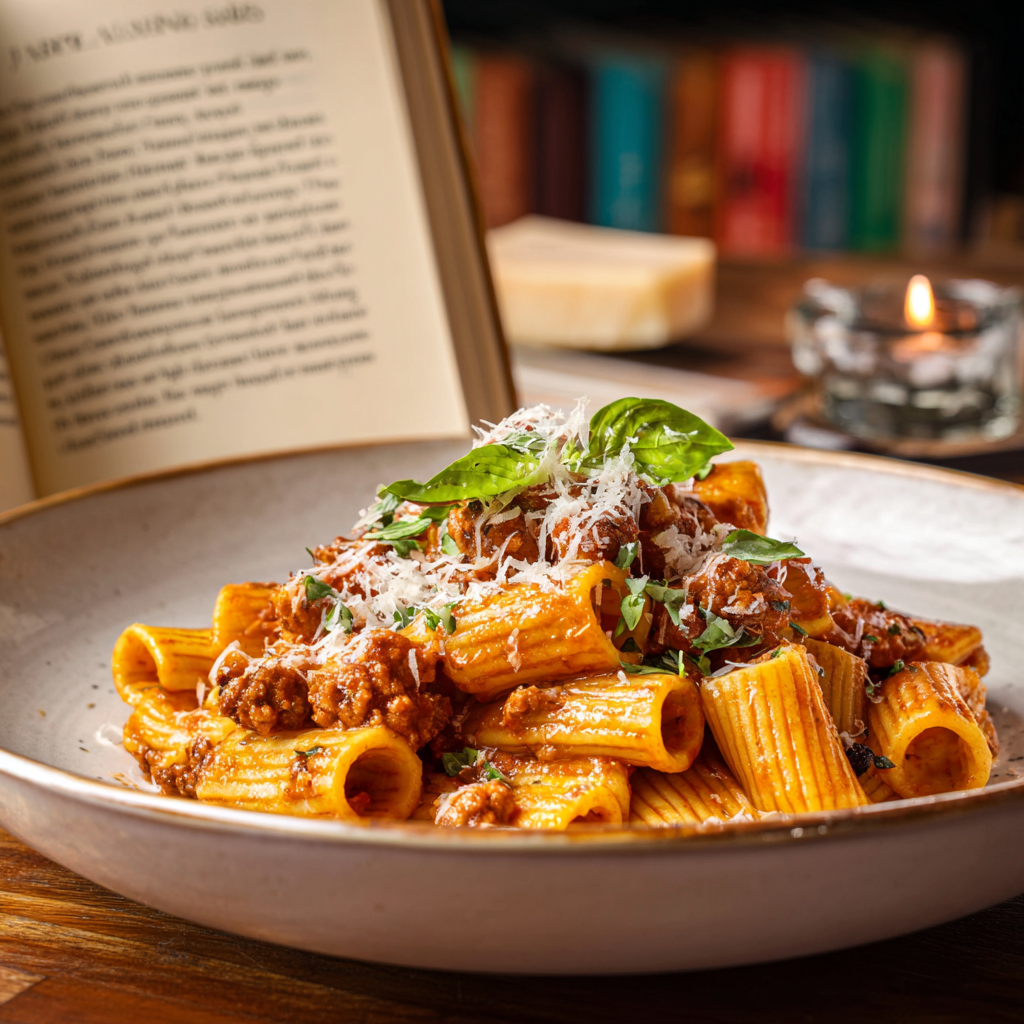
I’ll show a compact, step-by-step process that keeps the cook focused and the sauce balanced. Work in this order so tasks overlap and the whole recipe finishes in about 40 minutes.
Brown the meat, then break it down
Heat a wide pan until hot, add a little oil if the meat is lean, then add the links or crumbled meat. Let the surface caramelize—listen for a steady sizzle and watch for deep brown color, about 4–6 minutes.
Use a spoon to break pieces into bite-size crumbles. Remove excess fat if there’s too much, but keep enough for flavor.
Build depth with paste and fond
Lower the heat, add chopped onion and cook until translucent, 3–4 minutes. Add garlic and cook 30–45 seconds until fragrant.
Stir in a spoon of tomato paste and toast for 60 seconds. Add crushed tomatoes, push a wooden spoon across the pan to lift the fond, and bring to a gentle simmer.
Simmer time and sensory targets
Simmer 15–25 minutes, uncovered. The sauce should reduce slightly, smell cohesive, and lose raw brightness. Taste early and adjust salt and pepper—this is the time to balance flavor.
Cook and finish the pasta in the pan
Boil well-salted water in a large pot and cook the rigatoni or penne until 1–2 minutes shy of al dente. Reserve about 1/2 cup pot water before draining.
Add drained pasta to the pan with the sauce over medium heat. Toss and add splashes of pot water to loosen and help the sauce cling. Cook together 1–2 minutes so tubes fill and finish cooking without falling apart.
| Step | Time (minutes) | Visual cue |
|---|---|---|
| Brown meat | 4–6 | Deep brown crust, steady sizzle |
| Sauté onion & garlic | 3–4 | Onion translucent, garlic fragrant |
| Simmer sauce | 15–25 | Reduced slightly, cohesive flavor |
Choosing the best shape for this dish
The shape you pick decides whether each forkful is saucy, chunky, or quick to serve. Think about texture, speed, and what’s in your pantry before you boil water.
Rigatoni and other tubes
I favor large dried rigatoni as the default. Big tubes trap crumbled meat and sauce, so every bite feels balanced and restaurant-style.
Smaller tubes—penne or mezze rigatoni—work too. They cook a touch faster and give a slightly smoother mouthfeel.
Fileja: the traditional choice
Fileja is a hand-rolled shape from the Sila region that holds sauce inside its grooves. It behaves like rigatoni but with a chewier bite.
If you can’t find fileja in the U.S., use rigatoni or a short, ridged tube as a clear substitute. The texture won’t be identical, but the dish stays true to the idea.
Spaghetti for speed
Choose spaghetti when you need a quicker toss-and-serve. It cooks fast in a pot and is easier to twirl for casual meals.
To keep the spaghetti from turning watery, reduce the sauce slightly and finish the noodles in the pan with reserved water so the sauce clings.
| Shape | Why it works | Cook time note | Sauce behavior |
|---|---|---|---|
| Rigatoni | Large tube, classic restaurant bite | Standard dry time; holds heat well | Fills and coats inside for balanced bites |
| Fileja | Traditional, hand-rolled groove | Similar to rigatoni; slightly chewier | Catches sauce inside the curl and grooves |
| Penne / Mezze rigatoni | Accessible short tube options | Cook a little faster; good for weeknights | Smoother surface; still traps some meat |
| Spaghetti | Fast, easy to toss | Shortest boil; quick finish in pan | Lighter coating; needs reduced sauce to avoid watery result |
Dialing in the heat without wrecking the balance
Temper the chili so the sauce supports the other flavors, not hides them. I aim for warmth and fragrance that lift the tomatoes and pork, not a sauce that reads only of heat.
Adjusting peperoncino flakes by sausage type
If your sausage is dolce (sweet), start with 1/2 teaspoon of flakes for a 4-serving batch. If the sausage already carries heat, cut that to 1/4 teaspoon.
Stir the flakes in early, simmer, then taste after 10–15 minutes. Heat builds with time, so add slowly.
How much ’nduja to use when you’re new
’Nduja is hotter than it looks. Use about one-third the weight of what you’d use for standard sausage when substituting.
Start modestly, then add small spoonfuls after the sauce simmers and the flavors settle. Fat will mute apparent heat, so wait before deciding.
Salt, black pepper, and a pinch of sugar
Think of seasoning as three parts: salt to sharpen, black pepper for dry warmth, and a tiny pinch of sugar to round acidic tomatoes.
Taste twice—once after simmering and again after you toss the pasta—because noodles can mute salt and spice. Adjust by the teaspoon, not the ladle.
- I want heat that supports the tomato base and the pork, not obscures them.
- Add peppers slowly and always re-taste after simmering and after tossing with pasta.
- If you use olive oil to finish, it smooths perception of heat and ties flavors together.
| Ingredient | Starting amount (4 servings) | When to adjust | Quick tip |
|---|---|---|---|
| Peperoncino flakes | 1/4–1/2 tsp | After 10–15 minutes simmer | Less if sausage is already hot |
| ’Nduja | Use 1/3 the usual sausage weight | After sauce settles, add in 1 tsp steps | Fat mutes heat—wait before adding more |
| Salt | To taste; start small | After simmer and after pasta toss | Pasta can dilute salt; re-check |
| Sugar | Pinch (optional) | If tomatoes taste sharp | Balances acidity without sweetness |
Optional Calabrian add-ins for a heartier, “pasta alla Silana” style pan
If you want a more rustic finish, add a few classic ingredients from La Sila to deepen flavor while keeping the basic method intact. These options build richness and texture without overwhelming the tomatoes and core technique.
Guanciale, pancetta, or bacon — what each brings
Guanciale offers a clean, silky fat that crisps and melts into the pan. Pancetta is milder and works when you want salt plus body. Bacon adds a smoky edge if you prefer a stronger note.
| Cut | Fat profile | Effect in pan |
|---|---|---|
| Guanciale | High, pork cheek | Silky fat, crisp edges |
| Pancetta | Moderate, cured belly | Balanced salt and chew |
| Bacon | Smoky, variable fat | Smoky bite, crisp texture |
Porcini mushrooms: dried vs. frozen
Dried porcini give concentrated, woodsy flavor—soak them 20–30 minutes and strain the liquid through a fine sieve to avoid grit. Frozen mushrooms are convenient; add them late so they don’t turn rubbery.
Deglaze with whiskey or broth
A quick splash of whiskey lifts the fond and adds warmth. For an alcohol-free finish, use low-sodium broth or plain water and scrape the pan to release those browned bits.
Cheese cubes that melt into the pasta
Fold in small cubes of caciocavallo, provolone, or mozzarella at the end so they soften and stretch without fully dissolving. After adding these, taste before adding extra salt—the cured pork and cheese bring seasoning of their own.
For a traditional shape reference, see the fileja pasta recipe for technique and serving notes.
Kitchen setup and timing: how to get it on the table in under an hour
A reliable two-vessel routine turns a busy evening into a smooth cooking session. Set up one large pan for the sauce and a stock pot for boiling water. That simple combo keeps tasks separate and your counter clear.
The best pan and pot combo
Use a wide, heavy pan so the sauce reduces evenly and you can finish tubes without splashing. Use a tall pot with plenty of water so the pasta cooks evenly.
Prep shortcuts that don’t sacrifice flavor
Do a quick mise en place: chop onion and garlic, open the tomatoes, and grate the cheese. Good canned crushed tomatoes and freshly grated cheese save minutes while keeping quality.
Common timing mistakes and fixes
Don’t let the sauce over-reduce while you wait on the noodles. Add a splash of water or reserved pot water to restore body in a few minutes.
Avoid overcooking tubular pasta. Pull it 1–2 minutes before done and finish in the sauce so tubes fill without splitting.
- Prep: 10–20 minutes; simmer: 15–30 minutes; overlap tasks when possible.
- Sanity check: sauce tastes balanced, pasta still firm, pan not dry.
| Task | Minutes | Runs simultaneously | Quick tip |
|---|---|---|---|
| Chop and open ingredients | 10–15 | None | Mise en place prevents pauses |
| Simmer sauce | 15–30 | Boil water and cook pasta | Stir and watch reduction |
| Boil and finish tubes | 8–12 | Finish in pan with sauce | Reserve pot water to loosen |
Serving tips that make it taste like it came from a Calabrian table
A final drizzle and a quick grate turn good food into a memorable meal. Finish simply so the flavors stay clear and the bowl feels honest, not fussy.
Finish with extra virgin olive oil, grated cheese, and basil or parsley
Right before serving, drizzle a little extra virgin olive oil across each bowl. The oil adds aroma and softens heat without greasing the sauce.
Grate cheese at the table—Pecorino for a bright, salty bite; Parmigiano for a gentler, nutty finish. Add torn basil or chopped parsley last so the herb stays fresh.
Main dish vs first course: portioning and planning for leftovers
For a first course, serve smaller portions: about 3–4 ounces dry per person. For a main, give 5–6 ounces and a generous bowl so it feels satisfying.
Cook a bit extra if you like leftovers. Store cooled portions in the fridge and save some extra cheese for reheating. Leftovers reheat well on the stove or in the oven for a baked, crisp edge.
| Finish | Portion (dry) | Leftover tip |
|---|---|---|
| Extra virgin olive oil drizzle | 3–4 oz (first) | Reheat with a splash of water or oil |
| Grated cheese & basil | 5–6 oz (main) | Add fresh cheese before serving |
| Simple herbs at end | Family bowls welcome | Use leftovers in baked dishes |
Leftovers that still taste great: storing, reheating, and baking for crispy edges
Treat your extra serving like a short-term plan: cool fast, seal tight, and reheat gently.
Cool the pasta to room temperature within an hour, then move it into an airtight container. Refrigerate for 3–4 days; toss after that window to stay safe.
For quick reheats, microwave in 30–60 second bursts, stir, and add a teaspoon of water or a splash of oil if it looks dry. The fat firms up and the sauce tightens overnight, so a little moisture helps the texture.
To get crisp edges, spread leftovers in a baking dish, top with extra cheese, and bake at 180°C/356°F until bubbling and browned at the edges (about 10–15 minutes). You can also warm portions slowly in a pan over low heat for 3–5 minutes, turning once.
After reheating, taste and adjust with a pinch of salt or a crack of pepper. Note that vitamin and calorie values vary by sausage brand, cheese, and portion size, so nutrition totals change between recipes and servings.
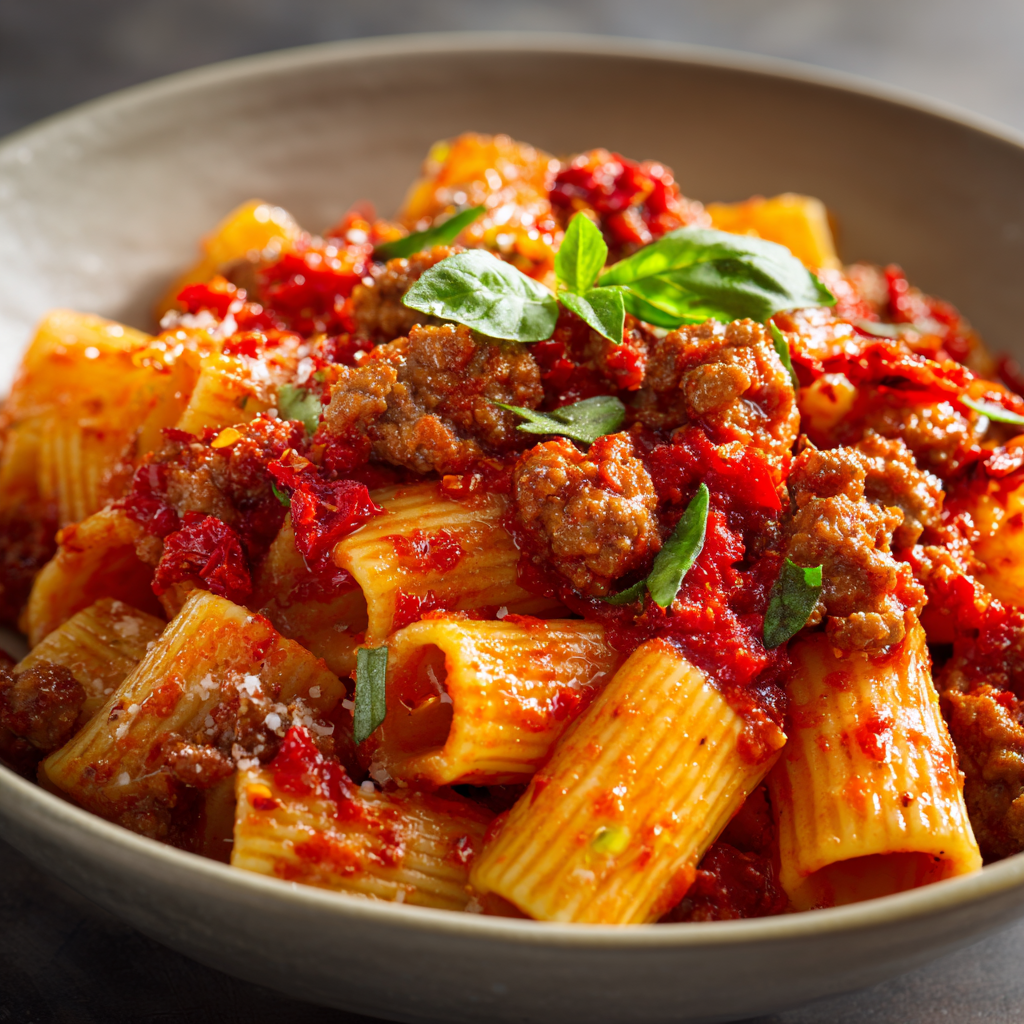
Calabrian Spicy Sausage Pasta
Ingredients
Method
- Heat a wide pan over medium-high heat. Add olive oil if the meat is lean. Brown the sausage (crumbled or in links) for 4-6 minutes, breaking it into bite-sized crumbles.
- Lower the heat and add the chopped onion. Sauté for 3-4 minutes until translucent. Add garlic and cook for 30-45 seconds until fragrant.
- Stir in tomato paste and cook for 1 minute. Add the crushed tomatoes and use a wooden spoon to lift any brown bits from the bottom of the pan. Bring to a simmer.
- Let the sauce simmer uncovered for 15-25 minutes, reducing slightly and blending flavors. Taste and adjust salt, pepper, and sugar to balance acidity.
- In a separate pot, bring salted water to a boil. Cook the rigatoni or penne 1-2 minutes shy of al dente. Reserve about 1/2 cup of pasta water before draining.
- Add the drained pasta to the pan with the sauce over medium heat. Toss and add reserved pasta water as needed to help the sauce cling. Cook for 1-2 minutes to finish cooking the pasta and allow it to soak up the sauce.
- Drizzle extra virgin olive oil over the pasta and sprinkle with grated cheese. Garnish with fresh basil or parsley.
Notes
- If you prefer a milder heat, adjust the amount of peperoncino flakes or use less ’nduja.
- For a more rustic feel, you can add ingredients like guanciale or pancetta for extra flavor.
- Rigatoni or penne is recommended for better sauce adhesion, but other pasta shapes like mezze rigatoni or spaghetti can work as well.