
Jump to Recipe
Risotto al limone is a Northern Italian rice dish where lemon zest and juice get stirred into a stovetop risotto base made with Carnaroli rice, dry white wine, and simmering stock. The lemon goes in twice, early for aroma and again off the heat for brightness, so the dish tastes clean rather than sour.
The rice itself does most of the work here. Carnaroli holds its shape and releases starch slowly, so you get a risotto that pools into a wave, or onda, when you tilt the pan rather than sitting stiff.
Keep your stock at a bare simmer, not a boil, and add it warm. Cold stock straight from the fridge stops the cooking each time it hits the pan, and you end up with rice that cooks unevenly no matter how long you stir.
It’s a 30-minute primo that needs your attention but not much else, one pot, one pan of hot stock, and a lemon.
Why You’ll Love This Recipe
- Ready in about 30 minutes with one pot
- Bright lemon flavor from both zest and juice
- Classic mantecatura finish gives a glossy, creamy texture
- Simple pantry ingredients, no odd substitutions needed
Ingredient Notes
- Carnaroli rice: Holds its bite better than Arborio and releases starch slowly. Arborio works as a substitute but turns creamier faster.
- vegetable stock: Keep it at a bare simmer so it doesn’t shock the rice. Chicken stock works fine if you’re not keeping this vegetarian.
- shallot: Milder than onion so it doesn’t compete with the lemon. A small yellow onion works in a pinch.
- unsalted butter: Divided between the soffritto and the mantecatura. If you only have salted butter, taste before adding extra salt.
- dry white wine: Adds acidity that balances the butter and parmesan. Dry vermouth is a fine substitute if that’s what’s open.
- parmesan: Grate it fresh off the block. Pre-grated cheese is drier and doesn’t melt into the rice the same way.
- lemons: Use unwaxed or well-scrubbed lemons since you’re using the zest. The juice goes in at the end so it stays bright.
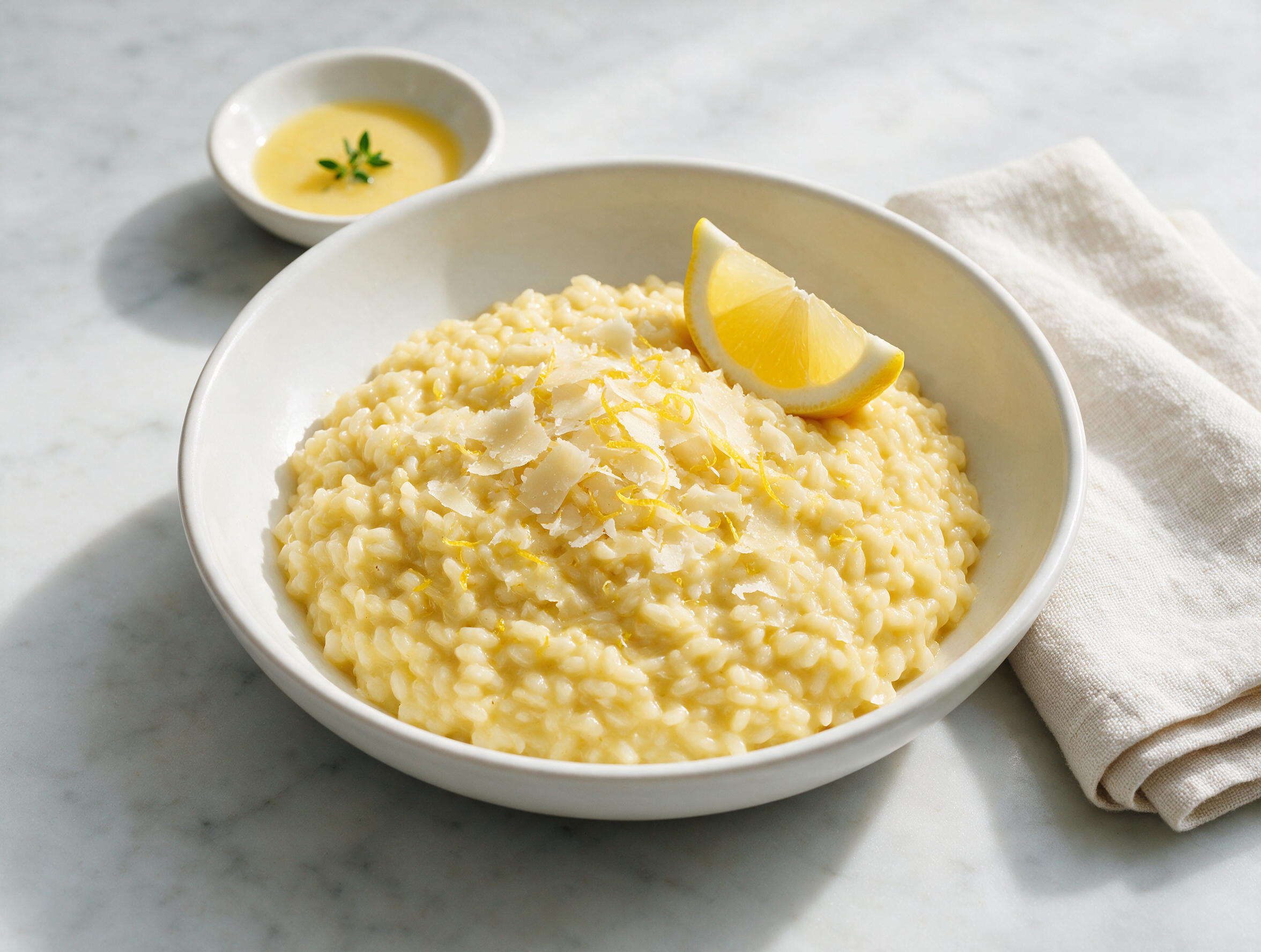
Silky Risotto al Limone with Parmesan and Lemon Zest
Ingredients
Method
- Zest both lemons with a microplane and set the zest aside. Juice one lemon and set the juice aside too, you'll need about 3 tbsp.
- Pour the stock into a 20 cm / 8-inch saucepan and bring it to a bare simmer over medium heat, about 95 C / 200 F. Keep it at that gentle simmer, not a rolling boil, for the whole cooking time.
- Heat the olive oil and 30 g of the butter in a 28 cm / 11-inch heavy-bottomed pot over medium heat. Add the shallot and cook for 3 to 4 minutes, stirring, until soft and translucent but not browned.
- Add the rice and stir constantly for 2 minutes, until the edges of the grains turn translucent and the centers stay opaque white. This tostatura step is what helps the rice hold its shape later.
- Pour in the wine and stir until it's fully absorbed, about 1 to 2 minutes.
- Add the warm stock one ladle at a time, stirring often, waiting until each addition is mostly absorbed before adding the next. This takes 18 to 20 minutes total.
- Start tasting the rice around the 16-minute mark. It's done when the grains are tender with a slight bite left in the center, not chalky and not mushy.
- Remove the pot from the heat. Stir in the remaining 40 g butter, the parmesan, lemon zest, and lemon juice, beating fairly hard for 30 seconds until the risotto turns glossy and pools into a slow wave when you tilt the pot. This is the mantecatura.
- Season with salt and black pepper to taste. Cover and let it rest for 1 to 2 minutes off the heat, then spoon it onto warm plates immediately.
Notes
- Keep stock at a bare simmer the whole time.
- Taste rice at 16 minutes, it should have a slight bite.
- Add lemon juice off heat so it stays bright, not muted.
- Use a wide, heavy-bottomed pot so rice cooks in a thin layer.
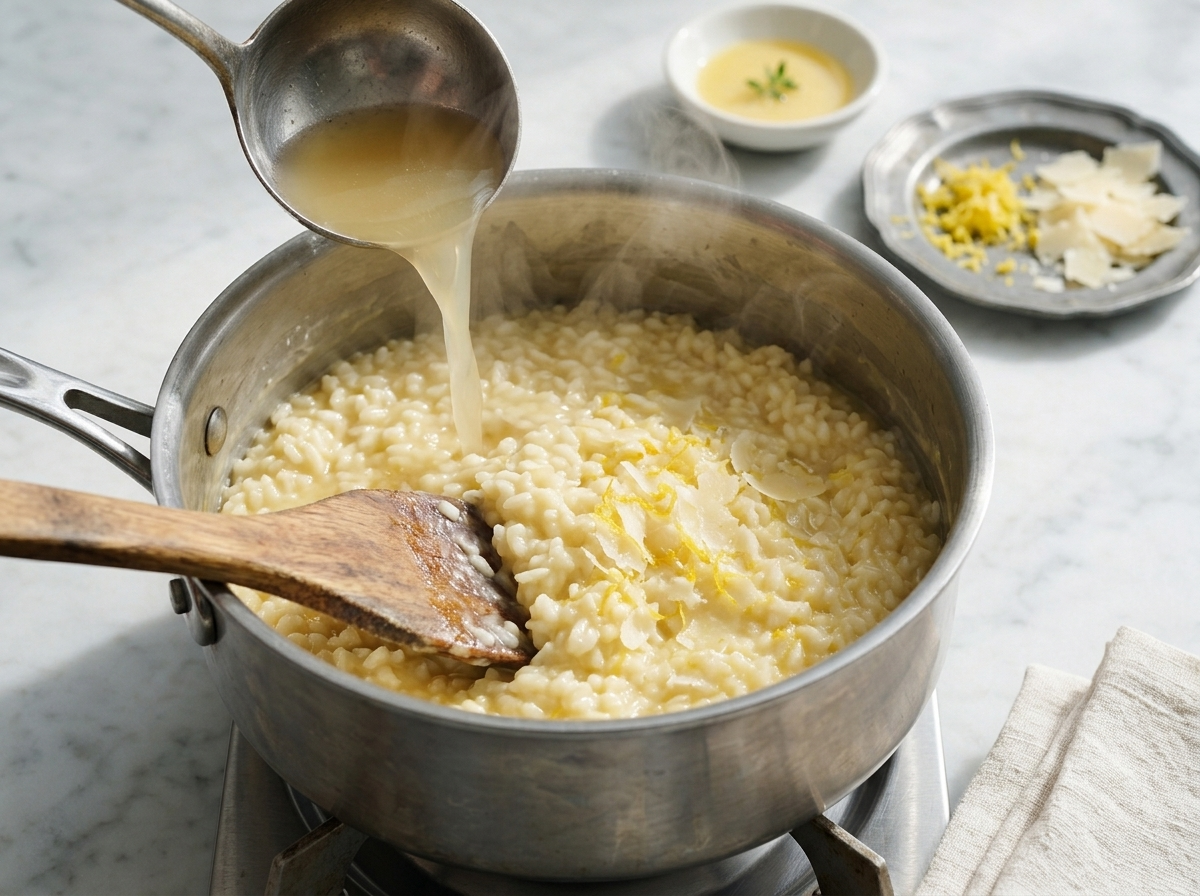
Tips for Success
- Toast the rice for a full 2 minutes until the edges look translucent, since that step builds the shape it holds later.
- Add stock one ladle at a time and wait until it’s absorbed before pouring more, or the rice cooks unevenly.
- Stir often but not constantly during the middle cooking stage to release starch without breaking the grains apart.
- Remove the pan from the heat before stirring in the last butter and parmesan so the mantecatura stays glossy, not greasy.
- Zest the lemons before juicing them, since it’s much easier to zest a whole lemon than a squeezed one.
Variations
- Stir in a handful of baby spinach or peas during the last 5 minutes for color and a milder, greener finish.
- Swap half the parmesan for pecorino for a saltier, sharper edge that still lets the lemon come through.
- Finish with a few torn basil or mint leaves along with the lemon zest for a fresher, herbal top note.
Storage and Reheating
Risotto al limone is best eaten right away, since the creamy texture loosens as it sits. Leftovers still work, though, and keep in an airtight container in the fridge for 2 to 3 days.
Reheat in a 20 cm / 8-inch skillet over medium-low heat with a splash of stock or water, stirring until it loosens back into a creamy texture, about 4 to 5 minutes. A microwave works in a pinch: heat in 30-second bursts, stirring in a spoonful of water each time.
I don’t recommend freezing this one. The rice turns grainy and the lemon flavor flattens out after thawing.
Serving Suggestions
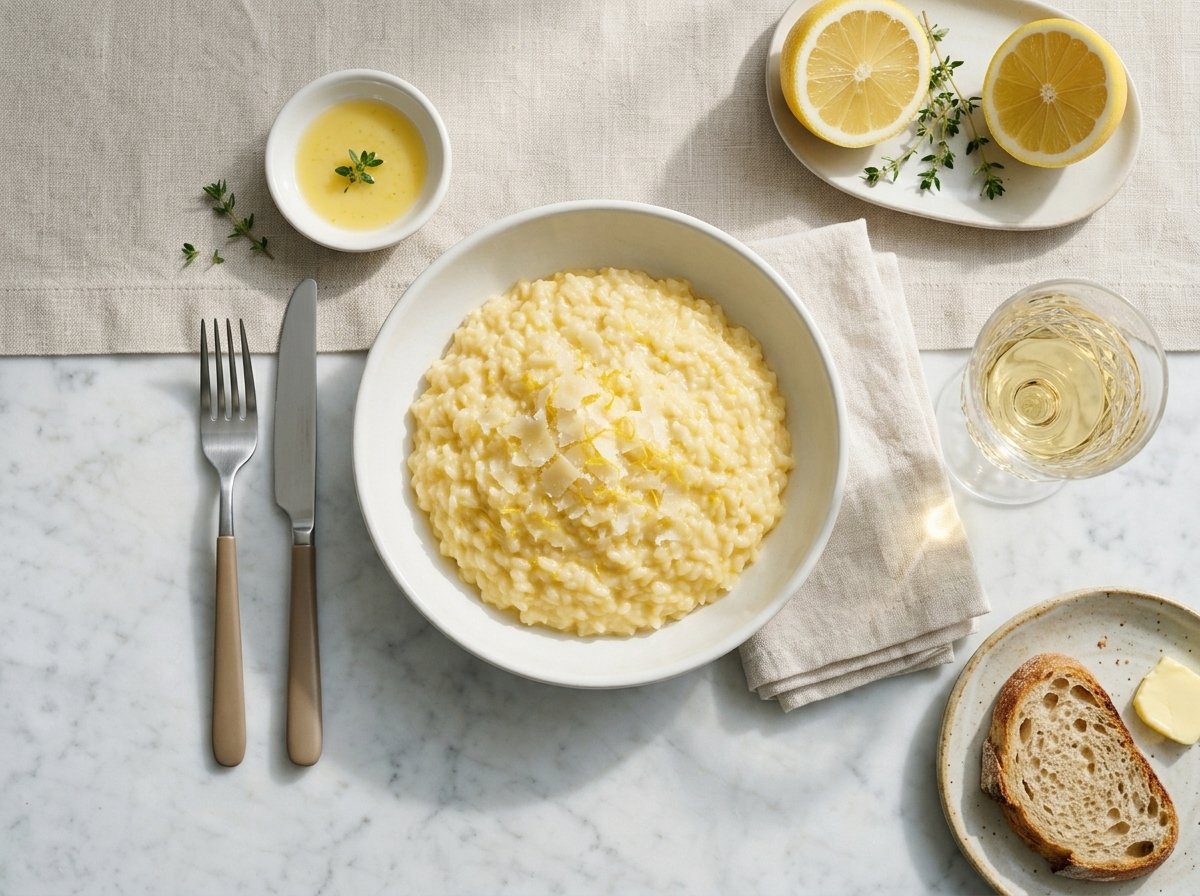
Risotto al limone works as its own primo course, plated shallow with a final grating of parmesan and a few threads of lemon zest on top.
Pair it with something simple on the side: grilled shrimp or a piece of pan-seared white fish plays well with the lemon, and a bitter green salad with olive oil cuts the richness.
For a light dinner, serve smaller portions before roast chicken or grilled salmon. A glass of the same dry white wine you cooked with ties the plate together.
FAQ
Why is my risotto al limone gluey instead of creamy?
Gluey risotto usually means the rice cooked past al dente or too much stock got dumped in at once instead of ladled in gradually. Stir gently rather than constantly, add stock one ladle at a time, and pull the pan off the heat once the rice still has a slight bite in the center.
Can I use Arborio rice instead of Carnaroli for risotto al limone?
Yes, Arborio works, though it turns creamier and softer faster than Carnaroli, so check for doneness a couple minutes earlier. Carnaroli holds a firmer bite and forgives a bit of overcooking, which is why I default to it, but Arborio is easier to find and still gives a good result.
Can I start risotto al limone ahead of dinner?
You can par-cook the rice: toast it, add wine, and stir in stock until it’s about 70% done, then spread it on a sheet pan to cool. Finish it in the last 10 minutes before serving by returning it to the pan with hot stock and doing the mantecatura fresh, so the texture doesn’t suffer.
What goes well with risotto al limone besides parmesan?
Grilled or pan-seared shrimp and white fish like sole or branzino pair well since the lemon in the risotto echoes the seafood. A simple arugula salad with olive oil and a squeeze of lemon on the side also balances the richness of the butter and cheese.
Is risotto al limone gluten free?
Yes, risotto al limone is naturally gluten free since it’s built on rice, stock, butter, and parmesan with no flour or pasta involved. Just double check your stock and wine labels, since some processed stocks add gluten-based thickeners, though most plain vegetable or chicken stock is fine.
What’s the difference between risotto al limone and risotto alla milanese?
Risotto alla milanese gets its golden color and earthy flavor from saffron and often bone marrow, while risotto al limone skips the saffron for lemon zest and juice, giving a lighter, brighter result. Both use the same base technique of toasting rice and building it with warm stock.