
Jump to Recipe
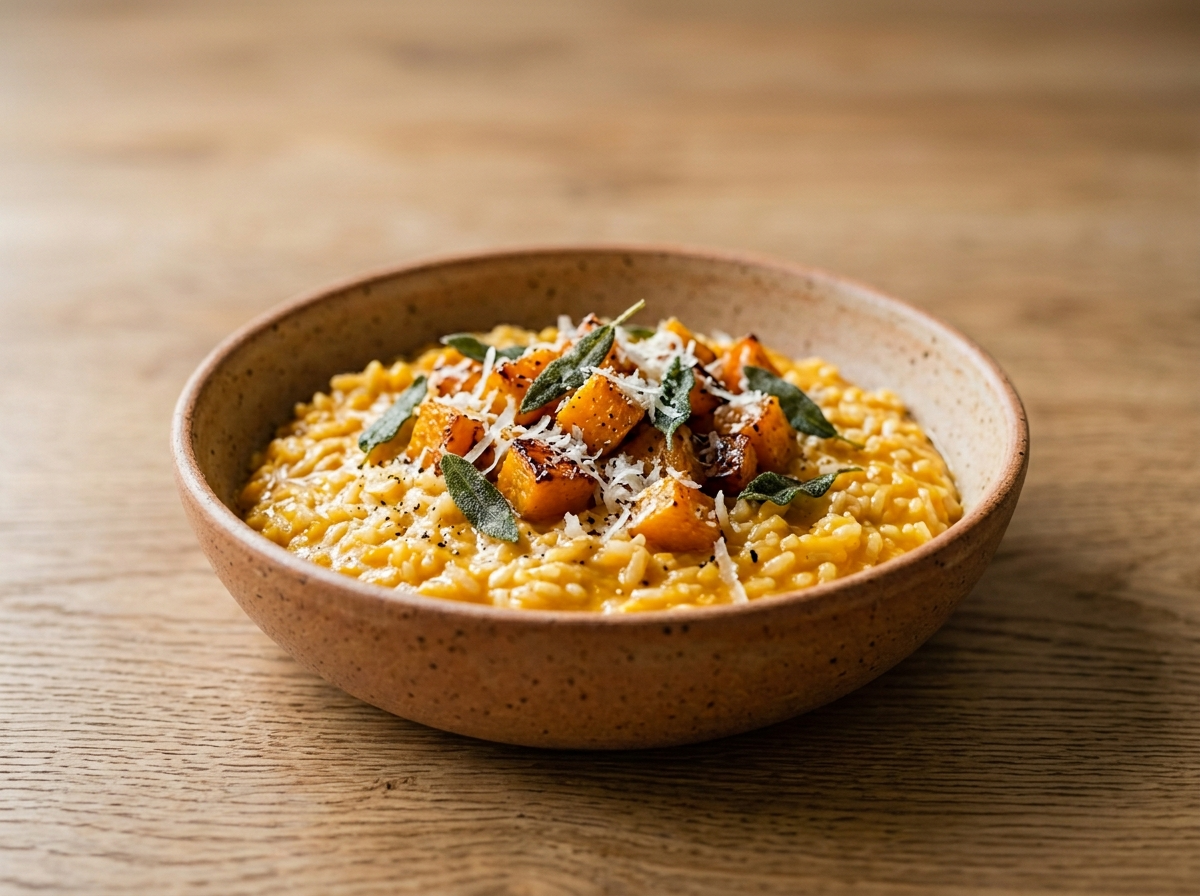
This is a classic northern Italian risotto made with sweet roasted pumpkin stirred into slowly cooked Carnaroli rice. The pumpkin breaks down slightly as it cooks, giving the finished dish a pale orange color and a naturally sweet, earthy flavor that works well against the salty bite of Parmigiano Reggiano.
The technique here follows the standard Italian cottura: warm stock added ladle by ladle, constant gentle stirring, and a final mantecatura off the heat with cold butter and cheese. It takes about 20 minutes of active cooking, which is a fair trade for the result.
I use Carnaroli rice when I can find it, and the same logic applies to other slow-cooked Italian rice dishes like authentic risotto al nero di seppia — it holds its shape a little longer than Arborio and gives you more control over the final texture.
Why You’ll Love This Recipe
- Naturally sweet pumpkin flavor needs no extra seasoning tricks
- Silky texture from the mantecatura technique, no cream needed
- One pan after the pumpkin roasts, easy weeknight cleanup
- Easily made vegetarian with good vegetable stock
Ingredient Notes
- Butternut squash or pumpkin: Butternut squash is the most consistent choice year-round. If you find fresh cooking pumpkin (zucca mantovana or Hokkaido), use it. Avoid watery varieties like jack-o-lantern pumpkin.
- Carnaroli rice: Carnaroli releases starch more gradually than Arborio, giving you a creamier, more controlled result. Arborio is a fine substitute and easier to find in most supermarkets.
- Dry white wine: Use a wine you’d drink, not cooking wine. A simple Pinot Grigio or Verdicchio works well. You can skip it and add an extra ladle of stock if you prefer alcohol-free.
- Parmigiano Reggiano: Grate it fresh just before the mantecatura. Pre-grated cheese doesn’t melt as smoothly. Grana Padano is a budget-friendly substitute with a slightly milder flavor.
- Unsalted butter: Cold butter cut into cubes is key for the mantecatura. Cold fat emulsifies into the rice more evenly than soft or melted butter, producing a glossy, cohesive finish.
- Vegetable or chicken stock: Keep it warm in a separate pot throughout cooking. Cold stock shocks the rice and slows the starch release. A good homemade or low-sodium carton stock both work.
Autumn Pumpkin Risotto Italian Style
Ingredients
Method
- Heat the oven to 200 C / 390 F. Toss the pumpkin cubes with 2 tbsp olive oil, salt, and pepper on a lined baking tray.
- Roast for 20 to 22 minutes, turning once halfway, until the edges are caramelized and the flesh is fork-tender.
- Set aside 150 g of the roasted cubes for garnish. Mash or blend the remaining pumpkin into a rough puree.
- Melt 20 g of the butter in a wide, heavy-bottomed pan over medium heat. Add the onion and cook for 5 minutes, stirring, until soft and pale but not browned.
- Add the garlic and cook for 1 minute until fragrant.
- Add the rice and toast it, stirring constantly, for 2 minutes until the grains look slightly translucent at the edges.
- Pour in the white wine and stir until it is fully absorbed, about 1 to 2 minutes.
- Add the pumpkin puree and stir to coat the rice, about 30 seconds.
- Begin adding warm stock one ladle at a time, about 80 ml per addition, stirring gently and waiting until each ladle is nearly absorbed before adding the next. Continue for 18 to 20 minutes until the rice is al dente with a slight bite at the center.
- Taste and adjust salt. The risotto should flow slightly when you tilt the pan, not sit stiff like a mound.
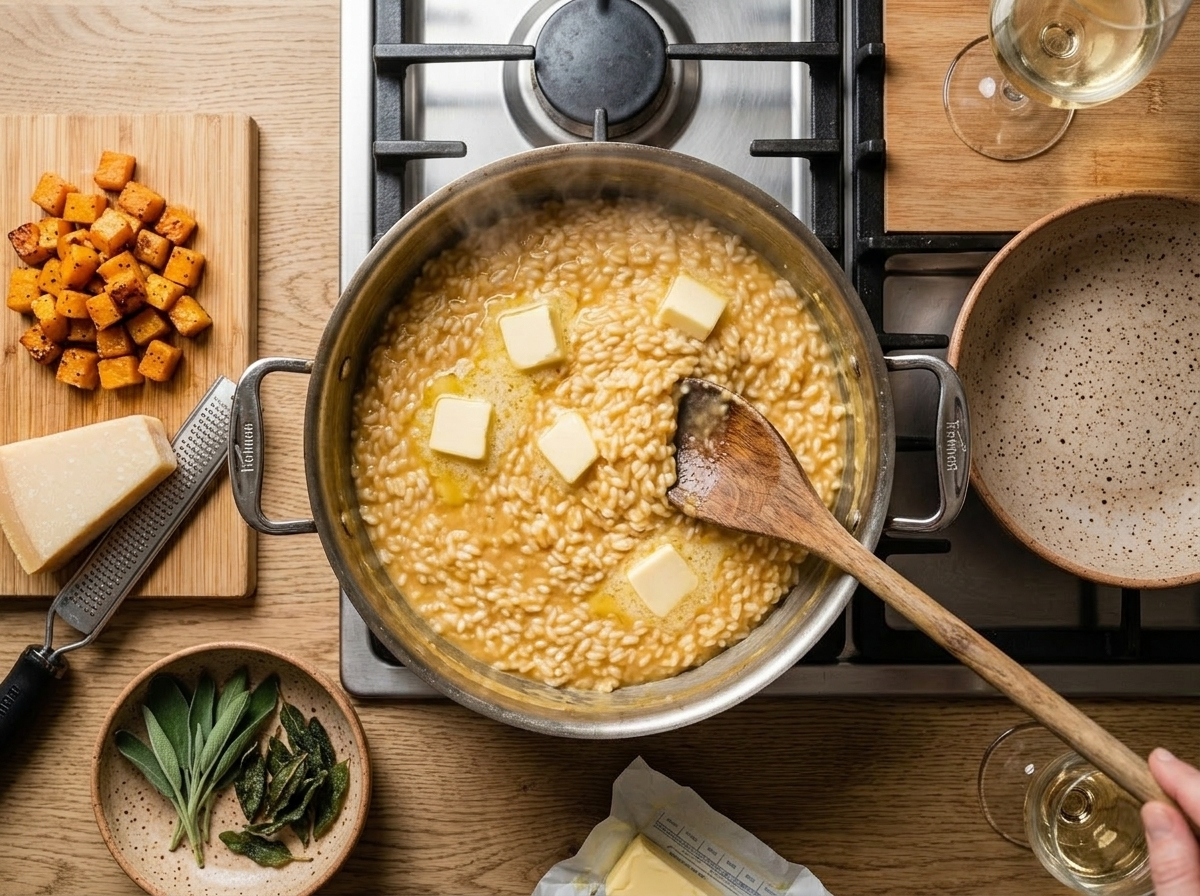
- Pull the pan off the heat. Add the remaining 40 g cold butter cubes and the grated Parmigiano Reggiano.
- Stir and fold vigorously for 60 seconds until the butter and cheese are fully emulsified into the rice and the surface looks glossy.
- If using sage, fry the leaves in 1 tbsp olive oil in a small pan over high heat for 30 seconds per side until crisp.
- Rest the risotto for 90 seconds, then spoon into warm bowls. Top each with a few reserved pumpkin cubes, crispy sage leaves if using, and an extra shaving of Parmigiano.
Notes
Tips for Success
- Roast the pumpkin cubes at 200 C until caramelized at the edges for deeper, sweeter flavor in the finished risotto.
- Keep your stock at a low simmer in a separate pan so each ladle you add is hot, not cold.
- Add stock one ladle at a time and wait until each addition is nearly absorbed before adding the next.
- Pull the pan off the heat before the mantecatura so the butter and cheese emulsify into the rice rather than turning greasy.
- Rest the risotto for 90 seconds before serving so it relaxes to the correct all’onda, wave-like consistency on the plate.
Variations
- Stir in crumbled cooked Italian sausage at the end for a heartier, meat-based autumn version.
- Add a pinch of freshly grated nutmeg and a few fresh sage leaves fried in butter as a garnish.
- Use smoked Scamorza instead of Parmigiano for a slightly smoky, stringy finish.
Storage and Reheating
Store leftover risotto in an airtight container in the fridge for up to 2 days. The rice will continue absorbing moisture as it sits, so the texture will be firmer when cold.
To reheat, add 2 to 3 tablespoons of warm stock or water per portion in a small pan over medium-low heat. Stir gently until it loosens back to a creamy consistency, about 3 to 4 minutes. Don’t microwave straight from the fridge without adding liquid, or you’ll get a stodgy result.
Risotto doesn’t freeze well. The starch structure breaks down on thawing and the texture turns grainy. Make only what you plan to eat within two days.
Serving Suggestions
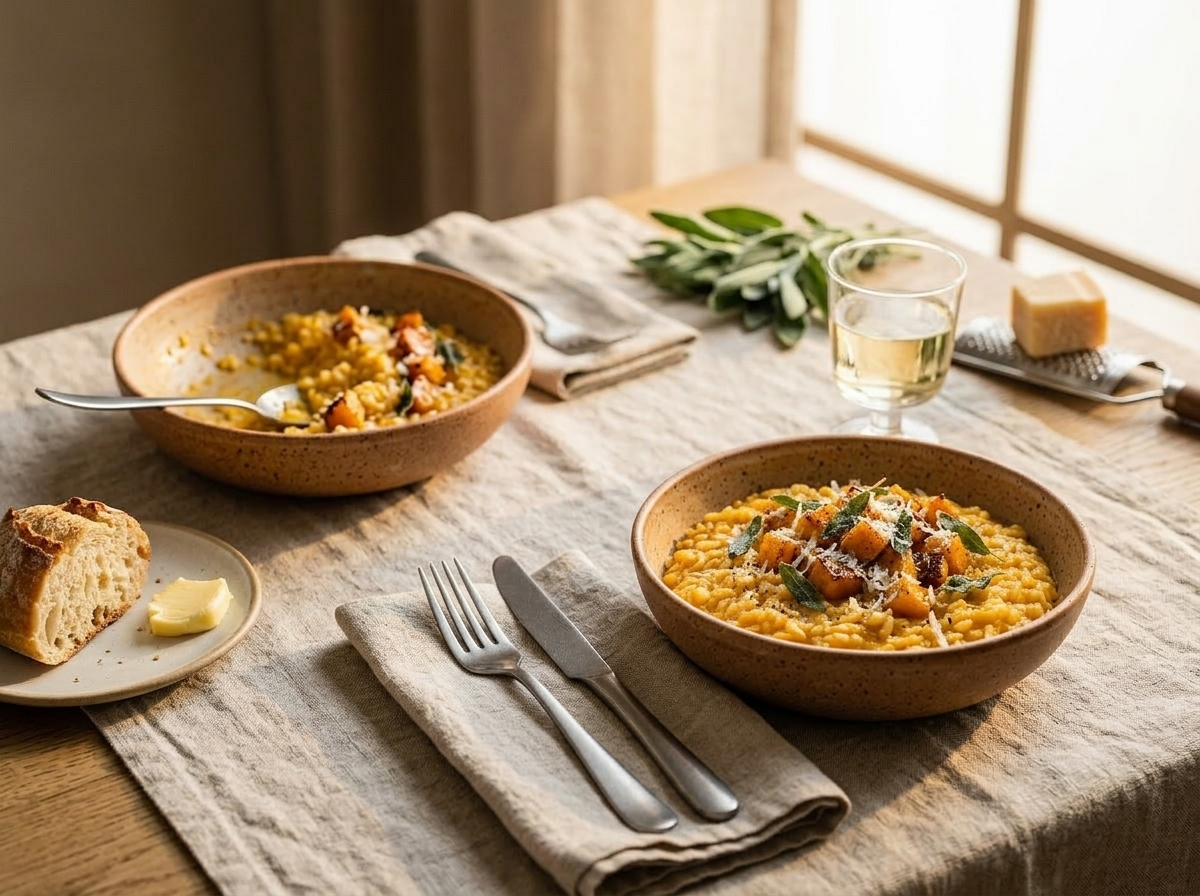
Serve this risotto as a primo piatto, the first course in an Italian meal, followed by a simple roast chicken or pork loin. A small portion, about 150 g cooked, is right for a starter course. For a main, serve a full 300 g portion with just a green salad alongside.
A few fried sage leaves and a drizzle of good olive oil on top add texture and visual contrast without complicating the plate. A shaving of Parmigiano over each bowl is worth the extra minute.
For wine, a medium-bodied white like a Friulano or Soave pairs cleanly with the sweet pumpkin and savory cheese. If you prefer red, a light Pinot Nero from Alto Adige won’t overpower it.
FAQ
Why is my pumpkin risotto turning out too thick and stodgy?
This usually means the stock was added too quickly or the heat was too high, causing the liquid to evaporate before the starch could release properly. Slow down the additions and keep the heat at a steady medium. You can also loosen a thick risotto with an extra ladle of warm stock just before serving.
Can I use canned pumpkin puree instead of fresh roasted pumpkin?
You can stir canned puree in during the last 5 minutes of cooking, but the flavor will be flatter and the texture smoother than with roasted fresh pumpkin. If you do use it, go with 150 g of pure pumpkin puree, not pumpkin pie filling, which contains added spices and sugar.
Can I make pumpkin risotto ahead for a dinner party and reheat it?
A useful trick is to cook the risotto until it’s about 75 percent done, then spread it on a tray to stop the cooking and refrigerate it. Finish it to order with warm stock and the mantecatura just before serving, which takes about 5 to 6 minutes. This is how Italian restaurants handle risotto service.
What goes well with Italian pumpkin risotto as a secondo?
A simply pan-roasted pork tenderloin or speck-wrapped chicken breast pairs well with the sweet, starchy pumpkin. The salt and fat in cured meat especially balances the natural sweetness of the squash.
Is this pumpkin risotto gluten free?
Yes, the recipe as written contains no gluten. Just confirm your stock is gluten free, as some commercial brands use wheat-based thickeners. Rice, butter, Parmigiano, pumpkin, and wine are all naturally gluten free.
What is the difference between Italian zucca risotto and butternut squash risotto?
Zucca in Italian cooking typically refers to varieties like zucca mantovana or Delica, which are denser, less watery, and slightly more earthy than butternut squash — a distinction you also notice in a dish like Italian squash and sage soup. Butternut is a practical substitute outside Italy and delivers a sweeter, milder result. The technique and seasoning stay exactly the same.