
Jump to Recipe
Gnudi di ricotta e spinaci are Tuscan dumplings made from ricotta, spinach, egg, and a little flour, poached in salted water until they float, then finished in browned butter and sage. Gnudi means naked, it’s the same filling you’d stuff into ravioli, just cooked without the pasta wrapper.
The texture depends on how well you drain the ricotta and spinach. Too much water in either one and the dumplings fall apart the moment they hit the pot. I drain both hard, sometimes overnight, before mixing anything else.
I use fresh spinach here, wilted and squeezed dry, but frozen works fine off-season. Just thaw it fully and squeeze out every bit of water you can, twice.
This makes a light primo for four, or a fuller main for two if you skip a pasta course after.
Why You’ll Love This Recipe
- No pasta dough, just ricotta, spinach, and a little flour
- Ready in about an hour from start to plate
- Shaped gnudi freeze well for a future dinner
- Easily adapted to gluten-free with a flour swap
Ingredient Notes
- Ricotta: Use whole-milk ricotta and drain it in a sieve for at least 2 hours, or overnight; low-fat ricotta holds too much water for the gnudi to set.
- Spinach: Fresh spinach wilted and squeezed dry gives the best color; frozen chopped spinach works too if thawed and squeezed twice.
- Parmesan: Parmigiano Reggiano adds salt and depth. Grana Padano is a fine, milder substitute.
- Egg: One egg binds the mixture. Don’t add a second one or the gnudi turn dense and heavy.
- Flour: 00 flour is traditional for the filling and dusting, but all-purpose flour behaves the same way.
- Butter and sage: Browned butter with sage is the classic Tuscan finish. Olive oil with garlic makes a lighter alternative.
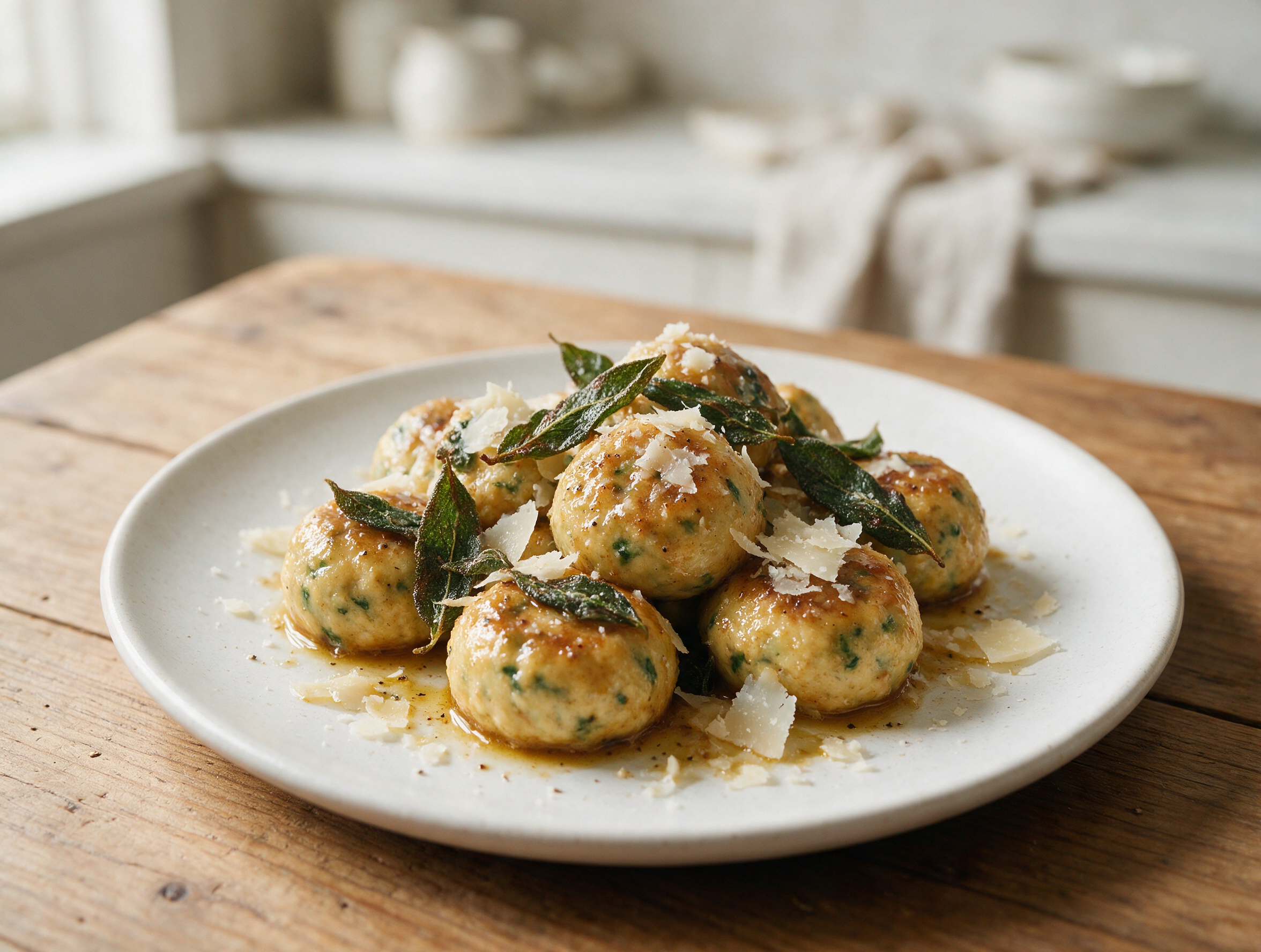
Silky Ricotta Spinach Gnudi with Brown Butter Sage
Ingredients
Method
- Drain the ricotta in a fine-mesh sieve set over a bowl in the fridge for at least 2 hours, or overnight, until it looks dry rather than wet.
- Wilt the spinach in a dry 10-inch / 26 cm skillet over medium heat, 2 to 3 minutes, until collapsed. Cool, then squeeze dry in a clean kitchen towel and chop finely.
- In a mixing bowl, stir together the drained ricotta, spinach, Parmesan, egg, flour, nutmeg, salt, and pepper until just combined.
- Cover and chill the mixture for 30 minutes so it firms up and is easier to shape.
- Dust a sheet pan with flour. With two spoons or lightly floured hands, shape the chilled mixture into 24 to 28 walnut-sized dumplings, about 25 g each, and set them on the pan.
- Bring a 5-quart / 4.7 L saucepot of water with the coarse salt to a bare simmer, not a rolling boil.
- Poach the gnudi in 3 batches of 8 to 9 so the pot isn't crowded, 3 to 4 minutes per batch, until they float to the surface. Let them cook 1 more minute after floating.
- Lift each batch out with a slotted spoon and drain briefly on a plate while you finish poaching the rest.
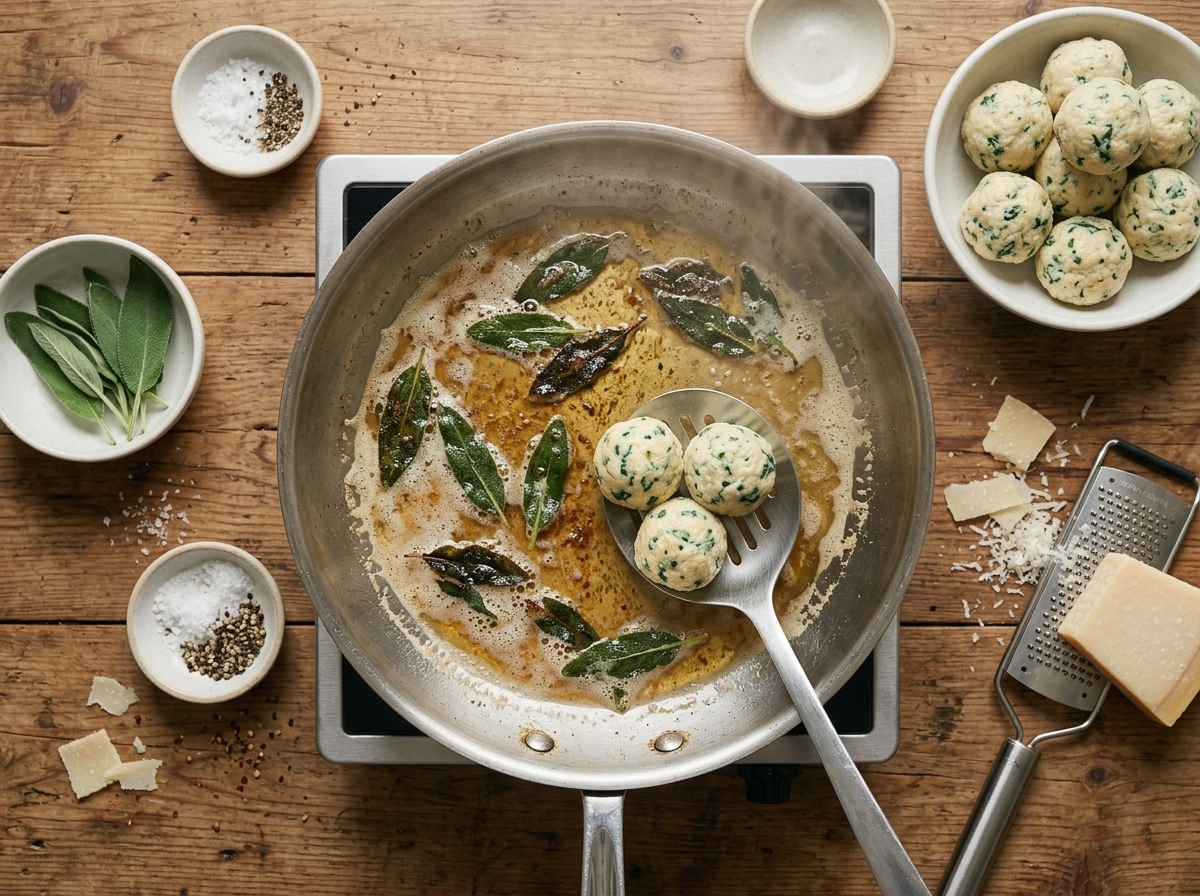
- Melt the butter in a 10-inch / 26 cm skillet over medium heat. Add the sage leaves and cook 2 to 3 minutes, swirling, until the butter turns golden brown and smells nutty and the sage is crisp.
- Add the poached gnudi to the skillet and toss gently for 1 minute to coat in the butter.
- Divide among plates, top with the extra Parmesan and black pepper, and serve right away.
Notes
- Drain ricotta and spinach very well, wet filling won't hold shape in water.
- Chill the mixture the full 30 minutes for cleaner shaping.
- Test one gnudo first, adjust flour if it falls apart.
- Don't crowd the pot, poach in 3 batches of 8 to 9.
Tips for Success
- Drain the ricotta in a fine-mesh sieve overnight so the mixture holds together instead of turning watery in the pot.
- Squeeze the cooked spinach until no more water drips out, then squeeze it again for good measure.
- Test one gnudo first by poaching it alone; if it falls apart, work in an extra tablespoon of flour.
- Keep the poaching water at a bare simmer, not a rolling boil, so the dumplings don’t break apart.
- Chill the mixture for the full 30 minutes before shaping, it makes the gnudi much easier to handle.
Variations
- Swap half the spinach for blanched chard or nettles for a more mineral, slightly bitter flavor.
- Toss the poached gnudi in a simple tomato sauce instead of brown butter for a lighter, brighter dish.
- Add lemon zest to the ricotta mixture and finish with lemon butter instead of sage for a spring version.
Storage and Reheating
Shaped, uncooked gnudi keep well in the fridge, covered and dusted with flour, for up to 24 hours before poaching. Freeze them uncooked on a floured sheet pan until solid, then transfer to a freezer bag for up to 2 months.
Poached leftover gnudi keep in an airtight container in the fridge for 2 to 3 days. Reheat gently in a 10-inch/26 cm skillet with a small knob of butter over low heat, turning them for 2 to 3 minutes until warmed through.
Skip the microwave. It turns the ricotta rubbery instead of just warm.
Serving Suggestions
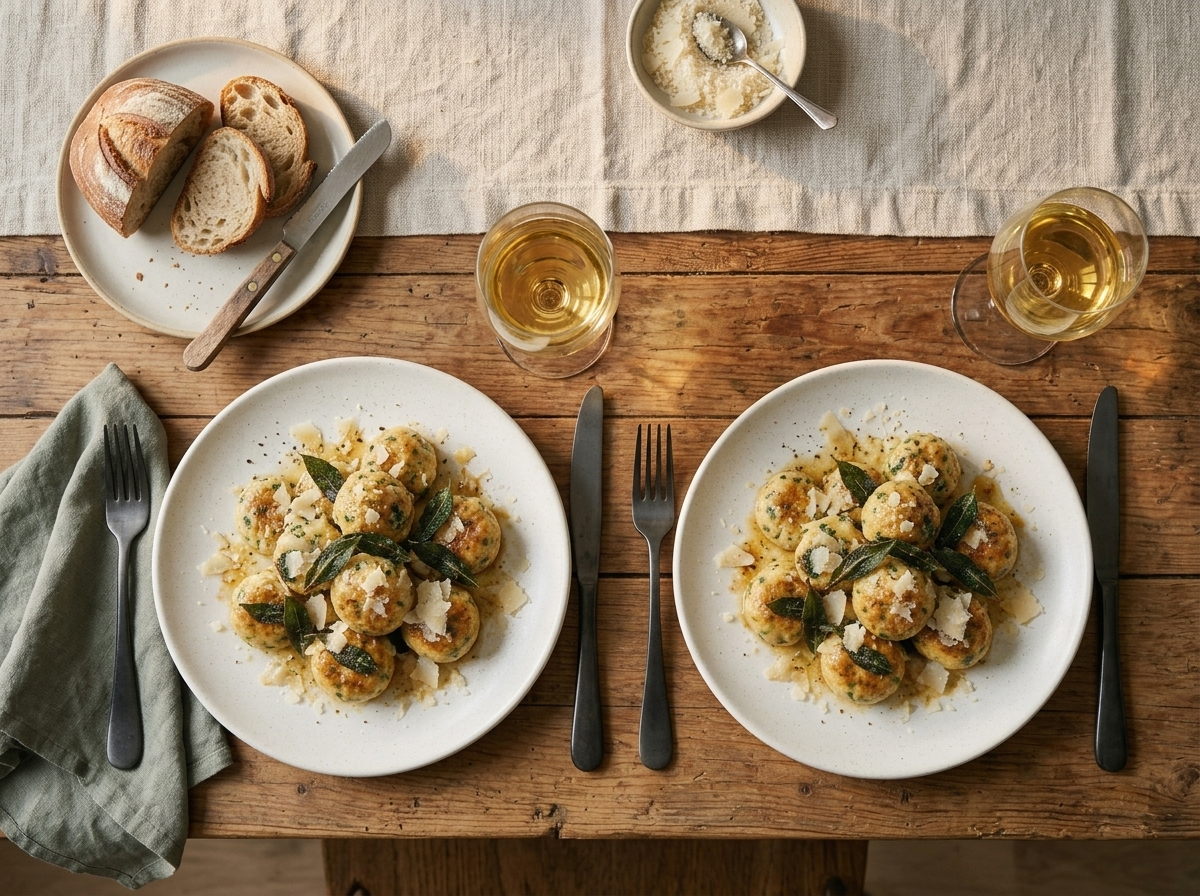
Serve gnudi di ricotta e spinaci as a primo, straight from the skillet, with extra grated parmesan and a good crack of black pepper on top.
A simple green salad with lemon dressing cuts through the butter, and crusty bread is good for mopping the plate.
For wine, a light Tuscan white like Vermentino works well against the richness of the ricotta and butter.
FAQ
How do I know when gnudi di ricotta e spinaci are done poaching?
They’re done when they float to the surface of the simmering water, which takes about 3 to 4 minutes. Let them cook 1 more minute after they float to set the center, then lift them out with a slotted spoon. Cutting one open is the surest check if you’re unsure.
Can I use frozen spinach instead of fresh for gnudi di ricotta e spinaci?
Yes, frozen spinach works fine if you thaw it completely and squeeze out the water twice. Fresh spinach gives a brighter color and slightly cleaner taste, but the texture difference is small once everything is mixed with ricotta and egg.
Can I freeze gnudi before cooking them?
Yes, shape the gnudi and freeze them on a tray dusted with flour until solid, then transfer to a bag. Poach straight from frozen in barely simmering water, adding 1 to 2 extra minutes before they float. Don’t thaw them first or they turn mushy.
What sauce goes well with ricotta and spinach gnudi besides brown butter?
Brown butter and sage is the classic match, but a light tomato sauce or olive oil with lemon zest both work with ricotta and spinach gnudi. Keep the sauce simple since the dumplings themselves carry most of the flavor.
Can I make gnudi di ricotta e spinaci gluten-free?
Yes, swap the flour for a 1-to-1 gluten-free blend or fine rice flour, both for the filling and for dusting the pan. The texture stays close to the original, just slightly softer, so handle the shaped gnudi gently before poaching.
What’s the difference between gnudi and ricotta gnocchi?
Gnudi and ricotta gnocchi are close cousins. Gnudi almost always include spinach and lean lighter on flour, while ricotta gnocchi skip the spinach and use a bit more flour for structure. Both are shaped by hand and poached the same way.