
Jump to Recipe
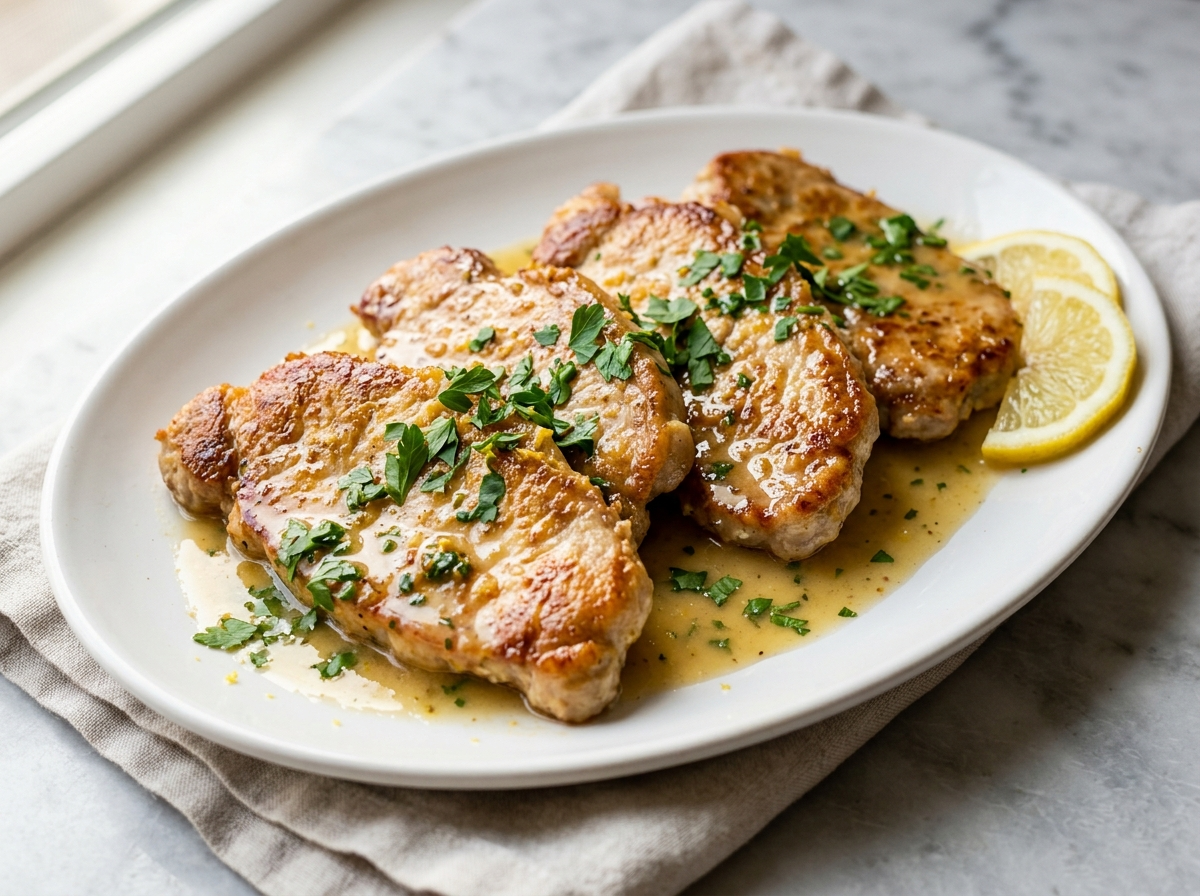
Scaloppine al limone is a Roman trattoria staple built on two techniques: pounding the meat thin and cooking it fast. The result is tender veal in a glossy, sharp pan sauce that takes under five minutes per batch.
The lemon is not background flavor here. It cuts through the butter and makes the whole dish taste clean rather than heavy. Use freshly squeezed juice – bottled will flatten the sauce.
This is not a slow-cooked dish. Once the veal hits the pan, everything moves quickly. Have your lemon squeezed, your parsley chopped, and your plate warm before you start cooking.
Veal is traditional, but the same method works with thin chicken breast or turkey cutlets if that’s what you’re working with.
Why You’ll Love This Recipe
- Ready in 20 minutes, start to finish
- Bright lemon sauce cuts through rich butter cleanly
- Works with veal, chicken, or turkey cutlets
- One skillet, minimal cleanup
Ingredient Notes
- Veal cutlets: Buy them pre-sliced or cut from the leg yourself. Pound to about 5 mm thick between sheets of plastic wrap so they cook evenly. Chicken breast or turkey escalopes work as direct substitutes.
- All-purpose flour: A light dusting helps the sauce cling and gives the surface a faint golden crust. Shake off the excess before the cutlets hit the pan or the flour will clump.
- Unsalted butter: Split the butter: use half for searing and stir in the rest at the end off the heat to keep the sauce glossy and stop it from breaking.
- Dry white wine: A light, dry Italian white like Pinot Grigio or Vermentino works well. Skip it and increase the chicken stock by the same amount if you prefer to cook without alcohol.
- Lemon juice: Squeeze it fresh right before you start cooking. About 2 medium lemons gives you the 60 ml you need. Taste and adjust at the end – acidity varies by lemon.
- Chicken stock: Use a low-sodium stock so you control the salt. Even a modest splash (about 60 ml) adds body to the pan sauce without overpowering the lemon.
Scaloppine al Limone (Italian Lemon Veal Cutlets)
Ingredients
Method
- Place veal cutlets between two sheets of plastic wrap and pound with a meat mallet or rolling pin until each is about 5 mm thick and even across the surface.
- Season both sides with salt and pepper. Spread the flour in a shallow bowl and dredge each cutlet, pressing lightly so the flour adheres, then shaking off the excess.
- Heat a 12-inch skillet over medium-high heat. Add the olive oil and 30 g of butter and let the butter foam subside before adding any meat.
- Working in batches, lay 2 to 3 cutlets flat in the pan without overlapping. Sear for 1.5 to 2 minutes per side until golden and cooked through. Transfer to a warm plate and repeat with the remaining cutlets.
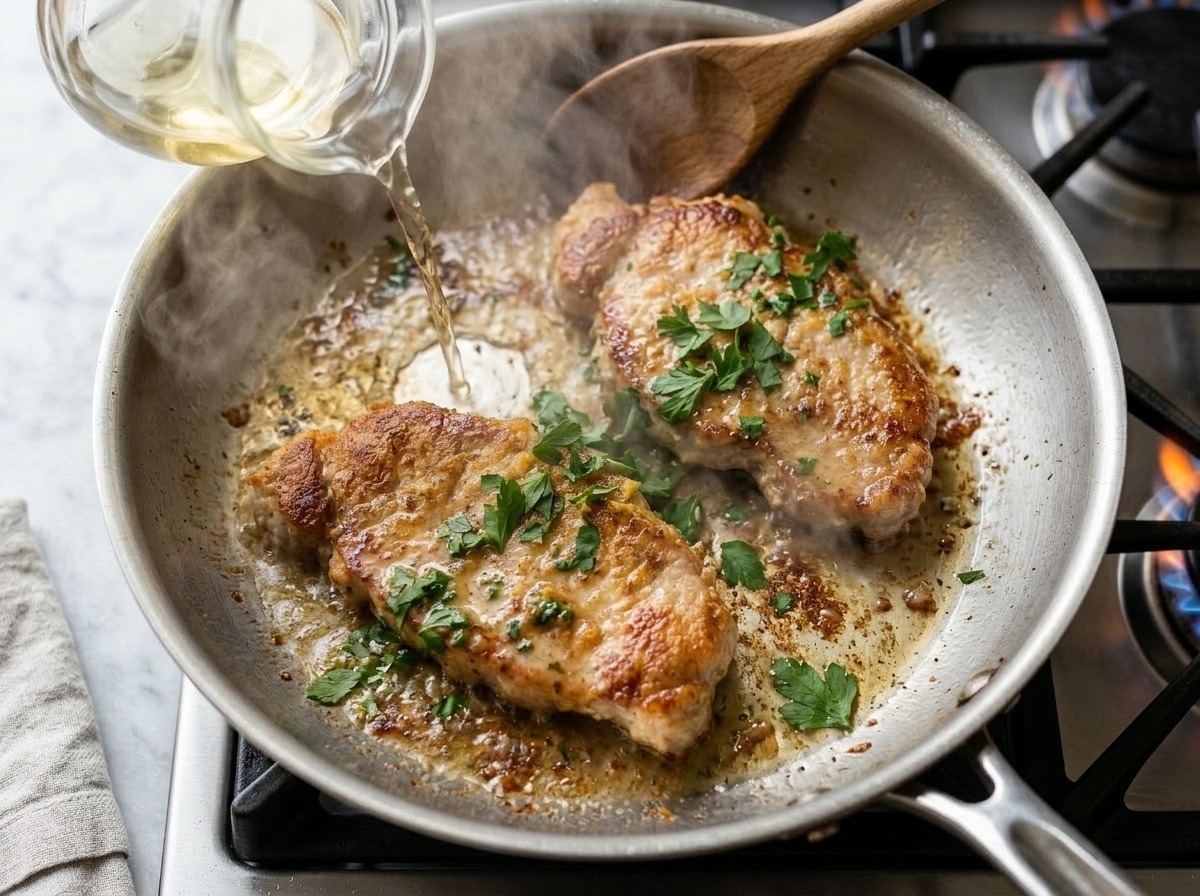
- With the skillet still over medium-high heat, pour in the white wine and scrape up any browned bits from the base. Let it reduce by half, about 1 minute.
- Add the chicken stock and simmer for 1 minute until slightly reduced. Remove the pan from the heat.
- Pour in the lemon juice (and zest if using) and swirl the pan. Add the remaining 30 g of cold butter in small cubes and swirl continuously off the heat until the sauce is smooth and glossy.
- Taste and adjust salt. Return all cutlets to the pan for 20 seconds, spooning the sauce over them to coat.
- Arrange the cutlets on warmed plates, spoon the pan sauce over the top, and scatter chopped parsley over each portion. Lay a lemon slice on the side and serve immediately.
Notes
Tips for Success
- Pound cutlets to an even 5 mm thickness so every piece finishes cooking at the same time.
- Pat the veal dry before flouring – moisture steams the meat instead of searing it.
- Cook in a single layer with space between pieces; crowding drops the pan temperature and turns the crust soggy.
- Pull the pan off the heat before adding the final cold butter, then swirl until it melts into the sauce.
- Taste the sauce after adding lemon, then adjust salt and a pinch of sugar if the acidity is too sharp.
Variations
- Chicken piccata style: add 2 tablespoons of capers to the sauce with the lemon juice.
- Scaloppine al marsala: replace lemon juice and wine with 120 ml dry Marsala for a deeper, nuttier sauce.
- Turkey scaloppine: substitute turkey breast cutlets, pounded thin; cook time stays the same.
Storage and Reheating
Store leftover scaloppine in an airtight container in the refrigerator for up to 2 days. Keep the sauce and cutlets together so the meat doesn’t dry out.
Reheat gently in a covered skillet over low heat with a tablespoon of water or stock to loosen the sauce. Avoid the microwave if you can – it toughens the veal and splits the butter sauce.
This dish does not freeze well. The thin cutlets become watery on thawing and the emulsified sauce breaks. Cook fresh batches instead.
Serving Suggestions
Scaloppine al limone pairs naturally with a starch that can soak up the pan sauce. Mashed potatoes, soft polenta, or plain buttered pasta are all practical choices.
For a lighter plate, serve alongside a bright Sicilian salad with fennel or a handful of dressed arugula. The peppery leaves wilt slightly under the warm cutlets and the lemon in the sauce does double duty as dressing.
A simple side of steamed green beans or crispy roasted potatoes rounds the plate without competing with the sauce. Keep any side dish mild so the lemon stays the main flavor.
FAQ
Why is my scaloppine al limone sauce breaking and looking greasy?
The butter sauce breaks when the pan is too hot when you add the final butter. Pull the skillet off the heat completely before swirling in the cold butter pieces. If it does break, a teaspoon of cold water and a gentle swirl off the heat usually brings it back together.
Can I use chicken instead of veal for scaloppine al limone?
Yes, thin chicken breast cutlets work directly in place of veal. Pound them to the same 5 mm thickness and cook for roughly the same time, checking that the center is no longer pink before removing from the pan.
Can I make the lemon pan sauce ahead and reheat it?
The sauce is best made fresh. A butter-lemon emulsion is fragile and tends to split when refrigerated and reheated. If you need to get ahead, prep and pound the cutlets up to 4 hours before cooking and keep them covered in the fridge.
What does scaloppine al limone pair well with for a dinner party?
Soft polenta or a Roman-style sautéed green on the side absorbs the pan sauce well and looks good on the plate. A simple arugula salad dressed with olive oil and shaved Parmigiano on the side keeps the meal feeling light without much extra work.
Is scaloppine al limone gluten-free?
Standard scaloppine uses all-purpose flour to dredge the cutlets, so it contains gluten. Swap in fine rice flour or certified gluten-free flour and it works just as well, with an equally golden crust.
What is the difference between scaloppine al limone and piccata?
They share the same lemon-butter base, but Italian-American piccata typically adds capers and sometimes a splash of brining liquid for extra sharpness. Classic Roman scaloppine al limone uses no capers and keeps the sauce cleaner and more restrained.