Jump to Recipe
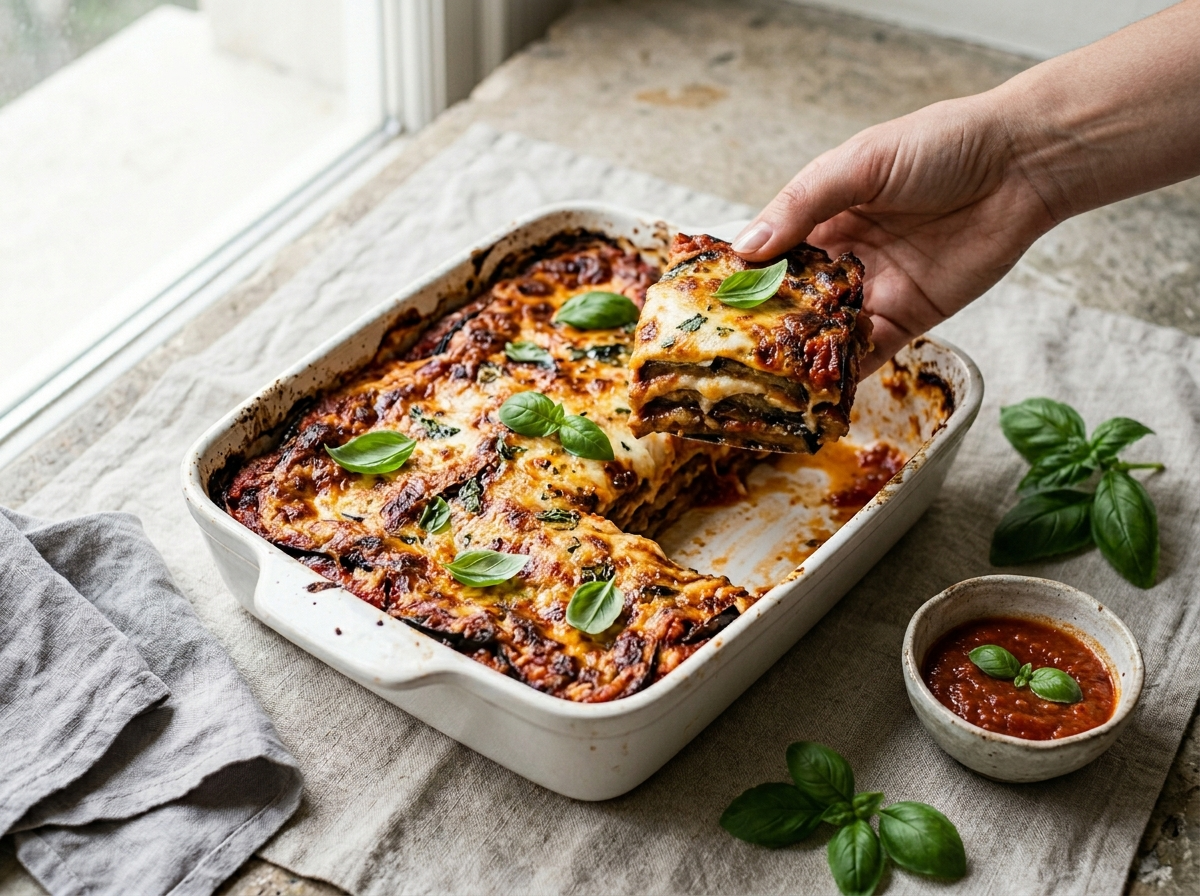
Parmigiana di melanzane is one of southern Italy’s most argued-over dishes. Naples, Sicily, and Calabria all claim it, and the debate over the name alone fills whole cookbooks. What nobody argues about is the result: thin-sliced eggplant, a long-cooked tomato sauce, melting mozzarella, and aged Parmigiano Reggiano baked into something that holds its shape when you cut it.
The technique is patient. You salt the eggplant, let it drain, fry it in batches, and build the layers carefully. None of that is difficult, but skipping any step shows in the final texture.
This version follows the Neapolitan approach: no breadcrumbs, no eggs in the layers, just fried eggplant alternated with tomato sauce, fior di latte, and grated Parmigiano. It bakes uncovered so the top browns and the whole thing firms enough to slice cleanly after a short rest.
Why You’ll Love This Recipe
- Holds its shape when sliced – no collapsing layers
- Make ahead by a full day, tastes better the next morning
- Only six core ingredients needed for the full dish
- Works as a main course or a generous side
Ingredient Notes
- Eggplant: Use large, firm globe eggplants. Long thin varieties release less bitter liquid and fry faster, but globe eggplants give you the wide slices you need for solid layers.
- Fior di latte (fresh cow’s milk mozzarella): Tear it by hand and let it dry on paper towels for 30 minutes before using – wet mozzarella makes the layers watery. Buffalo mozzarella works but releases even more liquid, so drying time matters more.
- Parmigiano Reggiano: Grate it fresh. Pre-grated Parmigiano clumps and doesn’t melt evenly between layers. Pecorino Romano works as a substitute but adds a sharper, saltier note.
- Canned whole peeled tomatoes (San Marzano): Crush them by hand before cooking for a coarser, more textured sauce. Any good-quality whole peeled tomato works; avoid pre-seasoned tomato passata here because you’re controlling the seasoning.
- Sunflower oil (for frying): Sunflower oil has a high smoke point and a neutral flavor that won’t compete with the tomato sauce. Olive oil is traditional in some regions but requires careful temperature control to avoid burning.
- Basil: Add fresh basil only to the tomato sauce and between layers – heat ruins the flavor if it goes in too early. Dried basil is not a workable substitute here.
Parmigiana di Melanzane (Italian Eggplant Parmigiana)
Ingredients
Method
- Slice the eggplants lengthways to 5-6 mm thick. Arrange in a large colander, sprinkling each layer with fine sea salt. Set a plate and a weight on top and leave to drain for 45 minutes - you'll see dark liquid collect at the base.
- Rinse the slices briefly under cold water, then lay them flat on clean kitchen towels. Press each slice firmly with a second towel until they feel dry to the touch, not damp.
- Warm the olive oil in a wide saucepan over medium heat. Add the crushed garlic cloves and cook for 2 minutes until pale golden and fragrant. Don't let them brown.
- Add the hand-crushed tomatoes and their juices. Season lightly with salt, bring to a gentle simmer, and cook uncovered for 20-25 minutes, stirring occasionally, until the sauce thickens and the oil rises slightly to the surface.
- Remove from the heat, discard the garlic, and stir in the torn basil. Taste and adjust salt. Set aside.
- Pour sunflower oil into a deep heavy-bottomed skillet to a depth of about 2 cm. Heat over medium-high until the oil reaches 175 C / 345 F on an instant-read thermometer.
- Fry the eggplant slices in small batches, 3-4 at a time, for 2-3 minutes per side until deep golden and just tender when pressed. Do not crowd the pan or the temperature drops and the slices steam rather than fry.
- Lift each batch onto a wire rack set over a baking sheet. Let them drain and cool slightly while you fry the remaining slices, returning the oil to temperature between batches.
- Heat the oven to 190 C / 375 F. Spread a thin layer of tomato sauce across the base of a 9x13-inch baking dish to prevent sticking.
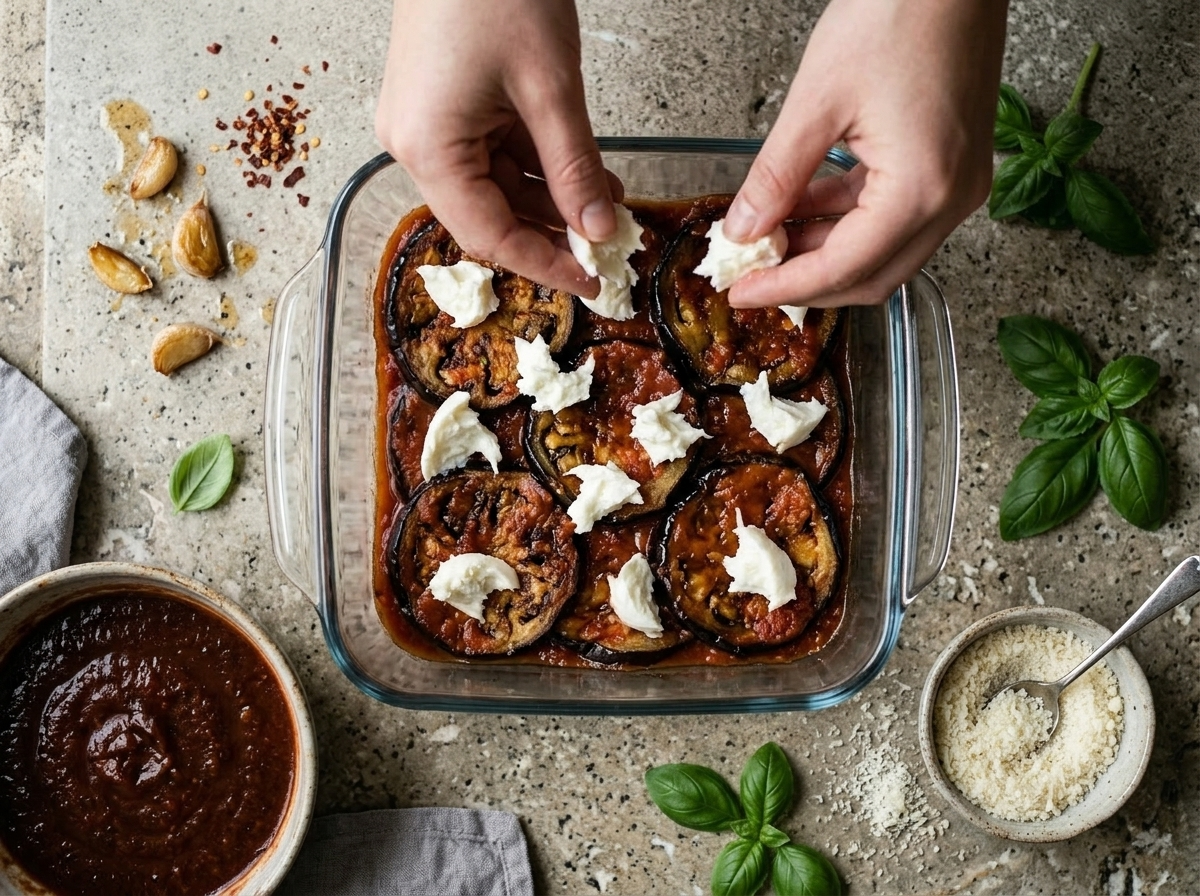
- Lay a single layer of fried eggplant slices over the sauce, overlapping them slightly. Spoon over enough tomato sauce to cover, scatter torn fior di latte pieces, a few basil leaves, and a generous handful of grated Parmigiano Reggiano.
- Repeat the layers - eggplant, tomato sauce, fior di latte, basil, Parmigiano - until all the eggplant is used up. Aim for at least 3 full layers. Finish with a layer of tomato sauce, the remaining fior di latte, and a final heavy dusting of Parmigiano.
- Bake uncovered for 30-35 minutes until the top is deeply golden, the edges are bubbling, and a knife inserted in the center comes out hot.
- Remove from the oven and rest at room temperature for at least 20 minutes before slicing. The layers firm as the dish cools and will hold their shape cleanly.
Notes
Tips for Success
- Salt eggplant slices in a colander for at least 45 minutes to draw out excess moisture before frying.
- Pat each eggplant slice completely dry with paper towels before it goes into the oil.
- Fry in small batches at 170-180 C / 340-355 F so the oil temperature stays stable and slices brown rather than steam.
- Drain fried slices on a wire rack, not paper towels, so they stay crisp on both sides.
- Rest the finished parmigiana at room temperature for at least 20 minutes before cutting so the layers bind and slice cleanly.
Variations
- Sicilian version adds hard-boiled egg slices and salted ricotta instead of fior di latte between layers.
- Lighter oven-baked parmigiana: brush eggplant slices with oil and roast at 220 C before layering, skip frying entirely.
- Add a thin layer of thinly sliced cooked ham between the eggplant and cheese layers for a richer, more filling result.
Storage and Reheating
Store leftover parmigiana covered in the fridge for up to 4 days. The flavors deepen overnight, which is why many Italian home cooks make it a day ahead.
To reheat, place portions in an oven-safe dish, cover loosely with foil, and warm at 170 C / 340 F for 15-20 minutes until heated through. Microwaving works in a pinch but softens the top layer.
Parmigiana freezes well. Cut into individual portions, wrap tightly in plastic wrap, then foil, and freeze for up to 2 months. Thaw in the fridge overnight before reheating.
Serving Suggestions
In Naples, parmigiana di melanzane is served at room temperature as an antipasto or a main course, never piping hot. A 20-minute rest after baking is the standard, and it genuinely tastes better that way.
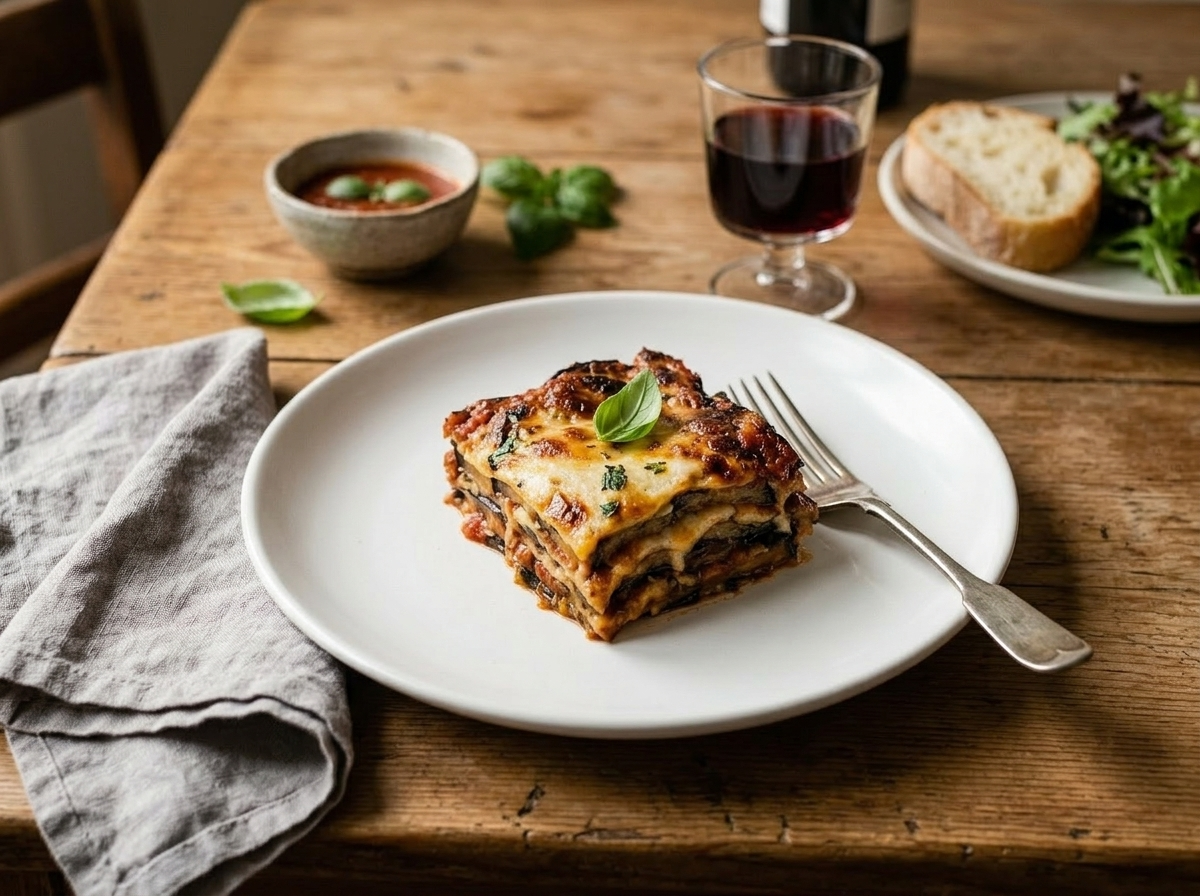
For a full meal, serve with crusty ciabatta or a simple green salad dressed with red wine vinegar and olive oil. The acidity cuts through the richness of the cheese layers.
For a sit-down dinner, pairing it with a bold Italian red wine and a light primo like a small bowl of pasta al pomodoro works well before the parmigiana. Keep the rest of the meal simple – the dish carries the plate.
FAQ
Why are my parmigiana layers watery after baking?
The most common cause is wet mozzarella. Tear fior di latte by hand, spread it on paper towels, and let it dry for at least 30 minutes before layering. Under-salted or insufficiently drained eggplant releases water during baking too, so don’t skip the salting step.
Can I use zucchini instead of eggplant in parmigiana di melanzane?
Yes, it’s a different dish but a good one – called parmigiana di zucchine. The technique is the same, but zucchini slices are thinner and fry faster, so watch the oil temperature carefully. The result is milder and less dense than the eggplant version.
How do I know when the parmigiana is done baking?
Look for a deeply golden-brown top with edges that are bubbling and slightly pulled away from the baking dish. The internal temperature should reach around 85 C / 185 F if you want to check. A knife inserted into the center should come out hot.
Can I assemble parmigiana di melanzane the night before baking?
Yes, and it’s a good idea. Assemble the full dish, cover with plastic wrap, and refrigerate overnight. Bring it to room temperature for 30 minutes before baking so it heats evenly from the center.
Is parmigiana di melanzane gluten-free?
The Neapolitan version in this recipe is naturally gluten-free – no flour, no breadcrumbs, no pasta. Just confirm that your canned tomatoes have no added thickeners and use a certified gluten-free baking dish if cross-contamination is a concern.
What is the difference between parmigiana di melanzane and eggplant parmesan?
The Italian original uses no breadcrumbs and no egg coating on the eggplant – just plain fried slices layered with tomato sauce, fior di latte, and Parmigiano. American eggplant parmesan typically breads and fries the slices and often uses low-moisture mozzarella. The Italian version is lighter and less structured.