
Jump to Recipe
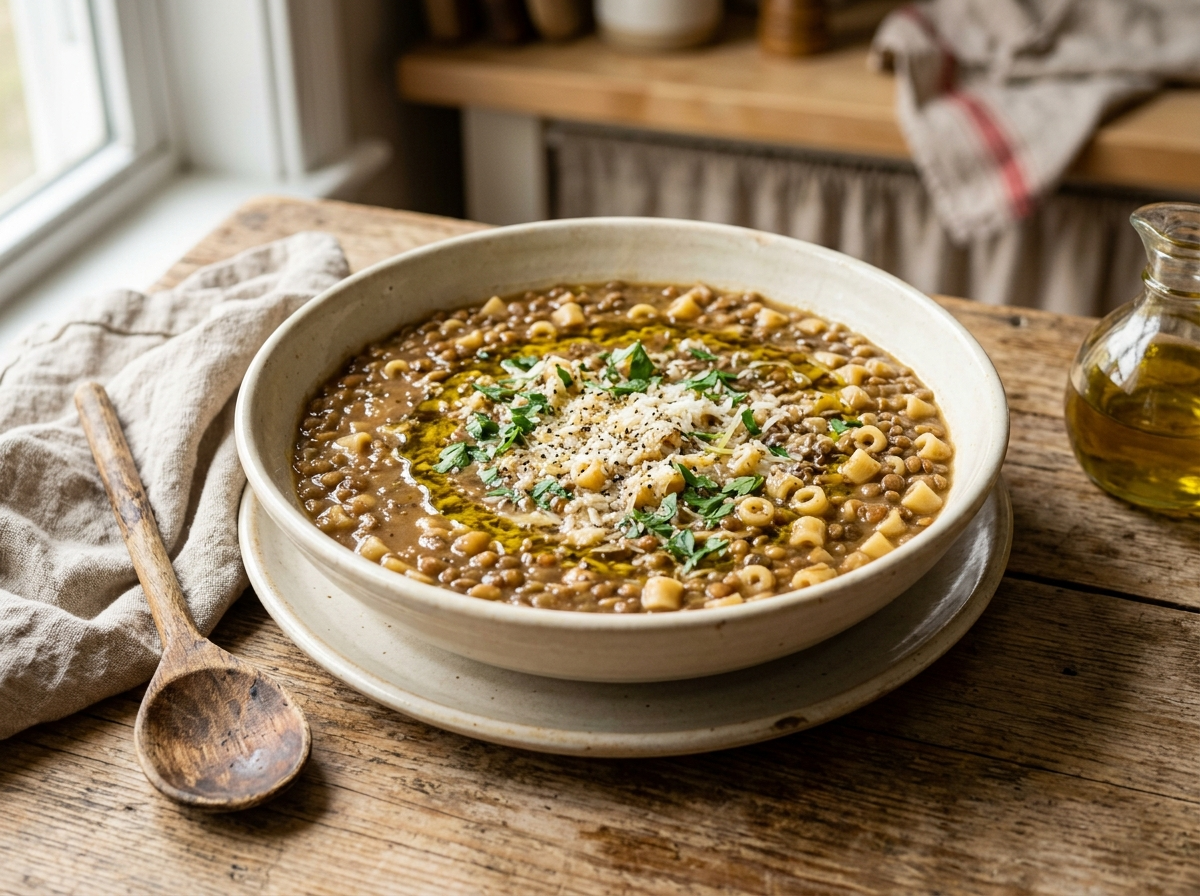
Pasta e lenticchie sits somewhere between a soup and a pasta dish, and that in-between texture is exactly the point. The lentils break down just enough to thicken the broth, so every spoonful clings to the pasta.
This is a Roman and Southern Italian cucina povera lentil classic built on a patient soffritto and one pot. Good ingredients, a patient soffritto, and one pot are all you need.
I use small pasta here – ditalini or broken spaghetti both work. The pasta finishes cooking directly in the lentil broth, which is what gives the dish its characteristic dense, almost porridge-like consistency.
It keeps well and actually improves the next day, which makes it a practical choice when you want a filling weeknight meal that does double duty as lunch.
Why You’ll Love This Recipe
- One pot, minimal cleanup, ready in 40 minutes
- Brown lentils provide 18 g protein per serving
- Tastes better the next day – ideal for meal prep
- Pantry ingredients only, no special shopping needed
Ingredient Notes
- Brown lentils: No soaking needed – they cook in about 25 minutes. Red lentils will dissolve completely and make the soup mushier, which some people prefer but changes the texture noticeably.
- Ditalini pasta: Small tubular pasta holds up best here. Broken spaghetti or small elbows work fine if ditalini isn’t available.
- Celery, carrot, onion (soffritto): Dice these small so they melt into the base. This is the flavor backbone of the dish – don’t skip or rush it.
- Parmesan rind: Drop one in during simmering for a savory, slightly funky depth. Completely optional but worth doing if you keep rinds in the freezer.
- Canned whole tomatoes: Two tablespoons of tomato paste is a direct substitute. Fresh peeled tomatoes work in summer. The tomato here is background, not dominant.
- Extra virgin olive oil: Used twice – once for the soffritto and once as a raw finish at serving. A good finishing oil makes a real difference in flavor here.
Pasta e Lenticchie (Italian Pasta and Lentil Soup)
Ingredients
Method
- Heat 3 tbsp olive oil in a large Dutch oven over medium-low heat. Add the diced onion, celery, and carrot with a pinch of salt.
- Cook, stirring occasionally, for 8 to 10 minutes until the vegetables are soft, pale, and just starting to stick to the bottom.
- Add the sliced garlic, chopped rosemary, and chili flakes. Stir and cook for 2 minutes more until fragrant.
- Add the crushed tomatoes (or tomato paste) and stir to coat the soffritto. Cook for 2 minutes until the tomato darkens slightly.
- Add the rinsed lentils and pour in the broth. Drop in the Parmesan rind if using. Stir once.
- Bring to a gentle boil over medium-high heat, then reduce to a steady simmer. Cook uncovered for 20 to 25 minutes, stirring occasionally, until the lentils are just tender but still holding their shape.
- Add hot water by the ladle if the broth reduces too quickly - you want the lentils fully submerged throughout cooking.
- Remove and discard the Parmesan rind. Taste the broth and add salt as needed.
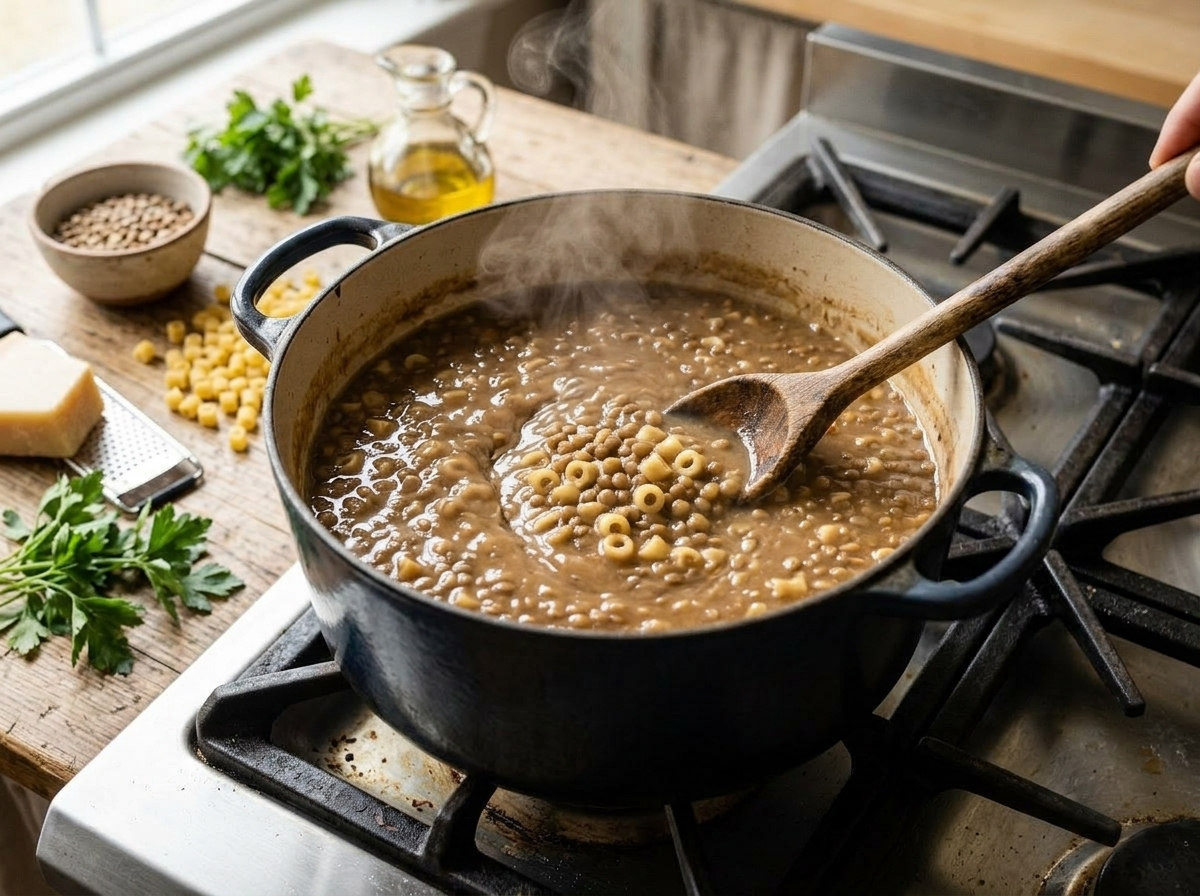
- Add the ditalini directly to the pot. Cook over medium heat, stirring frequently, for 10 to 12 minutes until the pasta is al dente and the soup is thick. Add splashes of hot water if it thickens too fast.
- Remove from heat. Drizzle in 2 tbsp raw olive oil and stir through. Let the pot rest for 2 minutes.
- Ladle into wide bowls. Top with grated Pecorino Romano, a few grinds of black pepper, and parsley if using. Add a final drizzle of olive oil at the table.
Notes
Tips for Success
- Cook the soffritto over medium-low heat for at least 8 minutes until the vegetables are soft and pale before adding lentils.
- Add the pasta only in the last 10 to 12 minutes so it finishes al dente rather than bloated and mushy.
- Keep a kettle of hot water nearby and add it by the ladle to control thickness as the pasta absorbs broth.
- Stir the pot frequently once the pasta goes in – small pasta sticks to the bottom quickly on medium heat.
- Taste and adjust salt only after the pasta is fully cooked, since the starch concentrates the seasoning as the soup thickens.
Variations
- Add 100 g diced pancetta to the soffritto for a smoky, meatier version common in Lazio.
- Use Castelluccio or Puy lentils for a firmer texture and earthier flavor – adjust cook time by 5 minutes.
- Finish with a spoonful of chili oil and a squeeze of lemon instead of olive oil for a brighter, spicier bowl.
Storage and Reheating
Store leftover pasta e lenticchie in an airtight container in the fridge for up to 3 days. The pasta will continue absorbing liquid as it sits, so the texture thickens considerably overnight.
To reheat, add a splash of water or light broth and warm over medium-low heat, stirring often. It will loosen back to a thick, scoopable consistency within a few minutes.
This dish freezes well if you freeze it before adding the pasta. Cook lentils and broth completely, cool, and freeze for up to 2 months. Add fresh pasta when reheating from frozen.
Serving Suggestions
Serve pasta e lenticchie in wide, shallow bowls with a generous drizzle of raw extra virgin olive oil and a few grinds of black pepper. A small handful of grated Pecorino Romano on top adds a sharp, salty contrast.
A thick slice of grilled country bread on the side is the most traditional accompaniment – good for scooping up the dense broth at the bottom of the bowl.
For a light meal, pair it with a simple bitter green side dressed with lemon and oil. The bitterness of radicchio or chicory cuts through the starchiness of the dish cleanly.

FAQ
Why is my pasta e lenticchie too thick and gluey?
Small pasta releases a lot of starch as it cooks, which thickens the broth fast. Add hot water or broth by the ladle and stir – it loosens quickly. If the pasta sat in the pot after cooking, it will have absorbed most of the liquid, which is normal.
Can I use red lentils instead of brown lentils in pasta e lenticchie?
You can, but red lentils dissolve almost completely, giving you a much smoother, almost creamy consistency. It’s a different texture from the traditional version, which has some whole lentils for bite.
Can I freeze pasta e lenticchie with the pasta already in it?
It’s not ideal – the pasta turns very soft after freezing and reheating. Freeze the lentil broth alone, then cook fresh pasta directly in it when reheating.
What pasta shape works best in pasta e lenticchie besides ditalini?
Broken spaghetti, small elbows, or tubettini are all good options. You want something small enough to fit on a spoon alongside the lentils.
Is pasta e lenticchie vegan?
The base recipe is vegan – just skip the Parmesan rind during cooking and don’t top with cheese. Everything else, including the soffritto and olive oil finish, is plant-based.
What is the difference between pasta e lenticchie and pasta e fagioli?
Both are thick Italian one-pot soups, but pasta e fagioli uses borlotti or cannellini beans cooked with aromatics instead of lentils. Lentils cook faster and break down more, making pasta e lenticchie denser and earthier in flavor.