
Jump to Recipe
Insalata di mare is a cold seafood salad from the Italian coast, made with a mix of squid, shrimp, mussels, and clams. It’s a fixture at Christmas Eve tables across southern Italy and just as at home on a summer lunch spread.
The technique is straightforward: each type of seafood is cooked separately, just until done, then combined and dressed while still warm. That’s what makes the difference between a vivid, well-seasoned salad and a bland, rubbery one.
I use a simple dressing of extra-virgin olive oil, fresh lemon juice, garlic, and flat-leaf parsley. Nothing more is needed when the seafood is fresh and properly cooked.
You can prepare this a few hours ahead, which actually improves it. The flavors settle and the texture firms up slightly, making it easier to serve at room temperature.

Why You’ll Love This Recipe
- Cooks in under 30 minutes with basic pantry staples
- Tastes better made a few hours ahead
- Light, clean flavors that don’t overwhelm the seafood
- Works as a starter or a light main course
Ingredient Notes
- squid (calamari): Buy cleaned squid to save time. Cut bodies into rings about 1 cm wide and leave small tentacles whole. Frozen squid works well here.
- mussels: Use live mussels; discard any that don’t close when tapped. If fresh mussels are unavailable, cooked vacuum-packed mussels are a practical substitute.
- clams (vongole): Littleneck or Manila clams both work. Soak them in cold salted water for 30 minutes before cooking to purge sand.
- shrimp: Medium shrimp (31/40 count) peel and cook quickly. You can use raw or pre-cooked; if pre-cooked, just warm briefly in the poaching liquid.
- extra-virgin olive oil: Use a good-quality, fruity olive oil because it’s the backbone of the dressing. A mild Ligurian or Sicilian oil suits this well.
- fresh lemon juice: Squeeze the lemon yourself; bottled juice has a cooked, flat taste. One large lemon usually gives about 60 ml (4 tbsp).
- flat-leaf parsley: Flat-leaf parsley has more flavor than curly here. Chop it just before dressing the salad so it stays vivid green.
- garlic: One clove, minced very fine or grated on a microplane so it dissolves into the dressing without harsh chunks.
Insalata di Mare (Italian Seafood Salad)
Ingredients
Method
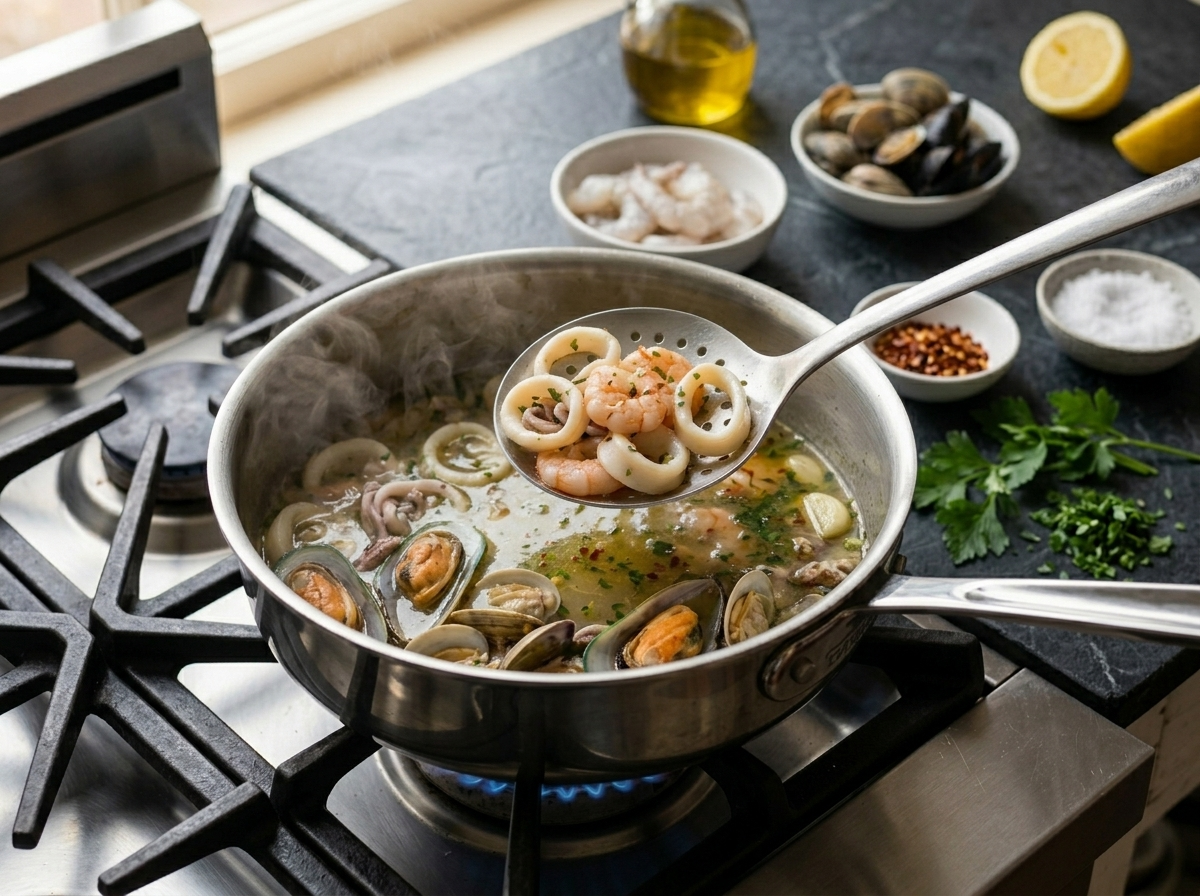
- Drain the clams from their soaking water. Place them in a large saucepan over medium-high heat with 50 ml of the white wine. Cover and cook for 3 to 4 minutes until the shells open, shaking the pan once halfway through.
- Use a slotted spoon to transfer opened clams to a bowl. Discard any that stayed closed. Strain the cooking liquid through a fine-mesh sieve lined with a paper towel to remove grit, then reserve 100 ml of it.
- When cool enough to handle, remove clam meat from shells and place in a large mixing bowl. Leave a few in the shell for presentation if you like.
- Add the mussels to the same saucepan with the remaining 50 ml of white wine. Cover and cook over medium-high heat for 3 to 4 minutes until all shells have opened.
- Transfer mussels with a slotted spoon to a bowl. Discard any unopened ones. Remove mussel meat from shells, reserving a few in the shell for presentation. Add meat to the bowl with the clams.
- Combine 2 liters of water, the reserved clam liquid, bay leaf, lemon slice, and 1 tbsp salt in the large saucepan. Bring to a gentle simmer over medium heat.
- Add squid rings and tentacles. Cook for 2 to 3 minutes until opaque and just tender. Lift out with a slotted spoon and add to the mixing bowl.
- Return the water to a simmer. Add shrimp and cook for 2 to 3 minutes until pink and opaque. Drain and add to the mixing bowl with the other seafood.
- While the seafood is still warm, add the olive oil, lemon juice, minced garlic, and half the chopped parsley to the bowl. Season with salt and black pepper.
- Toss gently to coat all the seafood evenly. Taste and adjust salt or lemon if needed.
- Cover the bowl with plastic wrap and leave to rest at room temperature for 20 minutes before serving. Scatter the remaining parsley over the top just before bringing it to the table.
Notes
Tips for Success
- Cook each seafood type separately so nothing overcooks while you wait for another to finish.
- Dress the seafood while it’s still warm so the lemon and oil absorb into the flesh rather than coating the surface.
- Soak clams in heavily salted water for at least 30 minutes before cooking to purge any residual sand.
- Slice squid rings no thicker than 1 cm so they cook through in 2 to 3 minutes without turning rubbery, the same principle behind properly fried Italian calamari.
- Rest the finished salad at room temperature for at least 20 minutes before serving to let the dressing settle evenly.
Variations
- Add thinly sliced celery and green olives for a Sicilian-style version with more crunch and brine.
- Include cooked octopus cut into small pieces alongside the squid for a more substantial salad.
- Use lime juice instead of lemon and add a small fresh chili for a brighter, slightly spicy dressing.
Storage and Reheating
Store insalata di mare in an airtight container in the refrigerator for up to 2 days. Press a layer of plastic wrap directly onto the surface before sealing to limit oxidation.
Serve it at room temperature, not cold from the fridge. Take it out about 20 to 30 minutes before eating so the olive oil loosens and the flavors come forward. Cold dressing on cold seafood tastes flat.
Don’t freeze this salad. The texture of squid, shrimp, and mollusks deteriorates significantly after freezing and thawing a second time.
Serving Suggestions
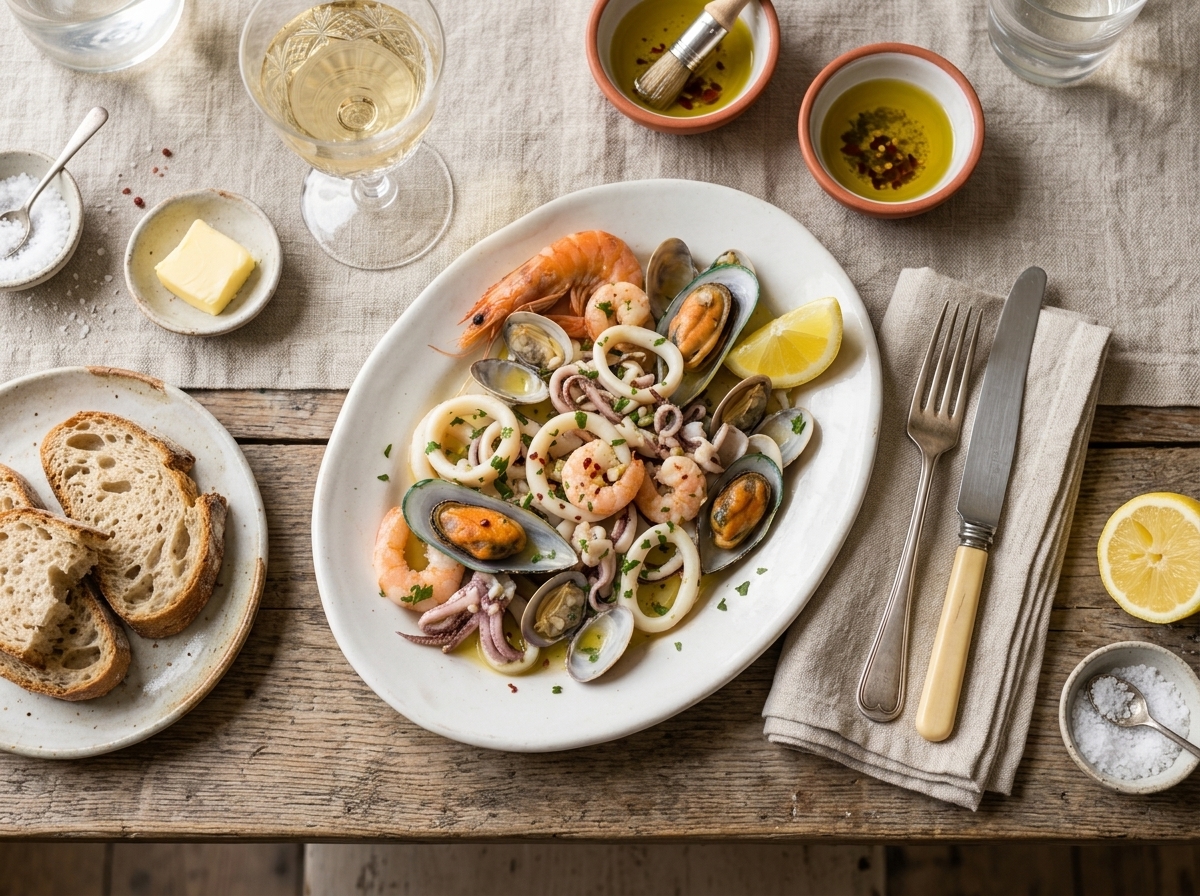
In Italy, insalata di mare is typically served as an antipasto before a pasta course, with thick slices of grilled or toasted bread on the side. A drizzle of extra olive oil at the table is standard.
It also works as a light main at lunch, especially in summer. Serve it over a bed of arugula or with boiled waxy potatoes dressed in olive oil for a more filling plate.
For a Christmas Eve spread in the southern Italian tradition, pair it with baccalà fritto, crispy stuffed fried olives, and a dry Vermentino or Greco di Tufo.
FAQ
Why is my insalata di mare rubbery?
Overcooking is almost always the cause, especially with squid and shrimp. Squid needs only 2 to 3 minutes in simmering water, and shrimp turns pink and opaque in under 3 minutes. Pull each one off the heat as soon as it’s just cooked through.
Can I use frozen mixed seafood instead of buying fresh squid, mussels, and clams separately?
You can, but the result will be less precise because frozen mixed seafood thaws unevenly and the pieces are often already pre-cooked. If you use it, thaw fully in the fridge overnight, pat dry, and warm gently in the poaching liquid rather than boiling hard.
How far ahead can I make insalata di mare and still have good texture?
Up to 4 to 6 hours ahead is the sweet spot. The seafood absorbs the dressing without softening too much, and the flavors are better integrated than if you serve it right away. Beyond 24 hours, the acidity from the lemon begins to break down the texture.
What wine pairs well with insalata di mare?
A dry, mineral Italian white works best. Vermentino from Sardinia, Greco di Tufo from Campania, or Verdicchio from the Marche coast all have the acidity and clean finish to complement the lemon dressing, as covered in this guide to Italian seafood wine pairings.
Is insalata di mare gluten-free?
Yes, this recipe contains no gluten. The only ingredients are seafood, olive oil, lemon juice, garlic, and parsley. Just make sure any pre-cooked or vacuum-packed seafood you buy doesn’t contain added starch or flavorings with hidden gluten.
What is the difference between insalata di mare and frutti di mare?
Frutti di mare is a broader term that simply means shellfish and mollusks in Italian. Insalata di mare is a specific preparation where mixed seafood is cooked, chilled, and dressed as a salad. You’ll see frutti di mare used for pasta dishes and mixed fry plates as well.