Jump to Recipe
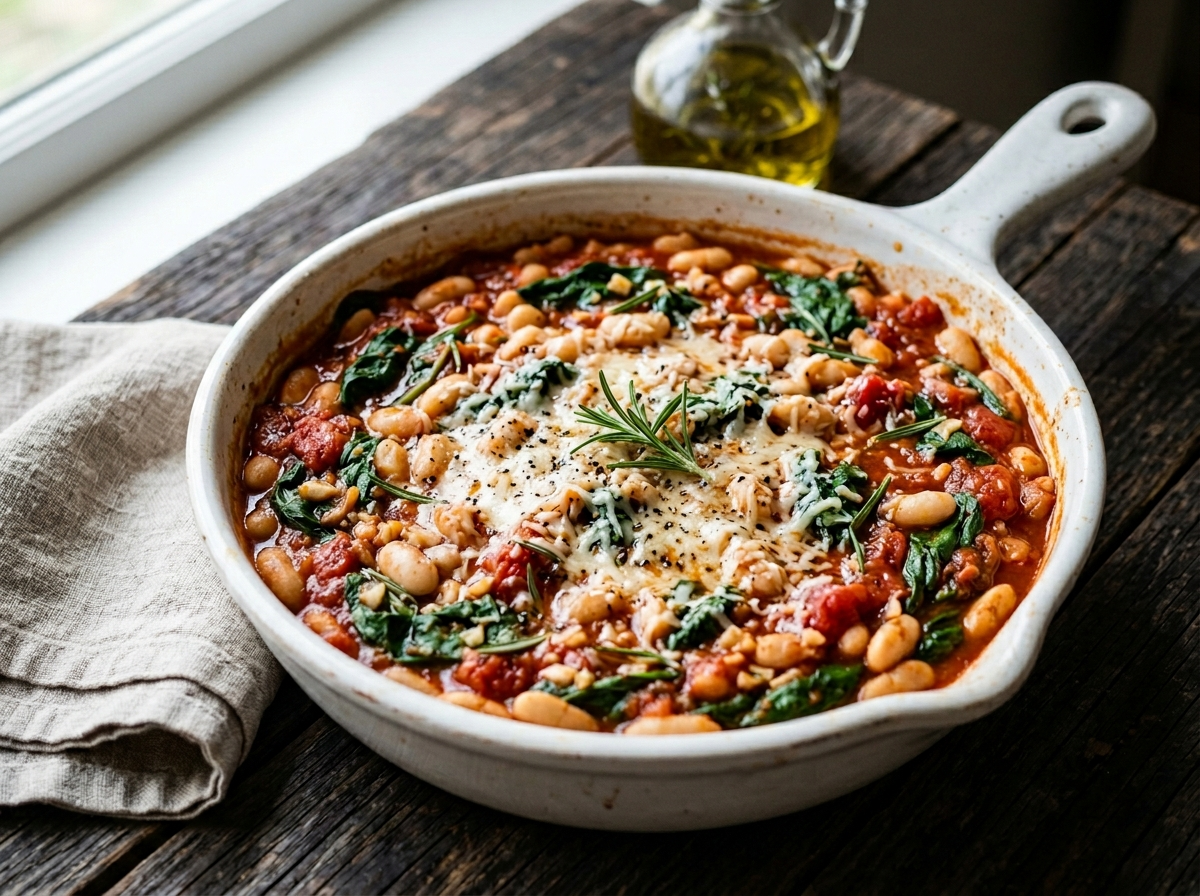
This skillet dinner started as a way to use two cans of cannellini beans and half a bag of spinach before they went to waste. It’s now on regular weeknight rotation because it genuinely fills you up and the cleanup is one pan.
The technique is simple: build a rosemary and garlic base in olive oil, add tomatoes, let them reduce, then fold in the beans so they soak up the sauce. Rough up a few beans against the pan – that’s what makes the sauce thick and clingy rather than watery.
Good canned beans and a real parmesan rind (if you have one) take this from fine to something you’d serve to guests. Neither is expensive.
Why You’ll Love This Recipe
- One skillet means almost no cleanup
- Pantry ingredients, no special shopping trip needed
- High-fiber, plant-based, and genuinely filling
- Ready faster than any takeout order
Ingredient Notes
- Cannellini beans: Two 400 g / 15 oz cans work perfectly here. Drain and rinse them well so the sauce doesn’t turn muddy. Borlotti or navy beans are a workable swap.
- Crushed tomatoes: A good-quality crushed tomato makes a noticeable difference – I use San Marzano when they’re on sale. Diced tomatoes work but the sauce stays chunkier.
- Fresh rosemary: One 6-inch sprig is enough – rosemary turns bitter if you overdo it. Dried rosemary works at half the amount; add it with the garlic so it has time to soften.
- Baby spinach: Two large handfuls wilt down to almost nothing, so don’t be shy. Frozen spinach (thawed and squeezed dry) is a practical swap, especially in winter.
- Parmesan rind: Optional but worth keeping in your freezer. Simmered in the sauce it adds a slow, savory depth that’s hard to replicate. Remove before serving.
- Vegetable or chicken stock: Stock loosens the sauce to the right consistency. Use vegetable stock to keep the dish fully plant-based. Low-sodium stock lets you control salt more precisely.
Tuscan White Bean Skillet Dinner
Ingredients
Method
- Heat the olive oil in a 12-inch skillet over medium heat. Add the diced onion and cook for 5 to 6 minutes, stirring occasionally, until soft and pale gold.
- Add the sliced garlic, rosemary sprig, and red pepper flakes if using. Cook for 2 minutes over medium-low, stirring often, until the garlic is fragrant and just beginning to color.
- Pour in the crushed tomatoes. Stir to combine and raise the heat to medium. Cook uncovered for 5 minutes, stirring occasionally, until the tomatoes reduce slightly and darken in color.
- Add the drained cannellini beans, vegetable stock, and parmesan rind if using. Stir to combine and bring to a gentle simmer.
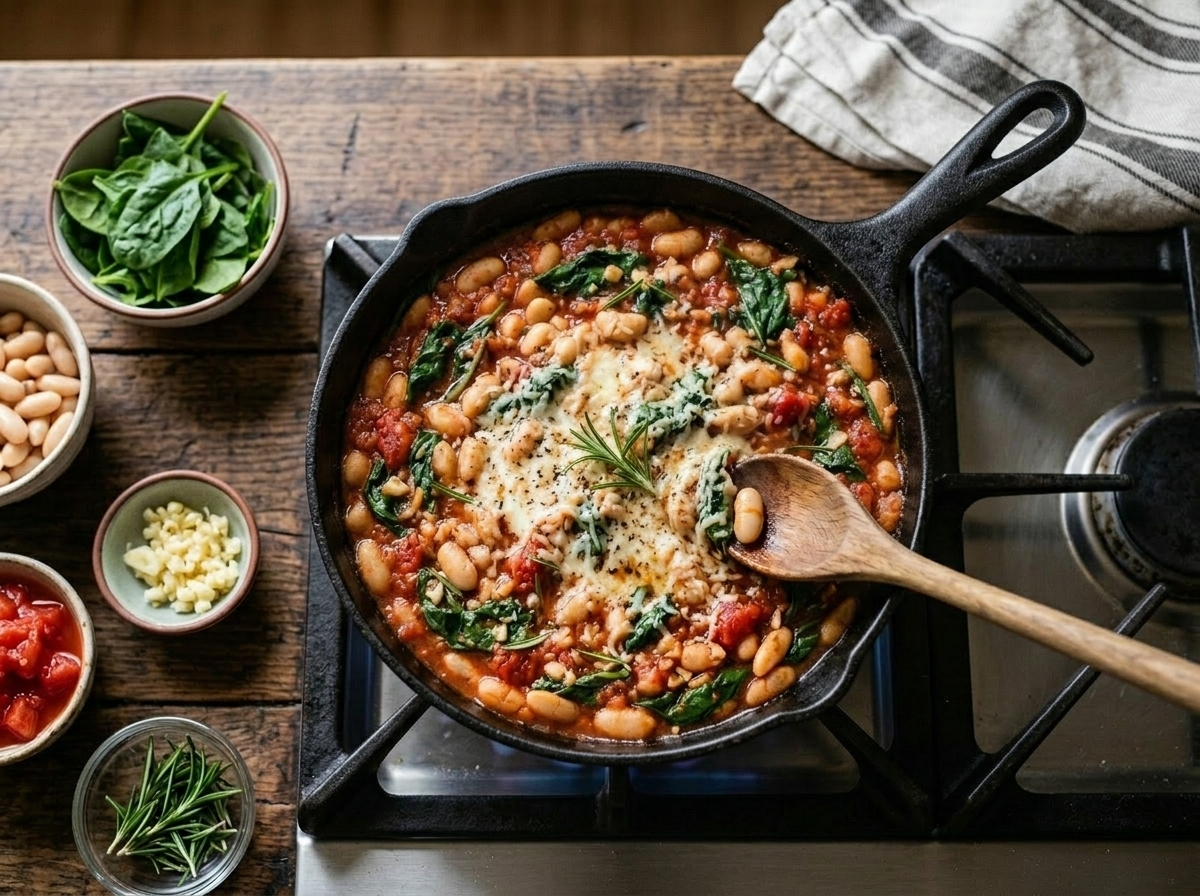
- Using a wooden spoon, press 4 to 5 beans firmly against the side of the skillet until they mash into the sauce. This thickens the liquid without adding any starch.
- Simmer uncovered for 10 to 12 minutes, stirring occasionally, until the sauce is thick enough to coat the back of a spoon and the beans are fully warmed through.
- Remove the rosemary sprig and parmesan rind. Add the spinach in two batches, folding it in and waiting for each batch to wilt before adding the next, about 2 minutes total.
- Taste and season with salt and black pepper. Remove from the heat and finish with a drizzle of raw extra-virgin olive oil.
- Serve immediately, topped with freshly grated Parmigiano-Reggiano if desired.
Notes
Tips for Success
- Smash 4-5 beans against the skillet with a wooden spoon to thicken the sauce without adding starch.
- Let the garlic and rosemary cook over medium-low for 2 full minutes before adding tomatoes – that’s where the flavor base builds.
- Add spinach in two batches so it wilts evenly rather than steaming in a clump.
- Taste and adjust salt only after the parmesan rind has simmered – it adds significant sodium as it cooks.
- Finish with a drizzle of raw extra-virgin olive oil off the heat for a cleaner, fruitier flavor.
Variations
- Add 200 g / 7 oz Italian sausage, browned and crumbled, after the garlic for a meat-forward version.
- Stir in 1 tsp Calabrian chili paste with the tomatoes for a spicy southern Italian spin.
- Swap spinach for cavolo nero (lacinato kale), adding it 5 minutes earlier so it fully softens.
Storage and Reheating
Store leftovers in a sealed container in the refrigerator for up to 4 days. The beans continue to absorb liquid overnight, so the texture thickens considerably.
Reheat in a skillet over medium-low with a splash of stock or water to loosen the sauce. Stir gently – the beans are softer the next day and break apart easily.
The skillet dinner freezes well for up to 2 months. Freeze in individual portions, thaw overnight in the fridge, and reheat as above.
Serving Suggestions
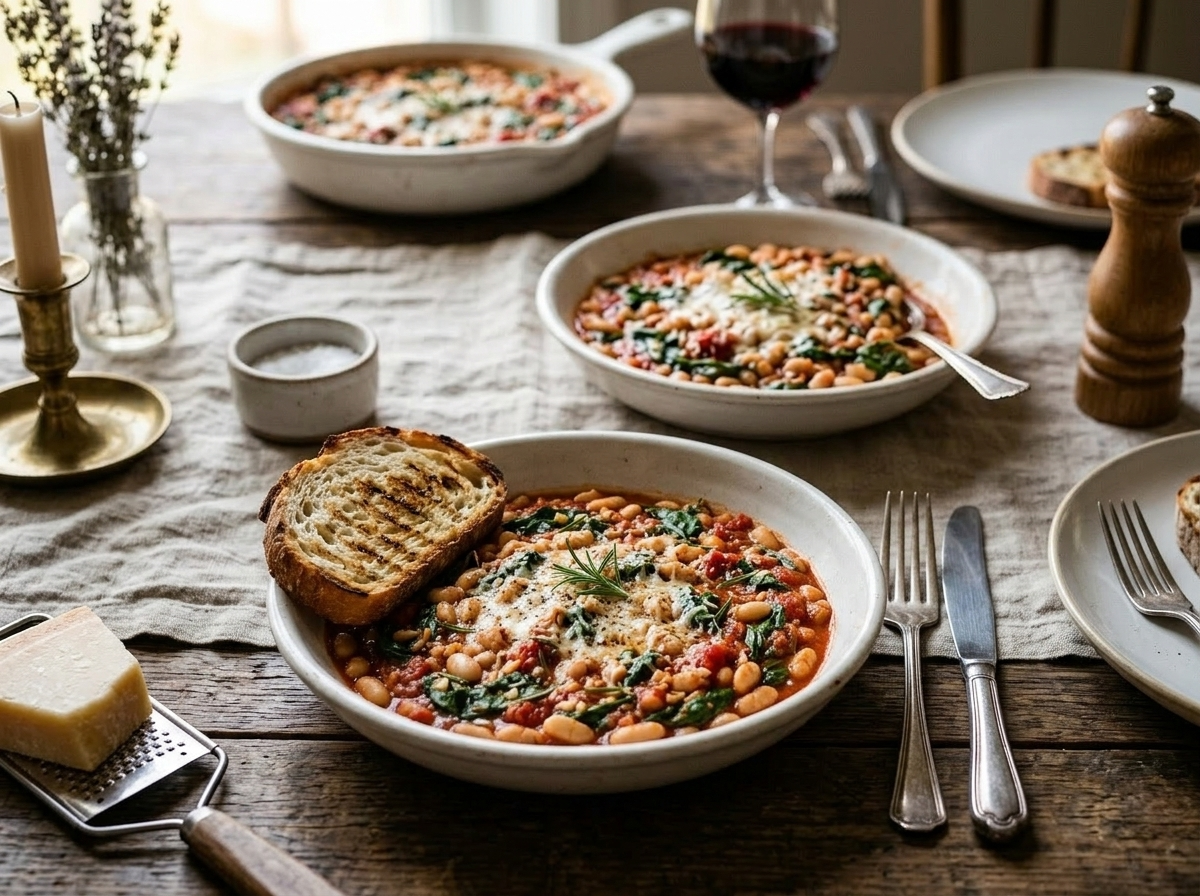
A thick slice of grilled sourdough or ciabatta rubbed with garlic is the straightforward pairing – it soaks up the tomato-rosemary sauce well. If you have day-old bread, toast it dry in a pan and float it on top so it stays slightly crisp.
For a more composed plate, spoon the beans over soft polenta, much like the braised approach used in an Umbrian rosemary and garlic stew. The combination of creamy polenta and the braised bean sauce is closer to a Tuscan trattoria bowl than a quick weeknight dinner.
A simple arugula salad dressed with lemon juice and olive oil cuts through the richness of the beans without competing with the rosemary.
FAQ
Why does my Tuscan white bean skillet turn out watery instead of thick?
The most common reason is not smashing any beans during cooking. Press 4-5 beans against the side of the pan with a wooden spoon – the starch they release thickens the sauce naturally. Also make sure you reduce the tomatoes for at least 5 minutes before adding stock.
Can I use dried cannellini beans instead of canned in this skillet recipe?
You can, but soak and cook them fully before starting – dried beans won’t soften properly in the short simmer time of this recipe. Cook dried beans until just tender, then use about 480 g / 2.5 cups cooked beans in place of two cans.
Can I freeze the Tuscan white bean skillet with the spinach already in it?
Yes, the spinach holds up fine in the freezer since it’s already wilted and incorporated into the sauce. Freeze in portions for up to 2 months and reheat gently with a splash of water or stock.
What cheese works best on top of this white bean skillet?
Freshly grated Parmigiano-Reggiano or Pecorino Romano are the natural choices – both add a salty, nutty finish. If you need a dairy-free option, a spoonful of nutritional yeast stirred in at the end gives a similar savory note.
Is this Tuscan white bean skillet dinner gluten-free?
The skillet itself is naturally gluten-free – beans, tomatoes, spinach, and olive oil contain no gluten. Just check your stock label for hidden gluten, and skip the bread pairing or use a certified gluten-free loaf.
What’s the difference between this dish and pasta e fagioli?
Pasta e fagioli is a soup or stew that includes pasta and is generally brothier and looser. This skillet dinner skips the pasta, uses less liquid, and is cooked down to a thicker, spoonable consistency closer to a Tuscan fagioli all’uccelletto.