
Jump to Recipe
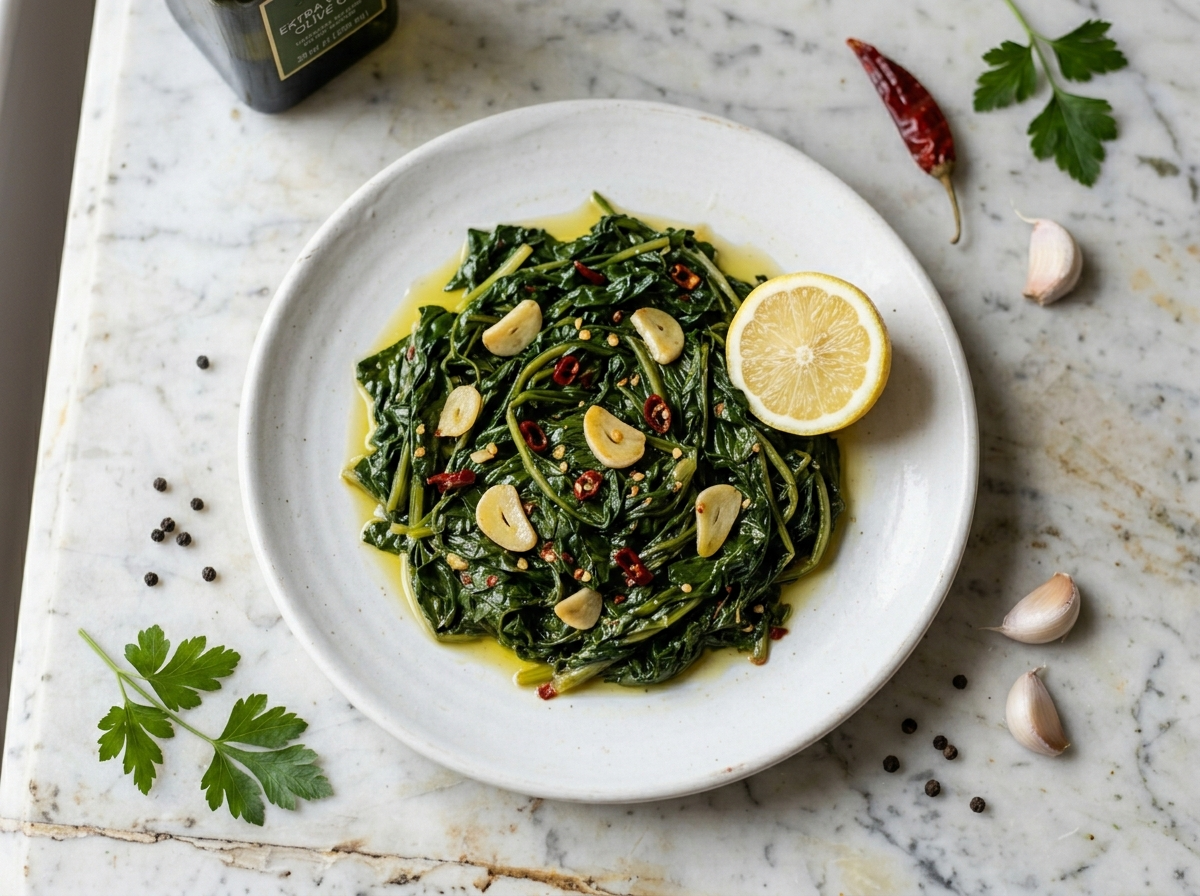
Ripassata in padella is what Romans call this technique: greens blanched first, then tossed back into a hot pan with garlic and chili. The double cooking is the whole point. Blanching tames the raw bitterness; the second pass in olive oil concentrates flavor and coats every leaf.
Chicory is the green of choice in Roman home kitchens, especially catalogna (puntarelle), cicoria selvatica, or curly chicory. Any of them works here. The bitterness is not a flaw to hide – it’s the reason you make this dish.
It takes about 25 minutes start to finish and needs nothing more than a good pour of olive oil, three garlic cloves, and a pinch of dried chili. Serve it next to roast lamb, alongside lentils slow-cooked with rosemary, or just on bruschetta with a thread of lemon.
Why You’ll Love This Recipe
- Ready in 25 minutes with just four pantry ingredients
- Blanching first removes harsh bitterness from raw chicory
- Works as a side dish or simple bruschetta topping
- Naturally vegan, gluten-free, and low in calories
Ingredient Notes
- chicory: Catalogna (puntarelle crowns), curly chicory, or cicoria selvatica all work. Escarole or dandelion greens are acceptable substitutes if chicory is hard to find.
- extra virgin olive oil: Use a grassy, mid-weight Italian olive oil. The oil does a lot of flavor work here, so avoid anything bland or overly refined.
- garlic: Three cloves, thinly sliced – not minced. Thin slices turn pale gold in the pan without burning as fast as finely cut garlic.
- dried chili flakes: Peperoncino is traditional. Start with a small pinch and add more at the table. Fresh chili, finely sliced, works equally well.
- salt: Season the blanching water well – under-salted water will leave the greens flat. Fine sea salt is fine; kosher salt works too.
- lemon (optional): A squeeze at the end is not traditional but brightens the dish noticeably if your chicory is on the very bitter side.
Roman Style Sautéed Chicory Recipe
Ingredients
Method
- Bring a large pot of well-salted water to a rolling boil. Add the trimmed chicory and blanch for 3 to 4 minutes, until the stems are just tender but the leaves still hold their shape.
- Drain the chicory into a colander and let it cool for 2 minutes. Then press it firmly with your hands, squeezing out as much water as possible. Roughly chop the greens into 5 cm pieces.
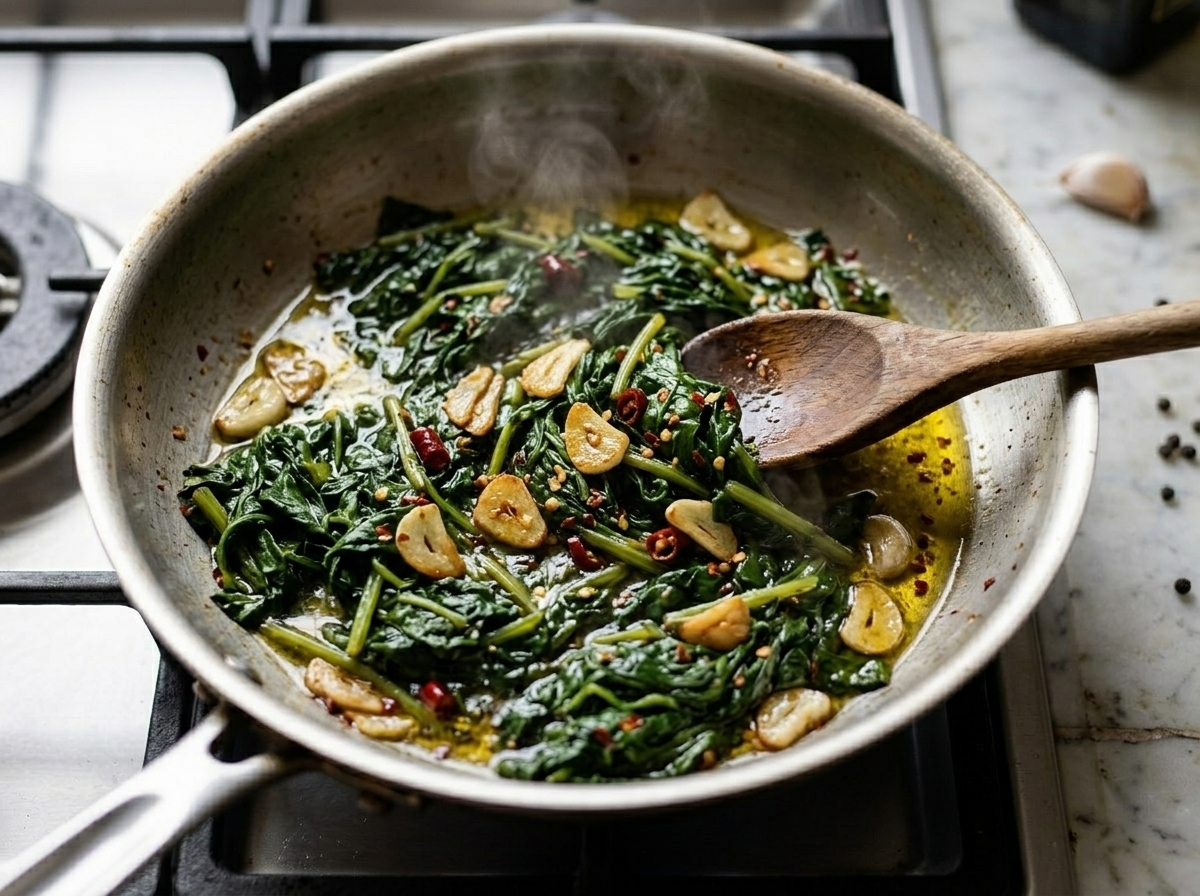
- Put the sliced garlic and olive oil into a cold, wide skillet. Set the pan over medium heat and let the garlic warm slowly in the oil until it turns pale gold and fragrant, about 2 to 3 minutes. Watch it - pale gold is the target, not brown.
- Add the chili flakes to the pan and stir for 30 seconds until fragrant.
- Raise the heat to medium-high. Add the squeezed chicory and toss well to coat every piece in the garlicky oil. Spread the greens out in the pan and cook, stirring occasionally, for 5 to 7 minutes until the edges pick up a little color and any remaining water has evaporated.
- Taste and season with salt. Squeeze over a little lemon juice if you'd like to brighten the flavor. Serve immediately.
Notes
Tips for Success
- Salt the blanching water as you would pasta water – it seasons the greens from the inside out.
- Squeeze blanched chicory firmly with your hands to remove excess water before it hits the pan.
- Slide garlic slices into cold oil, then heat together so garlic infuses slowly without scorching.
- Keep the heat at medium-high once the chicory goes in – you want a little color on the leaves, not steaming.
- Taste for salt only after sautéing; the reduction of water concentrates any salt already in the greens.
Variations
- Add 4 anchovy fillets to the olive oil with the garlic for a more savory, umami-forward version.
- Toss sautéed chicory through cooked orecchiette with a ladleful of pasta water for a quick weeknight primo.
- Top with a fried egg and a drizzle of good olive oil to turn this side into a light lunch.
Storage and Reheating
Store cooled chicory in a sealed container in the fridge for up to 3 days. The texture softens slightly but the flavor actually deepens overnight.
Reheat in a skillet over medium heat with a small splash of water and a drizzle of olive oil, stirring for 2 to 3 minutes until hot. Avoid the microwave if you can – it turns the greens watery.
This dish does not freeze well. The cell structure of leafy greens collapses on freezing, leaving a soggy result.
Serving Suggestions
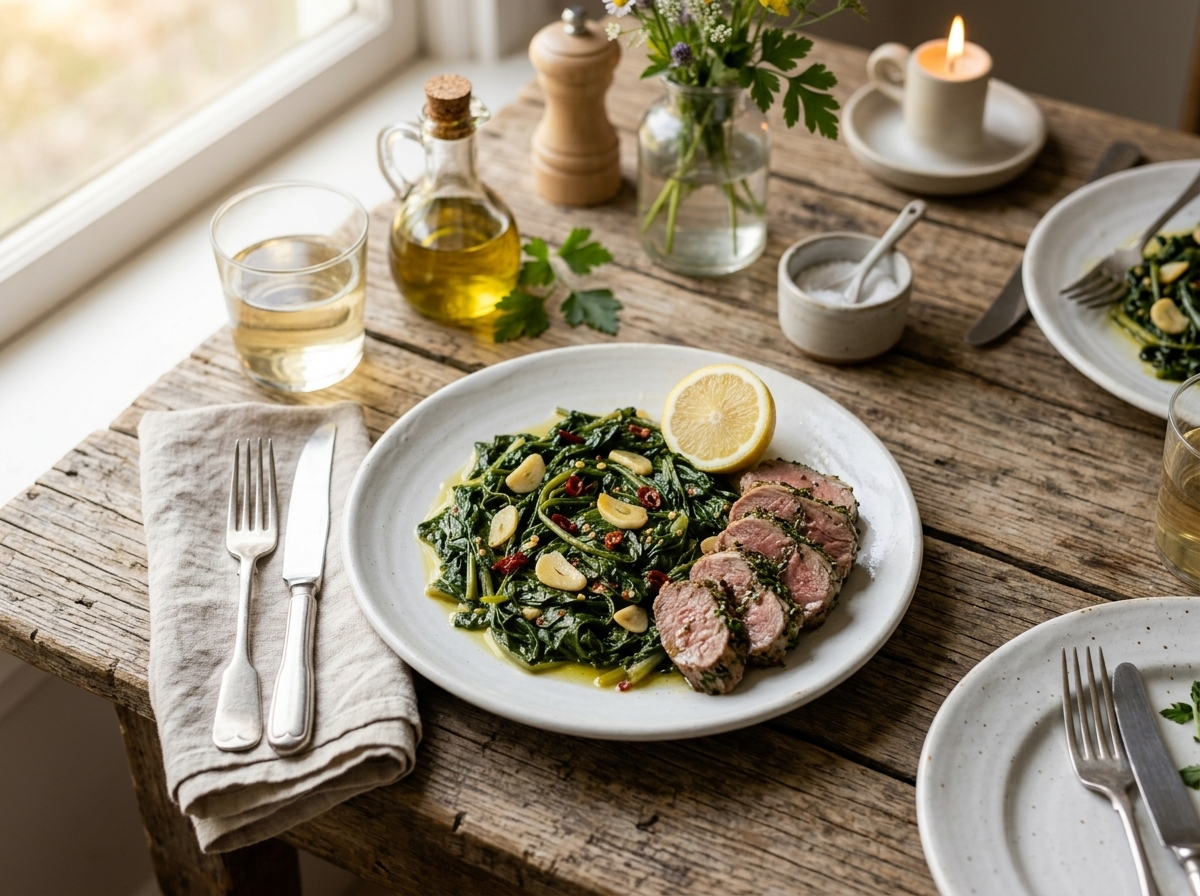
In Rome this goes alongside abbacchio al forno (roast lamb) or saltimbocca, where the bitterness of the greens cuts through the richness of the meat. It’s also the natural partner for grilled sausages or cotechino.
For a lighter meal, pile the sautéed chicory onto thick toasted sourdough, rub the bread first with a raw garlic clove, and finish with flaky salt and a thread of olive oil. That’s dinner sorted.
It also works cold, dressed with a little extra lemon juice and served as part of an antipasto spread alongside white beans, stuffed fried olives, and cured meats.
FAQ
Why is my sautéed chicory still bitter after cooking?
Chicory holds onto bitterness if the blanching step is too short. Make sure you boil the greens for at least 3 to 4 minutes, then squeeze out as much water as possible before the second pan step. Longer blanching removes more of the bitter compounds without killing the flavor entirely.
Can I use radicchio instead of curly chicory in this Roman recipe?
You can, but radicchio is significantly more bitter and loses its color in the pan, turning brownish rather than staying green. It works in a pinch – blanch it for just 2 minutes since it’s more delicate than catalogna or curly chicory.
Can I blanch the chicory the day before and sauté it just before serving?
Yes, and it’s one of the best things about this dish. Blanch, squeeze dry, and refrigerate the chicory in a covered bowl for up to 24 hours. The final sauté takes only 5 minutes from cold, so it fits easily into a dinner party prep schedule.
What meat or protein goes well with Roman sautéed chicory?
Roast lamb is the most traditional Roman pairing, especially at Easter. Grilled pork sausages, pan-fried seafood like crispy calamari, or a simple fried egg all work well with the garlic and chili notes in this dish.
Is Roman sautéed chicory gluten-free?
Yes, the dish is naturally gluten-free as written. There is no flour, pasta, or any gluten-containing ingredient in the base recipe – just greens, oil, garlic, and chili.
What is the difference between Roman ripassata and just plain boiled chicory?
Boiled chicory is one-dimensional – soft, bitter, and wet. Ripassata means ‘passed again,’ so the blanched greens go back into a hot pan with garlic and chili, adding fat, fragrance, and a little color. The two-step process is what gives the dish its depth.