
Jump to Recipe
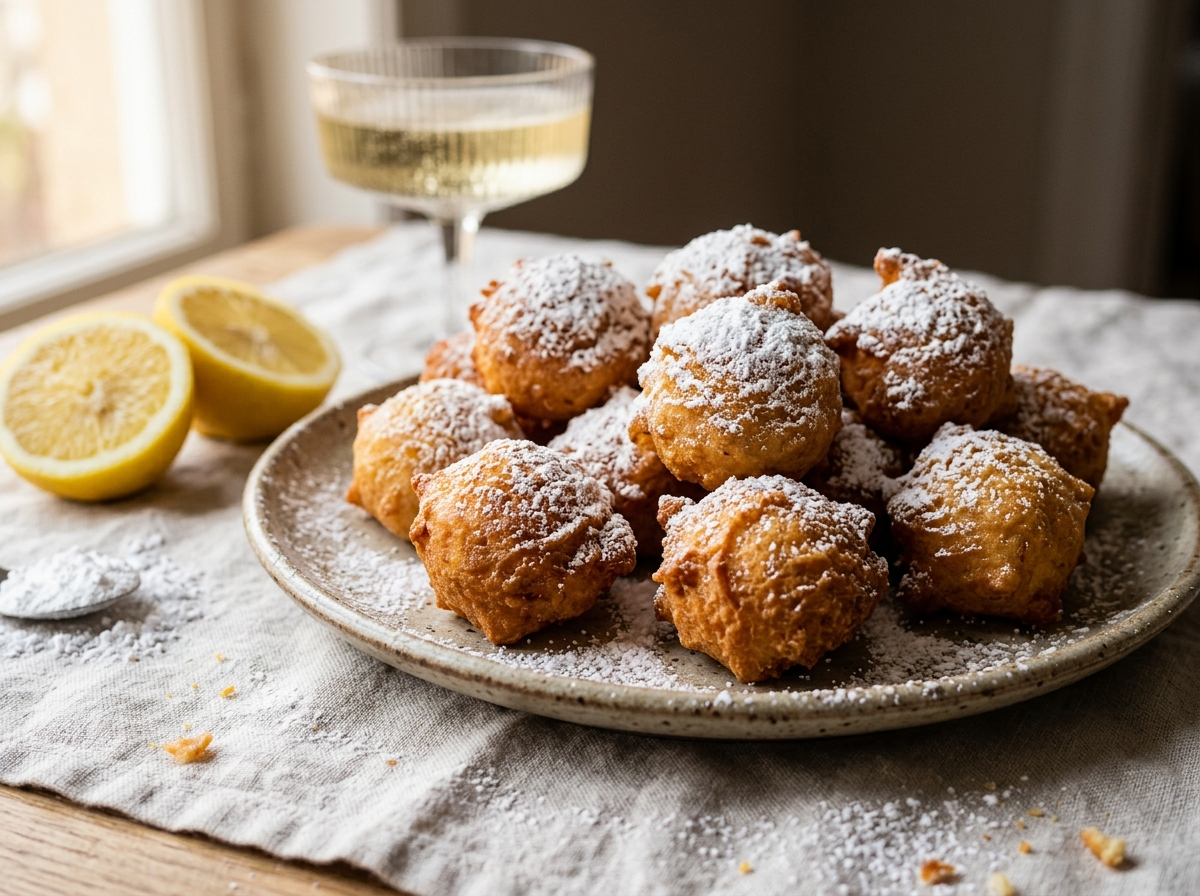
Castagnole are small fried dough balls eaten across Italy during Carnevale, the festive period before Lent. The name comes from castagna, the Italian word for chestnut, because the finished fritters are roughly chestnut-sized and turn a similar deep amber color.
This version uses ricotta in the dough, which is common in central and southern Italian households. The ricotta adds moisture without making the dough heavy, so the inside stays soft while the outside crisps properly in the oil.
A little lemon zest and a splash of grappa or rum cut the richness and give the fritters a clean, bright note. If you skip the alcohol, vanilla extract works fine.
The dough comes together in one bowl and needs no special equipment. Frying takes about ten minutes once the oil is hot.
Why You’ll Love This Recipe
- Ready in under 40 minutes, including fry time.
- Ricotta dough stays pillowy inside after frying.
- One bowl, no mixer, minimal cleanup needed.
- Classic Italian Carnevale flavor with bright lemon and grappa.
Ingredient Notes
- Ricotta: Use whole-milk ricotta for the best texture. If your ricotta is very wet, drain it in a fine-mesh sieve for 30 minutes first or the dough will be too loose to shape.
- All-purpose flour: Standard 00 flour also works and gives a slightly more delicate crumb. Add flour one tablespoon at a time if the dough is still sticky after mixing.
- Grappa or rum: Either spirit adds a subtle warmth and helps the fritters stay crisp as they cool. Substitute with 1 tsp vanilla extract if you prefer a non-alcoholic version.
- Lemon zest: Use unwaxed lemons and zest only the yellow part. Orange zest works as a swap and gives a slightly sweeter, rounder flavor.
- Baking powder: This is the leavener that makes castagnole puff. Make sure it’s fresh, a stale tin will give you flat, dense fritters.
- Neutral frying oil: Sunflower or vegetable oil both work. Avoid olive oil here, its low smoke point makes temperature control harder.
Castagnole: Italian Carnival Fritters with Ricotta and Lemon
Ingredients
Method
- In a large mixing bowl, combine the ricotta, eggs, granulated sugar, lemon zest, and grappa. Mix with a wooden spoon until smooth and uniform.
- Add the flour, baking powder, and salt. Stir until a soft, slightly sticky dough forms. If it clings to your hands in large wet clumps, add flour one tablespoon at a time until it just holds its shape.
- Cover the bowl with a plate or plastic wrap and rest the dough at room temperature for 15 minutes.
- Pour the oil into a deep, heavy-bottomed saucepan to a depth of at least 8 cm / 3 inches. Heat over medium heat until the oil reaches 170-175 C / 340-345 F. Check with an instant-read thermometer.
- With lightly oiled hands, pinch off pieces of dough and roll them into smooth balls roughly 3 cm / 1.2 inches in diameter. You should get about 30 to 35 balls total.
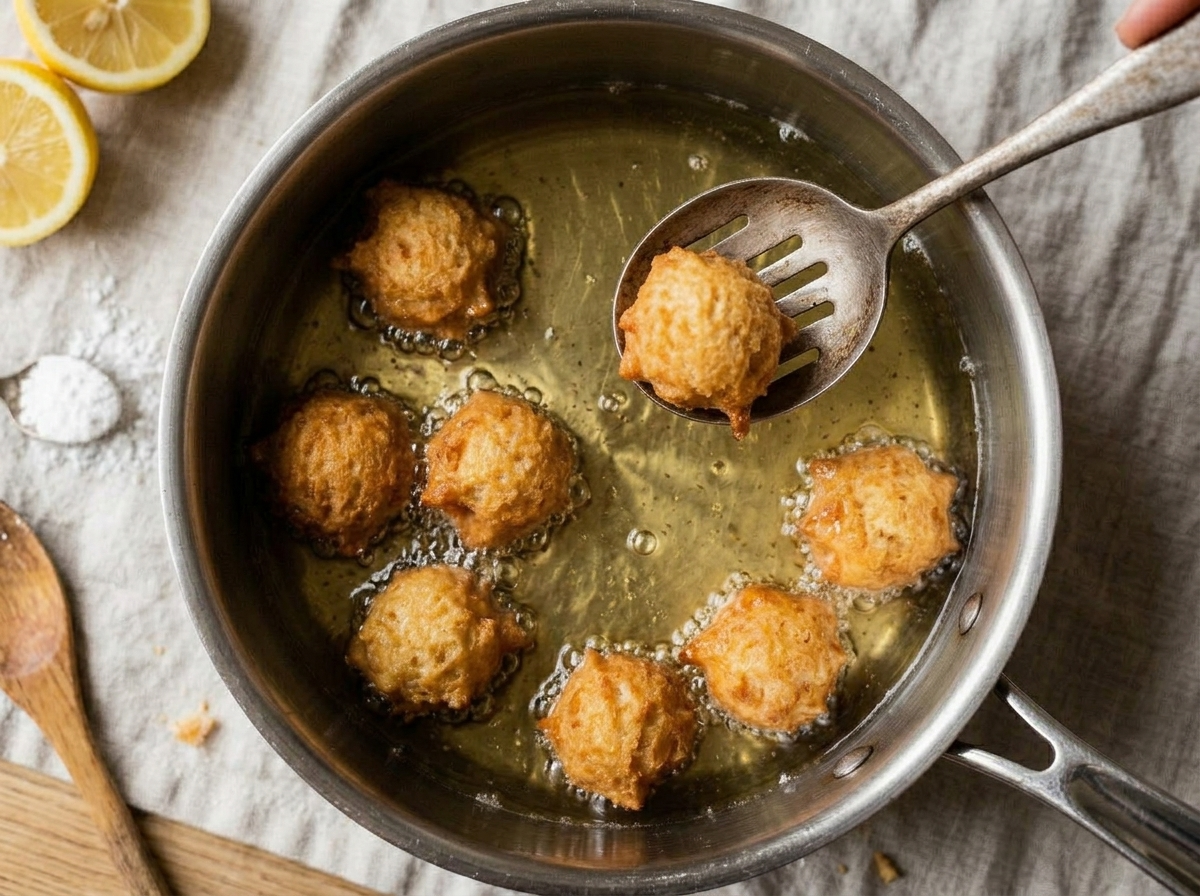
- Gently lower 6 to 8 balls into the hot oil using a slotted spoon. Fry for 3 to 4 minutes, turning occasionally, until deep golden brown on all sides.
- Lift the castagnole out with a slotted spoon and drain on a plate lined with paper towels. Check the oil temperature and return it to 170-175 C before frying the next batch.
- Repeat until all the dough is fried. Dust generously with powdered sugar just before serving.
Notes
Tips for Success
- Rest the dough for 15 minutes before shaping so the baking powder activates and the dough firms up slightly.
- Keep oil at 170-175 C / 340-345 F throughout; use a thermometer, not guesswork.
- Fry in small batches of 6 to 8 pieces so the oil temperature doesn’t drop and the fritters stay crisp.
- Roll each ball with lightly oiled hands, not floured ones, to prevent a raw flour crust forming on the outside.
- Dust with powdered sugar right before serving, not straight from the oil, or the sugar melts into a paste.
Variations
- Fill each castagnola with a small cube of dark chocolate before sealing the dough for a molten center.
- Add 1 tsp ground cinnamon and a pinch of nutmeg to the dough for a spiced, autumnal version.
- Roll finished fritters in cinnamon sugar instead of powdered sugar for a crunchier, caramelized coating.
Storage and Reheating
Castagnole are at their best within 2 hours of frying. The crust softens as they sit, which is normal, but after a day the texture changes noticeably.
Store leftovers in an uncovered bowl at room temperature for up to 24 hours. Covering them traps steam and makes the outside soggy faster. Don’t refrigerate them.
To refresh day-old castagnole, spread them on a baking sheet and warm in a 160 C / 320 F oven for 5 minutes. They won’t be as crisp as fresh, but they’ll be warm and soft all the way through.
Serving Suggestions
The standard Italian way is a pile of castagnole on a plate, dusted generously with powdered sugar, served with a small glass of prosecco or a sweet Moscato d’Asti on the side.
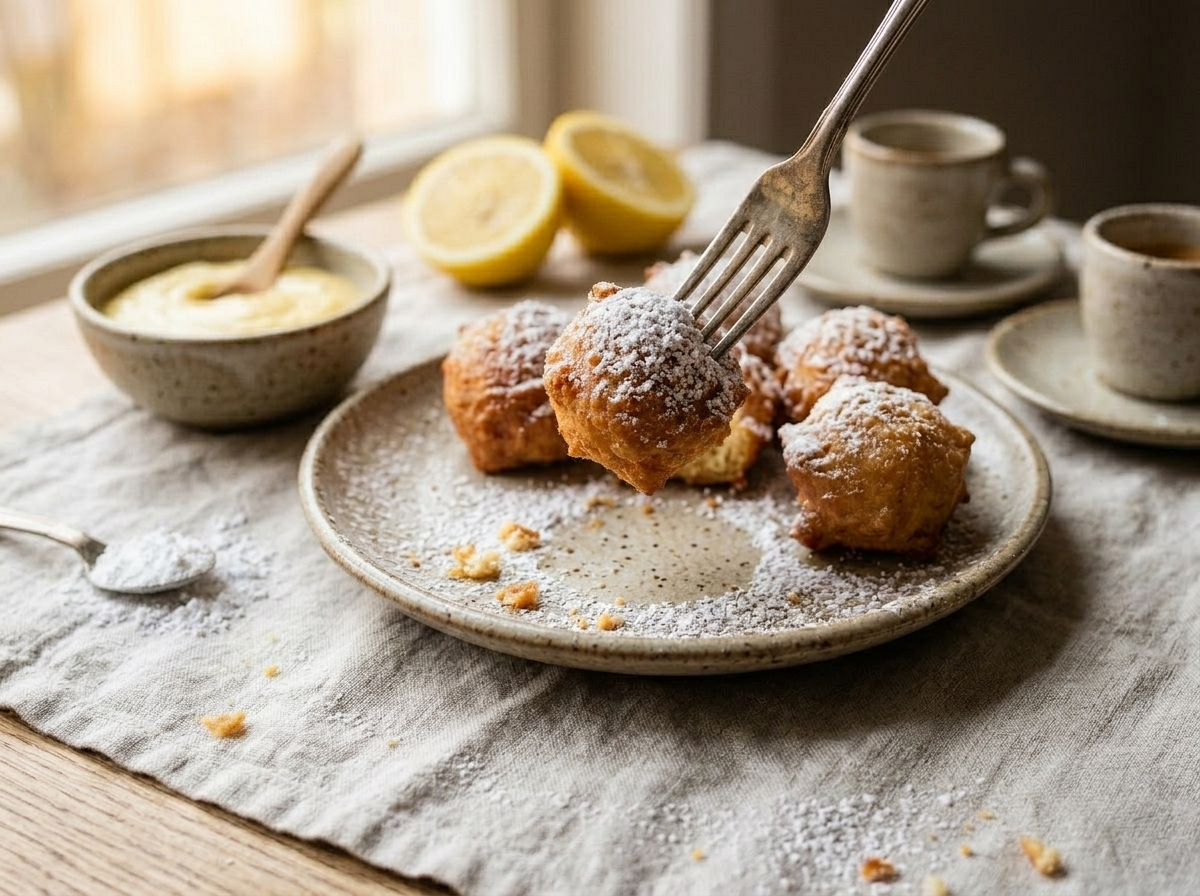
For a dessert spread, arrange them alongside other Carnevale sweets like chiacchiere or frappe. A small bowl of pastry cream for dipping is a popular addition in Emilia-Romagna.
For breakfast or merenda, Italians eat leftover castagnole plain with a short espresso. They’re sweet enough on their own.
FAQ
Why are my castagnole not puffing up in the oil?
The most common cause is oil that’s too hot, which sets the outside before the inside has time to expand. Check that your oil sits at 170-175 C / 340-345 F and that your baking powder is fresh.
Can I use cream cheese instead of ricotta in castagnole dough?
You can, but the result will be denser and slightly tangier. Ricotta has a lighter, grainier texture that gives castagnole their characteristic airy interior, much like the role it plays in an apple ricotta cake, so it’s worth sourcing if you can.
Can I make the castagnole dough the night before and fry in the morning?
It’s not ideal. The baking powder loses strength overnight in the fridge, so the fritters won’t puff as well. Mix and rest the dough 15-30 minutes before frying for the best results.
What’s the difference between castagnole and bomboloni?
Bomboloni are yeasted doughnuts that need proofing time and are often filled with cream or jam. Castagnole use baking powder instead of yeast, come together in minutes, and are smaller and denser with a chewier bite.
Are castagnole gluten-free?
Traditional castagnole are made with wheat flour and contain gluten. You can try a 1-to-1 gluten-free flour blend, but the texture and structure of the dough will vary depending on the blend you use.
What pairs well with castagnole besides powdered sugar?
A silky pastry cream for dipping is popular in northern Italy. A drizzle of honey or a dusting of cinnamon sugar also works well, and a glass of sweet sparkling wine like Moscato d’Asti complements the citrus notes in the dough.