Jump to Recipe
Have you ever wondered why a thin, golden chickpea flatbread can feel like the best kind of street food? This simple question points to what makes this dish special: humble ingredients turned into something crisp, tender, and utterly satisfying.
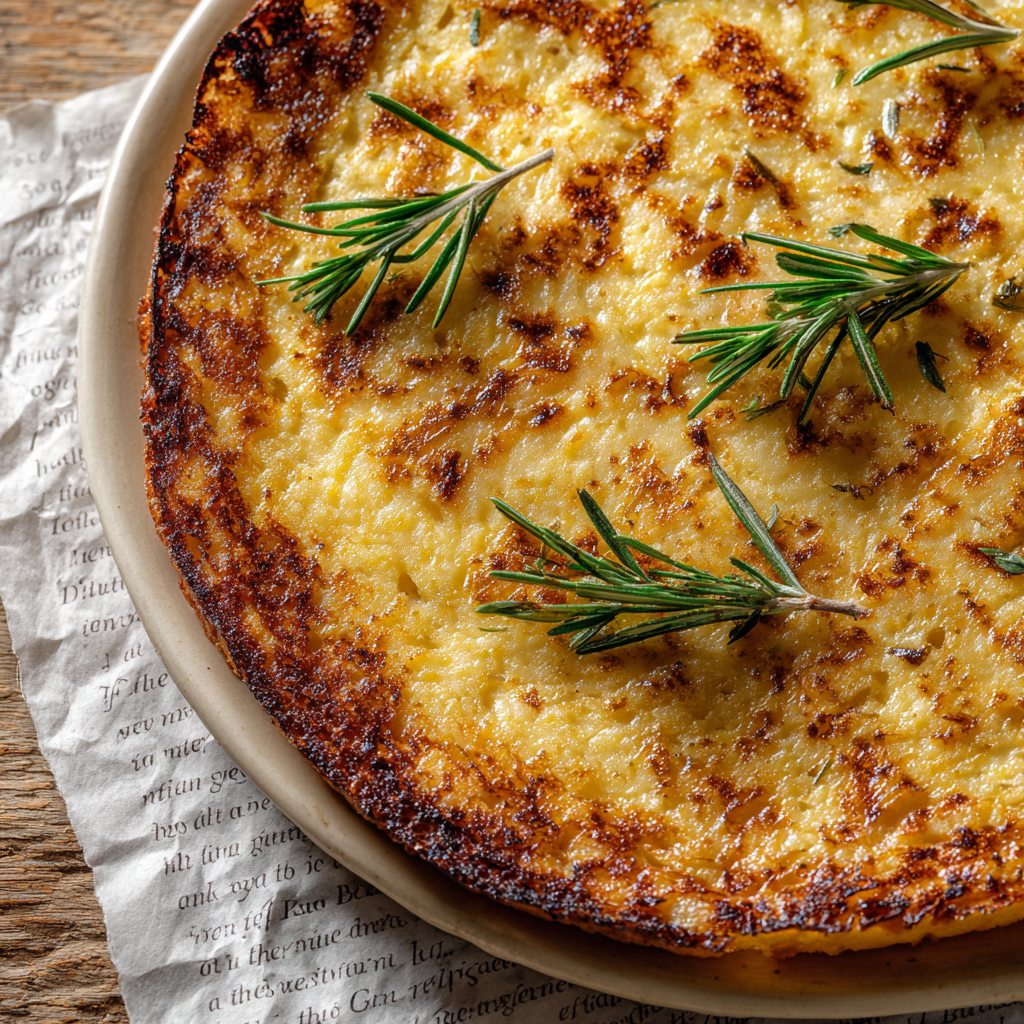
Think of the classic ligurian farinata as a savory pancake made from chickpea flour, water, olive oil, and salt. In Genoa it bakes in wide, shallow pans until the center stays soft and the edges lace and char. At home you should expect a tender middle, crisp edges, and a warm, nutty aroma.
I’ll name the four core ingredients and show how technique matters more than extras: rest the batter, heat the pan very hot, keep the mix thin, and finish briefly under the broiler. You don’t need a copper pan or wood oven to get great results in a U.S. kitchen.
Serve hot, cut into wedges or squares. It’s naturally gluten-free and vegan when made traditionally, and it reheats well if you heat it gently to bring back crispness.
Key Takeaways
- Four core ingredients: chickpea flour, water, olive oil, salt.
- Success = thin batter, long rest, very hot pan, quick broiler finish.
- Expect a tender center, crisp edges, and golden top.
- Adaptable to a regular oven and cast-iron pan at home.
- Best served hot; naturally gluten-free and vegan by tradition.
Farinata di ceci, explained like you’re standing at a focacceria in Genoa
In Genoa a hot round of batter disappears fast; people eat it standing, folded or cut into wedges. The snack is soft in the middle with a delicate, lacy crust where oil kissed a blazing pan.
What it tastes like and why the crust forms
The taste is mild and nutty — a gentle vegetal note from chickpea flour with a savory finish. The center feels custardy, while the edges brown and crisp into that signature lace.
Chickpea batter browns differently than wheat. When rested and poured into a very hot, oiled pan, the proteins and starches set into a thin, cohesive layer and caramelize on the top.
Names you’ll hear on your travels
Locals call it farinata or torta di ceci in parts of Italy. Cross the border to Nice and the same thing is known as socca. It resembles a pancake in shape but eats more like a thin flatbread.
Quick origin and why it stuck
Legends link the dish to Roman times or a 13th‑century Genoese navy tale, yet the real reason it endured is practical: cheap ingredients, fast baking, and portable satisfaction.
- Similar cousin: panelle (usually fried).
- Best eaten hot, with a grind of black pepper.
Ingredients and gear that make a real ligurian farinata di ceci recipe work in a US kitchen
A few modest ingredients and the right pan are all you need for a thin, golden chickpea bake.
What each core ingredient does
Chickpea flour supplies structure, color, and that nutty taste. Use fresh flour—older bags can taste flat.
Water hydrates and keeps the batter thin. Thin batter bakes tender, not cakey.
Salt sharpens the flavor. Olive oil makes crisp edges and aids browning; it also seasons the pan.
Pan choices that actually behave well
Pick a wide, shallow pan so the batter stays thin. A well‑seasoned cast iron skillet gives strong heat retention.
A dark metal pizza pan matches the classic round, while a rimmed sheet pan fits larger batches. A pizza stone or steel helps bottom heat.
| Pan | Why it works | Best use |
|---|---|---|
| Cast iron skillet | Holds and distributes heat evenly | Small batches; crisp edges |
| Dark pizza pan | Wide, shallow shape for thin bake | Classic round shape; easy sliding |
| Rimmed sheet pan | Makes larger portions; quick browning | Batch cooking for a crowd |
Keep add-ins restrained
Rosemary, a scatter of black pepper, or thinly sliced onions work well if used lightly. These highlight the chickpea flavor instead of masking it.
A little cheese added after baking is a modern option, not a must. Remember: this is an appetizer-style bake—simple technique matters more than many toppings.
How to make farinata with a crisp top and tender center
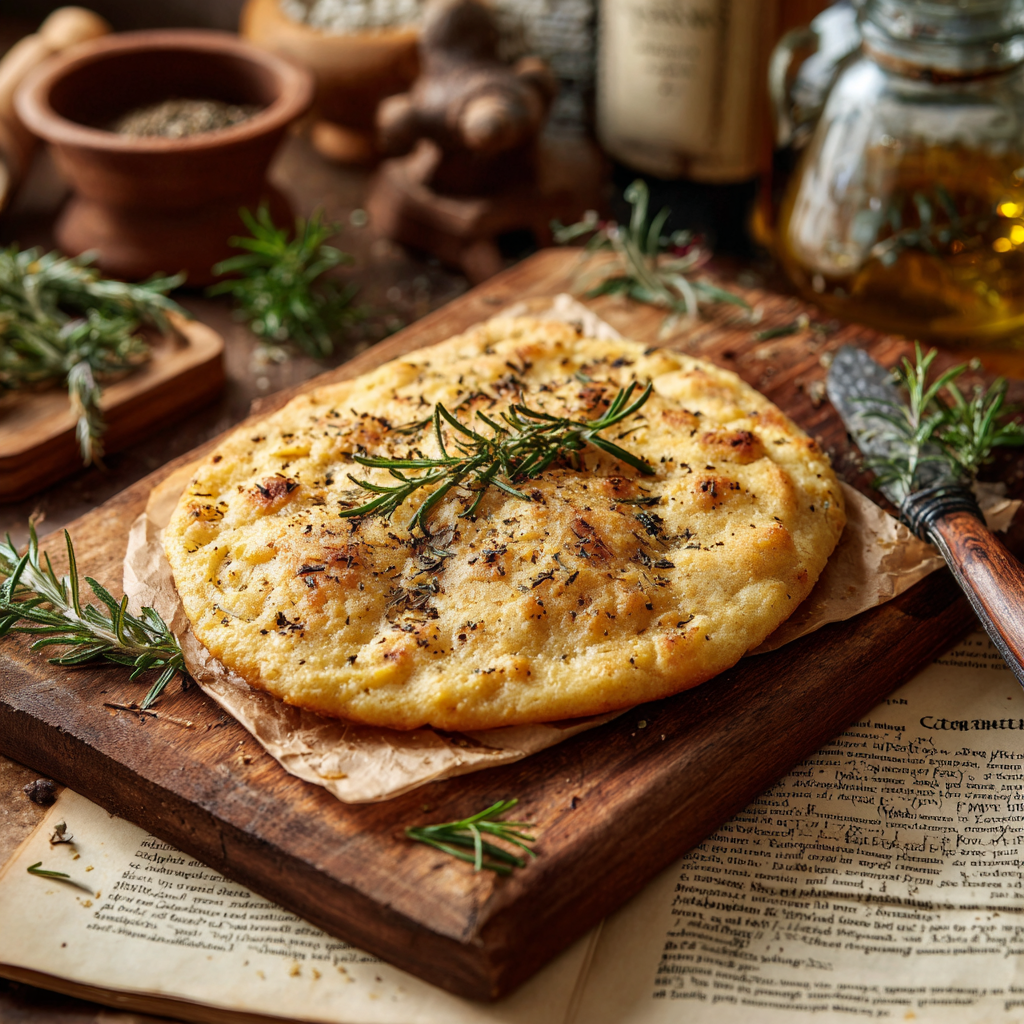
Get the batter right and the rest follows — this is the step that makes the top crisp and the center tender.
.
Whisk, rest, and why it matters
Start in a bowl with chickpea flour and salt. Stream in water while whisking until the mix looks like a thin crepe batter. Let the batter sit at room temperature for at least one hour.
One hour wakes the flour. Several hours or overnight deepens flavor and smooths texture. Longer rests may form foam and a settled sediment; skim foam and whisk the solids back in before baking.
Heat, pour, and bake safely
Preheat the oven very hot and heat your pan until it shimmers. Add a generous splash of olive oil so the edges fry the moment the batter hits the metal.
Carefully remove the hot pan, then slowly pour batter to keep the layer thin. Bake on the upper rack about 10–20 minutes depending on your oven—watch for a set center, browned edges, and a golden top.
Final finish
Use the broiler only briefly to get charred spots on top. Stand close and stop as soon as you see mottled browning so the bottom does not dry out. Let cool a couple minutes, slice, and serve hot.
Serving ideas, smart make-ahead tips, and the best way to enjoy it while it’s hot
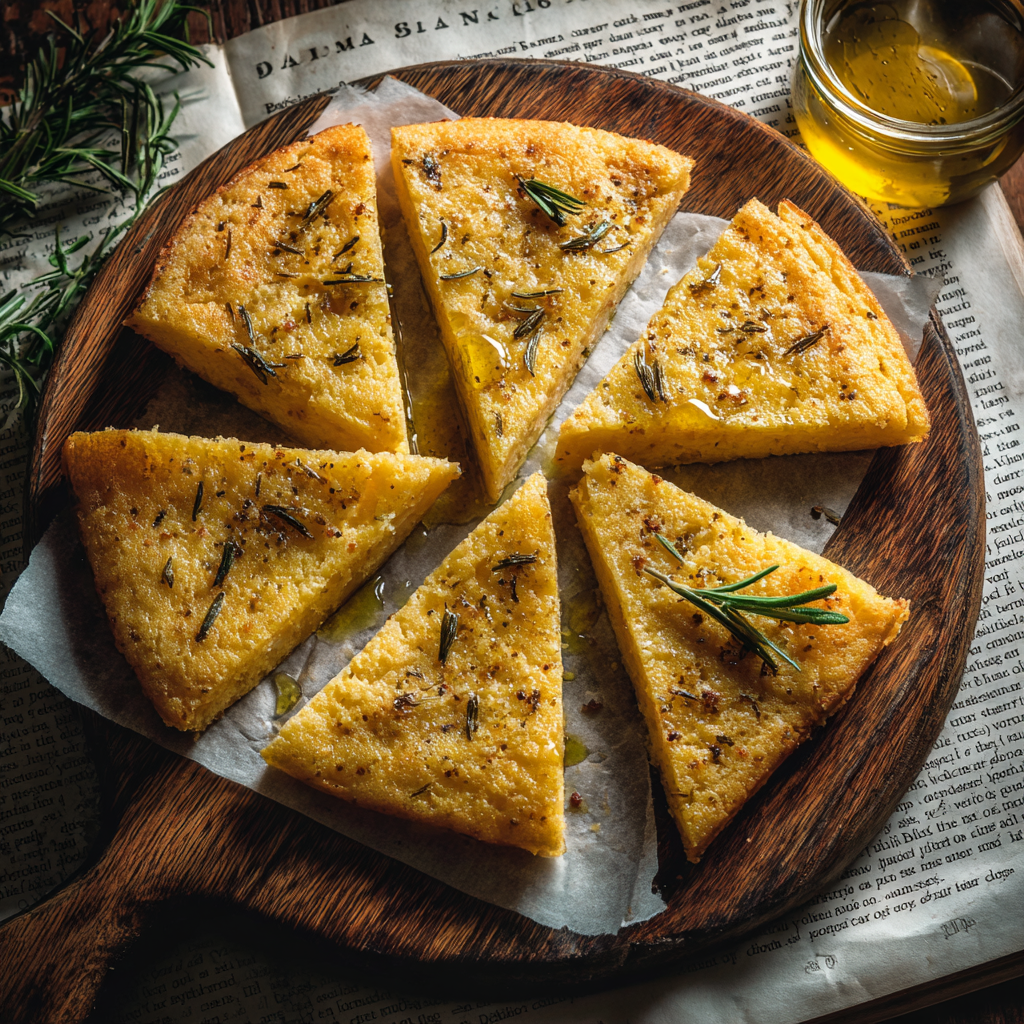
Serve this thin chickpea flatbread hot to enjoy its crisp edge and tender center. Slice into wedges for a round pan, squares for a sheet pan, or small bites if you use it as an appetizer with drinks.
Pair it simply: minestrone, roast chicken, a mussel stew, or grilled sausages with peppers and onions all work well. Treat it also as a gluten-free pizza base—top after baking and return to the oven very briefly so the surface stays crisp.
Make batter earlier in the day or the night before. Cover and refrigerate, then bring toward room temperature and whisk before baking. Leftovers soften; re-crisp in a hot skillet, oven, or air fryer for a few minutes rather than microwaving.
Keep finishes small: a grind of pepper, flaky salt, or a little cheese after baking. Simple ingredients, patient rest, and high heat are what make this recipe repeatable at home.
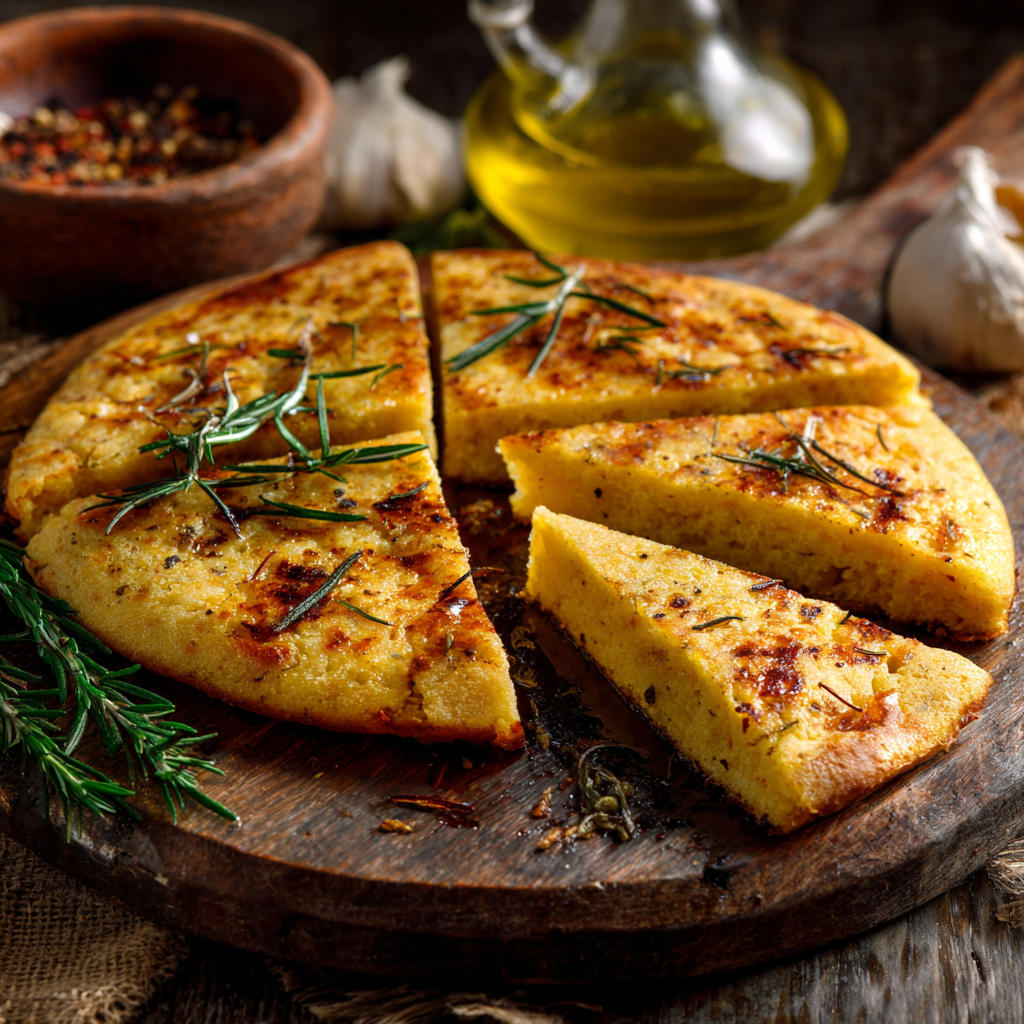
Farinata di Ceci (Chickpea Flatbread)
Ingredients
Method
- In a bowl, whisk together the chickpea flour and salt.
- Slowly add the water while whisking to avoid lumps. The batter should resemble a thin crepe batter.
- Let the batter rest for at least 1 hour at room temperature. For best results, let it rest longer (up to overnight) to improve the flavor.
- Preheat your oven to 475–500°F (245–260°C).
- Preheat your pan (preferably a well-seasoned cast-iron skillet or dark pizza pan) in the oven until it shimmers with heat.
- Add a generous splash of olive oil to the hot pan so the edges fry when the batter hits it.
- Carefully remove the pan from the oven, and pour the rested batter into the hot pan, keeping it thin and even.
- Place the pan back in the oven on the upper rack and bake for 10–20 minutes, depending on your oven. Look for a set center, browned edges, and a golden top.
- Briefly finish the farinata under the broiler for a minute to achieve a charred top. Watch closely to avoid drying out the bottom.
- Let the farinata cool for a couple of minutes before slicing it into wedges or squares.
- Serve hot, optionally topped with fresh rosemary, black pepper, or a little cheese. Enjoy it as a snack or with a simple meal.
Notes
- Farinata is best served hot to maintain its crispy edges and tender center.
- You can make the batter ahead of time and refrigerate it overnight for better flavor.
- If reheating leftovers, avoid microwaving; instead, use a hot skillet, oven, or air fryer to restore the crispness.