
Jump to Recipe
Can a home oven really capture the soul of a wood-fired roast and give you that crackling, herb-scented bite at the table?
I’ve built a practical method that chases the Umbrian idea of porchetta — garlic, fennel, rosemary, juicy meat, and crisp skin — without a whole animal or a spit. This approach focuses on flavor logic: a lean center, rendered fat, and skin that pops when roasted well.
We start by turning an accessible cut into a porchetta-style roast, then slice it properly for serving. Expect measured techniques: cut selection, scoring, a balanced rub, and a roasting schedule set for a standard U.S. oven using Fahrenheit temps.
Plan ahead: let the skin dry and the seasoning work for a day or two so results are repeatable. I write with confidence and care so you can get reliable results in a home kitchen and enjoy honest Italian food at your table.
Key Takeaways
- How to choose the right cut and butcher language for success.
- Scoring and rub tips that build real porchetta flavor.
- A roasting timeline for crisp skin and juicy meat.
- Slicing strategy to preserve texture and serve easily.
- Simple assembly notes to bring Italian flavors to everyday meals.
What makes an Umbrian porchetta sandwich worth chasing
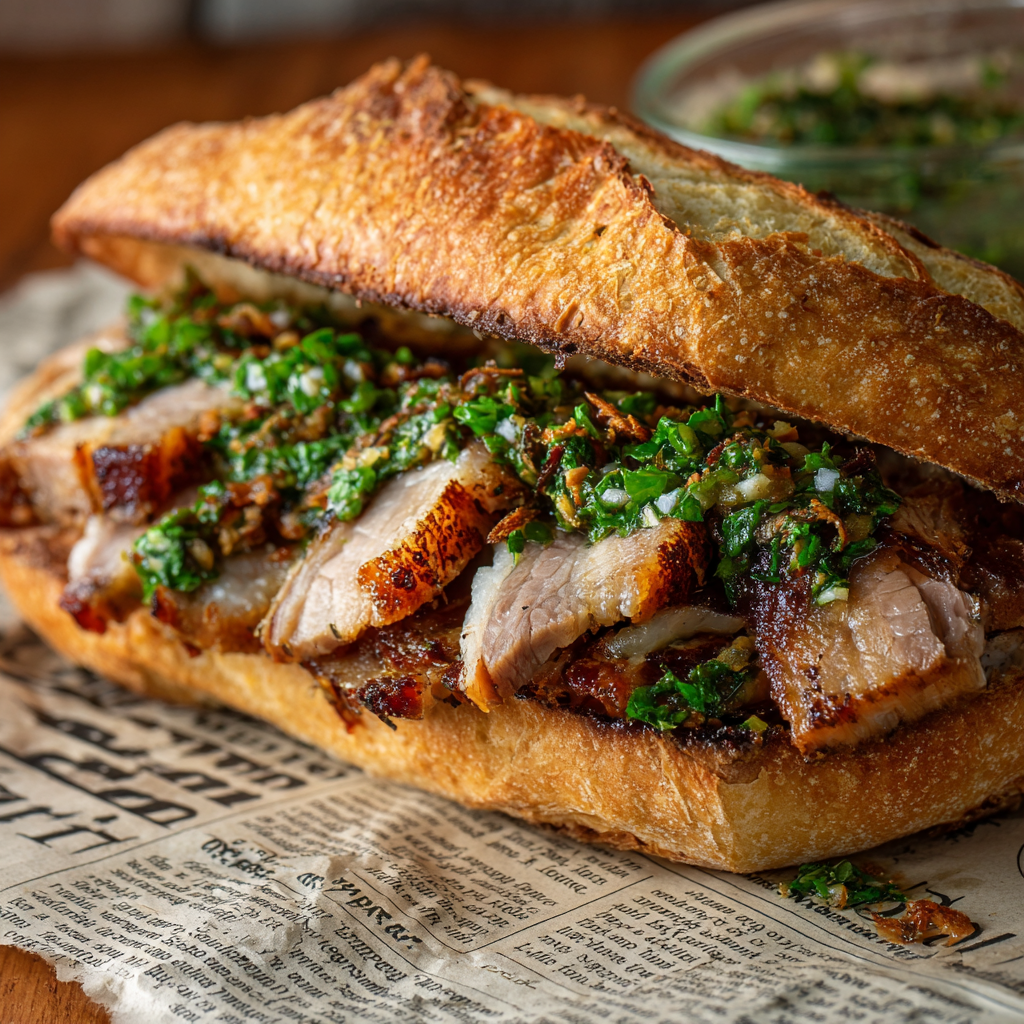
Street vendors in central Italy turn roast pork into an everyday meal that still feels like craft. At market stalls a porchetta becomes a handheld lesson in balance: bold aromatics, tender meat, and a top layer that snaps when you bite it.
The market craft behind the bite
Porchettai sell from vans and stalls, so the roast is built to be sliced thin and eaten on the go. It’s common food, but the preparation is treated seriously. Hog-raising and cured-meat traditions mean the technique is refined and consistent.
The flavors and textures to prioritize
Non-negotiable flavors are fennel, garlic, rosemary, black pepper, and enough salt through the interior. Aim for a tender, juicy center with a thin band of fat and shatterable crackling on top.
- Home-cook moves: score and dry the skin so it crisps.
- Keep slices deli-style for easy eating and texture contrast.
- Taste notes: fennel should be aromatic; garlic rounded; rosemary piney, not bitter; the skin should crackle.
How to get porchetta-style texture at home without roasting a whole pig
You can build the same lean-center, crackling-top structure at home with two common cuts and a little planning. The core idea: pair a boneless pork loin with skin-on pork belly so the loin gives clean, tender slices and the belly provides fat and skin for true crackle.
Why this cut combo works better than a single roast
A standard grocery roast is often too lean and lacks skin. That yields tender meat but misses the shatterable layer that defines porchetta. Wrapping belly around loin recreates the traditional lean-and-rich profile in a size that fits a home oven.
What to ask for at the butcher
- Ask for skin-on pork belly with the skin intact and a boneless pork loin roast sized to nest when rolled.
- Aim for similar lengths; small bits of loin showing are fine if placed seam-side down.
- Bring a plan: say you’re making porchetta so they understand you need belly with skin and a matching loin.
Make-ahead and simple equipment notes
Leave the rolled piece uncovered in the fridge for 1–2 days to air-dry the skin and let salt penetrate. If you have only a day, it will still work—expect a slightly less dramatic crackle.
Use a wire rack over a sheet pan for airflow and even heat in a standard home oven. A bit of planning and the right cuts make the difference between a good roast and something that truly snaps.
For a longer how-to, see this practical guide to a classic roast: classic Italian roast pork.
Ingredients and prep notes for pork belly, fennel, garlic, and herbs
I keep the ingredient list tight so each element behaves predictably in the roast. Toast fennel seeds until fragrant, then sauté finely chopped fennel with olive oil, garlic, and rosemary about 4 minutes until softened. Finish the mix with chopped fennel fronds for a bright note.
Core ingredients you shouldn’t swap
These are the non-negotiables for authentic flavor: fennel seed, garlic, rosemary, black pepper, and enough kosher salt to season both belly and loin. Salt both cuts early; it seasons through and improves texture in finished slices.
Smart substitutions that keep the spirit
Fresh rosemary is best (about 1 tablespoon minced). If you only have dried, use 1 teaspoon and expect a slightly different aroma. If you lack a fennel bulb, increase toasted fennel seeds for that anise note. Minced garlic sweetens during the long roast; sautéing it with fennel tames raw bite.
How salt, pepper, and oil drive flavor
Olive oil carries fat-soluble flavor, helps the rub spread, and aids browning without greasing the meat. Use a modest cup measure for larger batches of rub or tablespoons as needed for smaller roasts. Keep aromatics finely chopped so the roll ties tightly and slices cleanly.
| Ingredient | Function | Substitution |
|---|---|---|
| Fennel seed | Signature aroma; toast before use | Extra toasted seeds if no bulb |
| Garlic cloves | Sweetens with heat; builds depth | Roasted garlic for milder flavor |
| Rosemary | Piney herb backbone | Dried rosemary (1 tsp = 1 tbsp fresh) |
| Olive oil | Binder, flavor carrier, promotes browning | Neutral oil in a pinch |
| Kosher salt & black pepper | Penetrates meat; balances sweetness and fat | Adjust salt by weight, not taste alone |
Roasting method for crispy skin and juicy slices
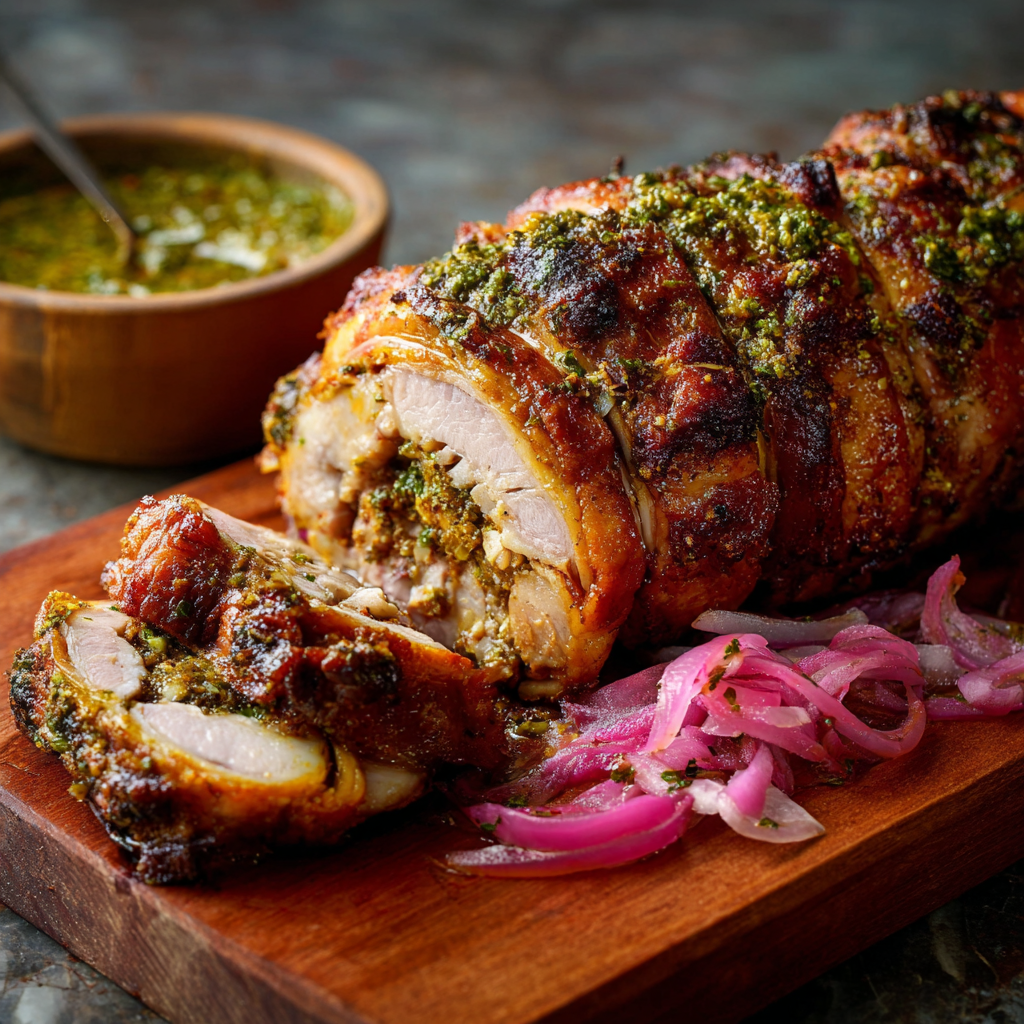
A clear roasting plan—scoring, seasoning, and timed heat—turns good pork into a dependable roast. Follow the steps below and work calmly through each stage so the skin crisps without overcooking the loin.
Scoring the skin
Score the belly skin in a diagonal diamond pattern. The cuts increase surface area so rendered fat can baste the skin and blister into crisp crackle.
Cut shallow: aim for the skin, not deep into meat. If a few cuts go deeper, it’s fine; consistency helps, but a steady hand matters more than perfection.
Toasting and building the rub
Toast fennel seeds until aromatic, then sauté with olive oil, chopped fennel, garlic, and rosemary about four minutes until soft. Finish with chopped fennel fronds and a pinch of salt and pepper.
Rolling and tying
Wrap the belly tight around the loin, align the ends, and tie at close intervals so the roll cooks evenly. A snug tie keeps the shape and helps slices hold together.
Oven timing and broiler finish
Start hot: roast at 500°F for 45 minutes to jump-start the skin. Reduce to 300°F and continue until the loin reaches 140°F—about 1.5–2 hours more depending on size.
Use the broiler only if you need extra color. Watch constantly and rotate the pan to avoid burning.
Resting and slicing
Rest the roast at least 20 minutes to let juices redistribute. Then cut 1/2-inch rounds for a roast-style plate or slice deli-thin for a classic handheld. Slicing too soon will cause loss of juices—wait and slice with a sharp knife.
| Stage | Temp/Time | Why it matters |
|---|---|---|
| Hot start | 500°F / 45 minutes | Promotes blistering of skin and initial browning |
| Slow roast | 300°F / 1.5–2 hours | Cooks the loin gently to 140°F without drying |
| Finish | Broil briefly as needed | Adds final color—watch to prevent burning |
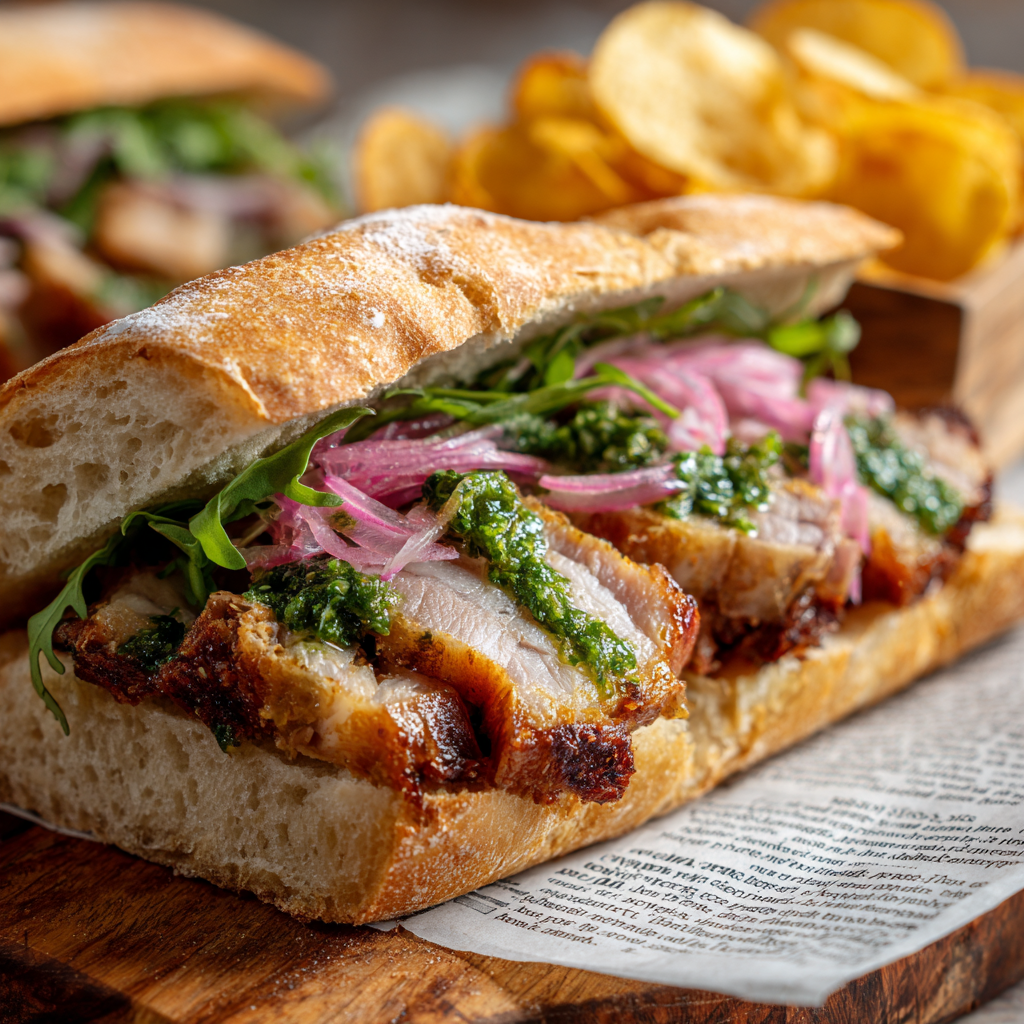
umbria porchetta sandwich recipe: building the sandwich like you’d order it in Italy
Think of this as an assembly guide: choose supporting bread, add a bright parsley-and-caper sauce, and finish with quick pickles and chopped crackling for texture.
Bread choices that work in the US
Pick a roll that lets the meat shine. Ciabatta offers a chewy crust and open crumb for juices. Sourdough gives structure and a touch of tang. A soft bun keeps the mouthfeel richer and more pillowy.
Italian salsa verde in minutes
Make the sauce by mixing finely chopped parsley, minced capers, one small garlic clove, lemon juice, and olive oil. Add an anchovy for umami if you like; it melts into the sauce without tasting fishy.
Quick pickled onions and greens
Thinly slice red onion and toss with red wine vinegar, a pinch of sugar, and salt. Rest for 40–60 minutes until the bite softens and the flavor brightens.
Use arugula for a peppery lift that keeps rich meat from feeling heavy.
Assembly tips and pairings
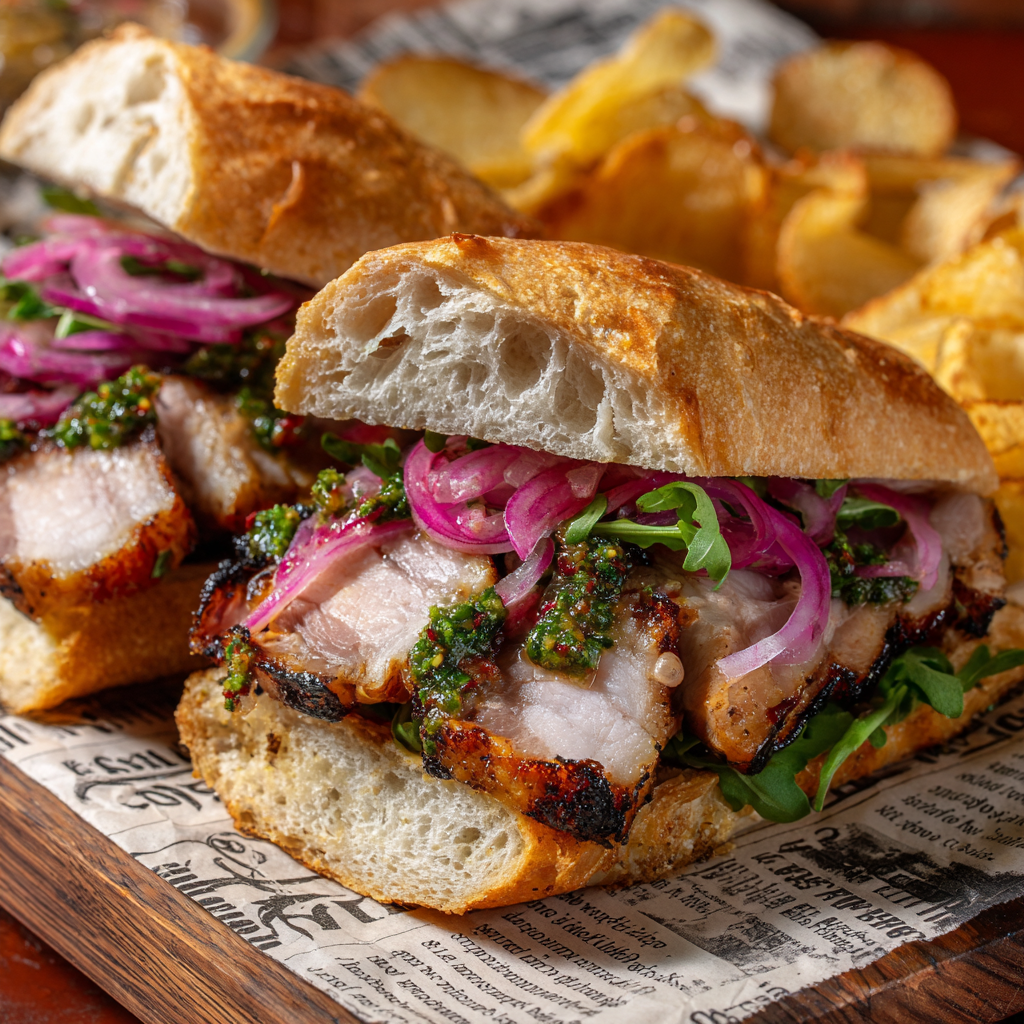
Layer for longevity: greens first, then thin slices or chopped meat, pickled onions, salsa verde, and a sprinkle of chopped crackling. Warm porchetta feels lush; cold slices are convenient and still excellent.
- Sides: kettle chips or herbed fries.
- Drinks: a crisp pale ale or San Pellegrino Clementina for a non-alcoholic lift.
Make-ahead, leftovers, and reheating so the porchetta stays special
Treat make-ahead like a relay: prep and tie the roast, dry the skin uncovered in the fridge for a day, then roast when you have the time. This schedule fits a busy day and rewards the extra hours of bench time.
Store cooled meat and skin together if possible, wrapped tight to keep moisture. Refrigerate within two hours. Expect the skin to soften after a day; that’s normal.
Reheat sliced meat gently in a low oven or covered pan so the loin stays juicy. Crisp the crackling separately under a watchful broiler for seconds. Don’t microwave thin slices—heat will toughen the lean and make the fat greasy.
Serve thin slices on bread, thicker cuts plated, or chopped for a rustic filling. A quick pinch of salt and a few drops of olive oil revive cold slices. Remember portion size—this pork is rich, so balance with greens and pickles rather than chasing any single vitamin claim.
Umbrian Porchetta Sandwich
Ingredients
Method
- Score the pork belly skin in a diamond pattern.
- Season both the pork belly and loin with kosher salt and black pepper.
- Toast fennel seeds until fragrant and sauté them with garlic, rosemary, and olive oil for about 4 minutes. Rub this mixture over the meat.
- Roll the pork belly tightly around the loin and tie it at 1-inch intervals to maintain shape.
- Place the rolled pork in the fridge uncovered for 1-2 days to air-dry the skin.
- Preheat the oven to 500°F (260°C).
- Roast the pork for 45 minutes at 500°F to blister the skin.
- Reduce the temperature to 300°F (150°C) and continue roasting for another 1.5-2 hours until the internal temperature reaches 140°F (60°C).
- Combine parsley, capers, garlic, lemon juice, and olive oil in a bowl. Add anchovy if desired. Set aside.
- Mix red wine vinegar, sugar, and salt with the thinly sliced red onion. Let it rest for 40-60 minutes.
- Let the roast rest for at least 20 minutes before slicing.
- Slice thinly for sandwiches or thicker for a plated serving.
- Slice bread of your choice and spread a bit of salsa verde.
- Add arugula, thin slices of porchetta, quick pickled onions, and chopped crackling (if desired).
- Serve the sandwich immediately for the best contrast of textures and flavors.
Notes
- For the best crackling, ensure the pork belly skin is well-dried and scored evenly.
- Resting the roast before slicing is crucial to keep the meat juicy.
- Leftovers can be refrigerated for up to 3 days. Reheat gently to preserve moisture and crisp the skin again.