
Jump to Recipe
Italy makes more styles of sparkling wine than most people realize, and the holiday season is exactly when that variety becomes useful. You’re not serving one dish, you’re feeding a table across four hours.
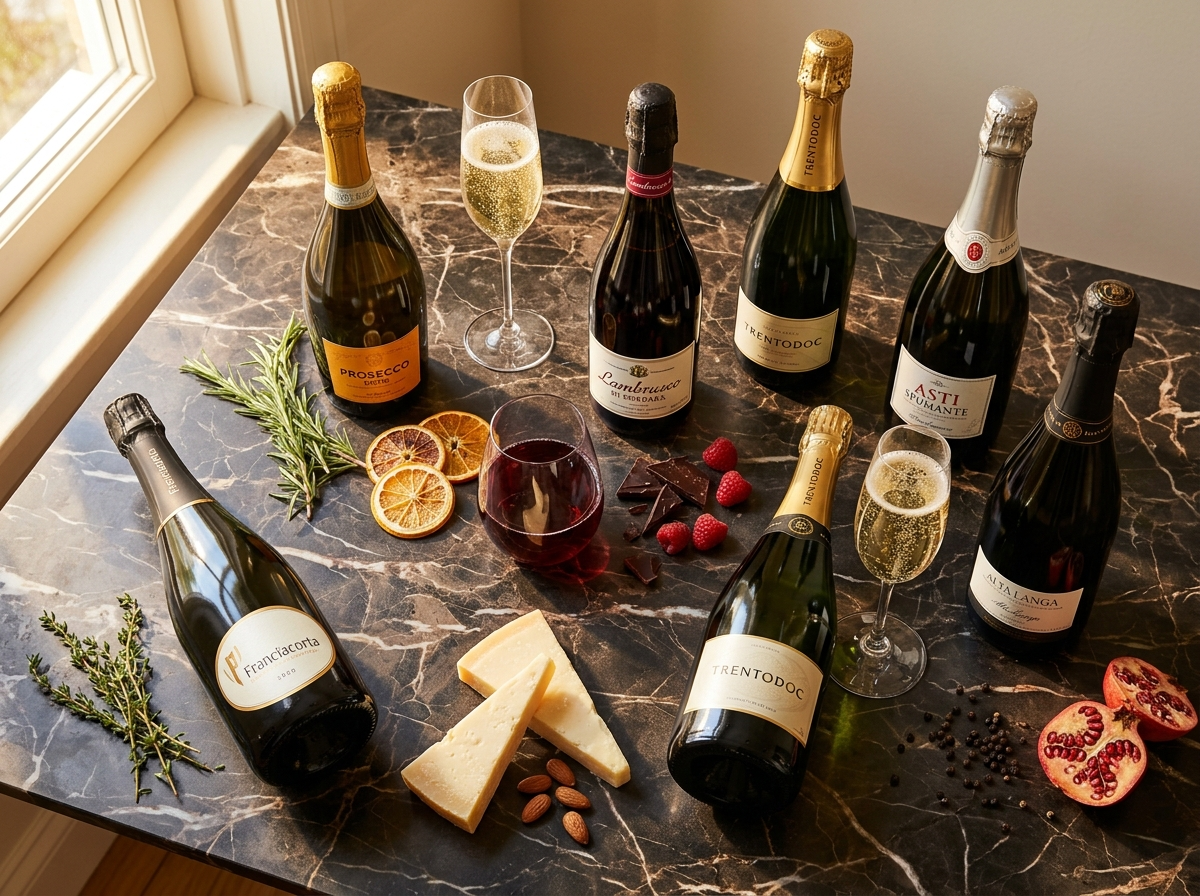
Franciacorta handles the aperitivo, Lambrusco rosso holds its own next to a stuffed roast, and a dry Prosecco Superiore cleans the palate between courses. Each one earns its spot at a different moment.
The guide below covers six wines by region, gives you a flavor shorthand, and tells you what to pour them with. Prices are US retail, early December as a benchmark.
None of these selections require a sommelier or a special-occasion budget. A few are genuinely inexpensive and still outperform generic Champagne alternatives at the same price.
Why You’ll Love This Recipe
- Covers six distinct styles, not just Prosecco
- Honest flavor descriptions, no wine-school jargon
- Budget picks alongside premium splurges included
- Pairing matched to actual holiday dishes you’ll cook
Ingredient Notes
- Franciacorta DOCG (Lombardy): Made by the traditional method, same as Champagne, so the bubbles are fine and persistent. Look for ‘Brut’ or ‘Satèn’ (the latter is creamier, lower pressure). Substitute: Trento DOC if Franciacorta is hard to find locally.
- Prosecco Superiore DOCG (Veneto / Friuli): Conegliano Valdobbiadene on the label means hillside fruit and better balance than generic Prosecco DOC. Brut or Extra Brut styles work best with food; Extra Dry is sweeter and better for pre-dinner only.
- Lambrusco di Sorbara DOC (Emilia-Romagna): The palest, driest Lambrusco style with genuine cherry-blossom aromatics. Far more elegant than the sweet red versions exported in the 1980s. Serve at 10-12 C / 50-54 F, not ice-cold.
- Lambrusco Grasparossa di Castelvetro DOC (Emilia-Romagna): Deeper color, more tannin, works next to cured meats and fatty roasts. The bubbles cut through cotechino or stuffed pork without disappearing. A ‘Secco’ label means dry.
- Trento DOC (Trentino-Alto Adige): Another traditional-method wine, often with more acidity and alpine freshness than Franciacorta. Ferrari and Maso Martis are reliable producers widely available in the US.
- Brachetto d’Acqui DOCG (Piedmont): A lightly sparkling sweet red with rose and raspberry notes. Matches panettone, pandoro, and any dessert involving dried fruit better than Asti Spumante does. Serve at 8 C / 46 F.
Italian Sparkling Wines for the Holidays: A Practical Guide with Pairings
Ingredients
Method
- Place all bottles in the refrigerator 12-24 hours before serving, not the freezer, so they chill evenly to 8-12 C / 46-54 F without losing carbonation.
- Fill a wine bucket with equal parts ice and cold water, not ice alone. Water conducts cold faster and keeps the bottle at serving temperature without cracking the glass.
- Set out glassware: tulip or flute glasses for Franciacorta and Prosecco, standard red wine glasses for both Lambrusco styles.
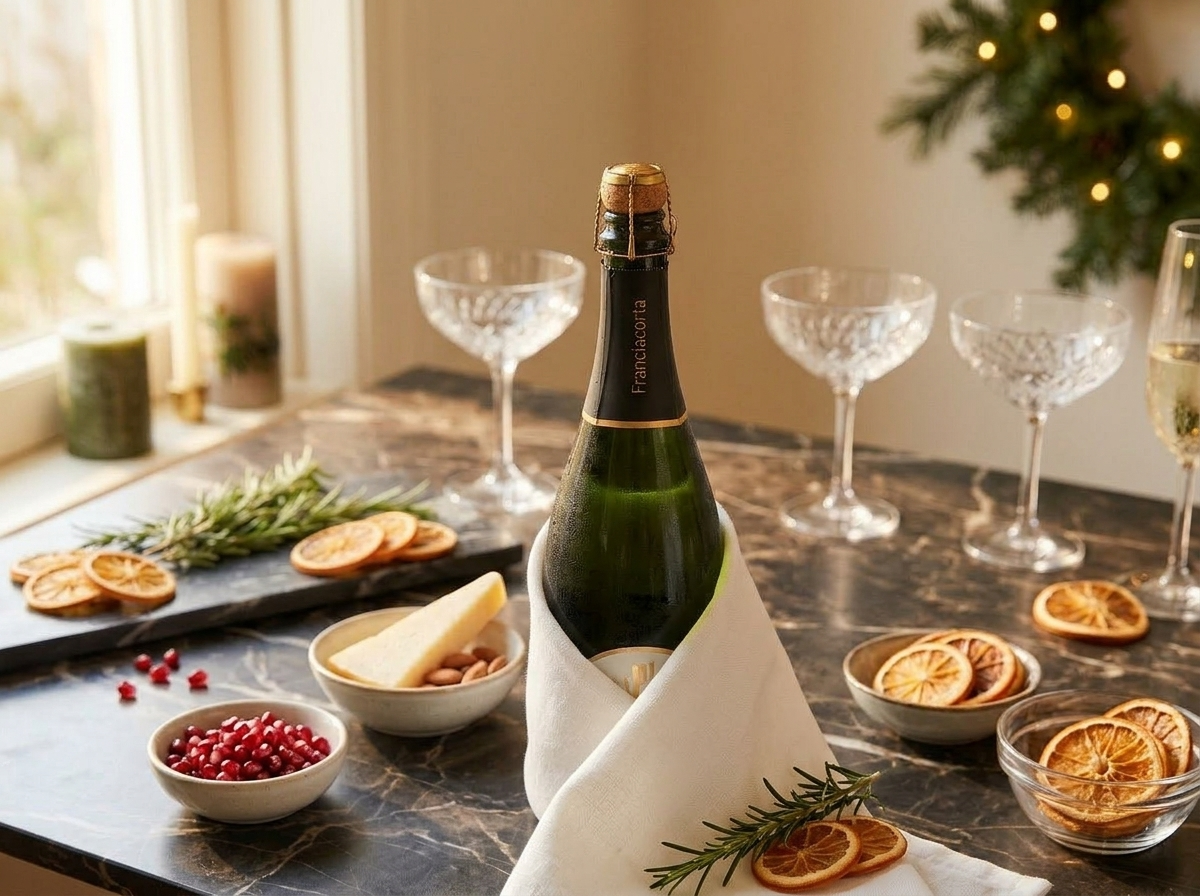
- Remove the foil and cage from each bottle over a cloth napkin. Point the cork away from guests. Twist the bottle, not the cork, applying gentle upward pressure until the cork releases with a soft sigh rather than a loud pop.
- Pour Franciacorta and Prosecco at a 45-degree angle into a chilled flute or tulip, filling to two-thirds to allow the mousse to develop.
- Pour Lambrusco straight down into a wide glass to release its dark-fruit aroma. The pour will foam slightly, which is normal for this style.
- Serve Brachetto d'Acqui last, with dessert, at 8 C / 46 F. Pour a small measure (100-120 ml) as it is sweet and meant to be sipped slowly alongside panettone or ricciarelli.
- Start with Franciacorta Brut or Prosecco Superiore during the aperitivo and antipasto stage, roughly the first 30-45 minutes.
- Move to Lambrusco di Sorbara with the first course (pasta in broth, light antipasti), then shift to Lambrusco Grasparossa with the main roast or cured meat platter.
- Close the meal with Brachetto d'Acqui alongside dessert. If guests prefer dry wine with sweets, open the Trento DOC Riserva here instead.
Notes
Tips for Success
- Chill all sparkling wines to 7-10 C / 45-50 F before serving, never colder or the aromas close down.
- Open Franciacorta and Trento DOC at least 10 minutes before pouring so the mousse settles into a proper pour.
- Pour Lambrusco into a wide red wine glass, not a flute, to let the dark fruit aromas open up.
- Match sweetness levels deliberately: pair Secco or Brut wines with savory dishes and Demi-Sec or Amabile with dessert.
- Buy one bottle per style and taste them as a flight before the holiday to identify which suits your specific menu.
Variations
- Swap Franciacorta for Trento DOC Riserva for a leaner, more mineral aperitivo option at a lower price.
- Use Brachetto d’Acqui DOCG in place of Asti Spumante with holiday desserts for drier, more complex results.
- For a red-wine-only table, serve both Lambrusco styles as a contrast: Sorbara with antipasto, Grasparossa with the main.
Storage and Reheating
Open bottles of any sparkling wine keep reasonably well for 18-24 hours with a wine stopper designed for sparkling (the hinged lever-cap type). A regular cork loses pressure within an hour.
For holiday prep, buy cases 1-2 weeks ahead and store horizontally at 12-15 C / 54-59 F, away from light. Avoid the refrigerator for long-term storage as the cold and vibration affect the wine over days.
Lambrusco is the most forgiving after opening. Its natural CO2 is lower pressure than Prosecco or Franciacorta, so it holds overnight better than you’d expect.
Serving Suggestions
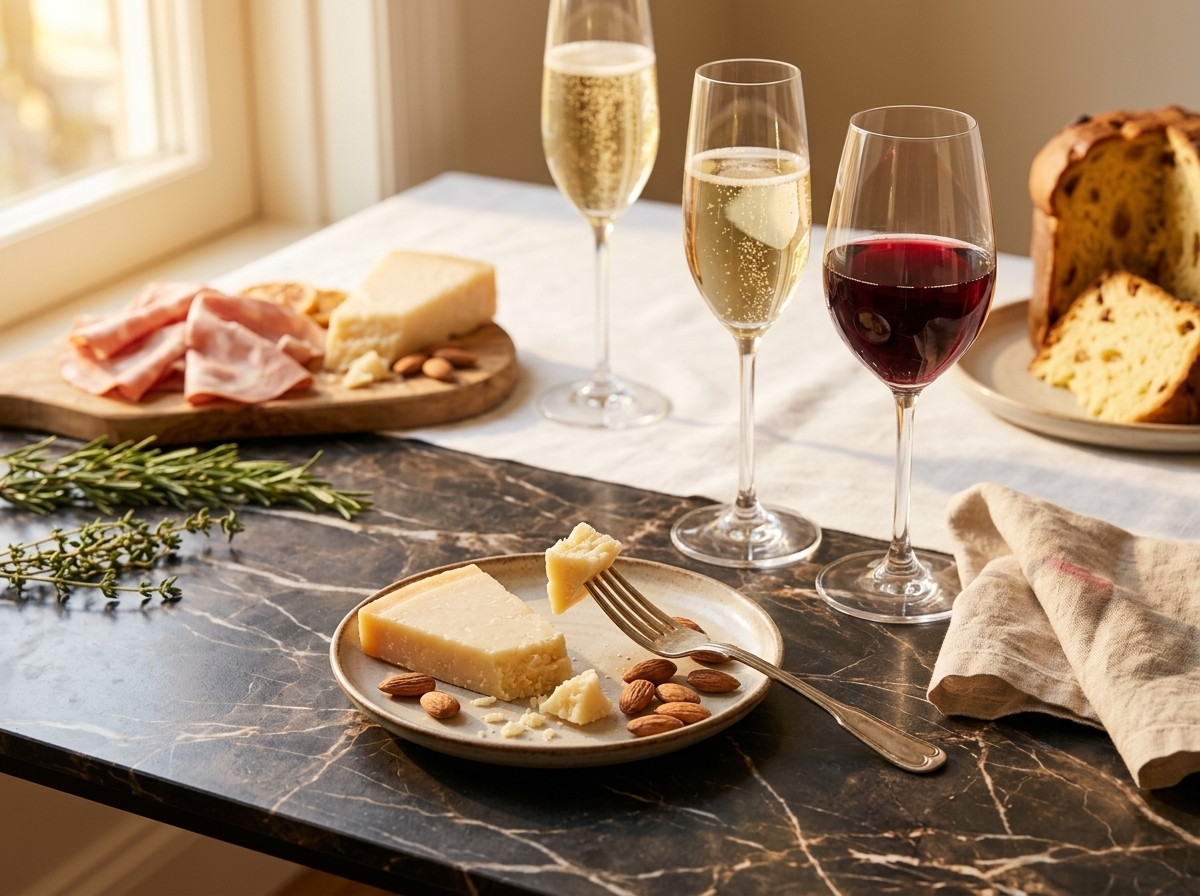
Franciacorta Brut or Satèn opens the meal well alongside fried cicchetti like olive ascolane, gougères, or a plate of mortadella with pistachios. The fine mousse and yeast-bread character bridge fried and cured flavors without overpowering them.
For the main course, Lambrusco Grasparossa Secco holds its own next to a pork loin with mostarda, stuffed arancini as a starter, or a platter of mixed cured meats. The tannin keeps the wine from disappearing against fat.
Finish with Brachetto d’Acqui alongside panettone, a light Italian ricotta cheesecake, or a plate of ricciarelli. Its light spritz and berry sweetness don’t compete with dessert the way a dry wine would.
FAQ
What’s the difference between Franciacorta and Prosecco for a holiday aperitivo?
Franciacorta is made by secondary fermentation in the bottle, like Champagne, giving it finer bubbles and a brioche-like depth. Prosecco ferments in a pressurized tank, producing a lighter, fruitier style that’s easier to drink in larger volume. For a sit-down dinner aperitivo, Franciacorta earns the extra cost.
Why does my Lambrusco taste sweet when I asked for a dry bottle?
Many Lambrusco labels exported to the US default to ‘Amabile’ (semi-sweet) without making it obvious on the front label. Look for ‘Secco’ explicitly on the label, and choose DOC-level wines like Sorbara or Grasparossa rather than generic Lambrusco di Modena.
Can I serve Brachetto d’Acqui alongside savory holiday dishes or only with dessert?
Brachetto is designed for dessert or a dessert course and doesn’t work well with savory food because its residual sugar clashes with salt and umami. Keep it specifically for panettone, pandoro, or a cheese course with gorgonzola dolce.
How far ahead can I buy Italian sparkling wines for a holiday dinner party?
Non-vintage Prosecco and Lambrusco are best purchased within a few months of the holiday and drunk young. Vintage Franciacorta Riserva and Trento DOC Riserva can be bought 1-2 years ahead and stored properly in a dark, cool spot. Avoid buying non-vintage sparkling wine more than 6 months ahead.
Is there an Italian sparkling wine that works for guests who don’t drink alcohol?
A few Italian producers make dealcoholized spumante, though quality varies and availability in the US is limited. For a non-alcoholic alternative with a similar festive feel, Italian sparkling water with a splash of blood orange juice mimics the color and pour of Lambrusco rosé without any wine involved.
What’s a good Italian sparkling wine under $20 for a large holiday crowd?
Prosecco DOC Brut from producers like Bisol, Mionetto, or La Marca is consistently reliable at $15-18 retail. If you want something less expected, Lambrusco di Sorbara DOC from Cleto Chiarli typically lands under $20 and genuinely surprises guests who expect sweet Lambrusco.