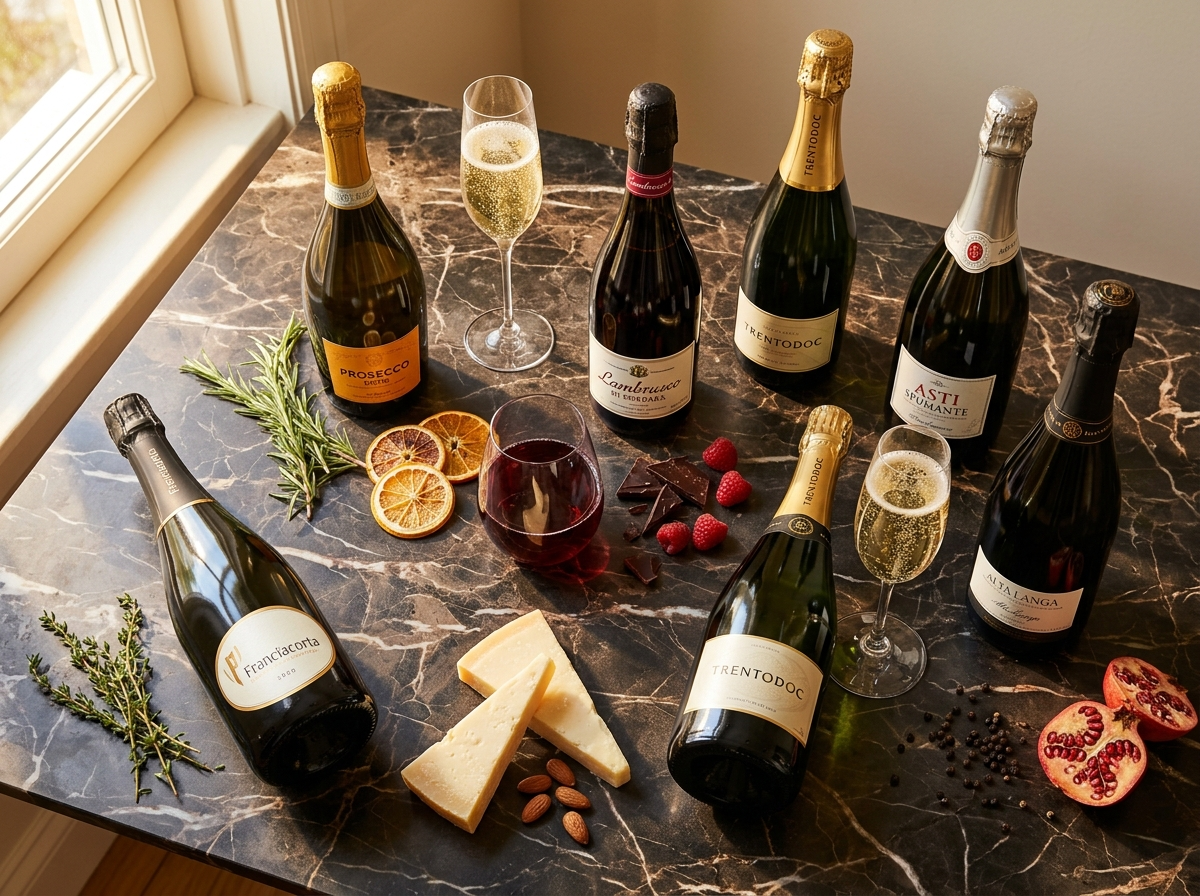
Ingredients
Method
Before the Party
- Place all bottles in the refrigerator 12-24 hours before serving, not the freezer, so they chill evenly to 8-12 C / 46-54 F without losing carbonation.
- Fill a wine bucket with equal parts ice and cold water, not ice alone. Water conducts cold faster and keeps the bottle at serving temperature without cracking the glass.
- Set out glassware: tulip or flute glasses for Franciacorta and Prosecco, standard red wine glasses for both Lambrusco styles.
Opening and Pouring
- Remove the foil and cage from each bottle over a cloth napkin. Point the cork away from guests. Twist the bottle, not the cork, applying gentle upward pressure until the cork releases with a soft sigh rather than a loud pop.
- Pour Franciacorta and Prosecco at a 45-degree angle into a chilled flute or tulip, filling to two-thirds to allow the mousse to develop.
- Pour Lambrusco straight down into a wide glass to release its dark-fruit aroma. The pour will foam slightly, which is normal for this style.
- Serve Brachetto d'Acqui last, with dessert, at 8 C / 46 F. Pour a small measure (100-120 ml) as it is sweet and meant to be sipped slowly alongside panettone or ricciarelli.
Sequencing the Wines Across the Meal
- Start with Franciacorta Brut or Prosecco Superiore during the aperitivo and antipasto stage, roughly the first 30-45 minutes.
- Move to Lambrusco di Sorbara with the first course (pasta in broth, light antipasti), then shift to Lambrusco Grasparossa with the main roast or cured meat platter.
- Close the meal with Brachetto d'Acqui alongside dessert. If guests prefer dry wine with sweets, open the Trento DOC Riserva here instead.
Notes
Nutrition reflects a 150 ml pour of dry Brut-style sparkling wine. Brachetto d'Acqui is higher in residual sugar and adds approximately 20-25 calories per 120 ml serving.