
Jump to Recipe
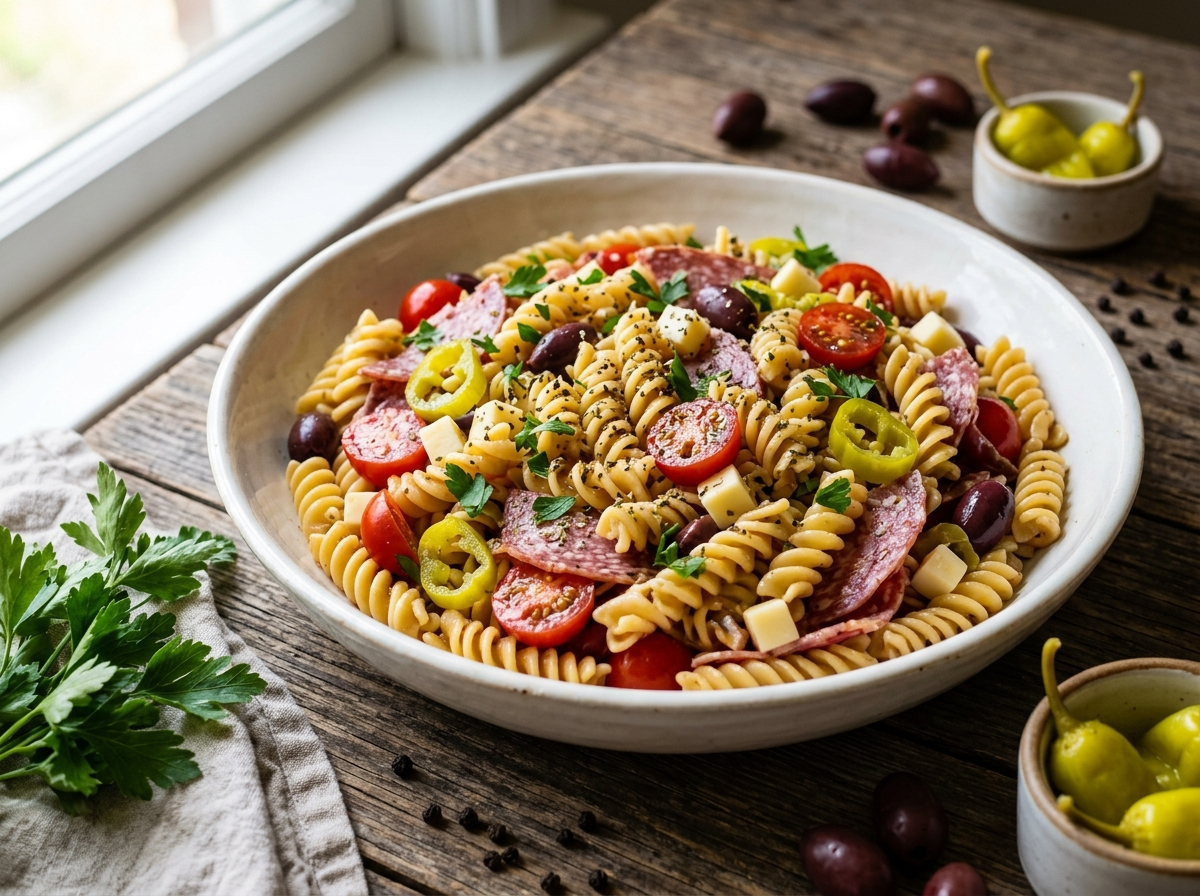
This is the pasta salad I make every time we eat outside from June through September. Short pasta, sharp dressing, and enough cured meat and pickled vegetables to stand on its own as a full meal.
The dressing is a straightforward red wine vinegar and olive oil mix, seasoned hard. That’s the key: pasta salad needs more salt and acid than you think, because cold temperatures dull both.
I use rotini here because the spirals trap the dressing. Farfalle and fusilli also work. Avoid penne – the smooth surface sheds the vinaigrette.
Make this at least 30 minutes before serving and up to a day ahead. The flavors settle, the pasta absorbs the dressing, and you spend zero time in the kitchen when guests arrive.
Why You’ll Love This Recipe
- Holds for 3 days – better the next day
- No reheating needed, great straight from the fridge
- One bowl, no separate sauce pan required
- Customizable with whatever deli meats you have
Ingredient Notes
- Rotini: The spiral shape holds the dressing in every bite. Fusilli or cavatappi are the best swaps if rotini isn’t available.
- Genoa salami: Slice it thick (about 3 mm) and cut into quarters so you get a meaty bite. Hard salami or soppressata work just as well.
- Pepperoncini: These mild pickled peppers add tang without heavy heat. Banana peppers are a direct substitute.
- Kalamata olives: Pitted and halved. Castelvetrano olives give a buttery contrast if you want less brininess.
- Red wine vinegar: Don’t swap for balsamic here – it’s too sweet and will stain the pasta. White wine vinegar is the next best option.
- Provolone: Cut into small cubes so it stays firm and doesn’t melt into the salad. Fresh mozzarella is softer and releases water, so add it just before serving if using.
Summer Italian Pasta Salad with Salami, Olives, and Pepperoncini
Ingredients
Method
- Bring a large pot of water to a boil and salt it heavily - it should taste like mild seawater.
- Add the rotini and cook according to package instructions until just al dente, usually 8 to 9 minutes. Do not overcook; the pasta will soften further as it sits in the dressing.
- Drain the pasta and rinse under cold running water for about 30 seconds to stop the cooking. Shake off excess water and transfer to a large mixing bowl.
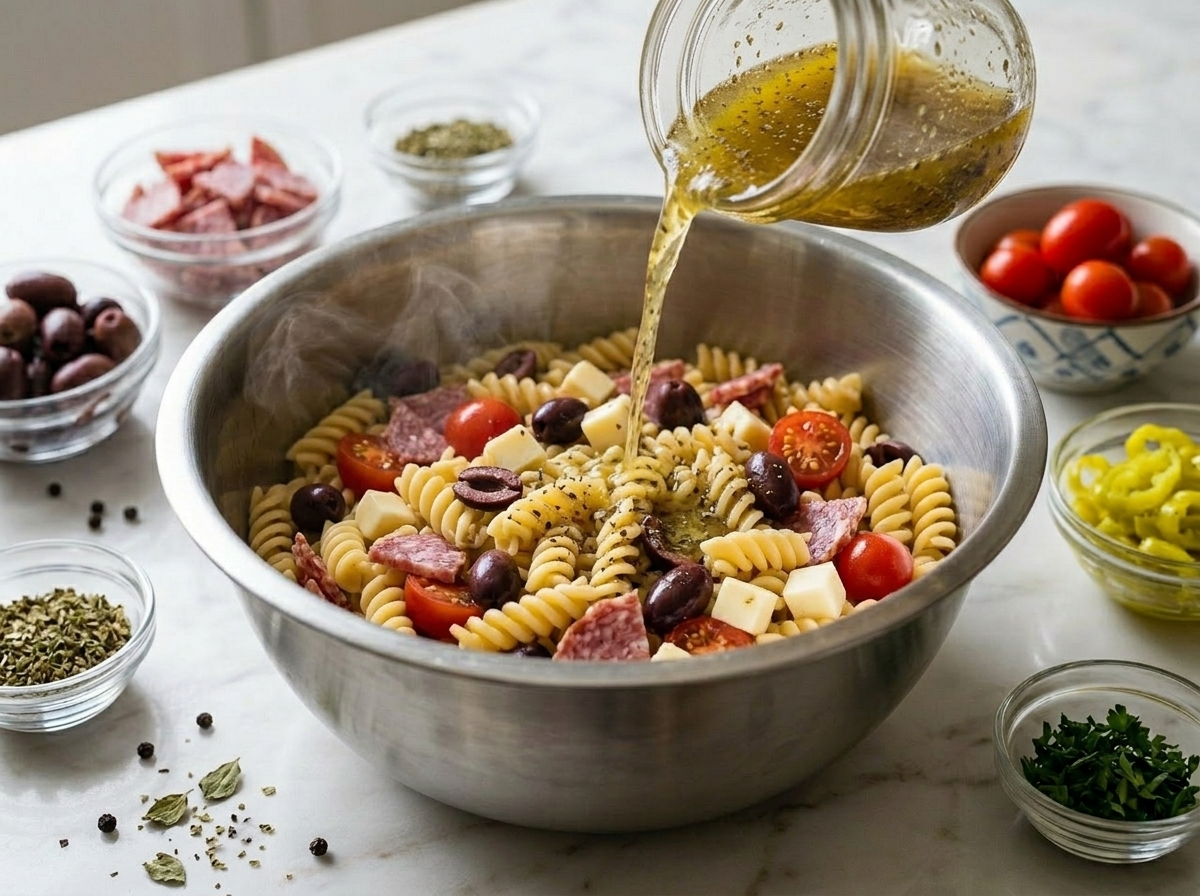
- In a small bowl or jar, combine the olive oil, red wine vinegar, Dijon mustard, minced garlic, dried oregano, salt, pepper, and red pepper flakes if using.
- Whisk or shake until the dressing is uniform and slightly thickened. Taste and adjust - it should be noticeably sharp and salty at this stage.
- Pour about two-thirds of the dressing over the still-warm pasta and toss to coat. The warmth helps the pasta absorb the vinaigrette.
- Add the salami, provolone, olives, pepperoncini, red onion, and green bell pepper. Toss everything together until evenly distributed.
- Add the cherry tomatoes and chopped parsley. Toss gently so the tomatoes don't break.
- Pour over the remaining dressing, toss once more, and taste for seasoning. Add salt and vinegar as needed.
- Let the salad rest for at least 20 minutes at room temperature, or cover and refrigerate for up to 24 hours. Stir and re-season before serving.
Notes
Tips for Success
- Salt the pasta water generously – it’s the only time you season the pasta itself.
- Rinse the cooked pasta under cold water immediately to stop cooking and cool it fast.
- Dress the pasta while it’s still slightly warm so it absorbs the vinaigrette rather than repelling it.
- Taste and re-season just before serving – cold dulls salt and acid, so add a pinch of each.
- Add the cherry tomatoes last to prevent them from bleeding color into the whole salad.
Variations
- Add 200 g drained chickpeas for a heartier, vegetarian-friendly version with more protein.
- Swap salami for grilled artichoke hearts and roasted red peppers for a fully vegetable version.
- Use a pesto vinaigrette (2 tbsp basil pesto whisked into the dressing) for a deeper herb flavor.
Storage and Reheating
Store in an airtight container in the refrigerator for up to 3 days. The pasta will absorb more dressing as it sits, so stir in a splash of olive oil and a few drops of red wine vinegar before serving leftovers.
Do not freeze this salad. The pasta turns mushy and the vegetables lose all texture after thawing.
This is a cold dish – serve it straight from the fridge or let it sit at room temperature for 10 minutes max before putting it on the table.
Serving Suggestions
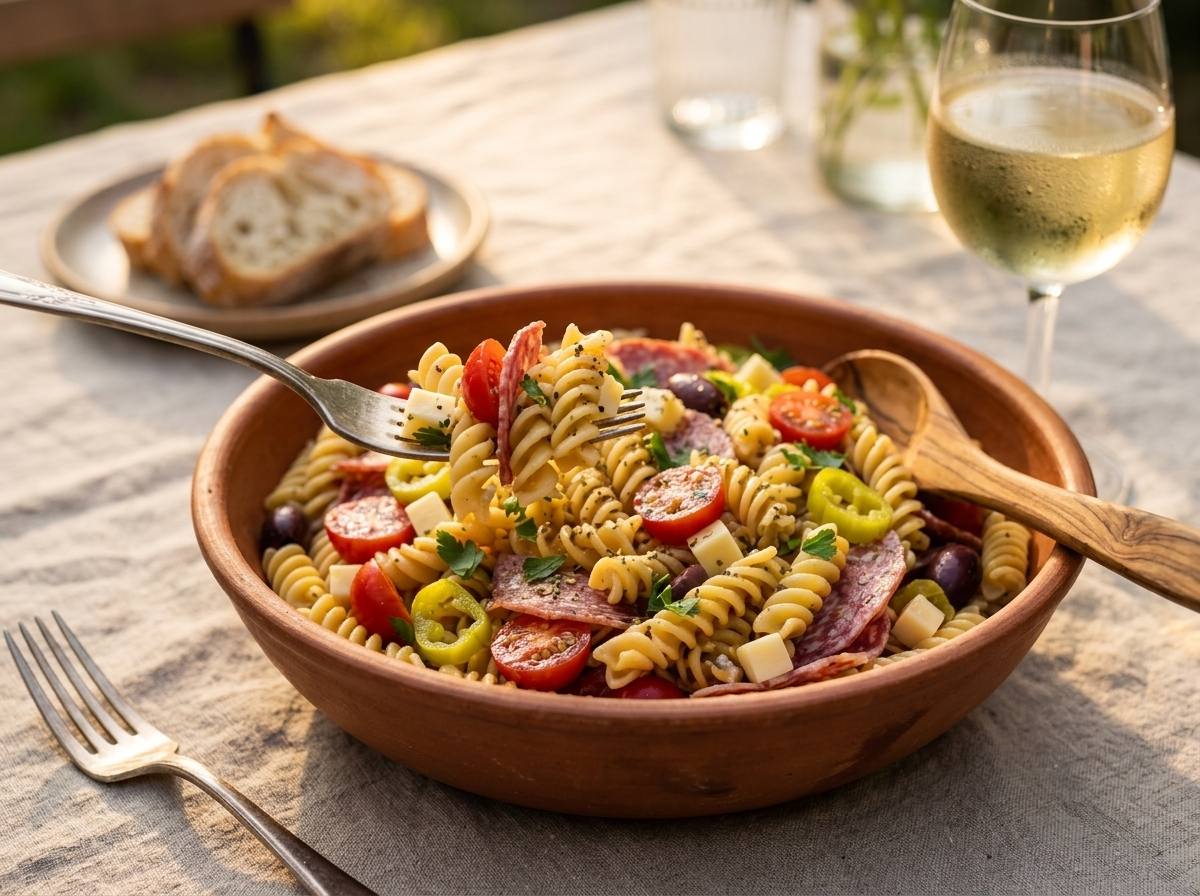
Serve alongside grilled chicken thighs or Italian sausages for a full backyard meal. The acidity in the dressing cuts through the fat from grilled meat cleanly.
For a picnic or potluck, pack it in a wide, shallow container so every scoop gets an even mix of pasta, meat, and vegetables — and pair it with a spread of cured meats and olives on the side. A side of crusty bread and a cold Aperol spritz fit the mood.
If you’re serving it as a standalone lunch, a handful of arugula folded in just before plating adds a peppery note and some green.
FAQ
Why does my Italian pasta salad taste bland after it sits in the fridge?
Cold temperature suppresses salt and acid, so the dressing that tasted right at room temperature will seem flat once chilled. Before serving, stir in a small pinch of salt and a few drops of red wine vinegar to bring the flavors back up.
Can I use Italian dressing from a bottle instead of making the vinaigrette?
You can, but most bottled Italian dressings are sweeter and thinner than a homemade red wine vinaigrette. If you use one, reduce the amount to about 4 tbsp and taste before adding more, since the salt level varies a lot between brands.
Can I make this Italian pasta salad the night before a party?
Yes, and it actually improves overnight as the pasta absorbs the dressing. Hold back the cherry tomatoes and add them in the morning so they don’t break down or bleed into the salad.
What protein pairs well alongside this pasta salad at a summer cookout?
Grilled Italian sausages are the most natural fit since they share the same flavor profile. Grilled chicken thighs marinated in garlic and lemon also work well without competing with the vinegar dressing.
Is this summer pasta salad gluten free?
Not as written, but it’s easy to adapt. Use a certified gluten-free rotini made from corn or rice flour, and check the label on your salami, since some brands use wheat as a filler.
What is the difference between Italian pasta salad and Greek pasta salad?
Italian pasta salad typically uses cured meats like salami, provolone, and a red wine vinegar and olive oil dressing. Greek pasta salad swaps the salami for cucumber, uses feta instead of provolone, and often includes oregano and lemon juice as the dominant flavors.