
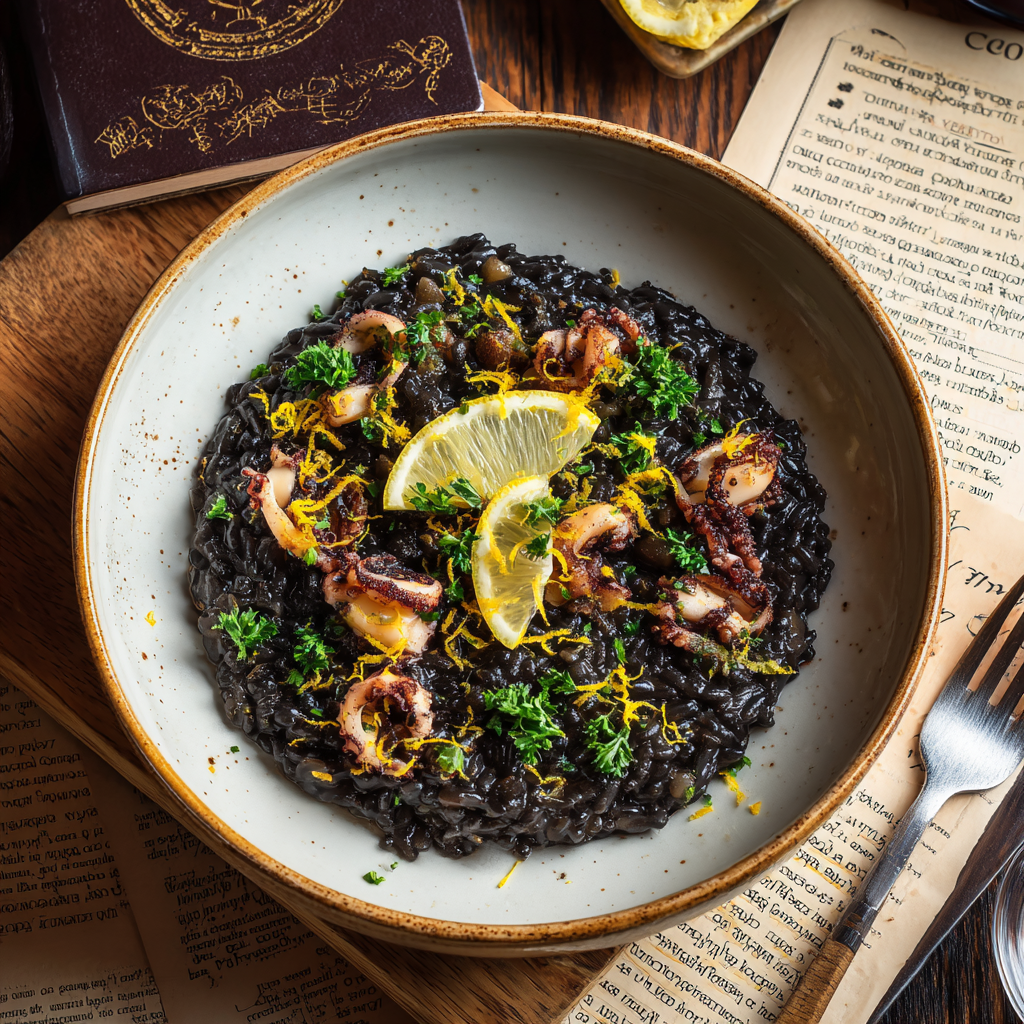
Jump to Recipe
What if making a true Venetian black risotto at home is easier than you think?
I write from practical experience: this is a faithful take on the lagoon classic that fits a U.S. kitchen. We keep key traditions—the ink for that deep, true black color and the finish that waves “all’onda”—while using sensible swaps like pre-cleaned squid and bottled ink when needed.
The flavor aim is savory and slightly sweet seafood, never heavy or “fishy.” Our two wins are clear each time: tender squid or cuttlefish and creamy rice that still bites at the center. Missing those turns this dish from special to disappointing.
Method matters. Many Venetian cooks build an inky seafood base first, then cook the rice in that liquid. That changes the risotto rhythm and extends total cooking time, so plan accordingly.
You don’t need a Venice fish market to succeed. Later sections cover what to buy, the step-by-step method, quick fixes, and serving notes so dinner stays enjoyable even if something shifts.
Key Takeaways
- This dish balances tender seafood with creamy, slightly al dente grains.
- We keep authentic texture and color while adapting sourcing for U.S. cooks.
- Building an inky base first changes the cooking rhythm and improves flavor.
- Expect longer overall time than a basic risotto—plan ahead.
- Simple swaps (pre-cleaned squid, bottled ink) make this accessible and reliable.
What makes risotto nero “authentic” in Venice, and what you can realistically do at home
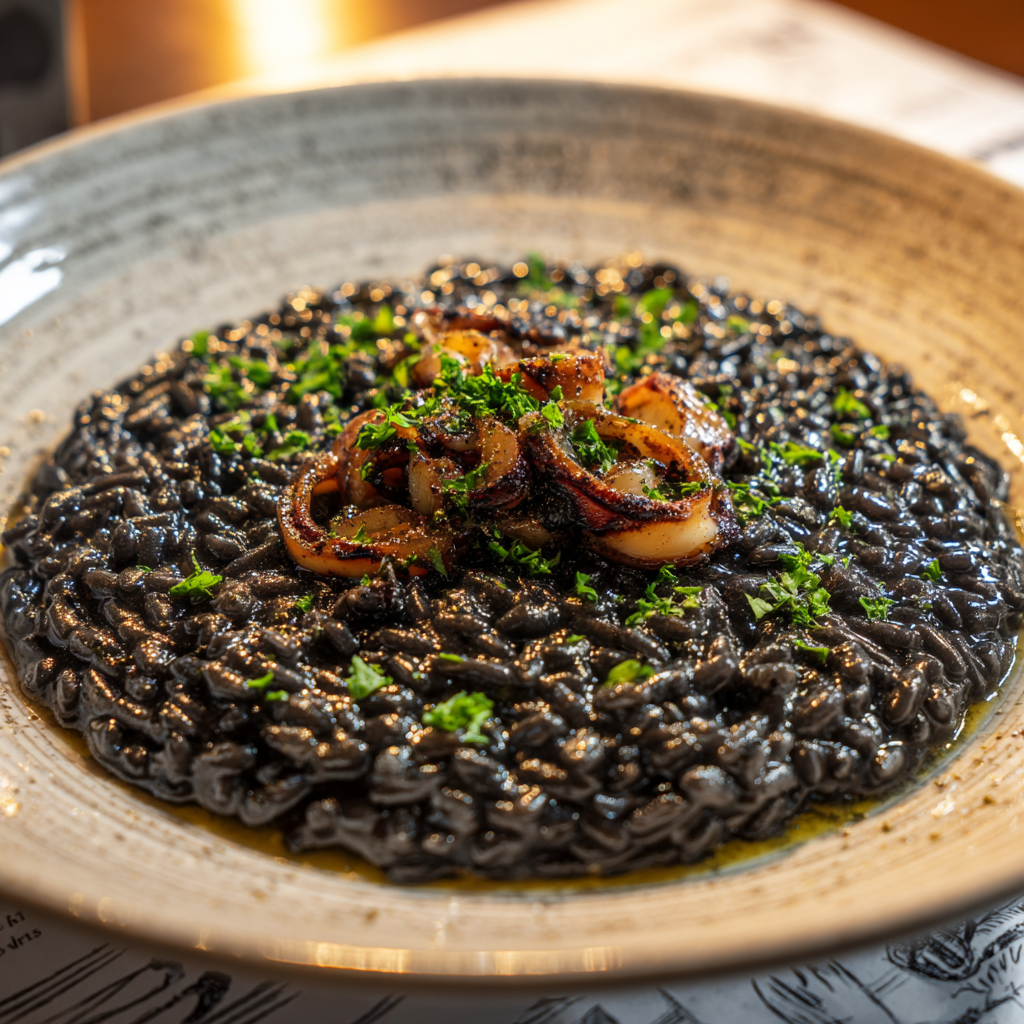
True Venetian black rice is about balance: sea flavors, ink, and a gentle, flowing finish. Authentic here means a simple structure—cephalopod plus ink, rice cooked to a creamy, spreadable texture, and no heavy toppings that mask the seafood.
Squid vs. cuttlefish: practical differences
Cuttlefish usually feels meatier and stands up to longer cooking. Squid is more delicate and cooks faster. Both work at home; choose cuttlefish for a firmer bite and squid if you prefer quick cooking or find it cleaned at the supermarket.
Why this method skips toasting the rice
Many Venetian cooks braise the cephalopod first so its liquid becomes the flavor base. That concentrated stock gives the grains a pure sea note. Skipping the toast helps prevent the seafood from turning rubbery later.
- Shopping note: most U.S. stores sell cleaned squid without an ink sac—plan for bottled ink or sachets.
- Finish test: “all’onda” means the dish should spread in a soft wave on the plate, not sit tall or run thin.
- Seasoning: a small knob of butter can gloss the surface; cheese is usually avoided so the ink and seafood stay bright.
Ingredients that matter most (and smart swaps that won’t wreck the dish)
A few smart ingredient choices will keep the dish true to Venetian tradition without fuss.
Rice choices
Pick vialone nano when you can for that authentic Venetian texture. Carnaroli is the next best option; it holds up and gives a forgiving, creamy finish. Use arborio only as a backup and handle it gently to avoid broken grains.
| Type | Why it matters | Use when |
|---|---|---|
| Vialone nano | Classic short, starchy grain | Available |
| Carnaroli | Stable, creamy, forgiving | Reliable choice |
| Arborio | Common, more fragile | Only if needed |
Ink, stock, and liquids
Squid ink and cuttlefish ink come in sacs, sachets, or bottles. In the U.S., sachets (tinta de calamar) and bottled ink are easiest to find and they deliver true color.
Start by making the cooking liquid fully black, then keep a little back to adjust color at the end. That prevents a washed-out gray finish.
For stock, a subtle fish stock is best. A light vegetable stock will not overpower the dish. If you must, use water and rely on the seafood ragù for depth.
Core aromatics and fat
Onion or shallot gives sweetness; garlic adds depth. Use olive oil for the soffritto and save a small knob of butter to mantecare if you want extra gloss.
Parsley, pepper, and careful salt finish the dish. A spoonful of tomato or a pinch of chili can lift flavors but should never mask the ink and fish.
Different recipes vary on when ink goes in; in the method section I explain timing so color and flavor stay controlled.
For more on family traditions and similar pasta dishes, see this family tradition.
risotto al nero di seppia recipe: the method that keeps the seafood tender and the rice creamy
Start with careful prep and the rest of the cooking falls into a calm rhythm. Chop onion and garlic, warm the stock in a second pot, and portion the squid or cuttlefish into small rings so they cook evenly. Open any ink sachets over a small bowl and keep paper towels handy to avoid stains.
Prep and ink handling
Use gloves or a spoon when handling ink. Rinse tools immediately. If you have bottled squid ink, pour a little into the bowl and set the rest aside to boost color later.
Build the soffritto
Heat olive oil in a wide pan over low heat. Soften the alliums until translucent. Do not brown them — bitterness is very noticeable in a dark dish.
Braise, add rice, and cook
Add the seafood, raise heat slightly, and pour in white wine. Keep a calm simmer and braise until pieces are just tender — small squid may take under 30 minutes; thicker cuttlefish can need 30–45 minutes. Stir in the ink until the braising liquid becomes a smooth black ragù.
Now add rice and let it drink that inky liquid for a few minutes before you ladle hot stock. Cook classic risotto-style: add stock little by little, stir regularly, and watch the minutes so the grain stays al dente and the pan yields a soft, wave-like flow.
Finish
Near the end, taste for color and add a touch more ink only if needed to avoid a gray result. Turn off the heat, fold in chopped parsley and a small knob of butter if you want extra gloss. Season carefully with salt and black pepper. No cheese — it will mute the seafood and dull the color.
For a related pasta version, see this squid-ink tagliolini link: squid-ink tagliolini.
Troubleshooting that actually saves dinner
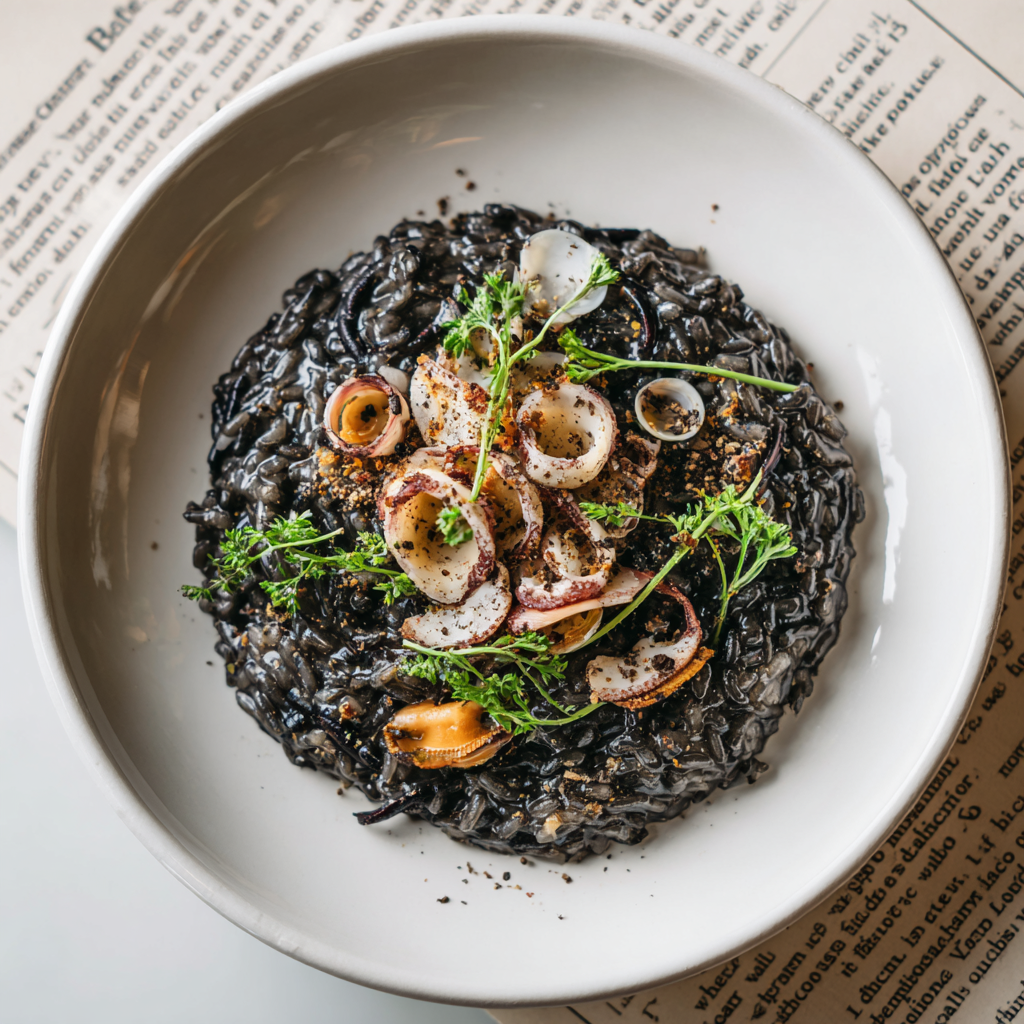
Most problems are simple to diagnose once you know what to watch for. Below are calm checks and quick fixes you can use while the pot is still on the stove.
If the color goes gray instead of deep black
Check three things: how much ink you added, whether you held some back, and if pale stock or water diluted the pan. Bottled ink can boost color if the sachet was weak.
- Color rescue: dissolve a small amount of ink in a spoonful of hot stock, then stir it in off the heat for even darkening.
If the squid feels rubbery
Pieces that are too large or a too-brisk simmer cause toughness. Cut squid or cuttlefish into thinner pieces and use gentler braising. If the squid is almost tender before you add rice, that’s usually the right moment—finish during the rice cooking so it keeps a bit of bite.
If the rice is crunchy, gluey, or broken
Keep stock hot in a separate pot and add it gradually. Crunch comes from cool stock or adding too much liquid at once. Glue or broken grains often come from over-stirring or using fragile arborio; choose sturdier grains and stir with a light hand.
If the flavor feels flat
Adjust in small steps: a pinch of salt, a grind of pepper, a splash more wine or a touch of tomato for acidity. Finish with a little lemon zest to brighten the seafood without making the dish taste lemony. If your stock is too strong or salty, dilute with water and rebalance gently.
Serving ideas, pairings, and leftovers that still taste great
A few small steps at the end will make the ink risotto read fresh and intentional. Warm the plate, finish simply, and serve without fuss so the seafood stays central.
Plating and finishing
Warm shallow bowls. Spoon the dish into the center, then give the bowl a gentle shake so the rice spreads into a soft wave, the classic all’onda. If it sits tall, add a tablespoon of hot stock and stir once to loosen, then serve immediately.
Top with a light shower of chopped parsley, two quick turns of black pepper, and an optional sprinkle of lemon zest for lift. Keep toppings minimal so the ink and seafood lead.
What to drink
Pour the same dry white wine you used in cooking. It will mirror the acidity already in the dish and keep the flavors balanced at the table.
Store, reheat, and reuse
Cool quickly, transfer to a shallow container, and refrigerate. Eat within one day for best texture. Rewarm gently over low heat with a splash of hot stock or water, stirring just enough to relax the grains.
Save any extra black ragù separately. Loosen it with a little pasta cooking water and toss with linguine, spaghetti, or bigoli for a quick, intentional second meal.
Your next batch will be even better: small tweaks that make risotto al nero di seppia feel restaurant-level
Small, deliberate choices turn a good ink dish into one you’d happily order out. Treat nero seppia as a craft: choose slightly smaller squid or cuttlefish so pieces cook evenly, and keep an extra sachet or a small bottle of squid ink on hand to correct color without over-reducing the pot.
Taste your cooking liquid first. If the stock reads loud or overly briny, dilute it; subtle background flavor lets the ink and seafood sing. Stop the stove about a minute early and finish off heat—mantecaring gently protects tenderness and creates a silky finish.
Decide on butter like a cook, not a rule: if the ink already gives gloss, use less or skip it. Skip cheese—three reasons: it masks seafood sweetness, dulls the black, and weights the mouthfeel.
Wipe the bowl rim, grind fresh pepper at the table, and jot how much ink you used for next time. A few controlled moves—good squid, careful ink, kind heat—make this risotto feel restaurant-level without fuss.
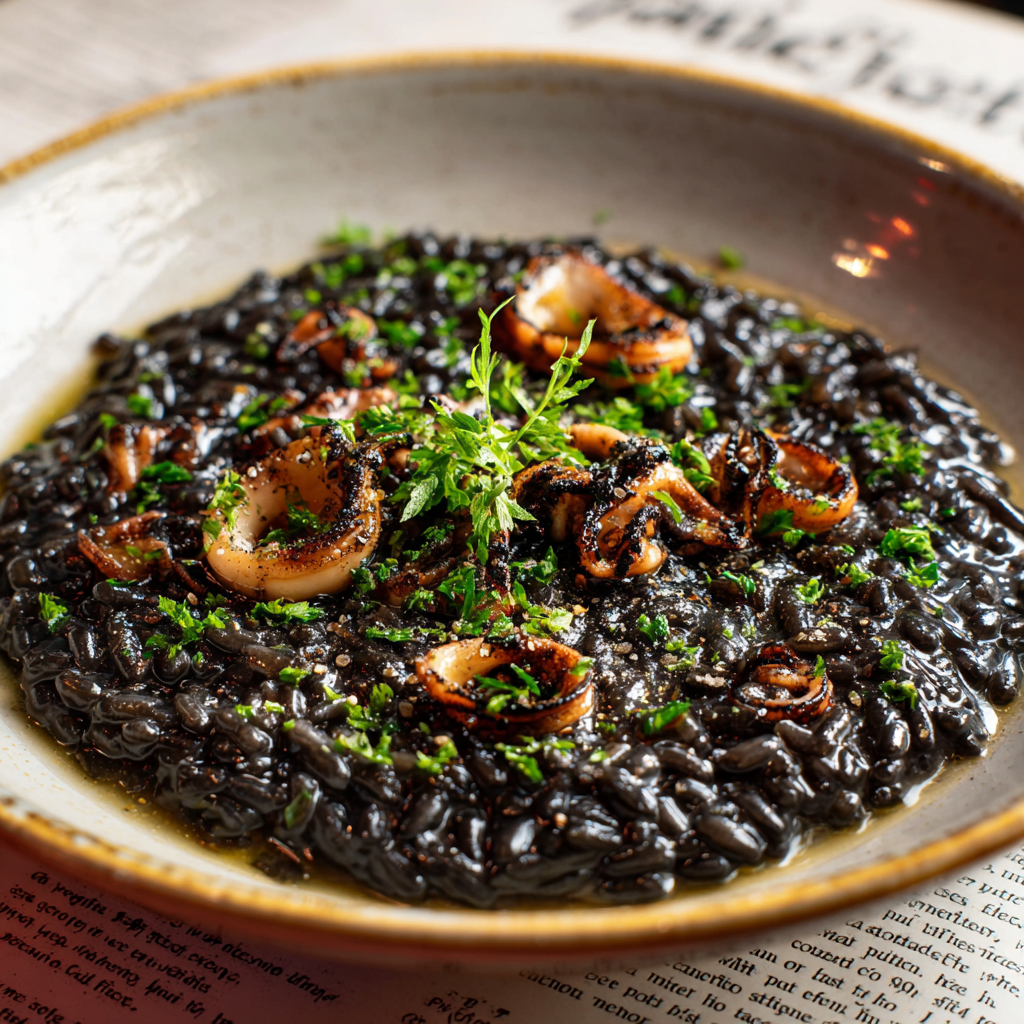
Risotto al Nero di Seppia (Venetian Black Risotto)
Ingredients
Method
Notes
- Rice Choice: For the best texture, use vialone nano rice if available. Carnaroli is a good substitute, while arborio is a last resort.
- Ink Handling: Be cautious when handling squid ink, as it can stain. Use gloves or a spoon to handle it and clean tools immediately.
- Storage: Leftovers can be stored in the refrigerator for up to one day. Reheat gently with a splash of stock or water.