

Jump to Recipe
Have you ever wondered why a roasted squash base tastes so much deeper than one boiled from raw?
I set out to make a dependable, weeknight-friendly version of this classic. Pellegrino Artusi’s simple approach—simmered squash pressed through a sieve—informs the method, but I lean on roasting first to get richer flavor and an easier purée. The core steps are clear: roast, build a gentle soffritto, simmer briefly, and blend until smooth.
This is a practical, technique-first guide for home cooks in the U.S. Use a modest drizzle of olive oil the way Italians do: sparingly and with purpose. Finish bowls with crisped sage and optional grated cheese for a focused, balanced bowl that works as a small first course or a light main.
If you want the full method and a tested list of ingredients, see this short, reliable version at the linked recipe.
Key Takeaways
- Roasting squash concentrates natural sugars for a deeper, cleaner flavor.
- Start with a light soffritto to balance sweetness with savory depth.
- Simmer briefly in good broth, then purée for a smooth, stable texture.
- Finish with crisp sage and a small drizzle of olive oil for clarity.
- This dish suits winter menus as a starter or a light dinner with a crunchy topping.
What makes this Italian squash-and-sage soup taste “restaurant-level” at home
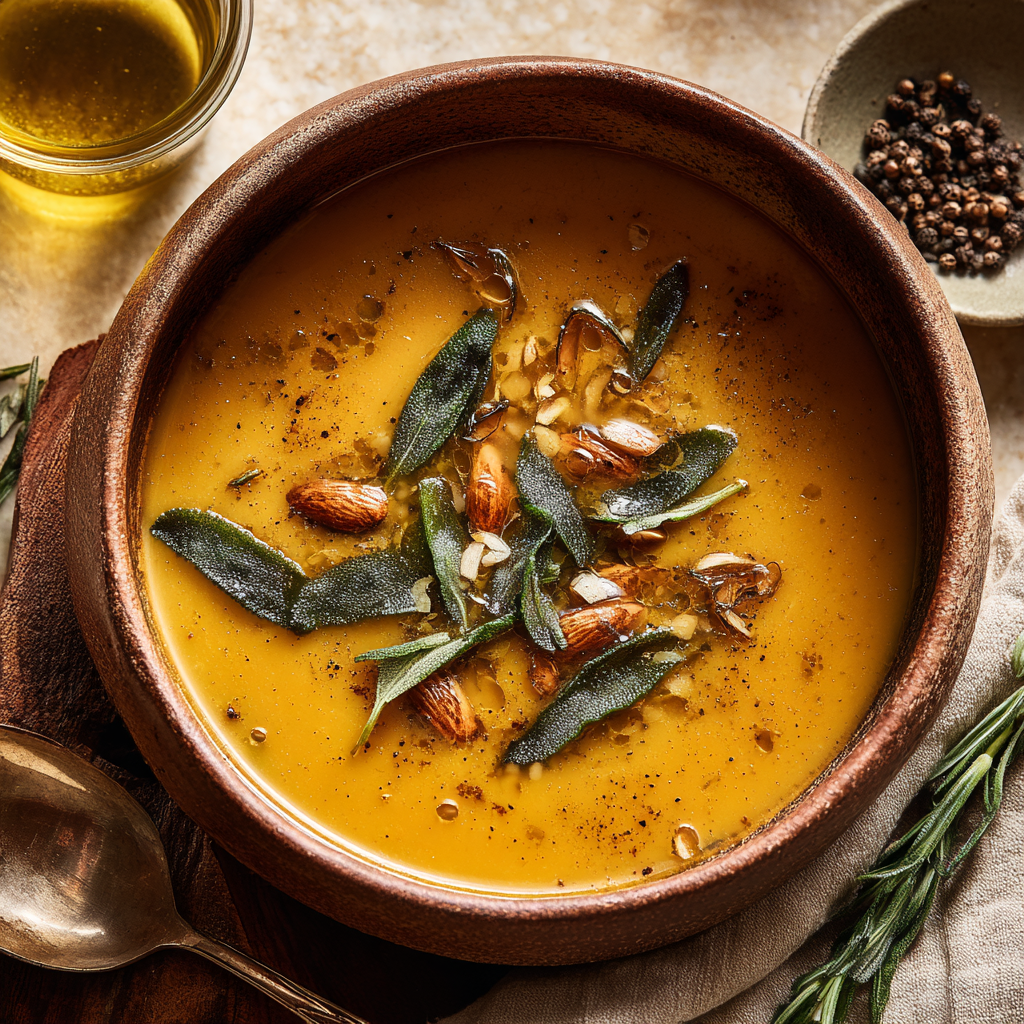
A quick turn in a hot oven is the small move that lifts this soup to restaurant level. Roasting concentrates sugars, reduces excess water, and gives you those lightly browned edges that read as savory and complex.
Why roasting winter squash adds sweetness, color, and deeper flavor
When you roast winter squash, moisture evaporates and natural sugars tighten up. The browned rim that forms at the cut edges adds caramelized notes you won’t get from boiling.
Look for spoon-tender flesh and a little color at the edges; that bit of browning is where much of the flavor lives. For dense squashes, roast halves cut-side-down, then scoop the flesh to avoid wrestling with the rind.
Sage as the signature finish: fragrant, crisp, and not overpowering
Sage works best as a final accent. Fry a few leaves briefly until crisp and scatter them on top. Use just a small amount so the herb reads as a bright, savory counterpoint and not a dominant perfume.
Choosing your squash for texture and ease
- Butternut is easiest to handle: thinner rind and straightforward flesh for quick baking and puréeing.
- Kabocha, bon bon, or buttercup give denser, almost candy-sweet flesh but have tougher rinds; roasting halves then scooping is low-stress and effective.
These two small choices—roasting and careful sage handling—deliver the most noticeable lift. They let a simple set of recipes feel polished without extra fuss or special gear.
Zuppa di zucca con salvia recipe ingredients and smart substitutions
Choose your broth first — it determines whether the bowl feels rustic or refined.
Broth choices that change the vibe
Use chicken broth for a rounder, savory base. Pick vegetable broth to keep the bowl plant-forward. Plain water works if you want the squash and olive oil to sing; just season carefully. Aim for about 3 to 4 cups of liquid, then adjust to your preferred thickness.
Fats and the simple soffritto
A classic soffritto starts with onion cooked gently in olive oil, butter, or a mix of both. Butter adds richness; olive oil keeps the flavor clean. Cook until soft, not browned, so the base tastes sweet and balanced.
Aromatics, crema, and finishing
Add mild garlic, thyme, or a diced carrot if you want extra sweetness and color. Remember: crema refers to a smooth purée, not mandatory cream. Finish bowls with grated Parmigiano cheese, a drizzle of extra-virgin olive oil, and a final grind of pepper and salt to taste.
- Classic croutons — comforting crunch.
- Pancetta “croutons” — salty, rich contrast.
- Toasted almonds (optional smoked paprika) — lighter, nutty crunch.
How to cook it step-by-step without overcomplicating anything
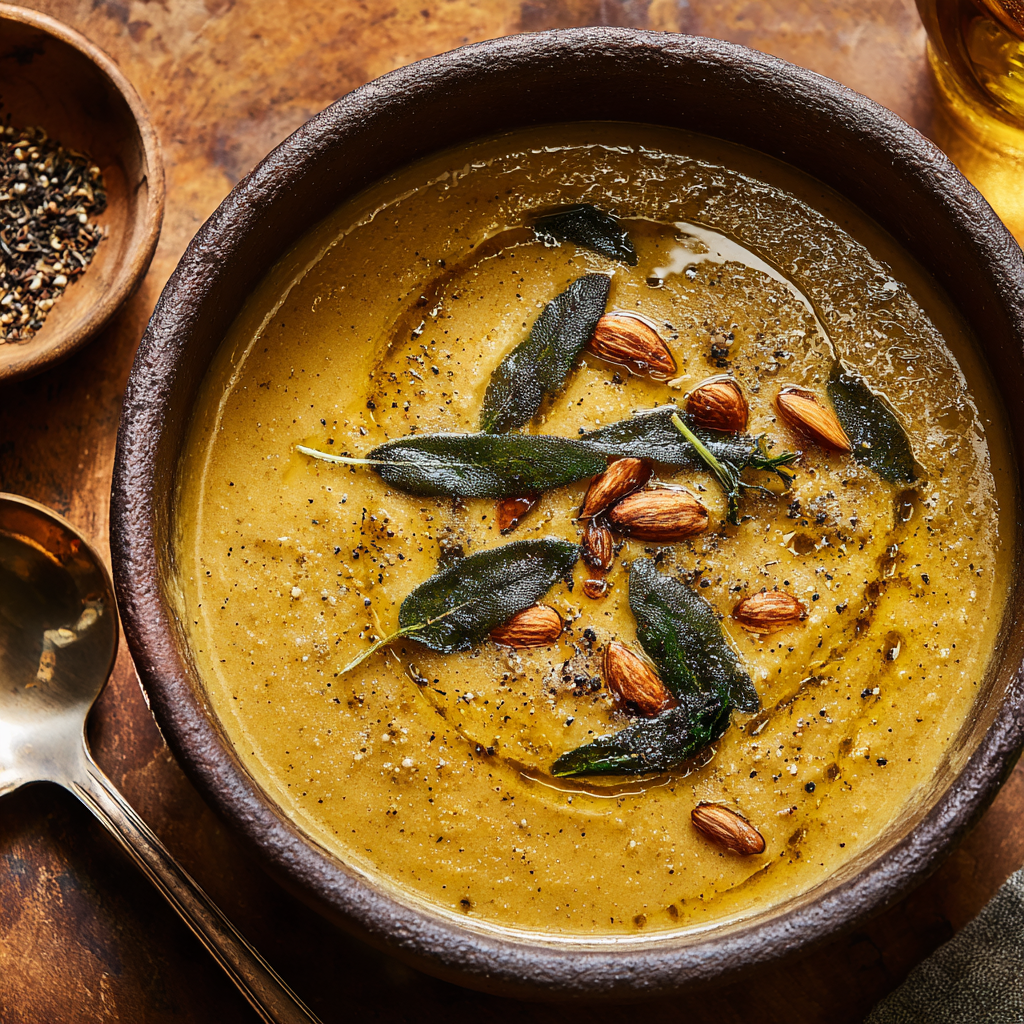
Begin with a clear sequence: roast, build the base, simmer briefly, then blend to silk. Preheat the oven to 425°F and roast squash wedges or halves on a rimmed baking sheet until spoon-tender and browned at the edges, about 30–45 minutes. Cut-side down helps dense squashes cook evenly.
While the squash roasts, start a gentle soffritto in a soup pot. Sweat a diced onion in a mix of butter and olive oil over low heat. Add a pinch of salt and a splash of water if it threatens to brown.
Add the roasted squash to the pot, then add broth and simmer about 10 minutes so flavors meld. Adjust seasoning with salt and pepper.
- Blend: use an immersion blender in the pot for safety. For a stand blender, work in small batches, vent the lid, and leave the fill line under two-thirds.
- For ultra-smooth texture, pass the purée through a fine food mill or sieve to remove fibers.
- Thin gradually — add broth a bit at a time until the texture feels velvety.
For crispy sage, fry leaves briefly in a little oil until crisp and remove at once to keep them bright. Serve warm as a first course or a light winter dinner with grated cheese, a drizzle of olive oil, and croutons or pancetta croutons.
Make it once, enjoy it all week: storing, freezing, and serving ideas for cozy winter bowls
Store a cooled pot promptly to keep flavor and safety in check. Cool at room temperature no more than an hour, then seal and refrigerate. Use within about 2 days for best texture and taste.
Reheat on the stove the gentle way: warm slowly, stir often, and add a small splash of broth or water if the soup tightens. For freezing, portion into meal-size containers with headspace so the jars can expand.
If thawed soup looks a bit grainy, a quick blend smooths it out. Taste and adjust salt before serving; chilled food often needs a seasoning lift.
Keep croutons, pancetta, or toasted almonds separate until plating. Try three easy bowls this week: one with grated cheese, one with a drizzle of olive and black pepper, and one with toasted nuts. For lunches, portion 1 to 1.5 cups so reheating is consistent.
For more ideas see more recipes and enjoy leftovers the simple way—the small bit of tasting at the end makes all the difference.

Zuppa di Zucca con Salvia (Squash and Sage Soup)
Ingredients
Method
Notes
- You can adjust the thickness of the soup based on your preference by adding more broth or water.
- If you want to make this dish heartier, try adding protein like cooked shredded chicken or crispy pancetta.
- You can freeze the soup for up to 3 months. When reheating, you might need to add extra broth to restore the texture.
- Roasting squash really enhances the flavor, so it's worth taking the time for this step instead of boiling.