
Jump to Recipe
Valtellina crock-fermented pickles are cucumbers cured in a plain salt brine instead of vinegar, using the same lacto-fermentation method Alpine households in Lombardy’s Valtellina valley have relied on for generations to get through a summer cucumber glut.
No canning, no boiling vinegar. Salt, water, and time do the work while wild lactobacillus bacteria turn the brine sour and cloudy over about a week.
I add whole grape leaves to the crock, a trick borrowed from the region’s vineyards. The tannins in the leaves keep the cucumbers from turning soft, which is the main risk with any long ferment.
Trim the blossom end off every cucumber before you start. Skip that step and the enzymes left in the blossom will turn your pickles mushy by day four, no matter how careful you are with the brine.
Why You’ll Love This Recipe
- No vinegar or canning equipment required
- Salt brine method keeps natural crunch for weeks
- Grape leaves add an authentic Alpine tannin bite
- Ferments hands-off on the counter in about a week
Ingredient Notes
- Pickling cucumbers: Use small, firm Kirby-style cucumbers picked within a day or two. Waxed supermarket cucumbers won’t ferment evenly since brine can’t penetrate the skin.
- Non-iodized sea salt: Iodized table salt can cloud the brine and slow fermentation. Kosher or pickling salt both work fine.
- Grape leaves: Fresh grape leaves add tannins that keep cucumbers crisp. Oak, horseradish, or blackcurrant leaves work the same way if you can’t find grape leaves.
- Non-chlorinated water: Chlorine can slow or stall the fermentation. Filtered or dechlorinated tap water works best.
- Juniper berries: A small Alpine touch that echoes the spicing used for local bresaola. Leave them out if you don’t have any on hand.
- Fresh dill with seed heads: Seed heads carry more flavor than leaves alone. Dill seed can replace fresh dill at 2 tsp per sprig called for.
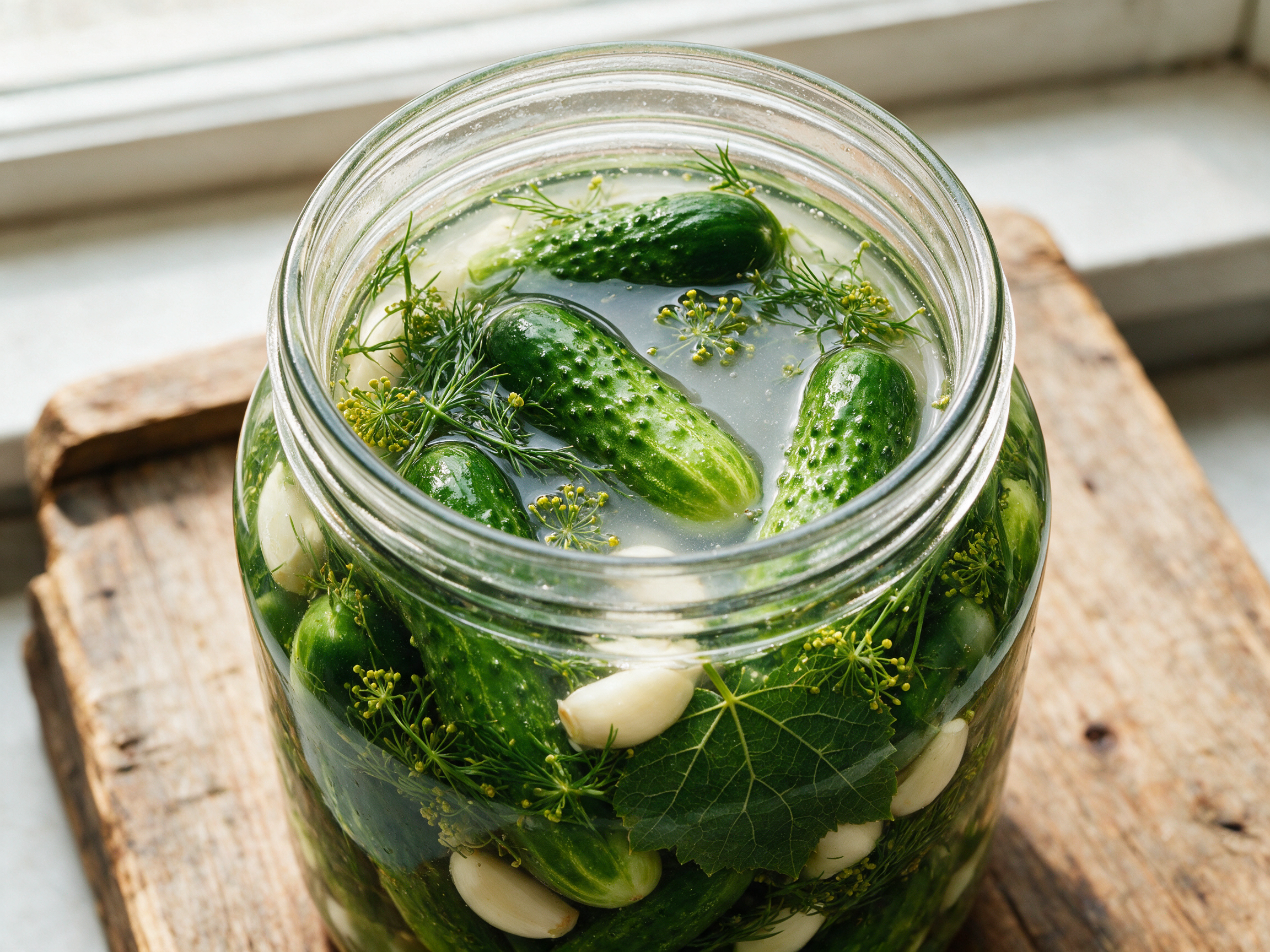
Valtellina Crock-Fermented Pickles with Grape Leaves
Ingredients
Method
- Wash the cucumbers under cold water and scrub off any blossom dust. Trim a thin slice off the blossom end of each one, the end opposite the stem, since it holds an enzyme that softens pickles during a long ferment.
- Weigh 1.5 L / 6 cups of non-chlorinated water into a bowl and stir in 52 g sea salt until fully dissolved. This gives a 3.5% brine, strong enough to favor lactobacillus over spoilage bacteria.
- Lay 2 grape leaves and half the garlic, dill, peppercorns, mustard seeds, bay leaves, and juniper berries in the bottom of a 2-liter / 2-quart fermentation crock or wide-mouth jar.
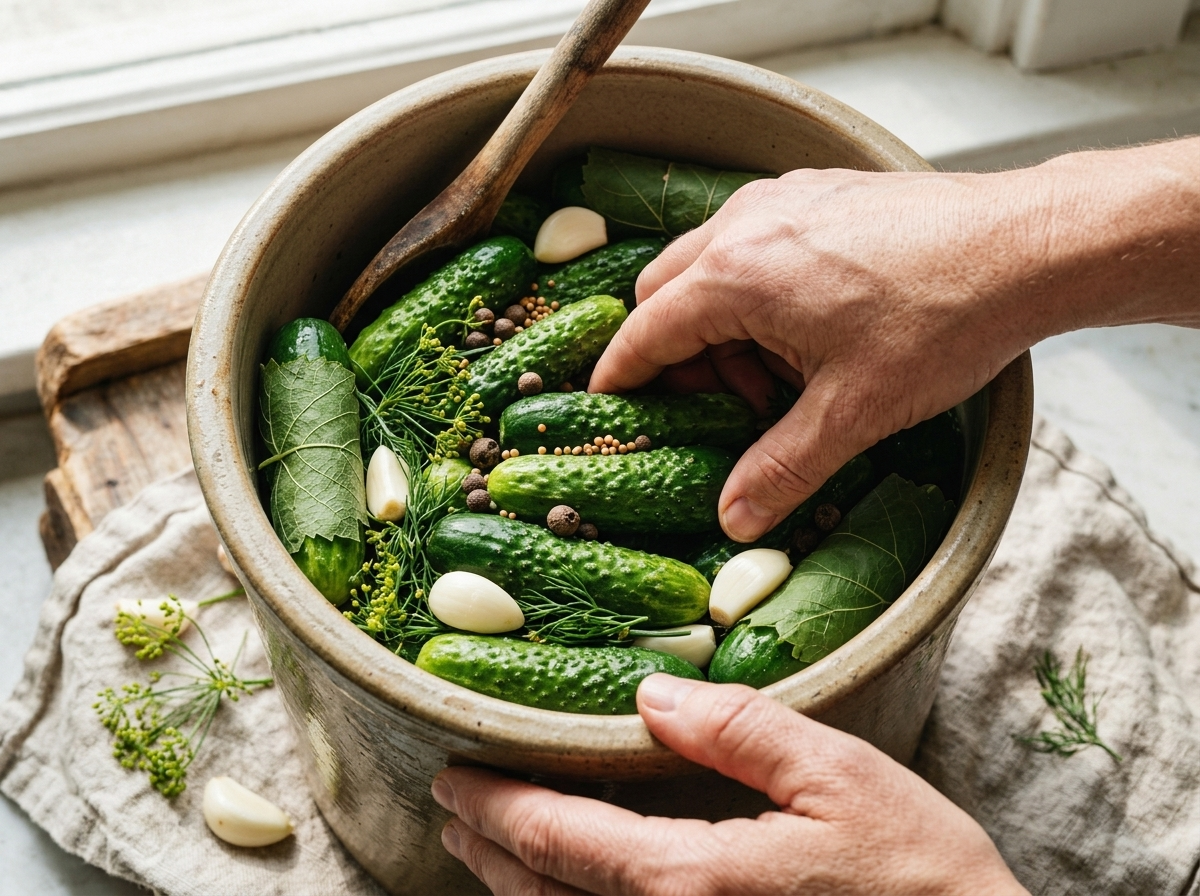
- Pack the cucumbers into the crock as tightly as you can without crushing them, standing smaller ones upright and laying larger ones on top.
- Scatter the remaining garlic, dill, spices, and chili flakes over the cucumbers, then tuck the remaining grape leaves on top as a final layer.
- Pour the brine over the cucumbers until fully covered, leaving about 2.5 cm / 1 inch of headspace.
- Set a fermentation weight, or a small plate topped with a water-filled bag, directly on the cucumbers so every piece stays under the brine line. Any cucumber that floats above the surface will mold within a day or two.
- Cover the crock loosely with a clean kitchen towel or cheesecloth secured with a rubber band. Set it on the counter out of direct sunlight, at 18 to 21 C / 65 to 70 F.
- Check daily and skim off any thin white film with a spoon, that's harmless kahm yeast. Discard the batch only if you see fuzzy pink, black, or green mold.
- Start tasting on day 5. The pickles are ready when the brine turns cloudy and the cucumbers taste tangy and sour, with a dull olive-green color rather than bright green, usually by day 7 to 10.
- Once fermented to taste, move the crock, or transfer everything to jars, to the fridge, keeping the cucumbers fully submerged in their brine. Slice or serve whole.
Notes
- Non-chlorinated water matters, since chlorine can slow or stall fermentation entirely.
- A crock with a water-seal lid works well, but a weighted jar is fine too.
- White kahm yeast on the surface is harmless, just skim it and keep fermenting.
- Colder rooms slow fermentation, warmer rooms speed it up by a few days.
Tips for Success
- Use non-iodized salt like pickling or kosher salt, since iodized salt can cloud the brine and slow fermentation unevenly.
- Trim the blossom end off every cucumber before packing the crock, or the natural enzymes there will soften your pickles.
- Keep the cucumbers weighted below the brine surface at all times, since any exposed piece will mold within a day or two.
- Taste starting on day 5 and every day after, since fermentation speed shifts with room temperature and cucumber size.
- Save a cup of finished brine from a past batch to jump-start a new one with active cultures.
Variations
- Swap half the dill for fresh tarragon and add a strip of lemon peel for a brighter, herbal Alpine variation.
- Add sliced carrots and green beans to the crock alongside the cucumbers for a mixed Valtellina-style vegetable ferment.
- Skip the chili flakes and add extra juniper berries for a milder flavor closer to traditional bresaola spicing.
Storage and Reheating
Once the pickles taste sour and tangy the way you like, move the crock or transfer everything to jars and refrigerate. Keep the cucumbers fully submerged in their own brine at all times.
Refrigerated, they keep for 2 to 3 months, and the flavor keeps deepening slowly in the cold. Always use a clean fork or tongs to remove pickles, then press the rest back under the brine.
These are eaten cold and raw, not reheated. Heat would kill the live cultures and soften the crunch that makes this ferment worth making.
Serving Suggestions
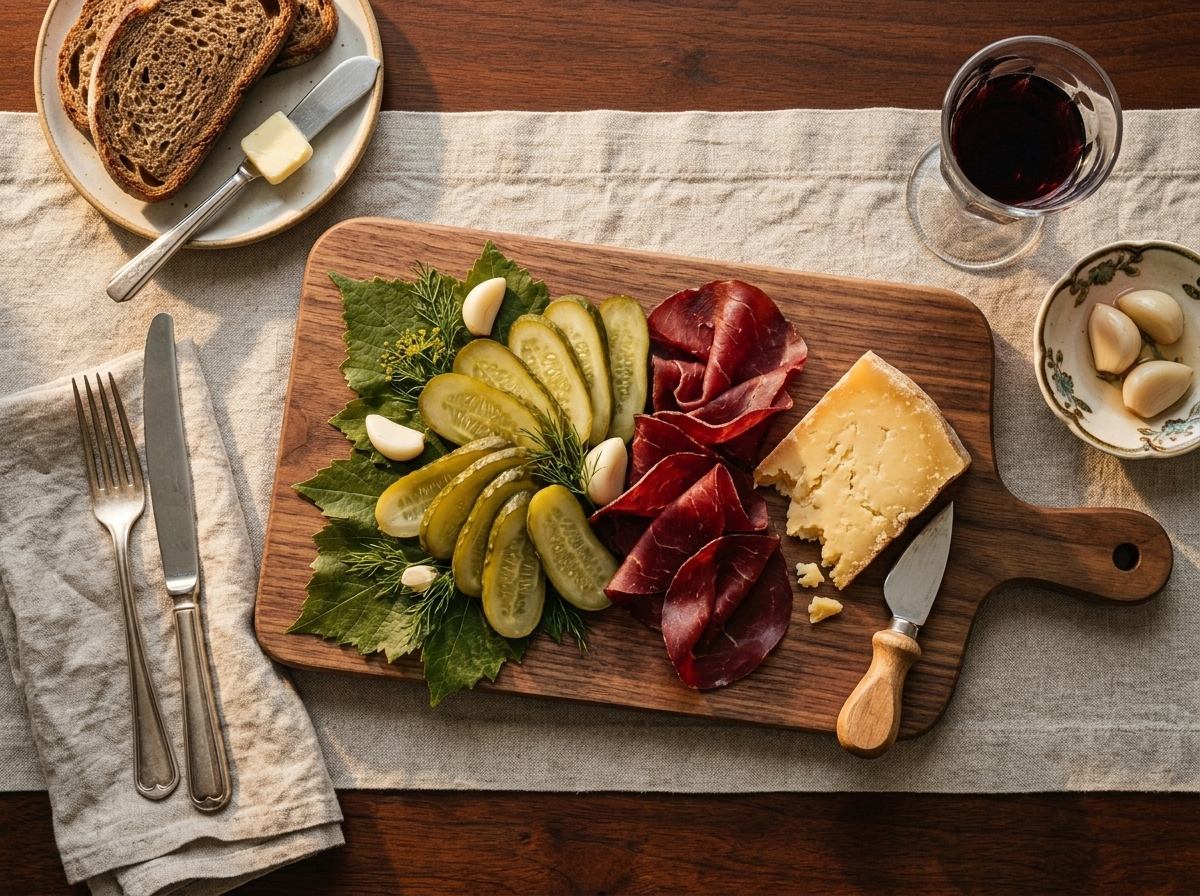
Serve these pickles alongside bresaola, the air-dried beef Valtellina is famous for, with a wedge of casera cheese and crusty bread for a simple Alpine board.
Chop them into potato salad or a lentil salad for a sour crunch, or set them next to grilled sausages and soft polenta where the acidity cuts through the fat.
A small glass of crisp white wine or a light Nebbiolo works well alongside the sourness at the table.
FAQ
Why did my Valtellina pickles turn soft instead of staying crisp?
Soft pickles usually mean the blossom end wasn’t trimmed before fermenting. That end holds an enzyme that breaks down pectin over a long brine soak, turning cucumbers mushy by day four or five. Using fresh, firm pickling cucumbers and adding tannin-rich grape or oak leaves to the crock also helps keep the texture crisp through a full week of fermentation.
Can I use oak or horseradish leaves instead of grape leaves?
Yes, oak, horseradish, or blackcurrant leaves all work in place of grape leaves. They contain the same tannins that firm up cucumber cell walls during fermentation, so the pickles stay crunchy instead of going soft. Use 5 to 6 leaves, rinsed well, and tuck them in with the other aromatics at the bottom and top of the crock.
How long do crock-fermented pickles keep once they’re ready?
Finished pickles keep for 2 to 3 months in the fridge, as long as they stay fully submerged in their own brine. Fermentation slows in the cold but doesn’t fully stop, so the flavor keeps deepening over time. Always use a clean utensil to fish pickles out and press the rest back under the brine line.
What goes well with Valtellina crock-fermented pickles?
These pickles pair well with bresaola, the air-dried beef Valtellina is known for, plus soft cheeses like casera or a simple cheese board. They also work chopped into potato salad or served alongside grilled sausages and polenta, where the sour crunch cuts through rich, fatty flavors.
Are Valtellina crock-fermented pickles vegan and gluten free?
Yes, this recipe is vegan and gluten free as written, since it’s only cucumbers, salt, water, garlic, and whole spices with no vinegar, sugar, or dairy involved. Double check that any add-in spices or leaves you use haven’t been processed alongside gluten-containing products if you’re cooking for someone with celiac disease.
What’s the difference between these crock-fermented pickles and quick vinegar pickles?
Crock-fermented pickles rely on salt brine and wild lactobacillus bacteria to sour naturally over 5 to 10 days, while quick vinegar pickles get their tang instantly from added vinegar and usually get canned or refrigerated right away. Fermented pickles have a deeper, more complex sour flavor and live cultures that vinegar pickles don’t develop.