Jump to Recipe
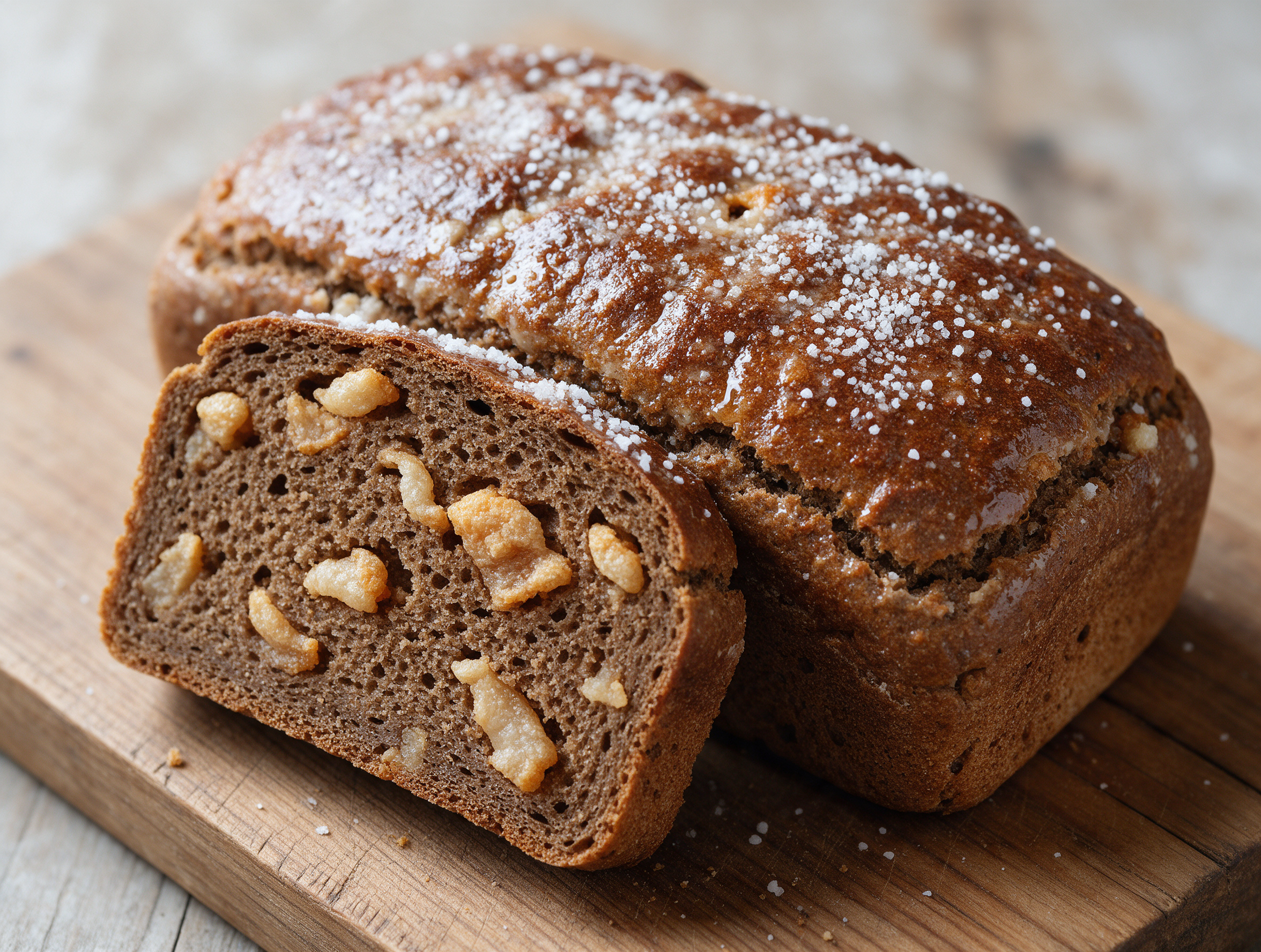
Füghiascia di Gordona is a rustic rye and lard bread from Valchiavenna, a valley in the Lombard Alps near the Swiss border, the same corner of the mountains that gives us rustic Valtellina pancotto. Bakers there fold pork cracklings, called ciccioli locally, straight into the dough before a hot bake gives the crust its snap.
I first ate a slice warm off a wood-fired peel at a village sagra, and the contrast stuck with me. Crisp outside, dense and slightly chewy inside, with pockets of rendered fat that taste close to bacon.
This version bakes in a home oven instead of a wood-fired one, but the ratio of rye to wheat flour and the cracklings stay true to what you’d find in Gordona. The dough is wet enough that you’ll want a bowl scraper, not a rolling pin.
One thing that trips people up: if the cracklings are too fatty and not diced small, they pool grease under the crust instead of crisping. Dice them fine and pat off excess fat before folding them in.
Why You’ll Love This Recipe
- Crisp, lard-brushed crust with a dense chewy crumb
- Uses pantry rye flour and rendered pork cracklings
- No stand mixer needed, just a bowl and a fold
- Keeps well for days, tastes even better on day two
Ingredient Notes
- rye flour: Gives the bread its dense, slightly earthy crumb. Whole rye works too but makes the dough stickier.
- bread flour: Balances the rye so the dough still stretches. Plain 00 flour works if that’s what you have.
- lard: Traditional here and what gives the crust its shine. Softened butter is a workable substitute but changes the flavor.
- pork cracklings (ciccioli): Look for these at an Italian deli or render your own from pork fat trimmings. Dice small so they don’t pool grease under the crust.
- fresh yeast: Use 15 g fresh yeast, or swap in 5 g active dry yeast dissolved the same way.
- coarse salt: Sprinkled on top after baking for crunch, don’t skip it or the crust tastes flat.
Füghiascia di Gordona: Rustic Rye Cracklings Bread
Ingredients
Method
- Dissolve the fresh yeast in the lukewarm water in a 4-quart / 3.8 L mixing bowl. Let it sit for 5 minutes until foamy on top.
- Add the rye flour, bread flour, and salt to the yeast water. Mix with a wooden spoon or your hand until a rough, sticky dough forms.
- Knead in the softened lard directly in the bowl for 5 to 7 minutes, folding and pressing, until the dough is smoother and starts pulling away from the sides.
- Cover the bowl and let the dough rise at room temperature, around 21 C / 70 F, for 90 minutes, until roughly doubled.
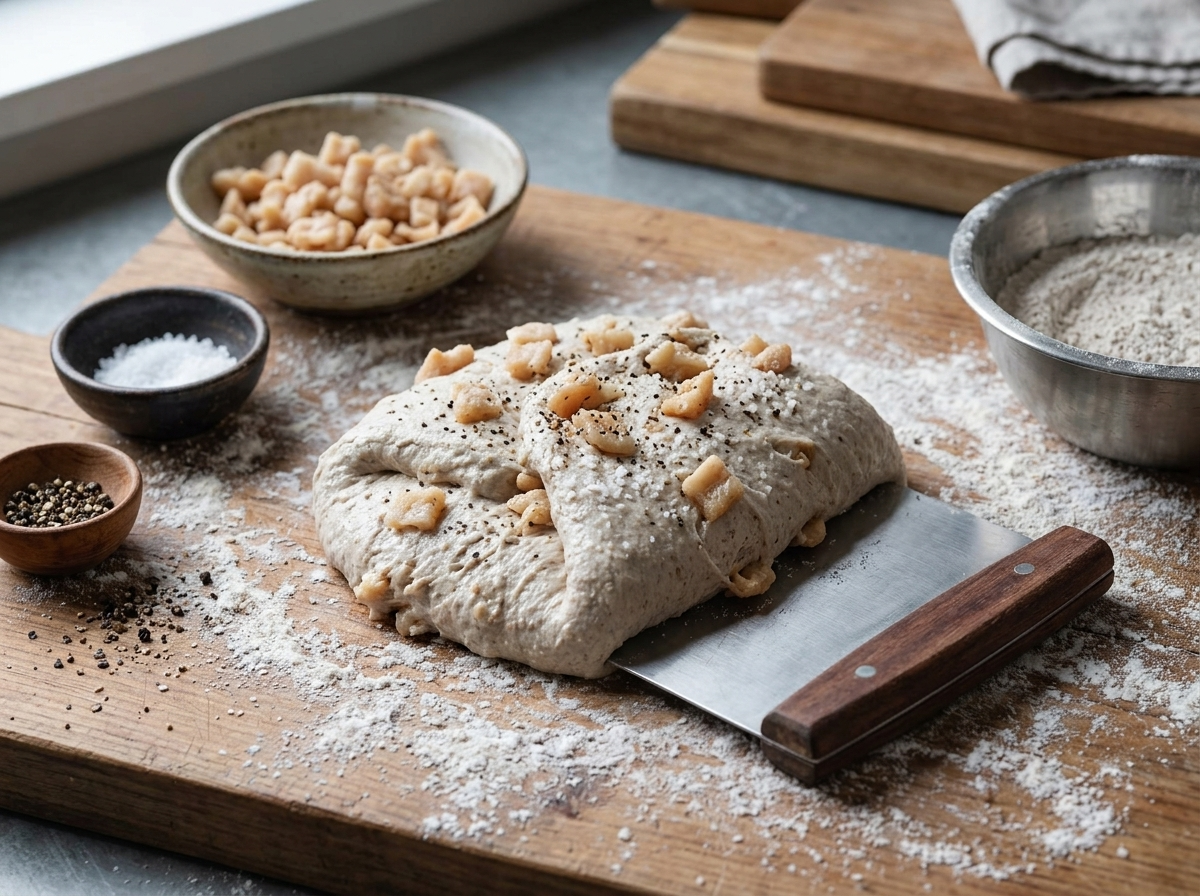
- Turn the dough onto a lightly floured surface. Scatter the diced cracklings and black pepper over it and fold gently a few times, just enough to distribute them without deflating the dough.
- Press and stretch the dough into a rough oval or rectangle on a parchment-lined sheet pan 33 x 46 cm / 13 x 18 inch. Dimple the surface firmly with your fingertips.
- Cover loosely with a towel and let it rise again for 30 minutes, until visibly puffed.
- Heat the oven to 220 C / 425 F while the dough finishes its second rise.
- Brush the top of the dough with melted lard and sprinkle with coarse salt.
- Bake for 28 to 32 minutes, until the crust is deep golden and sounds hollow when tapped. An instant-read thermometer should show around 96 C / 205 F at the center.
- Cool on a rack for at least 15 minutes before slicing into 8 pieces. Serve warm or at room temperature.
Notes
- Dice cracklings fine and pat off excess fat before folding into the dough.
- Let the first rise run a full 90 minutes, rye dough is slow to double.
- Shape with wet hands, not extra flour, the dough stays sticky by nature.
- Bake until the crust sounds hollow when tapped, that's the real doneness cue.
Tips for Success
- Dice the cracklings small before folding them in so they render crisp instead of leaking fat under the crust.
- Keep your hands wet, not floured, when shaping this dough, it’s stickier than a standard wheat loaf.
- Let the first rise run the full 90 minutes in a warm spot, rye dough is slower to double than wheat dough.
- Dimple the shaped dough firmly with your fingertips before the second rise, this keeps the crumb from ballooning unevenly.
- Brush the top with melted lard right before baking, not after, so the crust actually crisps instead of steaming soft.
Variations
- Swap half the cracklings for finely diced pancetta if you can’t find ciccioli, the texture is softer but the flavor still works.
- Add a handful of chopped rosemary to the dough for a herbal note that plays well against the rendered pork fat.
- Bake it thinner on a wider sheet pan for a crackery, snack-style version closer to a rustic cracker bread.
Storage and Reheating
Füghiascia di Gordona keeps well wrapped in a clean kitchen towel or paper bag at room temperature for 3 to 4 days. Avoid sealing it in plastic while warm, trapped steam softens the crust.
To refresh, reheat slices in a 180 C / 350 F oven for 6 to 8 minutes until the crust crisps back up. A toaster works fine for single slices too.
For longer storage, freeze cooled slices in a freezer bag for up to 2 months. Reheat straight from frozen in the oven at 180 C / 350 F for about 10 minutes.
Serving Suggestions
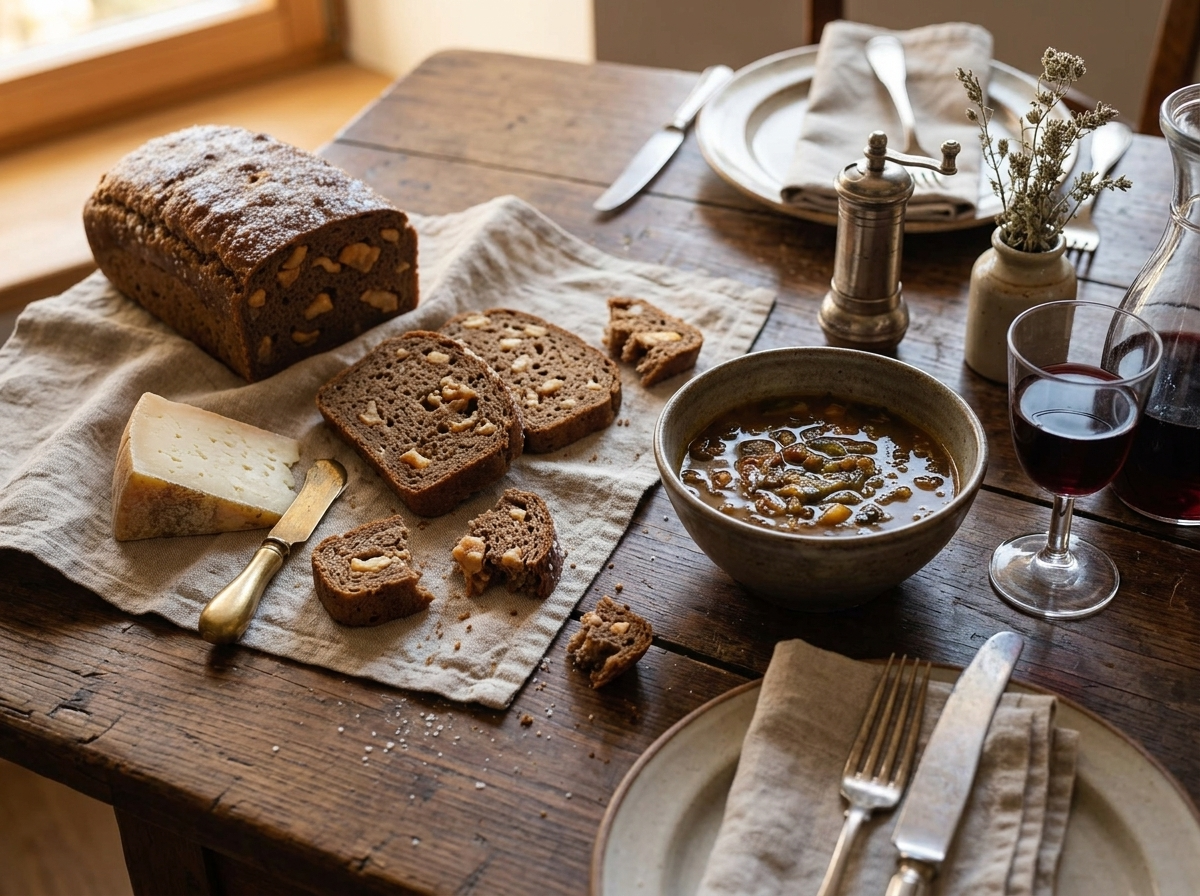
Serve füghiascia di Gordona warm, cut into wedges, alongside a soft local cheese like Bitto or a young toma. The salty crumb balances a mild cheese well.
It also holds up next to a bowl of barley or chestnut and borlotti bean minestra, torn straight into the bowl the way it’s eaten in Valchiavenna. A glass of light red wine, something like a Nebbiolo from a neighboring valley, rounds out the plate.
For a simpler snack, just slice it thin and eat it plain, still warm from the oven, the way it comes off the peel at a village sagra.
FAQ
Why is my füghiascia di Gordona dough too sticky to shape?
That’s normal, rye flour absorbs water differently than wheat and stays wetter and stickier through both rises. Don’t add extra flour to compensate, it toughens the crumb. Wet your hands or use an oiled bowl scraper to shape it instead.
Can I use pancetta instead of pork cracklings in this recipe?
Yes, finely diced pancetta works if you can’t find cracklings, though the texture comes out softer instead of crisp. Cracklings render little crunchy pockets in the crumb that pancetta won’t fully replicate. Pat pancetta dry before folding it in to avoid extra grease.
How long does füghiascia di Gordona keep, and can I freeze it?
Wrapped in a towel at room temperature, it keeps 3 to 4 days and actually tastes better on day two. For longer storage, freeze sliced pieces in a freezer bag for up to 2 months. Reheat in a 180 C / 350 F oven to bring the crust back.
What goes well with füghiascia di Gordona at the table?
A young local cheese, a bowl of bean or barley soup, or a glass of light red wine all pair naturally with it. The salty, savory crumb works best next to something mild that won’t compete with the rendered pork fat. It also stands alone as a snack, still warm.
Is füghiascia di Gordona gluten free?
No, it’s built on rye and wheat flour, so it’s not suitable for a gluten free diet. Swapping in gluten free flour blends changes the structure significantly since rye’s gluten network is part of what gives this bread its chewy density. There’s no reliable substitute here.
What’s the difference between füghiascia and a regular focaccia?
Füghiascia uses rye flour and pork cracklings folded into the dough, giving a denser, savory crumb, while a Ligurian focaccia relies on olive oil and all-purpose flour for a lighter, airier texture. Füghiascia is also brushed with lard, not oil, before baking.