
Jump to Recipe
Valtellina sourdough bread is a dense rye-wheat loaf from the Alpine valley of the same name in Lombardy, leavened with a natural starter instead of commercial yeast. The rye gives it a tight, moist crumb and a mild sourness that deepens the longer the dough ferments. Fennel seeds, a regional habit, run through the crumb and often sit on the crust too.
I started making this loaf after a week in Sondrio, where bakeries sell it alongside bresaola and pizzoccheri. The bread there is dark, almost brown, and holds up under cheese and cured meat without going soggy.
This version uses a 40:60 rye-to-wheat flour ratio, more forgiving for a home starter than the traditional segale-heavy loaves bakers make in wood-fired ovens. Bulk fermentation runs about 3 hours at room temperature, then a shorter final proof before baking in a hot Dutch oven.
One thing to watch: rye dough is stickier and less elastic than wheat dough. Don’t expect a smooth, windowpane gluten structure. It looks shaggy going into the banneton, and that’s normal.
Why You’ll Love This Recipe
- Dense, tangy crumb that keeps for nearly a week
- Uses a natural starter, no commercial yeast needed
- Dark crust holds up well under cured meats
- Freezes well for weeknight breakfast toast
Ingredient Notes
- whole rye flour: Gives the loaf its dark color and tight crumb. Medium rye flour works if whole rye isn’t available.
- strong white bread flour: Adds structure since rye has little gluten on its own; don’t skip it or the loaf won’t hold shape.
- active sourdough starter: Use a rye or wheat starter fed 8 to 12 hours before mixing. It should be domed, bubbly, and float in water.
- water: Use warm water around 30 C / 86 F to give the cool rye flour a steady start to fermentation.
- fine sea salt: Dissolves evenly into the dough. Skip flaky salt here, it won’t distribute the same way.
- fennel seeds: The classic Valtellina touch. Caraway or cumin seeds work as a substitute with a sharper flavor.
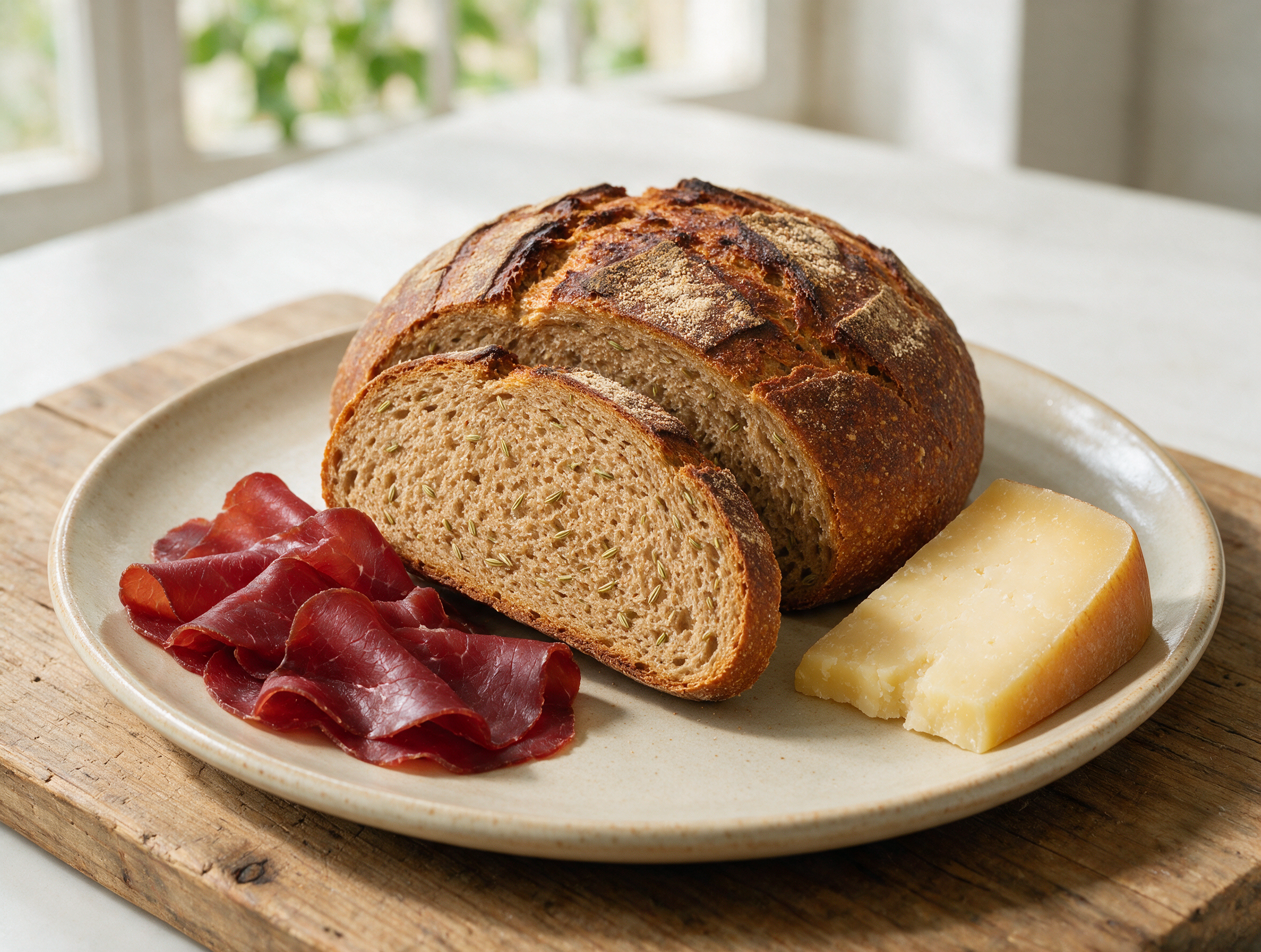
Rustic Valtellina Rye Sourdough Bread from Lombardy
Ingredients
Method
- The night before, feed your sourdough starter and let it sit at room temperature (21 C / 70 F) for 8 to 12 hours until domed and bubbly. It should float when dropped in water.
- In a large mixing bowl, combine the rye flour, bread flour, and warm water. Mix by hand until no dry flour remains, then rest (autolyse) for 30 minutes.
- Add the active starter, salt, and fennel seeds to the dough. Mix and fold for 3 to 4 minutes until roughly combined. The dough will be sticky and shaggy, not smooth, which is normal for rye.
- Cover the bowl and bulk ferment at room temperature for about 3 hours, folding the dough over on itself in the bowl every 45 minutes for the first 2 hours.
- Turn the dough onto a lightly floured surface and shape it into a tight round loaf with a bench scraper. Rye dough won't hold shape as well as wheat, so work quickly and firmly.
- Place the shaped loaf seam-side up in a well-floured banneton or a bowl lined with a floured kitchen towel. Cover and proof for 60 to 90 minutes, until it has grown but still springs back slowly when poked.
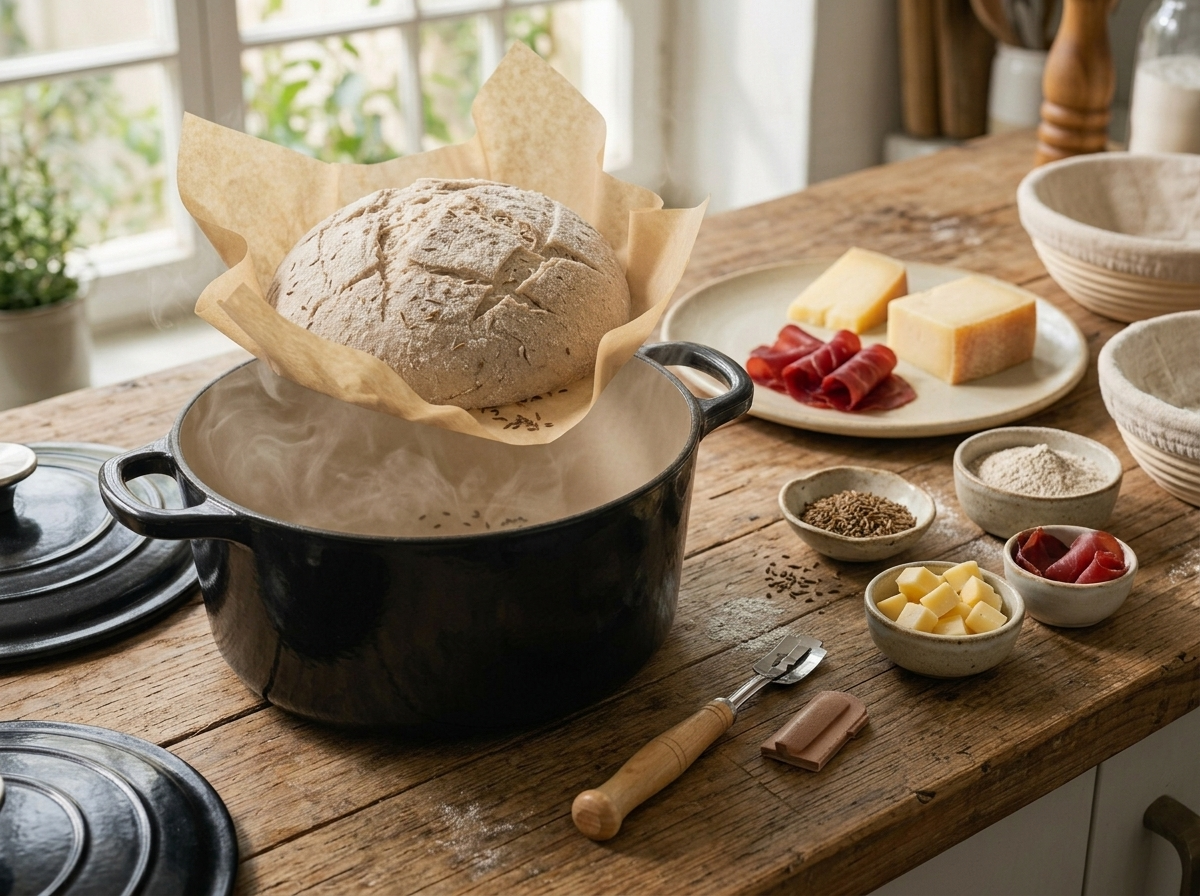
- About 45 minutes before baking, place a 26 cm / 10-inch Dutch oven with its lid on in the oven and heat to 250 C / 480 F.
- Turn the proofed loaf onto a piece of parchment, dust with rye flour, and score the top about 1 cm deep with a sharp blade.
- Lower the loaf into the hot Dutch oven using the parchment as a sling, cover with the lid, and bake for 25 minutes.
- Remove the lid, lower the oven to 220 C / 425 F, and bake uncovered for another 25 to 30 minutes, until the crust is deep brown and an instant-read thermometer inserted in the center reads 205 F / 96 C.
- Lift the loaf onto a wire rack and cool completely, at least 2 hours, before slicing so the crumb has time to set.
Notes
- Starter must be fully active and float in water before mixing.
- Rye dough stays sticky, resist adding extra flour beyond the recipe.
- Score about 1 cm deep to control the rye's tighter oven spring.
- Cool completely before slicing to avoid a gummy crumb.
Tips for Success
- Feed your starter 8 to 12 hours ahead so it’s active and domed before you mix the dough.
- Handle rye dough gently since it has less gluten; over-mixing won’t build strength, it just tears the structure.
- Preheat the Dutch oven fully before baking so the first 25 minutes trap steam and build an open crust.
- Check internal temperature with a probe thermometer; rye loaves need a hotter finish than wheat bread, 205 F / 96 C.
- Let the loaf cool fully, at least 2 hours, before slicing so the crumb sets and doesn’t turn gummy.
Variations
- Swap half the rye for whole wheat flour for a milder, less dense crumb that still holds a rustic bite.
- Use 1 tbsp caraway seeds instead of fennel for a sharper, more traditional Alpine-German flavor.
- Mix in 50 g chopped walnuts during shaping for a nuttier loaf that pairs well with soft cheese.
Storage and Reheating
Valtellina sourdough bread keeps at room temperature for 4 to 5 days wrapped in a clean kitchen towel or paper bag. The dense rye crumb actually improves after a day as the flavors settle.
Store it cut-side down on a wooden board, or in a paper bag inside a bread box, not sealed in plastic, which softens the crust and invites mold.
To refresh slices a few days in, warm them in a 180 C / 350 F oven for 5 to 6 minutes, or toast directly. The whole loaf freezes well wrapped tightly in foil then a freezer bag, for up to 3 months. Thaw at room temperature before reheating.
Serving Suggestions
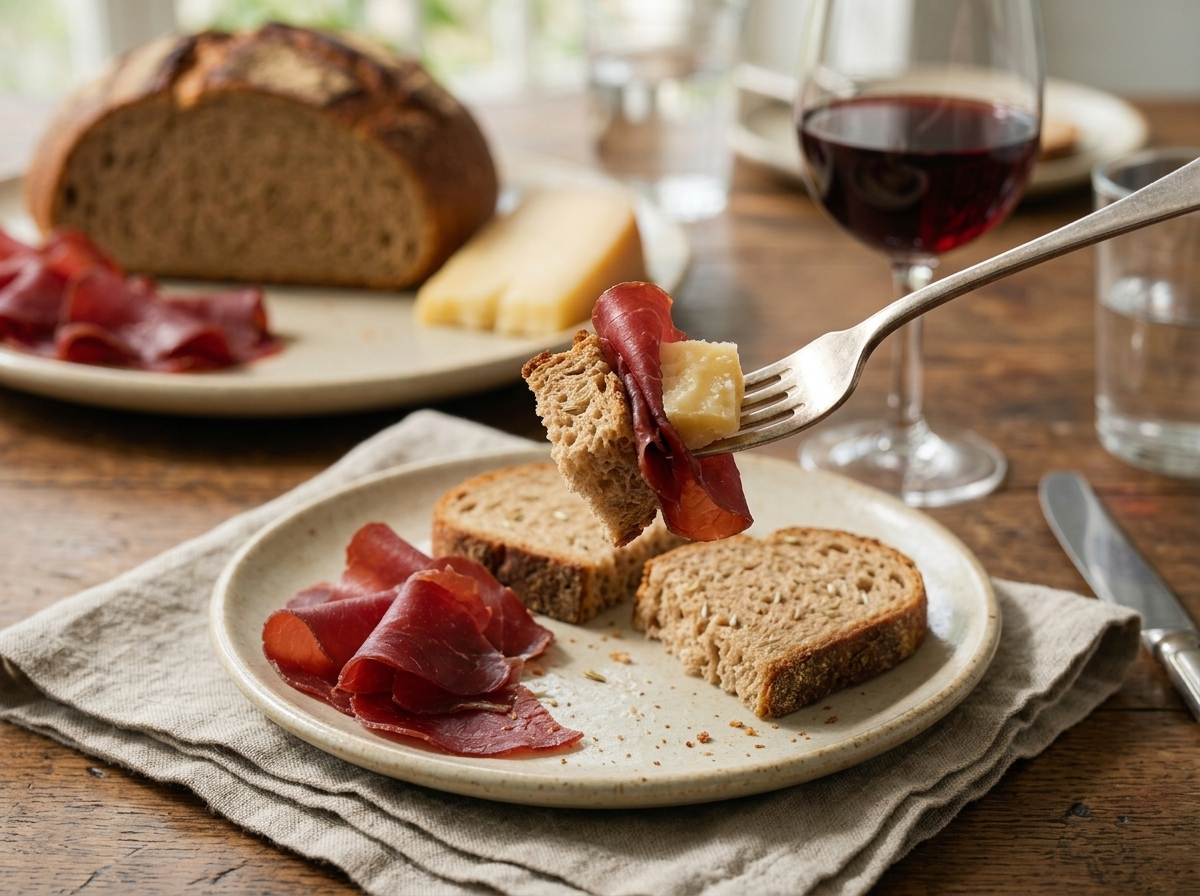
Valtellina sourdough bread pairs naturally with the region’s own bresaola and a wedge of Bitto or Casera cheese, both classic Alpine matches.
Slice it thick for open-faced sandwiches with soft cheese and honey, or serve alongside pizzoccheri or a bowl of minestrone to soak up the broth.
Toast leftover slices and rub with a cut garlic clove and olive oil for a simple bruschetta base.
FAQ
Why is my Valtellina sourdough bread dense and gummy instead of moist?
A dense, tight crumb is normal for rye bread, but gummy usually means it was undercooked or sliced too soon. Check for an internal temperature of 205 F / 96 C with a probe thermometer, and let the loaf cool for a full 2 hours before cutting so the crumb finishes setting.
Can I use all-purpose flour instead of rye flour in this Valtellina bread?
You can replace some of the rye, but not all of it, or you’ll lose the flavor and dense crumb that define this bread. Swap up to half the rye flour, about 175 g, for all-purpose or bread flour, keeping the rest whole rye for texture and mild sourness.
Can I retard the dough overnight in the fridge before baking this rye bread?
Yes, after shaping, place the loaf in its banneton, cover, and refrigerate for 8 to 14 hours instead of a room-temperature proof. Bake it straight from the fridge, adding about 5 extra minutes covered in the Dutch oven since the dough starts cold.
What cheese goes well with Valtellina sourdough bread?
Bitto or Casera, both Valtellina DOP cheeses, are the traditional match, along with sliced bresaola. The bread’s dense crumb and mild sourness hold up well against strong, aged cheeses and cured meat without falling apart.
Is Valtellina sourdough bread gluten-free?
No, this bread contains both rye and wheat flour, so it isn’t suitable for a gluten-free diet. Rye has less gluten than wheat but still contains it, and there’s no reliable one-to-one gluten-free swap that keeps the same dense, chewy crumb.
What’s the difference between this Valtellina bread and regular pane di segale?
Valtellina sourdough bread is a regional version of pane di segale that traditionally includes fennel seeds, a detail not always found in rye bread from other parts of Italy. It also uses a higher wheat-to-rye ratio than the nearly all-rye loaves baked in South Tyrol.