
Jump to Recipe
There’s a particular kind of quiet satisfaction that comes from a kitchen filled with the gentle, savory scent of meat slowly tenderizing in wine. It’s a promise of a deeply comforting meal, especially when the days grow shorter.
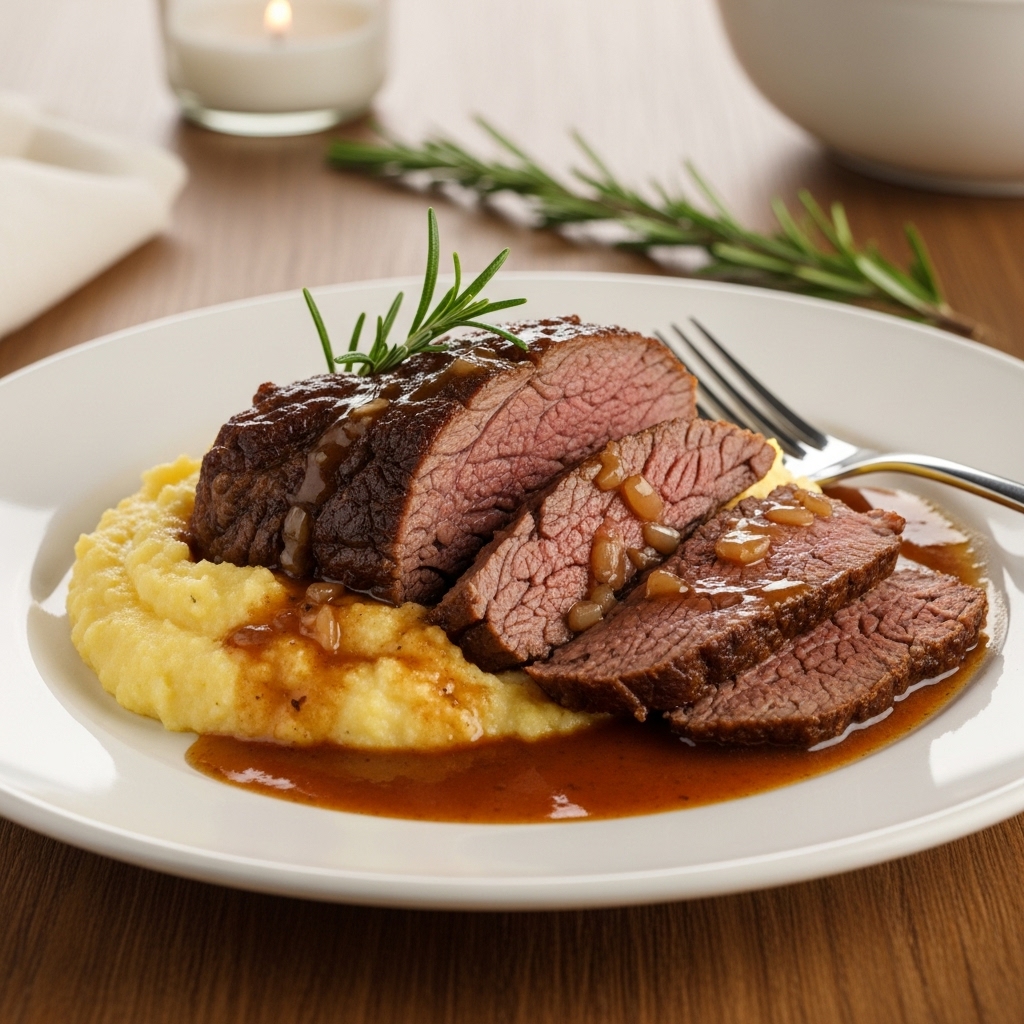
This classic pairing features beef that becomes incredibly soft through patient braising. It rests on a bed of soft, creamy polenta, which perfectly soaks up the rich, developed sauce. The name itself, brasato, comes from “brace,” meaning hot coals, reflecting its traditional roots.
This is a specialty of Northern Italy, where generations have perfected the art of turning simple ingredients into something extraordinary. While it requires time, the process is straightforward and deeply rewarding. You can approach it with a similar technique used in a good beef stew.
We’ll walk through both the cultural background and the practical steps to bring this heartfelt dish to your own table.
Key Takeaways
- This dish is a traditional example of slow-cooked comfort food.
- It combines tender, wine-braised beef with creamy polenta.
- The recipe has deep roots in Northern Italian culinary history.
- Patience in cooking transforms simple ingredients.
- The method is accessible for home cooks seeking authentic results.
- It’s a perfect meal for a cozy, satisfying dinner.
Celebrating Italian Winter Traditions with Brasato con Polenta Italian Winter
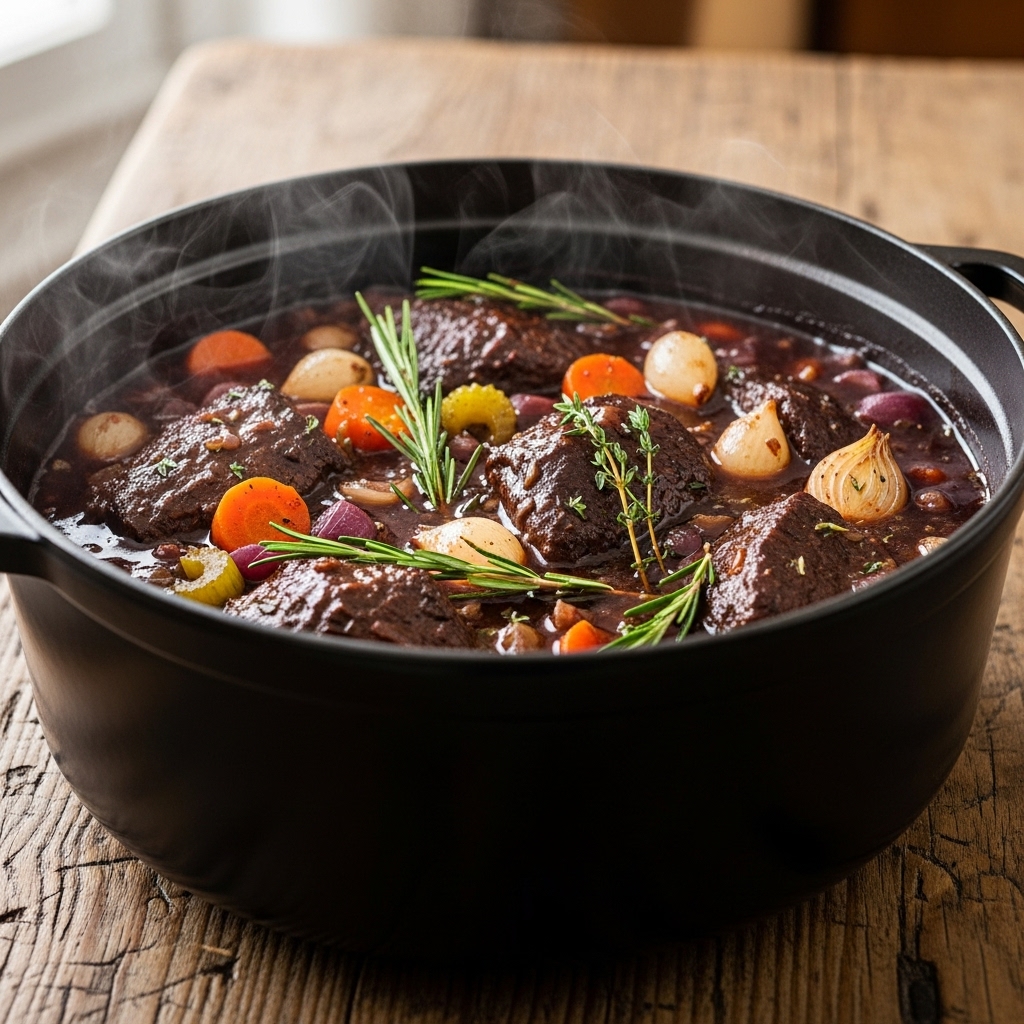
The story behind this comforting meal reveals how necessity and tradition shaped a culinary masterpiece. Each component carries centuries of history.
The Rich History and Cultural Roots
The name “brasato” comes from “brace,” meaning hot coals. Originally, cooks prepared this dish over embers. Today’s braising method evolved from that slow, gentle heat.
Brasato al Barolo represents Piedmont’s approach to cooking. Families transformed tough beef cuts using local Barolo wine. The wine’s tannins and acidity naturally tenderize meat during long marination.
This wasn’t just about availability. It was about understanding how ingredients work together over time.
How Italian Heritage Inspires This Cozy Dish
Polenta’s journey spans millennia. Roman legions ate “pulmentum” made from crushed grains. Maize arrived in Europe after Columbus’s voyages.
For centuries, it sustained Northern Italian families as peasant food. Now it graces gourmet tables while maintaining its comforting role.
These recipes passed through generations. Each family added small variations while honoring core principles. The long cooking time became part of the ritual, especially for Sunday meals.
Understanding this heritage informs our approach today. It reminds us why traditional methods and ingredient choices matter for authentic results.
Step-by-Step Brasato and Polenta Preparation Tips
Planning ahead is the secret to achieving the tender, wine-infused results this recipe promises. The process unfolds over a day or two, with each step building on the last.
Marinating, Browning, and Slow Cooking Techniques
Begin your preparation the day before cooking. The marinade needs at least 12 hours to work its magic. Refrigeration keeps everything safe while flavors develop.
Pre-salting the meat 24 hours in advance helps seasoning penetrate deeply. Tie the beef with kitchen string to maintain its shape during long cooking.
Before browning, pat the meat completely dry. Heat butter and olive oil in your pot over medium heat. Brown each side for about 5 minutes without moving it constantly.
Slow cooking is essential. Whether using the stovetop or oven, maintain low heat. The liquid should simmer gently for several hours until the meat becomes spoon-tender.
Key Tools and Timing for Perfect Results
Cooking the dish a day before serving offers advantages. Flavors meld together beautifully overnight. Removing congealed fat becomes much easier.
Proper equipment makes a difference. A heavy pot with a tight lid ensures even heat distribution. For the polenta, constant stirring for 40 minutes creates the ideal creamy texture.
| Step | Timing | Key Action |
|---|---|---|
| Marinating | 12-24 hours | Refrigerate with wine and aromatics |
| Browning | 5 minutes per side | Dry meat thoroughly first |
| Slow Cooking | 2.5-4 hours | Maintain gentle simmer |
| Resting | Overnight | Refrigerate for flavor development |
Exploring Essential Ingredients and Flavor Techniques
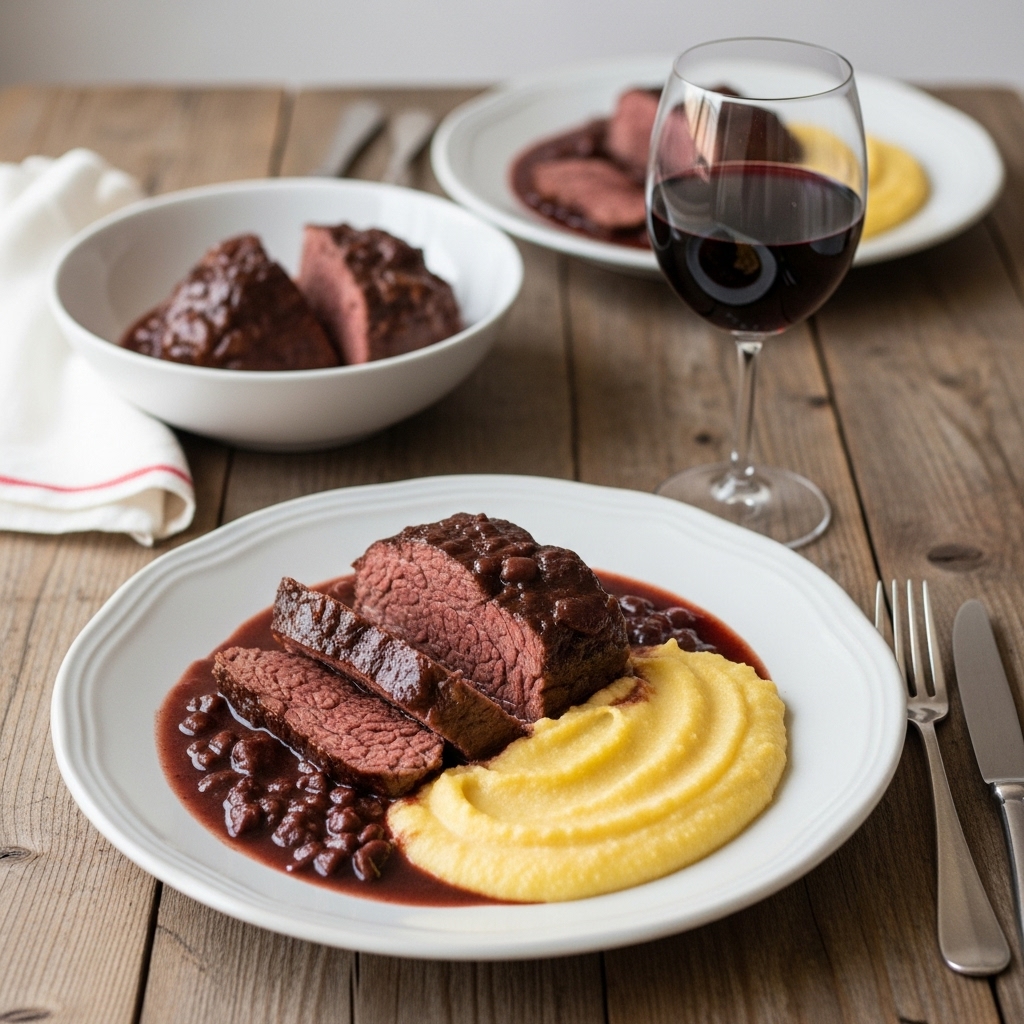
The quality of your final dish depends entirely on the ingredients you choose and how you handle them. Each component serves a purpose, building layers of flavor and texture.
Let’s break down what you’ll need and why each item matters.
The Role of Premium Beef Cuts and Aromatic Wine
Start with a well-marbled cut like beef chuck roast. It has connective tissue that breaks down during slow cooking, creating incredible tenderness.
I recommend a single, large piece of meat, about two to three pounds. This size cooks evenly and stays moist.
For the marinade, a full-bodied red wine is essential. Barolo wine is ideal because its tannins soften the meat. If Barolo isn’t available, a good Barbera works well.
Remember, the wine’s quality directly impacts your sauce. Use a bottle you would enjoy drinking.
Balancing Herbs, Spices, and Olive Oil
The vegetable base is simple: carrots, celery, and onion, cut into large chunks. They sweeten the sauce as they cook.
Fresh rosemary and bay leaf provide an herbal backbone. Warm spices like cloves and peppercorns add depth.
For cooking fat, extra virgin olive oil is a classic choice. Some traditions use clarified butter for browning the meat.
A few anchovy fillets will dissolve, adding a rich umami flavor without any fishy taste.
Achieving That Signature Sauce and Texture
After braising, you’ll blend the softened vegetables with the cooking liquid. This creates a smooth, velvety sauce.
Simmer it gently to reduce it to the perfect consistency. It should coat the back of a spoon.
For the creamy side, use a good-quality cornmeal. Cook it with water and salt, finishing with a drizzle of olive oil.
| Ingredient Category | Key Examples | Primary Function |
|---|---|---|
| Beef Cut | Chuck Roast | Becomes tender through slow cooking |
| Liquid | Red Wine, Stock | Creates the braising medium and sauce base |
| Aromatics | Carrots, Onion, Celery, Garlic | Builds foundational flavor |
| Herbs & Spices | Rosemary, Bay Leaf, Cloves | Adds complexity and aroma |
| Fat | Olive Oil, Butter | Used for browning and enriching |
Wrapping Up Your Italian Winter Culinary Journey
Bringing everything together at serving time is where the magic truly happens. Carefully lift the tender beef from the pot. Discard the rosemary sprigs and bay leaves that have given their flavor.
Use an immersion blender to puree the softened vegetables into the cooking liquid. This creates a smooth, rich sauce that captures all the flavors developed during hours of cooking. Let the meat rest before slicing for cleaner cuts.
Serve this beautiful dish over creamy polenta or mashed potatoes. Both provide a mild, starchy base that balances the rich sauce. For an authentic brasato al Barolo recipe, the traditional pairing is essential.
Making this a day ahead offers practical advantages. The fat congeals for easy removal, and reheating improves the flavor. Serve the same red wine used in cooking for perfect harmony.
Any leftovers make a fantastic pasta sauce. Simply shred the meat with a fork and warm it with the sauce. This patient cooking rewards you with deep flavors that define comfort food.
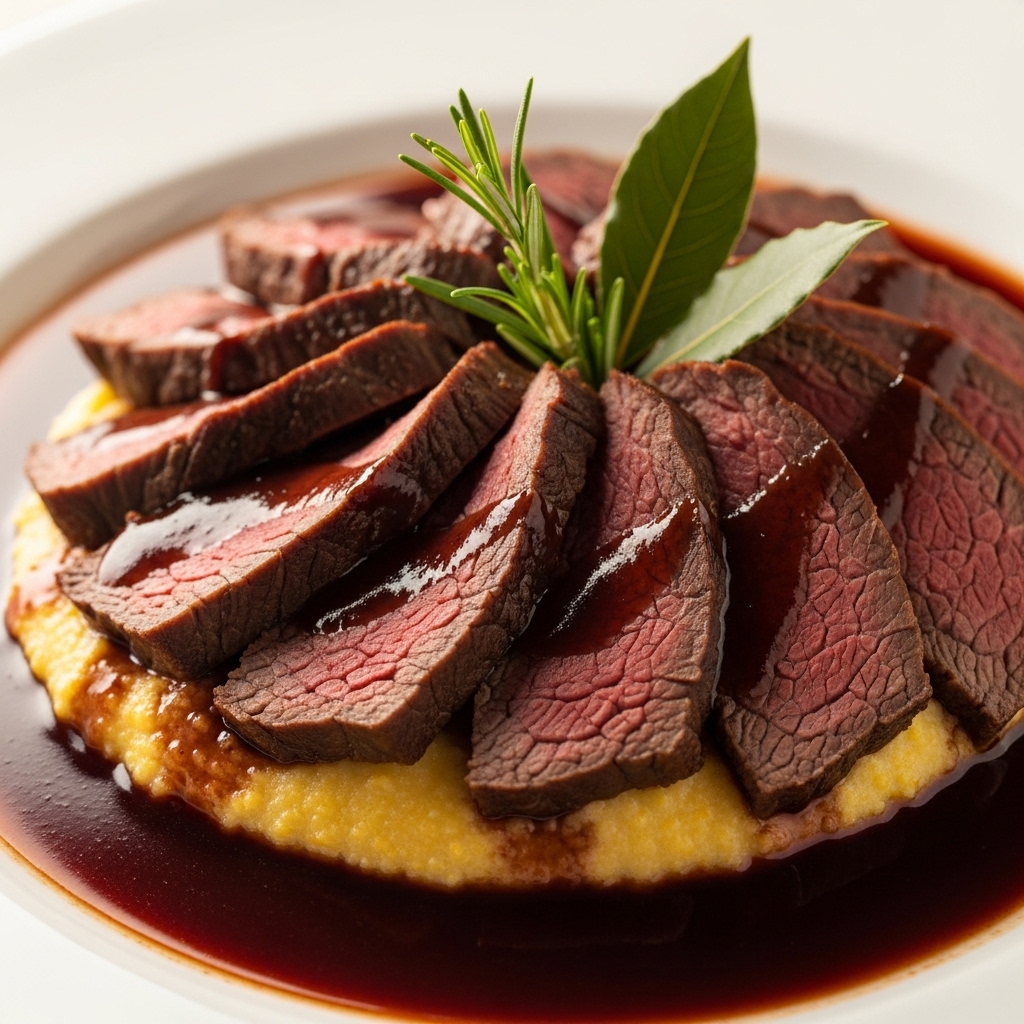
Brasato con Polenta (Italian Braised Beef with Polenta)
Ingredients
Method
- The day before cooking, marinate the beef in the red wine with the carrots, celery, onion, garlic, bay leaves, rosemary, cloves, and peppercorns.
- Let it refrigerate for 12-24 hours, allowing the flavors to develop.
- Pre-salt the beef 24 hours in advance.
- Tie the beef with kitchen string to maintain its shape during cooking.
- The next day, remove the beef from the marinade and pat it dry.
- Heat the olive oil and butter in a heavy pot over medium heat.
- Brown the beef on all sides for about 5 minutes per side, without moving it constantly.
- Add the marinade (wine and vegetables) to the pot with the beef.
- Bring the liquid to a simmer, then cover and cook on low heat for 2.5-4 hours. You can cook it on the stovetop or in the oven at 300°F (150°C). The beef should be tender and easily pull apart.
- While the beef is cooking, bring 4 cups of water to a boil in a large pot.
- Slowly whisk in the cornmeal, ensuring no lumps form. Reduce the heat to low and continue stirring constantly for 40 minutes, adding salt to taste.
- When done, stir in the olive oil to finish.
- Once the beef is done, remove it from the pot and discard the rosemary and bay leaves.
- Use an immersion blender to blend the vegetables and cooking liquid into a smooth sauce.
- Let the sauce simmer gently to reduce to a thicker consistency.
- Slice the beef and place it on a plate over the creamy polenta.
- Spoon the rich sauce over the beef and polenta. Serve with the same wine used in cooking for an authentic touch.
- For best flavor, let the dish rest overnight, and reheat the next day. This helps the flavors meld and makes removing excess fat easier.
Notes
- This dish is best made a day ahead to enhance flavor. The fat can congeal overnight for easy removal when reheating.
- It pairs wonderfully with a simple green salad or sautéed bitter greens like kale for a balanced meal.