
Jump to Recipe
I learned this brasato al barolo recipe at my nonna’s table, where the smell of wine, onions, and simmering beef felt like home.
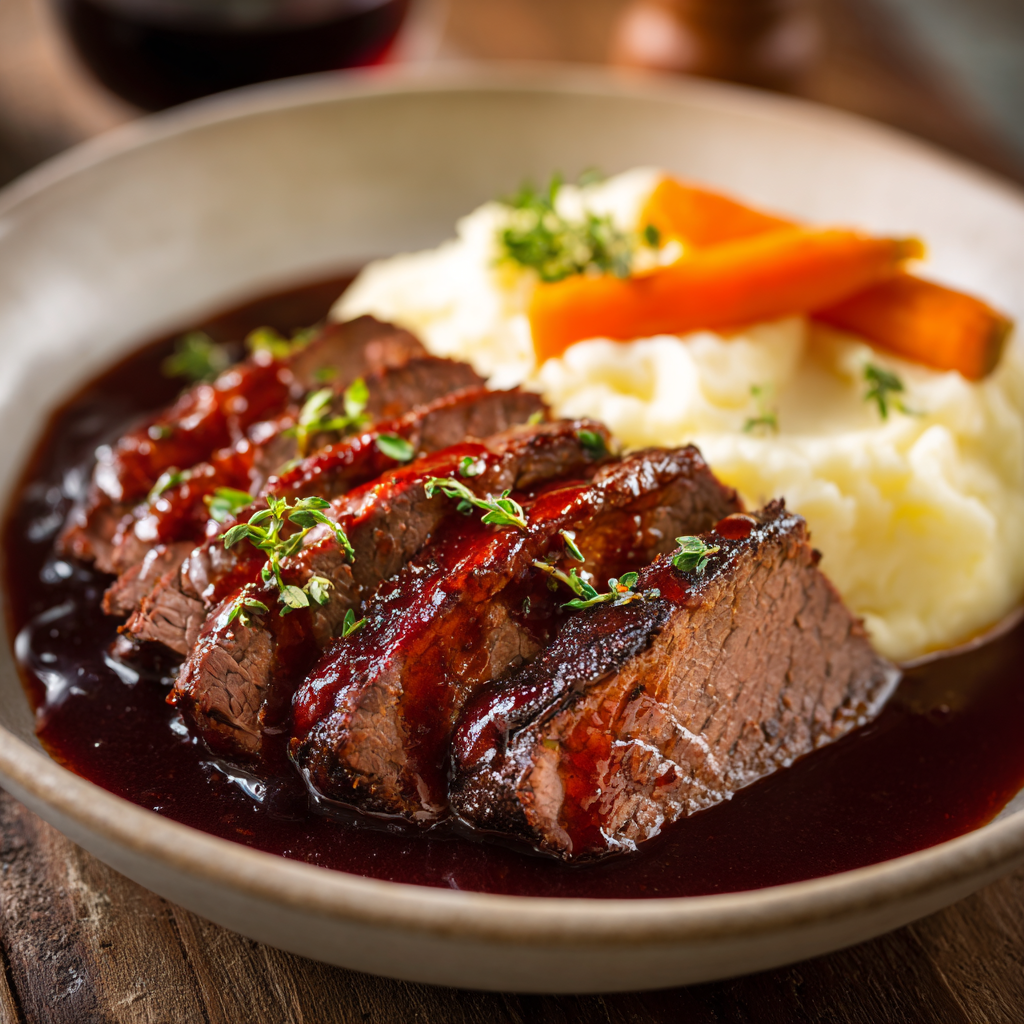
The dish is a slow-roasted comfort from Piedmont: a seared roast braised low and slow in a heavy pot until the liquid becomes a glossy, brothy sauce.
Use a full-bodied red wine—Barolo if you can, or a solid Valpolicella or Barbera—to build depth. Sear the beef well, then keep a gentle simmer for about 2.5–3 hours so the meat is tender but still sliceable.
I’ll show simple swaps for an American kitchen, explain why the Dutch oven matters, and share the texture cues you need to stop guessing. Finish the sauce by passing some vegetables and whisking in butter for a silky, restaurant-style finish that honors the cuisine and family memory.
Key Takeaways
- Sear the roast first to build rich flavor.
- Braise low and slow in a heavy pot for 2.5–3 hours.
- Choose a full-bodied red wine for depth; budget-friendly alternatives work.
- Keep the liquid level steady so the beef stays tender and sliceable.
- Finish the sauce by passing vegetables and adding butter for silkiness.
Why this Piedmontese brasato belongs at your table
This Piedmontese braise has a quiet power: layered wine, aromatics, and slow time that transform a humble roast.
What “brasato” really means
In my kitchen, brasato starts with a fierce sear to color the beef, then a gentle simmer. I add enough wine and other liquid to reach halfway up the meat so the cut relaxes into tenderness. Never a rolling boil—too much agitation tightens the fibers and ruins texture.
The right cut for tenderness
I choose shoulder, brisket, or a well-marbled chuck. These cuts have connective tissue that melts with long braising and yields slices that hold together. Filet may sound elegant, but it often becomes mush after hours in a pot.
Choosing the wine
Purists prize barolo wine for its structure, yet a good full-bodied red or any robust red wine does the job. If I need more volume, I add a splash of water instead of opening extra bottles so the wine flavor stays central.
- Base aromatics: onions, carrots, bay leaves, and a hint of cloves.
- Expect a brothy, elegant sauce—perfect to spoon over the meat and sides.
Authentic brasato al barolo recipe
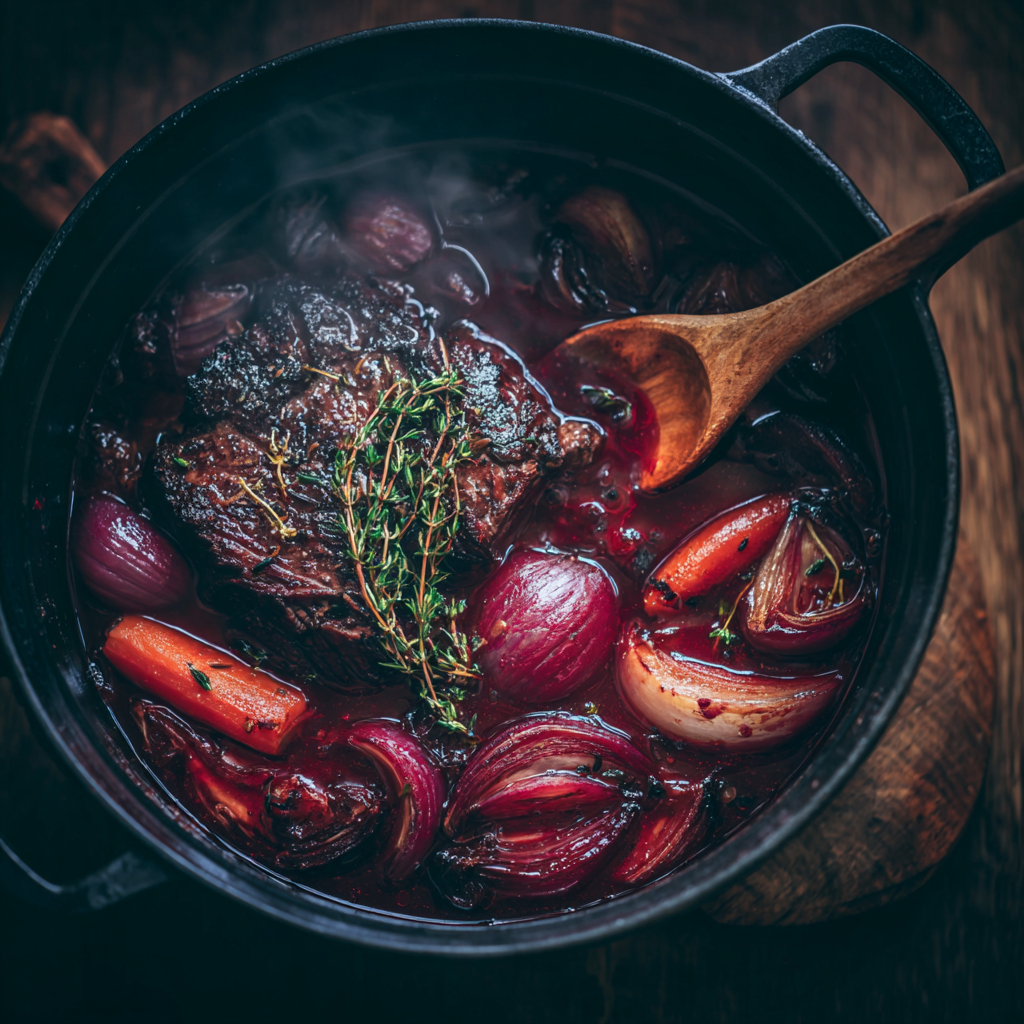
Begin with a dry, well-seasoned roast and a hot pan. Pat a 3–4 lb chuck or brisket dry, salt and pepper it, and sear in a film of olive oil until each side has a deep brown crust. Set aside the meat and keep the juices on the plate.
Ingredients with smart substitutions and aromatics
Use onions and carrots as a base; add celery and garlic if you like. Add bay leaves and a pinch of ground cloves for that classic aroma. One to one-and-a-half bottles of full-bodied red wine will half-submerge the roast. If needed, top with a splash of water to reach the right liquid level.
Step-by-step method
- Lower heat slightly and sauté the vegetables in the pan fond until glossy, then stir in garlic briefly.
- Nestle the roast back in, pour wine to halfway up the meat, bring to the edge of a boil, then reduce to a gentle simmer.
- Cover partially and braise in the heavy pot for about 2.5–3 hours, turning once at the halfway mark.
- Visual cue: a fork should meet light resistance and the slices should hold together when cut against the grain.
Pro tips for texture and sauce
If you want a silkier sauce, pass some vegetables through a food mill into the broth or whisk in a spoon of tomato paste with a ladle of hot liquid. Finish by stirring in a small knob of butter for shine. Reduce the sauce a few minutes for slight thickness, but keep it brothy so it soaks into sides.
| Step | Timing | Visual Cue | Why it matters |
|---|---|---|---|
| Sear roast | 8–12 minutes total | Deep brown crust | Builds fond and deeper beef flavor |
| Braise in wine | 2.5–3 hours | Gentle simmer, half-submerged | Melts connective tissue; keeps slices intact |
| Finish sauce | 5–10 minutes | Light nappe, glossy | Adds body without losing broth character |
| Slice & serve | After resting 10 minutes | Slices hold together, juices clear | Resting keeps juices and improves texture |
Serving, sides, and next-day magic
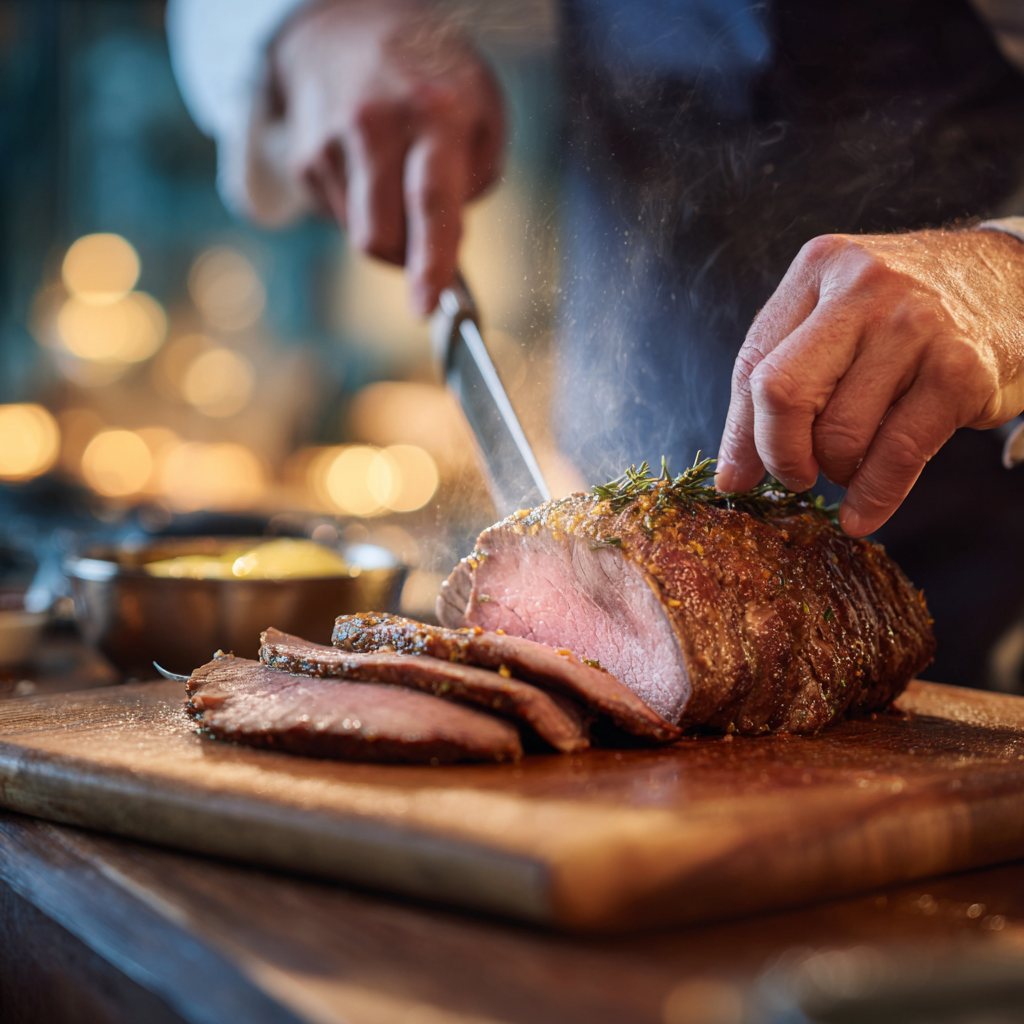
A warm platter, fanned slices, and a pool of glossy broth turn this roast into comfort food.
I slice the meat against the grain and fan it on a warm plate. Then I ladle the silky sauce so it pools around the vegetables and soaks into mashed potatoes. Keep a few whole vegetables for texture and pass some into the broth for body.
How to plate: silky sauce, vegetables, and mashed potatoes to soak up the juices
Place a generous spoonful of mashed potatoes at the center. Lay slices of beef over the mash. Spoon sauce and broth around the edge so the potatoes drink the juices.
Leftovers that shine: gentle reheating, pasta enrichments, and make-ahead slicing
If serving the next day, chill the roast whole. Slice cold for neat portions that reheat evenly.
- Reheat slices in a pan with enough reserved liquid to barely cover; use low heat for about 8–10 minutes so the meat stays tender.
- Shred leftover beef and fold into pasta with a spoon of tomato paste and crushed tomato; use broth to loosen the sauce as needed.
- Skim chilled fat before warming; if the sauce tightened, loosen with a splash of broth or water and warm gently.
| Task | Method | Time | Why it matters |
|---|---|---|---|
| Slicing for service | Slice cold against the grain | After chilling 30–60 minutes | Neat pieces reheat evenly and hold their juices |
| Reheat slices | Low in a pan with reserved liquid | 8–10 minutes | Protects texture and keeps the meat tender |
| Pasta or ravioli use | Shred meat, add tomato paste and crushed tomato, loosen with broth | 10–15 minutes | Transforms leftovers into a rich, sauced first course |
| Sauce recovery | Warm gently, add broth if needed, skim fat | 5 minutes | Restores sheen and cleans the flavor |
Conclusion
A careful sear, a respectful simmer, and a good bottle of wine turn humble meat into a memorable meal. Use a full-bodied red wine if you can, or a solid full-bodied red as a worthy stand-in.
Trust the cook time and the hours at low heat. Avoid a hard boil; gentle simmering protects texture and lets garlic, cloves, and aromatics bloom in the pot.
This is the recipe I reach for when I want comfort and a touch of history. With clear prep time and cook time, a sturdy pot, and a final kiss of olive oil or butter, you’ll serve beef braised to silky perfection.
Whether you favor barolo wine or another bottle, follow your senses and the steps here. Grazie for cooking with me — I can’t wait to hear how you make this dish your own.
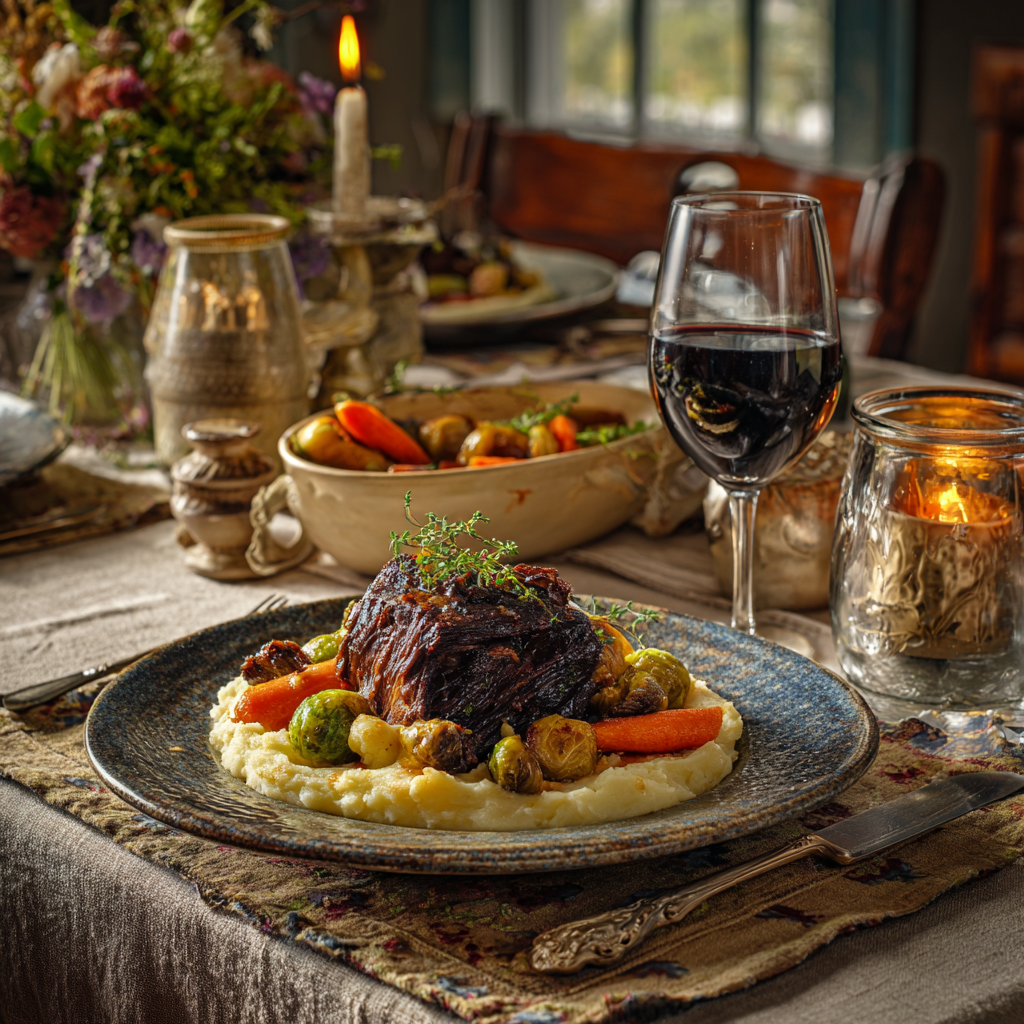
Brasato al Barolo (Piedmontese Red Wine Braised Beef)
Ingredients
Method
- Pat the roast dry with paper towels and season all sides with salt and pepper. Let it rest for 15–20 minutes at room temperature.
- Heat olive oil in a heavy Dutch oven over medium-high heat. Sear the beef on all sides until it forms a deep brown crust (8–12 minutes total). Remove and set aside.
- Lower the heat slightly. Add onions, carrots, and celery to the same pot. Cook until glossy and golden. Stir in garlic for 30 seconds.
- Stir in tomato paste (if using), cook briefly, then pour in red wine until the liquid reaches halfway up the beef. Add bay leaves and ground cloves.
- Bring to a gentle simmer (never boil), cover partially, and cook for 2.5–3 hours over low heat. Turn the roast halfway through. The meat should be tender but still sliceable.
- Remove the beef to rest. Strain or pass some vegetables through a food mill into the liquid. Simmer the sauce briefly to thicken slightly. Whisk in a knob of butter for silkiness.
- Slice the beef against the grain. Fan slices on a warm platter, spoon the glossy wine sauce over the top, and serve with mashed potatoes or creamy polenta.
Notes
- Don’t rush the sear — it’s key for depth and color.
- Keep the liquid level steady during braising; top with a splash of water if it drops too low.
- Avoid a rolling boil — gentle simmering keeps the beef tender.
- If making ahead, chill the roast whole and slice it cold before reheating in its sauce.
- Serve with mashed potatoes, polenta, or buttered noodles to soak up the rich wine sauce.